|
Strategy, Operations and Finance Committee
Meeting Agenda
|
10 April 2025
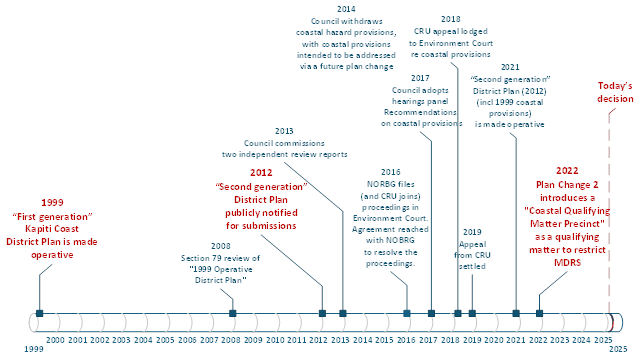
|
9 Pūrongo
| Reports
9.1 District
Plan: Approach for Review of Coastal Provisions
Kaituhi |
Author: Jason
Holland, District Planning Manager
Kaiwhakamana
| Authoriser: Kris Pervan, Group Manager Strategy & Growth
Te pūtake |
Purpose
1 This
paper seeks the Committee’s approval of the proposed scope and timing for
a Coastal Environment Plan Change to the Operative District Plan.
He
whakarāpopoto | EXecutive summary
2 An
Executive Summary is not required.
Te tuku haepapa
| Delegation
3 The
Strategy, Operations and Finance Committee has delegated authority to consider
this under section B.1. of the 2022-2025 Triennium Governance Structure and
Delegations ‘Preparation of the District Plan and Plan Changes’.
Taunakitanga | RECOMMENDATIONS
That the
Strategy, Operations and Finance Committee:
A. Notes
the findings of the Gap Analysis for the coastal provisions of the District
Plan (Attachment 2).
B. Notes
that staff are currently undertaking a monitoring and reporting exercise for
the coastal provisions in accordance with Section 35 of the Resource Management
Act 1991.
C. Agree,
as assessed by the Gap Analysis, that the 1999 Operative District Plan coastal
provisions require alteration, pursuant to section 79 of the Resource
Management Act 1991.
D. Approve
as outlined in this report:
D.1 the
proposed scope of the coastal plan change including coastal hazards and other
coastal provisions (as described in paragraphs 19-26 of this paper).
D.2 the
recommended timing (Table 1, Option C) for the review of the coastal provisions
of the Operative Kapiti Coast District Plan up to notification of a coastal
plan change.
Tūāpapa | Background
4 On
30
January 2025 Council approved the commencement of a review of the
coastal provisions in the Operative Kapiti Coast District Plan.
5 As
background to approving the approach to progress this work, a summary of the
history related to coastal provisions within the Operative Kapiti Coast
District Plan is provided. It shares an overview of key decisions and events diagrammatically
(below) and a more detailed explanation follows.
6 In
1999: under the Resource Management Act 1991 (RMA), coastal provisions were
included in the “first generation” Operative Kapiti Coast District
Plan. It included:
6.1 Objectives
and policies for the coastal environment covering natural character and amenity
values, public access, tangata whenua and coastal hazards.
6.2 Rules
for the coastal environment imposing coastal building line restrictions and
relocatable building requirements, and limiting modification of naturally
occurring indigenous vegetation removal adjacent to the coastal marine area.
6.3 Planning
maps spatially identifying the location of a “coastal building
line” and a “relocatable building area”.
7 In
2008: a full review of the 1999 Operative District Plan under section 79 of
the RMA commenced. As a result of that review, a proposed “second
generation” District Plan was publicly notified for submissions in 2012.
In relation to coastal provisions, it included:
7.1 A
general objective for the coastal environment covering natural character,
public access and coastal hazards.
7.2 Policies
and rules for coastal natural character, public access and coastal hazards.
7.3 Planning
maps spatially identifying the extent of the coastal environment; areas of high
natural character; and coastal hazard management areas which included
“Rural No Build”, “Urban Relocatable Build” and
“Urban No Build” areas.
8 In
2013: as a result of community and submitter concerns surrounding many of
the 2012 Proposed District Plan provisions, Council commissioned two
independent review reports:
8.1 “Coastal
Erosion Hazard Assessments for the Kāpiti Coast: Review of the Science
& Assessment Undertaken for the Proposed Kāpiti Coast District Plan
2012” (Carley et al).
8.2 “Independent
Review of the Kāpiti Coast Proposed District Plan” (Sylvia Allan and
Richard Fowler).
9 In
2014: Council made decisions in response to those reports, including (but
not limited to):
9.1 Proceeding
with a modified process for completing the 2012 Proposed District Plan (as
recommended by Allan and Fowler); this meant that coastal and other provisions
not withdrawn in 2014 would continue through to a hearing, Council decisions
and subsequent appeals).
9.2 Withdrawing
coastal hazard (and some other) provisions (which occurred in 2014) with the
intention being that a future plan change would address coastal hazard issues.
9.3 Adopting
the Carley et al recommendations, and endorsing the formulation of a
coastal advisory group.
10 In
2016: concerned at Council’s process and decisions, NOBRG[1] filed declaratory
proceedings to the Environment Court in March 2016. CRU[2] joined those proceedings.
10.1 In
June 2016, Council reached an agreement with NOBRG which ended those
proceedings. Those agreements centred around early engagement with (and
involvement of) the community, including NOBRG, early in the process of
addressing coastal hazards; evaluating a range of management options for
coastal hazard management (including those identified in Carley et al), and
considering possible responses not restricted to hazard lines.
10.2 Further
to this, Council agreed that it would achieve integrated coastal management and
sustainable management by ensuring any coastal hazards plan change:
· Is of sufficient
scope to enable submissions on the full range of management options.
· Includes potential
for amending provisions relating to resources relevant to coastal hazard
management within the coastal environment.
10.3 Following
the withdrawal of proceedings by NOBRG, CRU filed their own proceedings against
Council. One central aspect of those proceedings was a request for a
declaration that the Council had to re-notify the existing ODP coastal
provisions if it intended for those provisions to remain in place pending a
future plan change. Both the Environment Court and the High Court
rejected that position. However, CRU were successful in arguing that the
withdrawal of coastal hazard provisions in 2014 had inadvertently amended a
small number of other plan provisions; as a result, Council withdrew additional
provisions in 2017.
11 In
2017: Hearings on submissions on the 2012 Proposed District Plan occurred
from April 2016 to April 2017. In November 2017, Council adopted the
recommendations of the hearings panel as its own decision, including their
recommendations on the remaining coastal provisions.
12 In
2018: eighteen appeals were lodged to the Environment Court on
Council’s decision, including an appeal from CRU in relation to the
remaining coastal provisions. This appeal was joined by
other parties including DOC[3].
12.1 The
appeal from CRU was settled in 2019 by Council agreeing to specific amendments
to the remaining coastal provisions, which the Environment Court confirmed by
consent notice.
12.2 DOC's
acceptance of those changes was achieved by Council committing to initiate a
plan change to address natural character and biodiversity provisions of the
NZCPS. A letter from Council to DOC outlining this commitment is Attachment
1 to this report.
12.3 Council
also chose at that time to enter into an agreement with CRU making the same
commitments as it did to NORBG.
13 In
2021: Following resolution of the last of the appeals on the District Plan,
in May 2021, Council resolved to make the District Plan (including the
remaining coastal provisions) operative. By that time, staff had also prepared
amendments to the District Plan to give effect to National Planning Standards.[4] These amendments
included “re-housing” plan content within a mandatory structure,
including a “Coastal Environment” chapter, and incorporating
standard definitions for certain words and phrases[5].
14 In
parallel to the final stages of completing the District Plan process, work had
begun on establishing a coastal advisory group including in response to the
commitments to NORBG and CRU. The history of the Takutai Kāpiti project
and Coastal Advisory Panel has been summarised in recent Council reports which
will not be repeated here.[6]
However, to clarify and in the context of decisions sought today, we note that
the project was initiated as part of Council’s response to the
aforementioned agreements Council reached with both NOBRG and CRU. Decisions
related to receipt of the Coastal
Advisory Panel’s Report in June 2024, and Council’s agreement
in December 2024 to investigate the risk-based planning approach can be read here.
15 In
2022: Finally, an aspect of Plan
Change 2 (Council’s intensification planning instrument) being the
Coastal Qualifying Matter Precinct was introduced to the District Plan as a
temporary measure, until provisions to manage coastal hazards are incorporated
into the District Plan as part of a future coastal plan change.
He
kōrerorero | Discussion
16 This
paper seeks your approval of the proposed scope and timing for the review of
the coastal provisions of the Operative Kapiti Coast District Plan up to
notification, and as provided for in this paper.
17 To
support this decision we have confirmed (as set out in paragraph 37) and are
now progressing due diligence requirements. This includes:
17.1 Section
79 (s79): assessing whether the existing (1999 Operative District Plan)
coastal provisions require alteration, pursuant to s79 of the RMA. In response
to this requirement, a completed “Gap Analysis” Report is attached
in Attachment 2 for your information. Key findings are summarised in
paragraph 18 (below), with the purpose of the Report being to:
(1) Provide
a comprehensive review of the current provisions of the District Plan relevant
to coastal hazards and coastal natural character.
(2) Identify
and review the available higher order policy framework, direction and guidance,
including recent and ongoing changes.
(3) Provide
an analysis of the degree to which the most relevant provisions relating to
coastal hazards and coastal natural character give effect to and align with
higher order requirements, especially the NZCPS[7],
the RPS[8]
and the NRP.[9]
(4) Maintain
a “live document” in two respects (for feedback; but also that it
may need to be amended as national and regional direction evolves during the
preparation of the proposed plan change).
17.2 Section
35 (s35): undertaking a monitoring and reporting exercise for provisions
relating to coastal hazards and natural character of the District Plan to
determine their efficiency and effectiveness, pursuant to s35 of the RMA. This
work is underway but not finalised.
17.2.1 Officers
are in the process of undertaking this assessment. The monitoring report is
being drafted to review available data for resource consent applications and
pre-application meetings in relation to the following key topics:
§ Scope
of Provisions
§ Approaches
§ Affected
Zones; and sites affected by multiple overlays (e.g. multiple hazards).
§ Adaptability
of Provisions / Responsiveness to Change
§ Consistency
of Assessments / Quality of Information / Further Information
17.2.2 Once
finalised, the findings of this review will be made publicly available as
prescribed by s35 of the RMA.
18 Key
findings from the “Gap Analysis” include:
18.1 That
the current provisions need to be altered to achieve the effective management
of the risk from coastal hazards and the appropriate protection of coastal
natural character.
18.2 Regarding
coastal hazards:
18.2.1 The
existing provisions for managing coastal hazards are a mix of outdated rules
from the 1999 District Plan and newer zone-specific provisions (i.e. Coastal
Qualifying Matter Precinct) introduced through recent plan changes.
18.2.2 Overall,
the current provisions need significant alteration to ensure they effectively
manage coastal hazards, align with higher order direction, and incorporate best
practices for risk management and climate change adaptation.
18.2.3 The
only provisions of the Operative District Plan that are currently overdue for
review under s79(1) of the RMA are the coastal hazard provisions which have
been carried over from the 1999 Operative District Plan. Earlier reviews have
come to the conclusion that the 1999 provisions are not sufficient and do not
give effect to current legislation.[10]
18.3 Regarding
coastal character:
18.3.1 Provisions
have been reviewed more recently (i.e. the 2012 Proposed District Plan
process), but were inadvertently affected by the withdrawal of coastal hazard
provisions leading to a 2018 commitment by Council to DOC to review them (see Attachment
1).
18.3.2 The
Gap Analysis suggests relevant policies are relatively detailed and generally
well aligned with higher order guidance, however, the rules need significant
improvement to effectively protect and manage the coastal natural character as
intended by the higher-order directives and the District Plan's objectives.
Scope and timing for the review of the coastal provisions
19 The
following section outlines the proposed approach to both the scope and timing
of the coastal plan change, for which we seek your approval. Of note, with
respect to:
19.1 Scope:
a separate discussion is provided for the coastal hazards component of the
proposed plan change, acknowledging its special history and that Council has
entered into specific agreements in relation to this work. For avoidance of
doubt, while not specifically discussed below, the proposed scope will include
removal of the Coastal Qualifying Matter Precinct (as this is a commitment of
Council), and any necessary consequential work.
19.2 Timing:
the following discussion sets out proposed phases of work. This is a guide
rather than a prescriptive “set-in-stone” approach. It is
acknowledged that further engagement with iwi, GWRC,[11] CRU and NOBRG may result in
amendments to the steps set out here.
Scope for Coastal Hazards
20 The
scope for the coastal hazard component of the plan change encompasses the 1999
Operative District Plan provisions which are set out in the Coastal Environment
chapter of the 2021 Operative District Plan.
21 In
relation to these provisions, the proposed process will provide for a
comprehensive review of coastal hazard science to ensure the data that informs
the plan change is independently tested and robust. It then reviews existing
District Plan provisions and will propose the necessary amendments in response
to the updated science. The process also allows for, and includes, engagement
at several stages with interested parties and stakeholders including CRU,
NOBRG, Ngā Hapū o Ōtaki, Ngāti Toa Rangatira, Te Ātiawa
ki Whakarongotai and GWRC.
22 The
proposed process for coastal hazards up to the decision
to notify a coastal plan change is proposed to progress through five
phases, as below, and detailed in Attachment 3.
Phase A: (Science expert panel)
Review the science.
Phase B: Council considers /
implements science expert panel recommendations.
Phase C:
Consultation with stakeholders (including CRU, NOBRG, Ngā Hapū o
Ōtaki, Ngāti Toa Rangatira, Te Ātiawa ki Whakarongotai and GWRC)
on individual provisions.
Phase D:
Prepare Plan Change and Section 32 Evaluation Report.`
Phase E:
Final Pre-notification consultation (coastal hazards and coastal natural
character) including community consultation on a full draft plan change.
Scope for Coastal Natural Character
23 The
proposed scope for the coastal natural character component includes all other
provisions in the Coastal Environment chapter of the 2021 Operative District
Plan (as many of these provisions relate in some way to natural character, this
term is used as a “catch-all”) and related provisions in other
chapters as identified in the Gap Analysis.
24 The
process for reviewing these provisions is linked to the process for reviewing
the coastal hazard provisions. While being slightly less complex, it still
allows for extensive engagement with interested parties.
25 The
review of the coastal natural character component will be informed by the Kāpiti
Coast Natural Character Evaluation. This evidence has been previously
commissioned by Kāpiti Coast District Council and GWRC and prepared by
Boffa Miskell Ltd and NIWA. The Kāpiti Coast
Natural Character Evaluation[12]
included:
25.1 Identification
of the extent of the coastal environment, including the inland extent.
25.2 Identification
of the marine and terrestrial coastal areas within the coastal environment
including a description and documentation of each area.
25.3 Evaluation
of the levels of natural character for each marine and terrestrial areas.
25.4 Identification
of the spatial extent and the attribute ratings of natural character components
with high or very high levels of natural character.
25.5 Evaluation
and identification of outstanding natural character areas.
26 Four
primary steps are proposed for the review of the coastal natural character
provisions, including:
I. Option
Identification: Council summarises the resource management issues that need to
be addressed in relation to coastal natural character and identifies potential
options to address these issues. Further, evaluation of these options and
identification of a preferred option.
II. Initial
Consultation: Council engages with special interest groups on the identified
options and review and incorporate the feedback received.
III. Prepare
Draft Provisions and Section 32 Evaluation: Council prepares the full set of
proposed provisions and the s32 evaluation report.
IV. Final
Pre-Notification Consultation: This step is progressed in parallel to the
coastal hazards review phases, noted in Phase E (refer to paragraph 22). It
will include the final round of pre-notification consultation with interested
parties and the wider community on the combined coastal plan change.
Timeframes
27 Given
the scope outlined for coastal hazards, and coastal natural character (above)
we anticipate an extended timeframe for the pre-notification process. A project
chart has been prepared to visualise the different phases of the process and
the overlap between the coastal hazard and coastal natural character
components. This is provided as Attachment 4
to this report. Of note:
27.1 Estimated
timeframes have been allocated to each of the phases and steps identified
above. The more streamlined process for the coastal natural character
provisions will run parallel to the coastal hazards, referred to as Phases A to
D, and will then merge together in the final step, referred to as Phase E, and
Pre-Notification Consultation.
27.2 This
extended process for coastal hazards is expected to stretch over a period of
approximately 84 weeks; starting on 5 May 2025.
28 Other
(shorter) timelines are considered in more detail in the options below. It is
acknowledged that some parties may expect shorter timeframes, and a reduced
scope.
He
take | Issues
29 There
are five issues of significance in regards to determining the scope and optimal
timing for this proposed Plan Change:
29.1 Alignment
with previous Council agreements, regarding community engagement:
29.1.1 Based
on previous plan change processes and the resulting settlement agreements with
CRU and NOBRG, there is an increased expectation that Council enables
involvement of interested parties in the process leading up to the notification
decision for a coastal plan change. This will require allowance for extended
opportunities for interested parties to review and provide feedback on the
draft provisions throughout the proposed process.
29.1.2 It
is acknowledged that there are currently unresolved differences in opinions
regarding the appropriate science and data that is used to inform the
development of coastal hazard provisions. Addressing these issues will require
additional work to progress, over an extended timeframe with a moderate
additional cost.
29.2 Alignment
with a previous Council commitment to DOC to initiate a plan change to give
effect to NZCPS natural character and biodiversity provisions (see Attachment
1).
29.3 The
need to review the science (see Attachment 3, Phase A).
29.4 The
timing of (potential) RMA Reforms on the basis that:
29.4.1 The
Government has announced that the RMA will be further amended, with a new Act
being gazetted in 2026 and implemented in 2027. Any coastal plan change would
overlap with the new legislation and therefore the potential implications for
the plan change would likely be required.
29.4.2 Any
process entered into prior to the new legislation being gazetted will continue
to be processed under the current RMA process. Currently, there is no
moratorium for starting new plan change processes.
29.4.3 It
is expected that the development of the Spatial Plan and Regulatory Plan under
the new legislation will take several years. As such, there will still be a
need for the District Plan to manage development in the coastal environment
until the new regulatory plan is developed.
29.5 The
timing of (potential) changes to National Policy Statement for Natural Hazards:
29.5.1 Currently,
we understand that a new a National Policy Statement for Natural Hazard
Decision-Making (NPS-NHD) will be notified in 2025. It is expected to set
further directions, beyond the New Zealand Coastal Policy Statement, on how
councils are to manage their natural hazard risks.
29.5.2 Any
direction within the National Policy Statement will need to be adhered to, as
it is a higher order document in the context of the RMA. Progressing work at a
pace that enables alignment with this timeframe will reduce the likelihood of
duplication, and additional associated costs of rework.
Ngā
kōwhiringa | Options
30 Three[13] timing options for
progressing the coastal plan change were considered and assessed, as follows:
Table 1: Options analysis
|
Kōwhiringa
| Options
|
Hua
| Benefits
|
Tūraru
| Risks
|
|
Option A:
Finalise pre-notification
consultation and decision to notify a proposed plan change by July 2025
Not recommended
|
· Accelerated
process.
· Earlier
notification decision,
which does not overlap with local election period.
· Process
can be undertaken under the current RMA and is unlikely to be affected by RMA
reforms.
|
· Minimal
time for pre-notification engagement.
· Not
aligned to settlement agreements, as timeframe fails to provide time for
community engagement.
· Higher
risk for appeals and judicial review.
· No
time to test and agree on ‘correct’ science and data.
· Plan
change would be advanced without knowledge of the upcoming NPS-NHD, and
require further change to progress.
|
|
Option B:
Finalise pre-notification consultation
and decision to notify a proposed plan change by February 2026
Not recommended
|
· Extended
time and scope for pre-notification engagement.
· Allows
more meaningful consultation on provisions.
· Allows
some time to determine appropriate science and data.
· Process
is unlikely to be affected by RMA reforms.
|
· Longer
process, and later time to notification.
· May
overlap with local election timeframes (significant notification decision
would be early in new triennium).
· Does
not guarantee agreement and buy in from all parties.
· Difficult
to run an independent process to review the science and make meaningful
changes to the science used, based on feedback from the expert panel, because
of truncated timeframes.
|
|
Option
C:
Finalise
pre-notification consultation and decision to notify a proposed plan change
by December 2026
Recommended
|
· Allows for meaningful engagement with interested parties,
in accordance with mediated outcomes.
· Provides for separate reviews of objectives, policies and
rules and wider consultation on the combined framework.
· Allows for thorough review process to determine correct
science and data.
· Avoids conflict with local election timeframes.
· Will allow for consideration of any relevant provisions
in the NPS-NH or wider central government reforms.
|
· Longer process, and later time to notification
· Does not guarantee agreement and buy in from all parties.
· May result in overlap with RMA reforms (depending on how
quickly this progresses).
|
31 The
preferred recommendation, Option C (above), is the most effective in ensuring
consistency with previous agreements and commitment; and that Council gives
effect to higher order legislation; enables meaningful engagement; and that any
provision is based on robust and tested science.
Mana whenua
32 Policy
2 of the NZCPS (“The Treaty of Waitangi, tangata whenua and Māori
heritage”) requires Council to (among other things): involve iwi
authorities or hapū on behalf of tangata whenua in the preparation of
regional policy statements, and plans, by undertaking effective consultation
with tangata whenua; with such consultation to be early, meaningful, and as far
as practicable in accordance with tikanga Māori.
33 Council
also has general obligations to consult with iwi in respect of plan changes
under the RMA.
34 The
proposed scope and timing of the coastal plan change is intended to allow for
extensive engagement with mana whenua.
Panonitanga Āhuarangi me te Taiao | Climate change
and Environment
35 Any
review of coastal hazard provisions must consider and respond to the issue of
climate change as required by higher order policy and planning instruments such
as the NZCPS and the RPS.
Ahumoni me ngā rawa | Financial
and resourcing
36 Costs
associated with the review of the coastal provisions are accounted for within
the wider District-Wide Planning budget in the Long-Term Plan 2024-2034.
Tūraru ā-Ture me te Whakahaere
| Legal and Organisational Risk
37 The
Council will be advised by lawyers as necessary throughout the coastal plan
change process. Legislative requirements for this Plan Change include:
The Local Government Act 2002:
37.1 Section
12 of the Local Government Act 2002 (LGA) outlines the status and powers of
local authorities and establishes that in performing its role Council is bound
by other relevant legislation, in this case the Resource Management Act 1991
(RMA).
The Resource Management Act
1991:
37.2 The
RMA contains two main sections that require Councils to review District Plans
at prescribed timeframes:
37.2.1 Section
35 (s35) of the RMA outlines Councils obligation to gather information and
monitor the efficiency and effectiveness of its District Plan policies, rules
and other methods, and to compile and make publicly available a review of the
results of that monitoring at intervals of not more than 5 years.[14]
37.2.2 Section
79 (s79) of the RMA requires Council to commence a review of its District Plan
provisions at least every 10 years.
37.3 Both
sections prescribe maximum repeat timeframes for the respective reviews to be
undertaken but do not restrict Councils from undertaking them any earlier if
the need arises. Councils are entitled to review their District Plans for any
reason at any time.
Higher
Order Policy and Guidance
37.4 Council
also has an obligation to give effect to and implement higher order policy and
guidance relating to coastal and natural hazards through its District Plan. In
the case of the coastal plan change process it is of particular note that
Council needs to ”give effect to”:
37.4.1 NZCPS:
contains objectives and policies addressing the management of coastal hazard
risks and the protection of coastal natural character.
37.4.2 RPS:
contains objectives, policies and methods relating to the coastal environment,
natural hazards and climate change.
Ngā pānga ki ngā kaupapa here | Policy impact
38 The
proposed scope and timing of the coastal plan change does not impact Council
policies.
TE whakawhiti kōrero me te
tūhono | Communications &
engagement
Te mahere tūhono | Engagement
planning
39 Subject to the
Committee’s decisions today, staff will prepare comprehensive engagement
plans in accordance with the phases of work outlined in this paper.
Whakatairanga |
Publicity
40 A
media statement will be released to communicate the Committee’s decision.
For wider consultation later in the process, Council will use its established
communications channels to inform and consult with the wider community.
Ngā āpitihanga | Attachments
1. Council
letter to Department of Conservation in 2018 (under separate cover) 
2. Gap
Analysis (under separate cover) 
3. Proposed
process for coastal hazards up to the decision to notify a coastal plan change
(under separate cover)
4. Project
Chart (under separate cover)
|
Strategy, Operations and Finance Committee
Meeting Agenda
|
10 April 2025
|
9.2 Economic Development Strategy (2024 to 2027) Go-Live
Kaituhi | Author: Matthew
Adamson, Strategic Advisor
Kaiwhakamana | Authoriser: Kris Pervan, Group Manager Strategy & Growth
Te
pūtake | Purpose
1 To
report-back on final engagement on the refreshed Economic Development Strategy
(2024 to 2027) ahead of its publication on the Business Kāpiti page.
He
whakarāpopoto | EXecutive
summary
2 An executive summary is not required for this paper.
Te
tuku haepapa | Delegation
3 The Strategy, Operations and Finance Committee has delegated
authority to consider this matter under section B.1 of the Governance Structure
and Delegations (2022-25 Triennium).
Taunakitanga | RECOMMENDATIONS
That the Strategy, Operations and Finance Committee:
A. Note that:
A.1 Requested stakeholder and community engagement was completed between
January and March 2025, with general support received
by the business community.
A.2 One change was made, as a result of feedback from the construction
sector, to strengthen the focus on removing regulatory barriers for business
growth.
A.3 The new Economic Development Strategy will be published on
the Business Kāpiti website page in May 2025.
Tūāpapa | Background
4 Supporting Economic
Development in Kāpiti is
one of Council’s Top 10 priorities, with a key action for this triennium
including review and refresh of the Economic Development Strategy. The review
is focused on building on the success of the previous Strategy that has been
delivered in collaboration with business.
5 Elected members,
businesses, stakeholders and the wider community have been engaged at key
points throughout the development of the Strategy. As a result of this feedback[15],
and in response to the recessionary conditions that the New Zealand economy is
experiencing, there is a strong focus in the refreshed Strategy to:
5.1 Address
areas where our local economy lags behind.
5.2 Enhance
Kāpiti Coast’s competitive advantage.
5.3 Embed
economic development in the broader context of community values.
6 On 5 December 2024 this Committee
considered and endorsed the substantive content of the refreshed Economic
Development Strategy, noting that a final round of engagement with targeted
stakeholders and the public would occur in early 2025. Following which, the
finalised Strategy (incorporating any substantive feedback) would be published
in an interactive website format to enable engagement and greater
accessibility.
He
kōrerorero | Discussion
7 This paper updates you
on the final rounds of targeted engagement and public consultation, and shares
the interactive website format that goes live on 1 May 2025.
Online publication – Economic
Development, and how we support economic growth
8 In the interim of
go-live, an overview of the online publication of the refreshed Economic
Strategy is set out in Appendix 1 for your information. Of note:
8.1 The primary website for the Economic
Strategy is on the Business Kāpiti website, offering links to:
8.1.1 Focus
areas for working together to improve economic growth, and how to get involved;
8.1.2 Connection
with the ecosystem (including the Chamber, Te Rōpū Pakihi, KEDA and
others); and
8.1.3 Activity
already underway, including case studies of activity with businesses already
underway in food and beverage, creativity, sustainability, education and
skills, and tourism.
8.2 A “sister” website page for
Economic Development, highlighting Council’s role in supporting economic
growth shares the refreshed Strategy’s Focus Areas; workstreams; and
links to the Business Kāpiti website, and how to get involved.
Final round of consultation completed
9 The
final round of targeted stakeholder engagement occurred during January and
February 2025, involving 12 business networks and industry clusters, alongside
meetings with Council advisory groups. Detail on the groups and their key
feedback is provided in Appendix 2.
9.1 Stakeholder engagement focused on
understanding how well the Strategy met the needs of each sector and testing
the proposed approach and workstreams. Overall, the stakeholders we engaged
with were supportive of the direction proposed by the Strategy. Key themes for
improvement were as follows:
|
Theme
|
Response and/or amendment
|
|
Businesses are finding Council regulatory
processes difficult to navigate, which is having impact on delivery of
projects. An opportunity was identified to make this a strategic priority and
support business and developers through these processes.
|
Elevated support with regulatory
processes to a priority area in the final Strategy. This involves a new
dedicated priority action, workstreams and supporting measures, as detailed
in paragraph 10.
|
|
The success measures were viewed as too
high-level and needing to be better supported by baseline data.
|
Reviewed the initial measures and refined
these with reference to baseline data where we already have information.
These measures will be regularly updated on the Council and Business
Kāpiti webpages. They will also form part of the six-monthly progress
reports to this Committee.
|
|
Interest in seeing other specific
clusters included (e.g., health, retail, retirement).
|
No change to strategy itself. The cluster
approach is as an evolving process, where clusters form, establish their
focus, and then transition to independence. The clusters identified in the
Strategy were selected on their potential for growth and job creation in
Kāpiti. Future economic development strategies will be able to consider
the inclusion of new cluster groups.
|
|
Interest in leveraging the tourism
potential of the coastal trails network, including through better signage and
connectivity
|
No change to strategy itself. However,
more specific comments made on topics like the focus of tourism selling
points for Kāpiti, will be considered through other initiatives. Several
themes are already reflected in work underway/planned through the Destination
Management Plan or will likely be responded to through the Culture and
Creativity Strategy.
|
|
Lack of accommodation and suitable event
venues cited as barriers to tourism growth.
|
10 The
refreshed Strategy was also shared with our community for feedback. The number
of responses received was small. However, we note that previously we have
received strong support from consultation[16]
on economic development, with many residents through Vision Kāpiti
confirming that they want to see more local employment opportunities and more
local support for business. In regard to this round of engagement:
10.1 Consultation occurred between 11 February and 7
March 2025.This included five ‘pop-ups’ across the district[17]
and marketing and promotion across social media and Everything Kāpiti.
Twenty-four submissions were received via the Have Your Say Platform and five
submissions were received through email. Details are provided in Appendix 3,
however, of note:
10.1.1 In line
with previous feedback[18],
through the Have Your Say Platform, 50% of submitters thought the Strategy
would meet the needs of the community; and 66% were happy or neutral with the
Strategy’s approach.
10.1.2 Around
30% of feedback through the Have Your Say Platform (11 people) reiterated
feedback on the need for Council to tighten its finances, and reduce services.
They are not supportive of economic development, but made no specific comments
on proposed changes to the Strategy itself.
10.2 Themes from public submissions, which are already
addressed through comments in paragraph 9.3, can be summarised as follows:
10.2.1 Council
should set the conditions for businesses to thrive. This could include making
regulatory processes more user friendly or reducing business rates
10.2.2 Support
for a strong emphasis on sustainable economic development through climate
friendly economic models.
10.2.3 The
Strategy is too high level, and the success measures are too broad.
10.2.4 A
stronger focus on arts and culture as drivers of economic development.
11 One change
has been introduced as a result of consultation, related to the existing Focus
Area: Kāpiti Coast is an inclusive community and is recognised as a great
and easy place to invest and do business. This includes:
11.1 A new priority action: Support regulatory
requirements and processes which are clear, coordinated and easy to navigate.
11.2 Four workstreams introduced to support business,
proposed to be delivered in collaboration with key ecosystem bodies (including
the Chamber and Te Rōpū Pakihi):
· Support to
navigate regulatory/compliance requirements.
· Feedback to
council on issues related to efficiency in the regulatory process.
· Learn from others
to inform continuous improvement.
· Advocate to
central and local government for regulatory reform that supports ease of doing
business and sustainable economic growth.
11.3 Two performance measures will be introduced: Rates
of business survey respondents who – a) understand their regulatory
compliance requirements; and b) indicate that council consenting and compliance
processes were straightforward to use.
He take | Issues
12 There are
no significant issues to raise with Council at this time.
Ngā kōwhiringa | Options
13 No options
are proposed. Elected Members have previously endorsed the strategy content and
are asked to note the feedback received and changes made.
Mana whenua
14 Iwi
Māori and Māori business representatives have been involved in the
development of this strategy. Mana whenua are represented on the Economic
Development Kotahitanga Board and the views of Māori business were
captured through engagement with Te Rōpū Pakihi.
Panonitanga Āhuarangi me
te Taiao | Climate change and Environment
15 Several submissions
emphasised the need to utilise sustainable, climate-friendly models of economic
development. The Strategy uses the Doughnut Economic Model and places a strong
focus on sustainability and resilience ( for example, regenerative agriculture
and sustainable tourism).
Ahumoni me ngā rawa | Financial and resourcing
16 There are
no direct financial or resourcing implications arising from this decision as
the existing Budget for economic development will be used to fund the work
proposed.
Tūraru ā-Ture me te
Whakahaere |
Legal and Organisational
Risk
17 No legal or organisational risks
have been identified.
Ngā pānga ki ngā kaupapa here | Policy impact
18 The refreshed Strategy will replace
the existing Economic Development Strategy 2020-23. The Strategy is one of
Council’s five core operating strategies in its strategic
architecture.
TE whakawhiti
kōrero me te tūhono | Communications
& engagement
Te mahere tūhono | Engagement planning
19 Council and
the Economic Development Kotahitanga Board have now engaged with business, the
sector, and public on the Direction of Travel and final Strategy refresh.
No further engagement is proposed on the Strategy itself.
Whakatairanga | Publicity
20 A webpage with the final document
and supporting document will be launched and a joint media release will be
issued by the Council and the EDKB. This will be supported by digital marketing
through Council’s social media channels and a notice in Everything
Kāpiti.
Ngā āpitihanga |
Attachments
1. Appendix
1: Overview of the online publication of the refreshed Economic Strategy (under
separate cover) 
2. Appendix
2: Summary of feedback gathered through stakeholder engagement (under separate
cover)
3. Appendix 3: Public feedback
received on the draft Economic Development Strategy (under separate cover)