|
Additional Kaunihera | Council Meeting Agenda
|
20 June 2024
|
7 Pūrongo
| Reports
7.1 Coastal
Advisory Panel Recommendation Report
Kaituhi |
Author: Jason
Holland, District Planning Manager
Kaiwhakamana
| Authoriser: Kris Pervan, Group Manager Strategy & Growth
Te pūtake |
Purpose
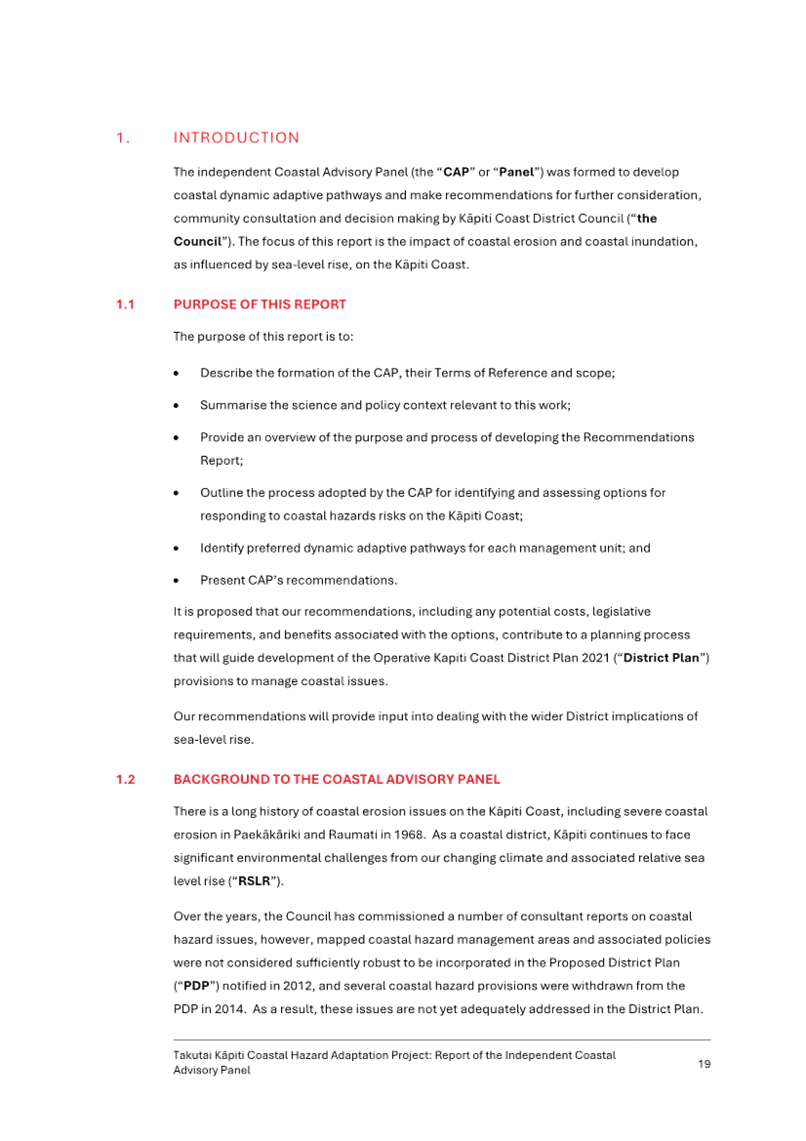
1 This
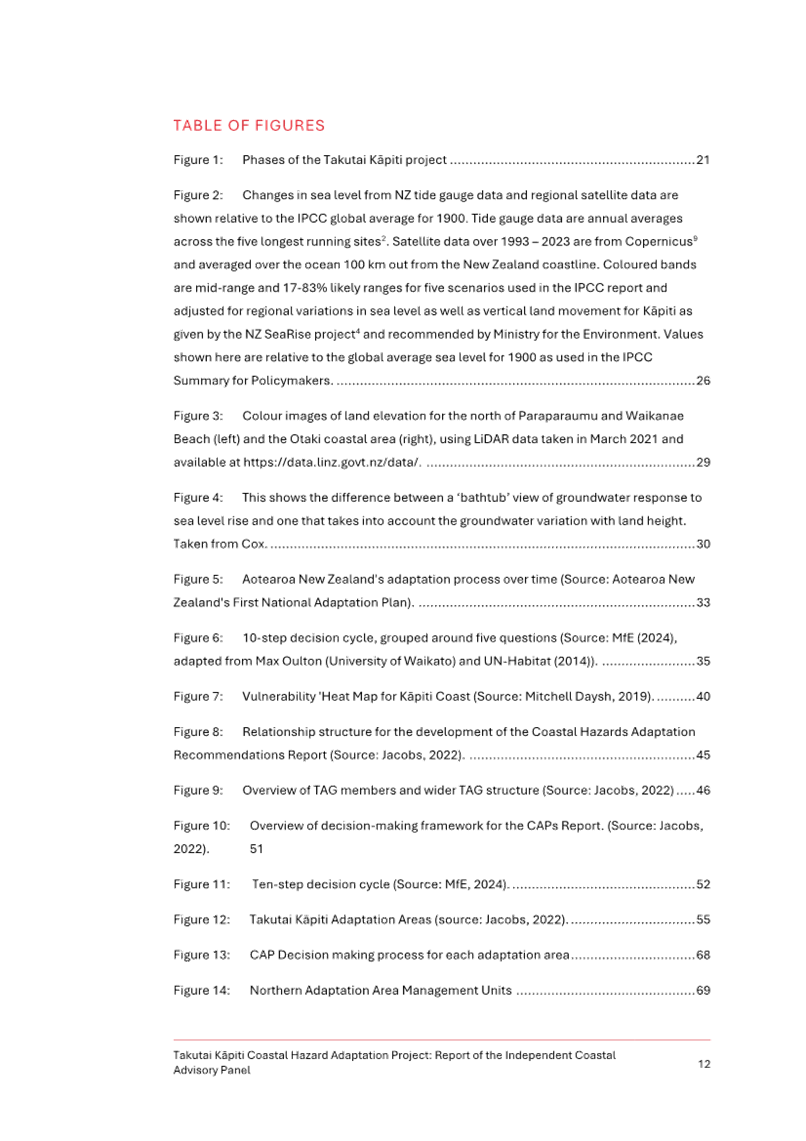
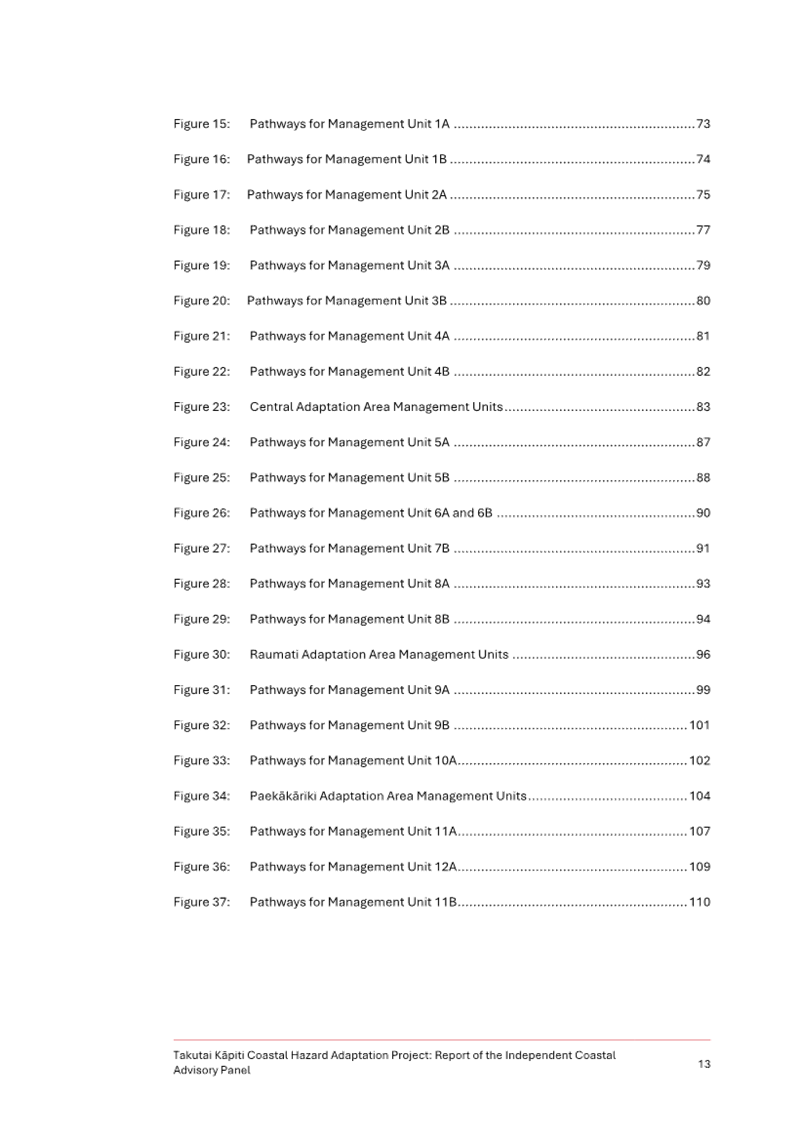
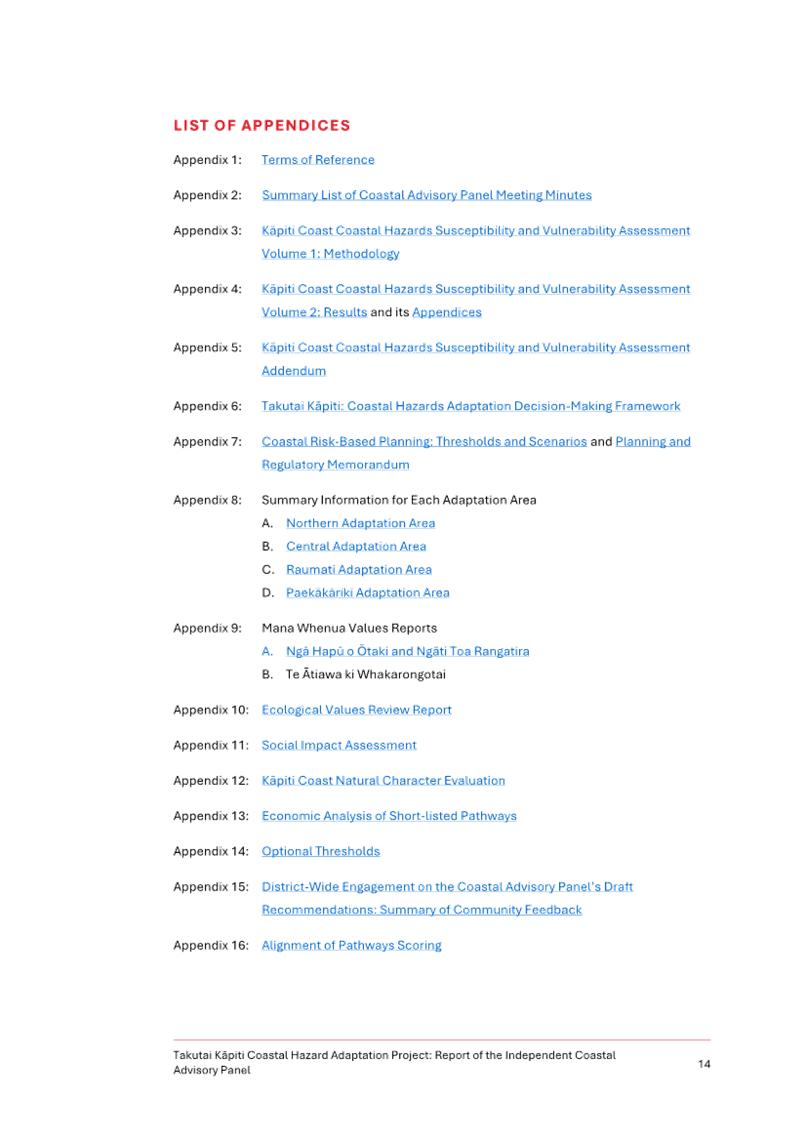
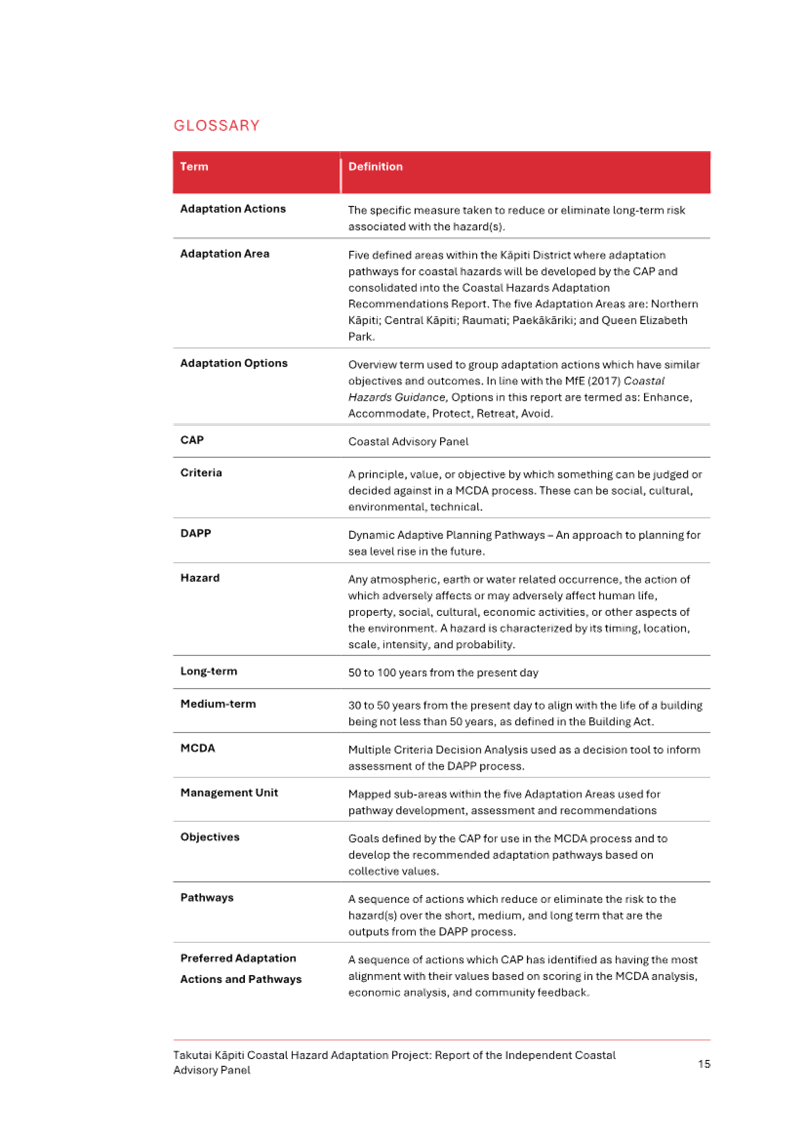
report:
1.1 Accompanies
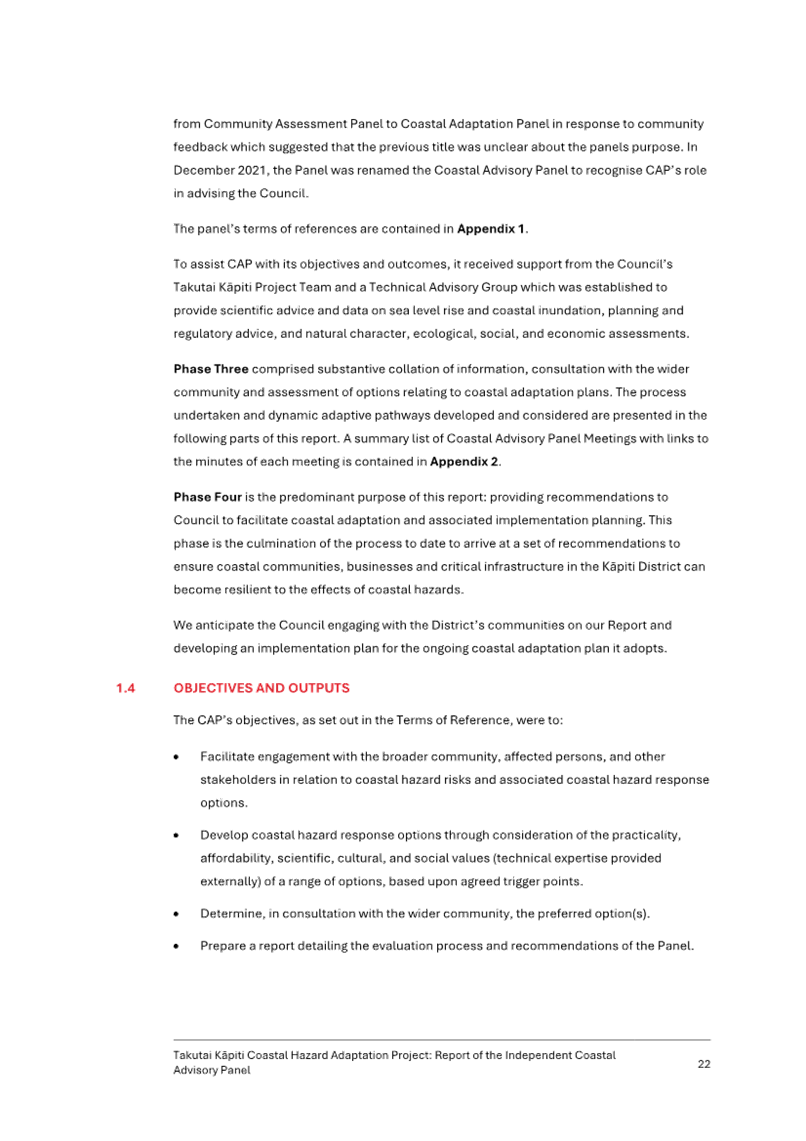
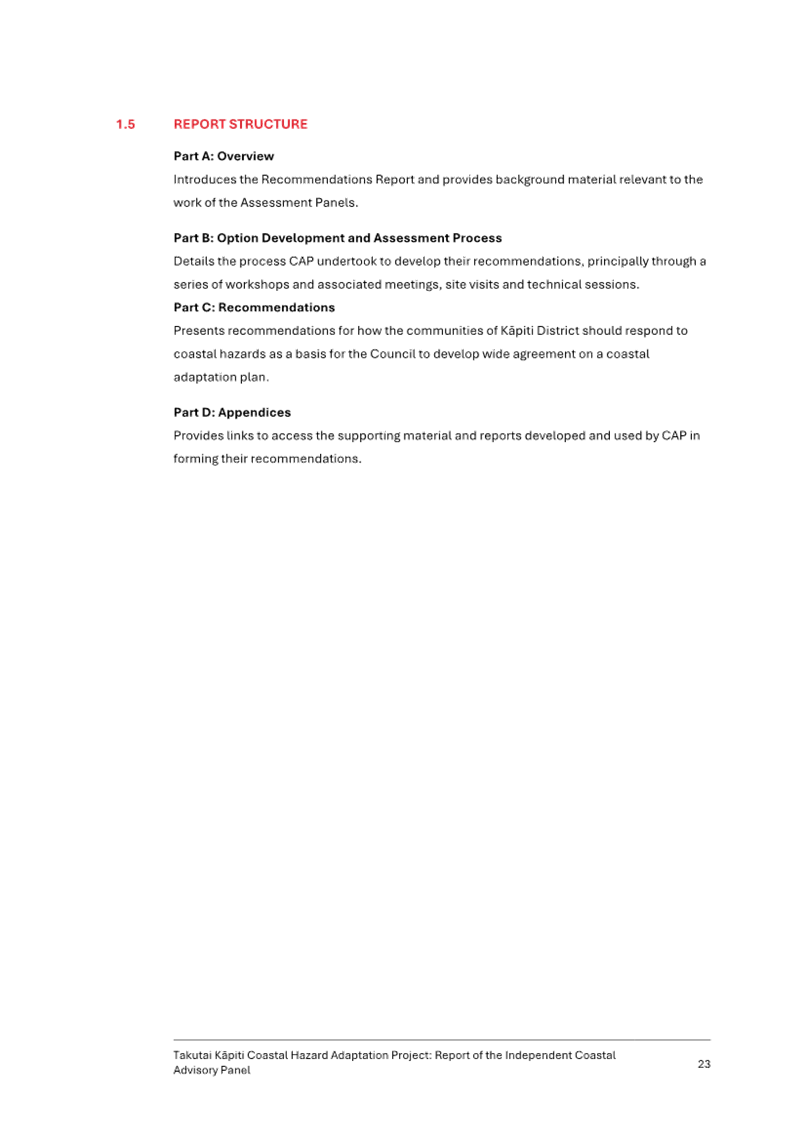
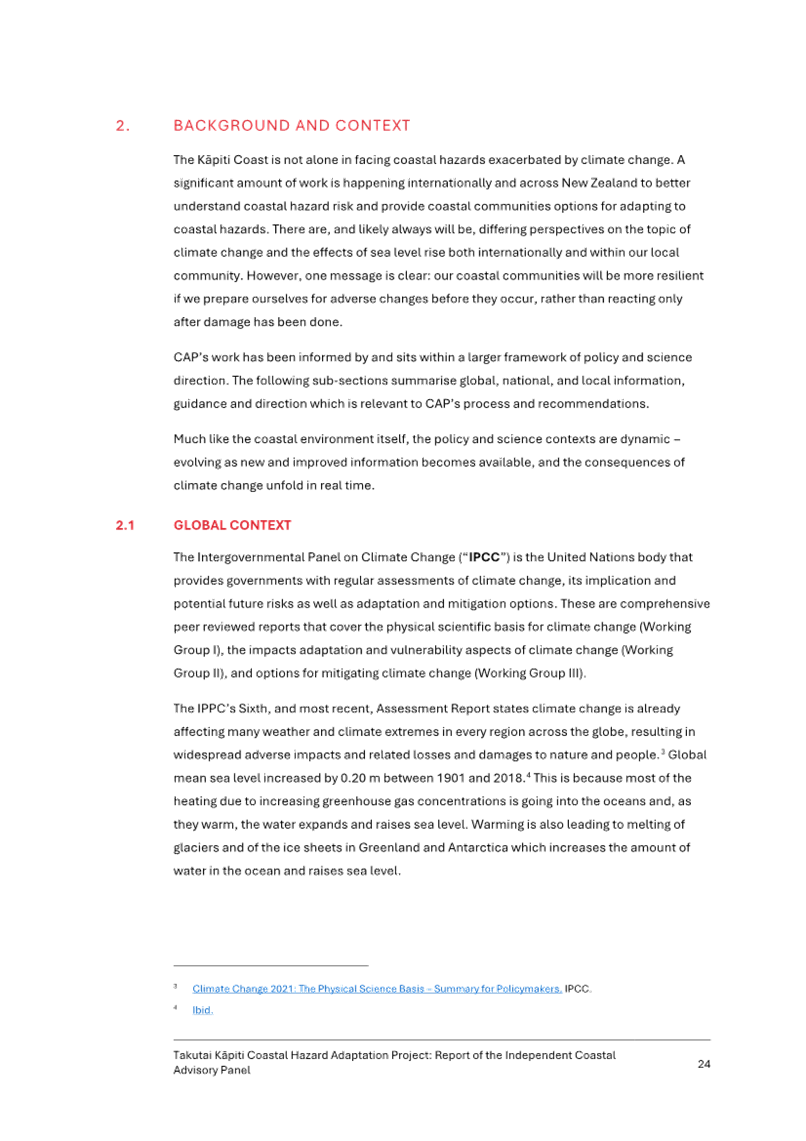
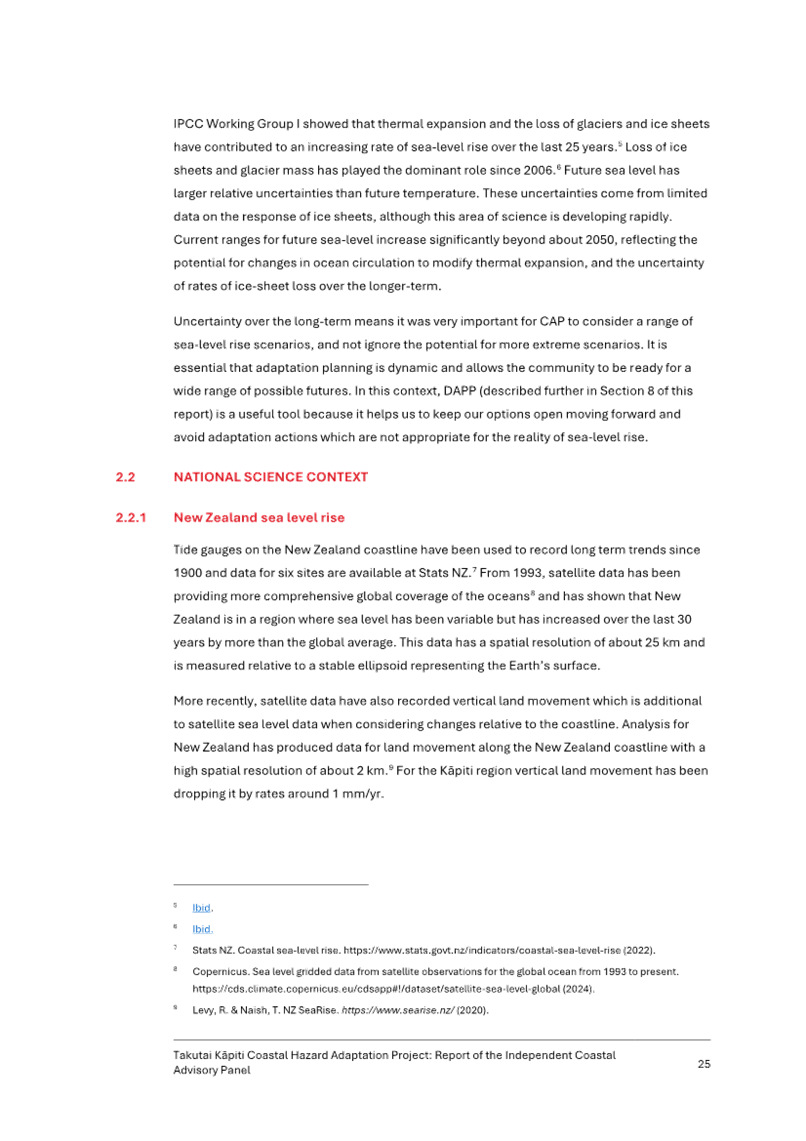
the Coastal Advisory Panel’s (“the Panel’s”)
Recommendation Report to Council (“the Report”), marking the
completion of the Takutai Kāpiti project (“the Project”), and
dissolution of the Panel at the end of June 2024.
1.2 Seeks
initial Council decisions to receive the Panel’s Report; and confirm
official completion of the Project.
He
whakarāpopoto | EXecutive summary
2 Following
the completion of the agreed programme of work, which included a structured
“dynamic adaptive planning pathway” process involving consideration
of technical advice and engagement with coastal communities throughout the Kāpiti
district, the Panel has completed its Report. The receipt of this Report by
Council marks the conclusion of the Project.
3 The
Report’s recommendations cover:
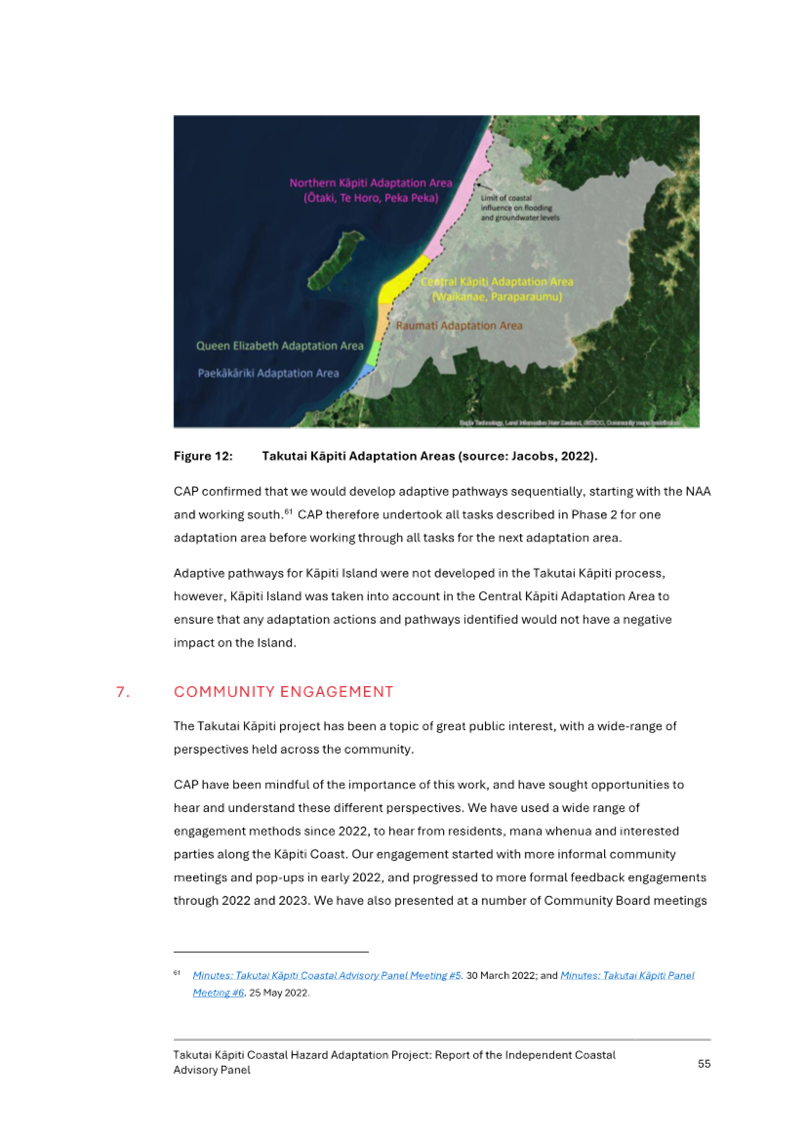
3.1 Multiple
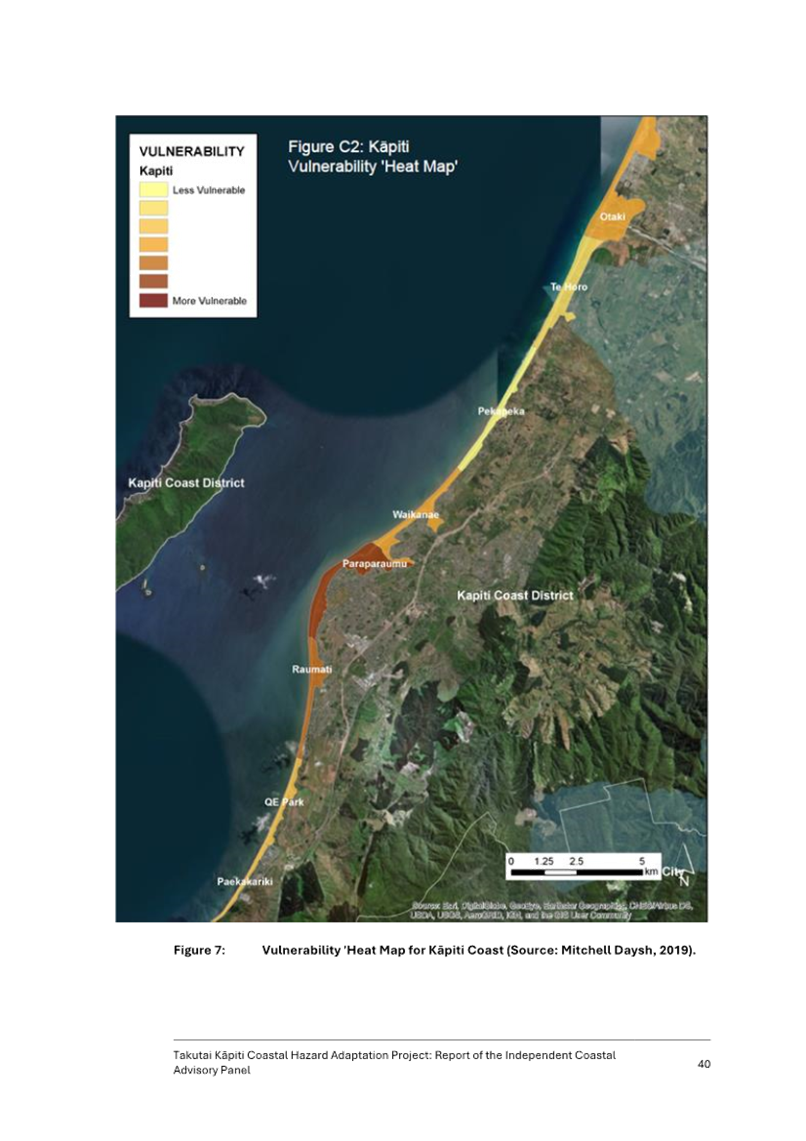
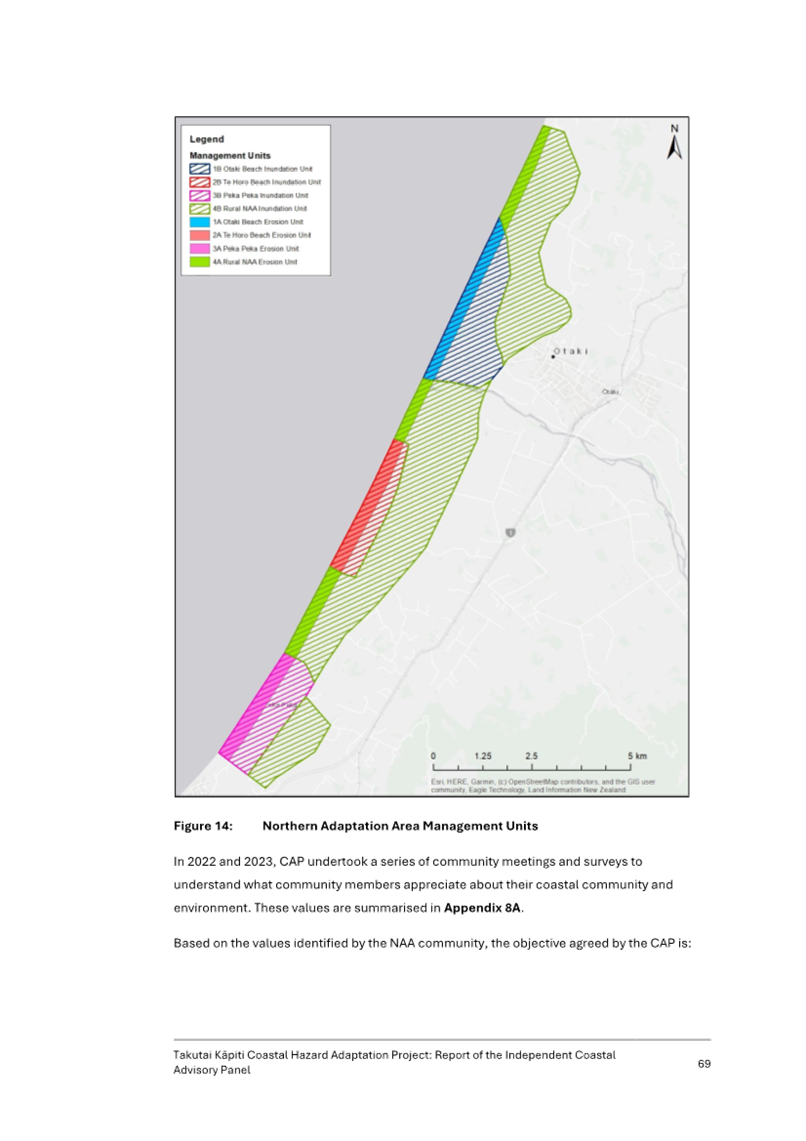
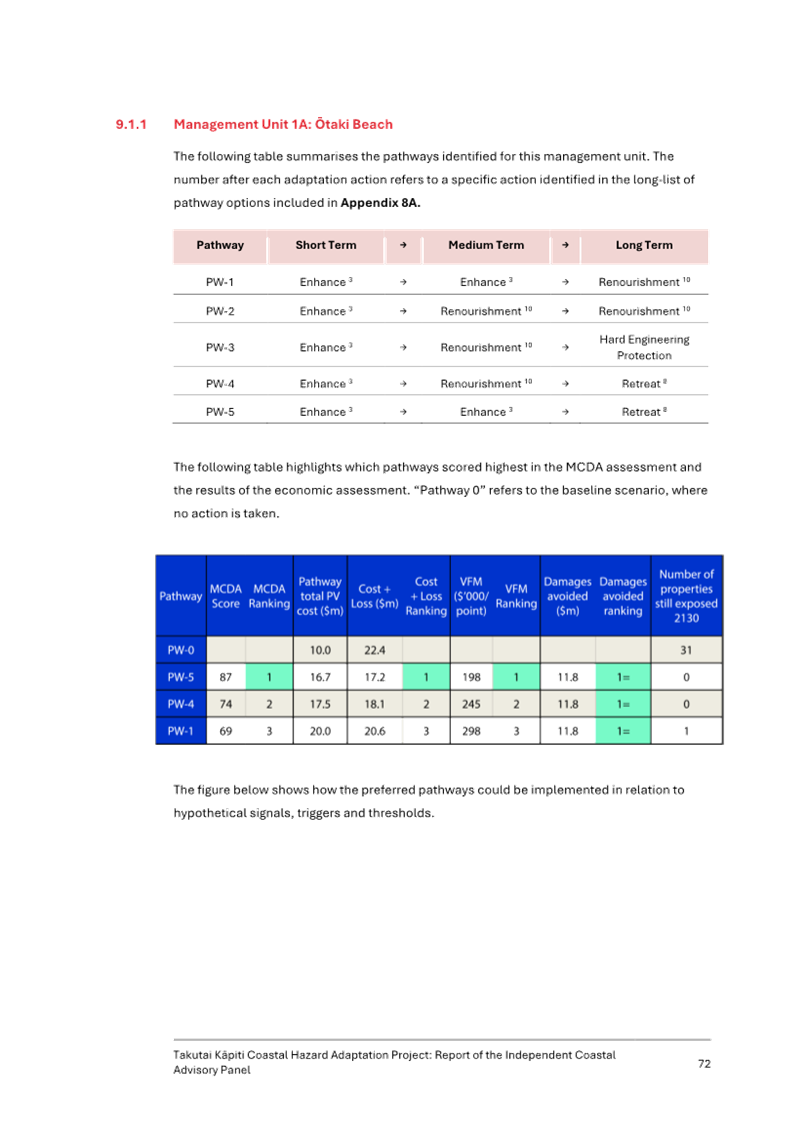
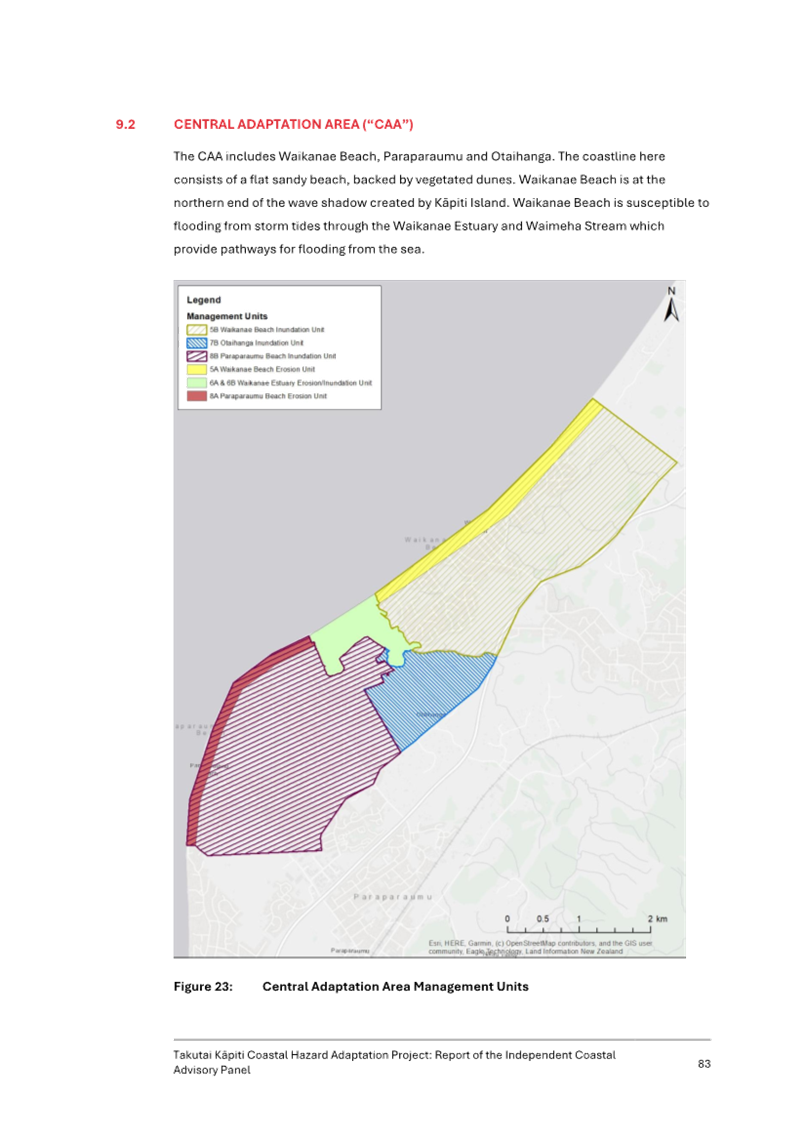
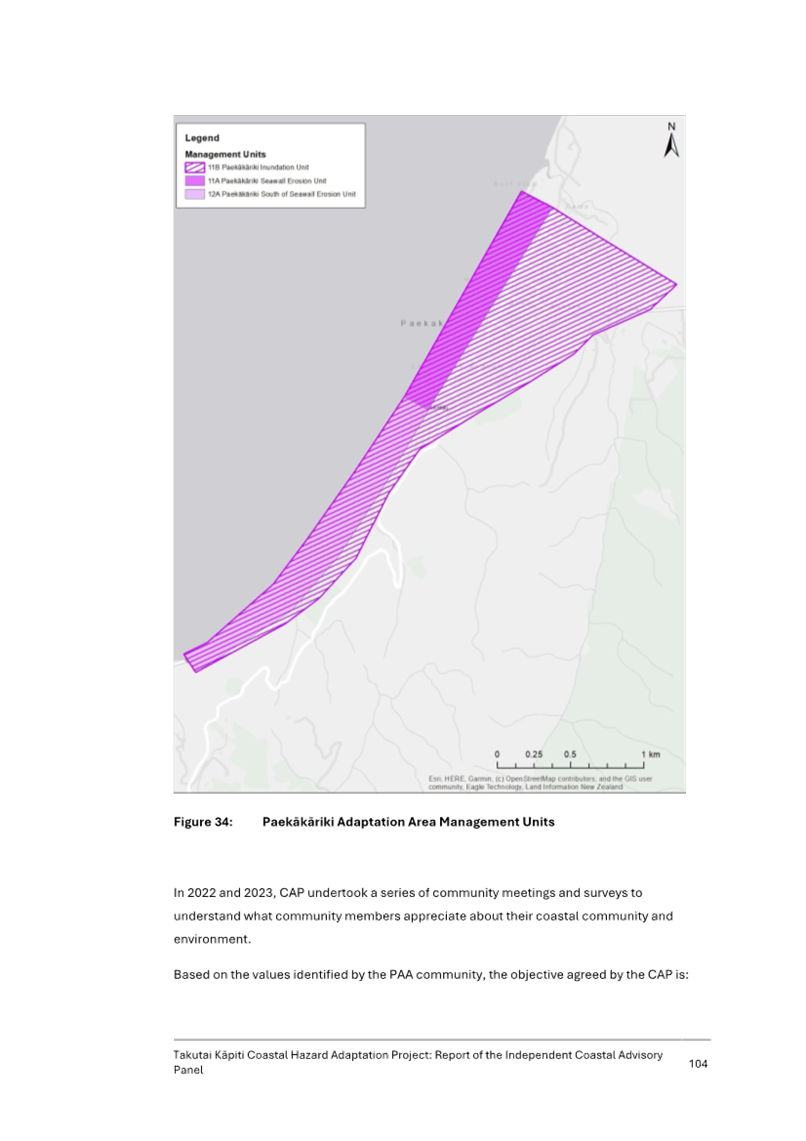
adaptation pathway options for 20 different areas (“management
units”) along the Kāpiti Coast.
3.2 Ten
further recommendations covering a range of matters including (but not limited
to) the need for further community engagement and economic analysis of
short-term adaptation options, monitoring, and an approach to district
planning.
4 The
Report also outlines community concerns raised through the Panel’s
process relating to:
4.1 Insurability
of private properties.
4.2 The
uncertainty of evidence, and impact, related to national requirements to take a
“100-year perspective” for planning.
5 In
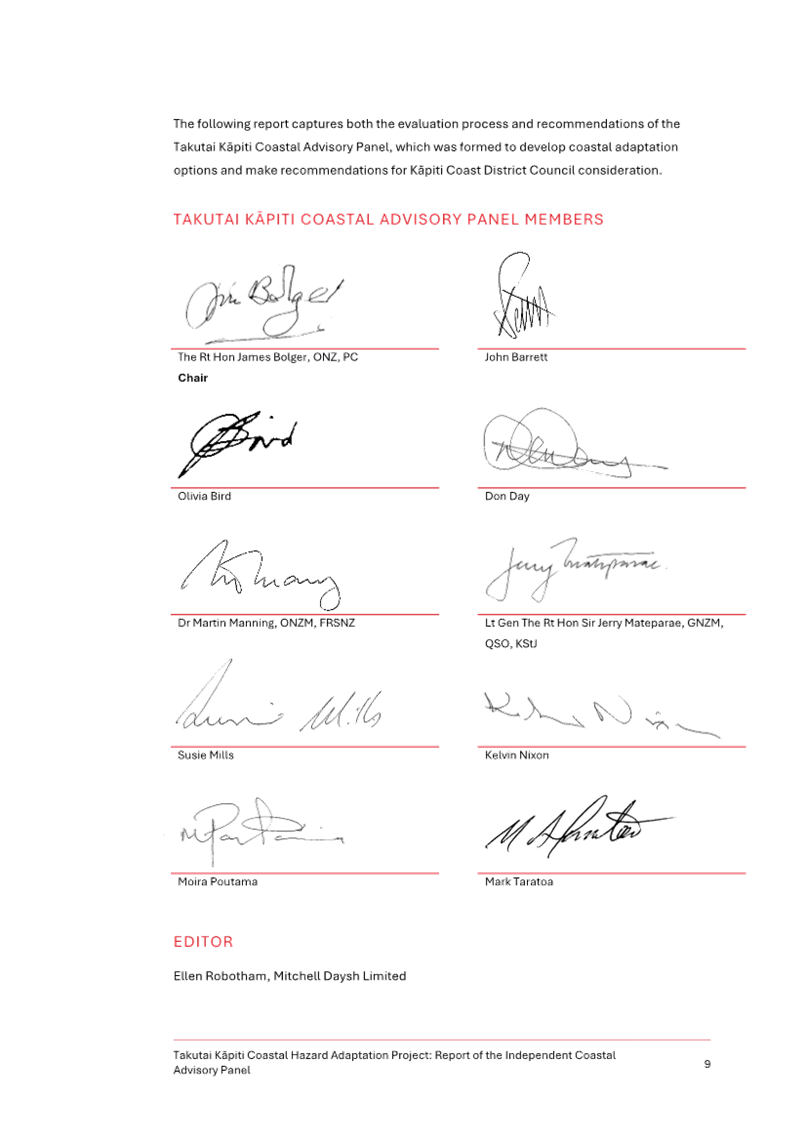
addition to receiving the Panel’s Report, thanking Panel members for
their work, and officially completing the Project, Officers also recommended
that Council seek feedback from the Insurance Council of New Zealand and
Department of Conservation (respectively) regarding these community concerns.
Te tuku haepapa
| Delegation
6 Council
has authority to consider this matter.
Taunakitanga | RECOMMENDATIONS
That Council:
A. Receives
the Coastal Advisory Panel’s Recommendation Report, provided in Appendix
1
B. Acknowledges
and thanks the Chair and Members of the Coastal Advisory Panel for their
expertise, advice and steadfast work throughout the term of the Takutai
Kāpiti project.
C. Confirms
that with the tabling of the Recommendation Report and completion of its agreed
work programme, that the Coastal Advisory Panel’s role will now also end.
D. Seeks
feedback from:
D.1 The
Insurance Council of New Zealand regarding the Report’s findings.
D.2 The
Department of Conservation regarding Council’s obligations under the New
Zealand Coastal Policy Statement 2010 to “take a 100-year
perspective”.
Tūāpapa | Background
Commitments
and obligations underpinning Takutai Kāpiti
7 The
Project was initiated by Council:
7.1 In
recognition of Council’s obligations under the New Zealand Coastal Policy
Statement 2010 and Resource Management Act 1991, which requires councils to
manage risks from coastal hazards and the effects of climate change.
7.2 To
meet commitments arising from past litigation on the coastal hazard provisions
of the Proposed District Plan that was publicly notified in 2012, following the
withdrawal of its coastal hazard provisions in 2014 and 2017. Those commitments
included (among other things) that Council must:
7.2.1 Engage
with the community early in the process of addressing coastal hazards;
7.2.2 Evaluate
an appropriate range of options for coastal hazards.
8 As
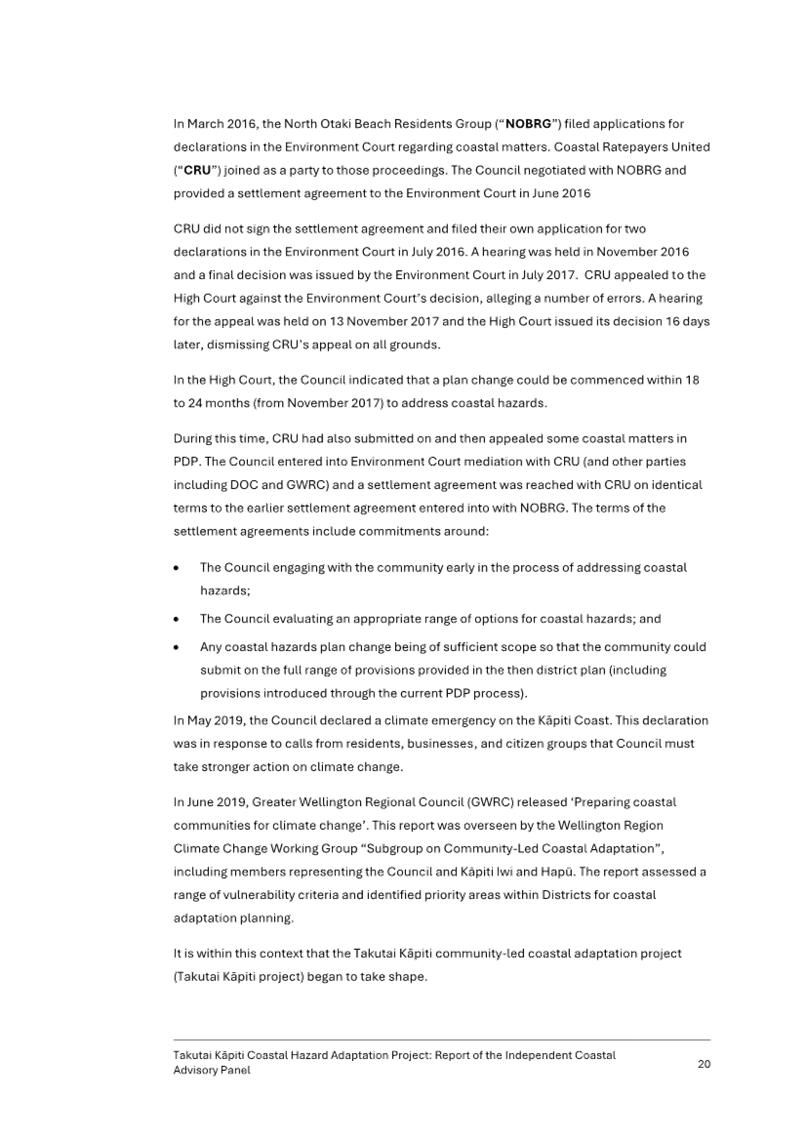
a first step in responding to those obligations, in 2019 and 2020 a Co-Design
Working Group (“Working Group”) developed recommendations for
designing a process to deliver coastal adaptation options for Council’s
consideration. The Working Group included iwi, the two past litigants[1] on coastal hazard
issues, other local stakeholders and staff representatives of Council and other
key statutory authorities.
9 The
Working Group’s recommendations covered Panel design, scope, project
governance, and the appointment process for Panel members. In December 2020
Council approved the Working Group’s recommendations on those matters,
and it also made decisions regarding the Panel’s composition and fees
payable.
The Panel’s approach and Council support
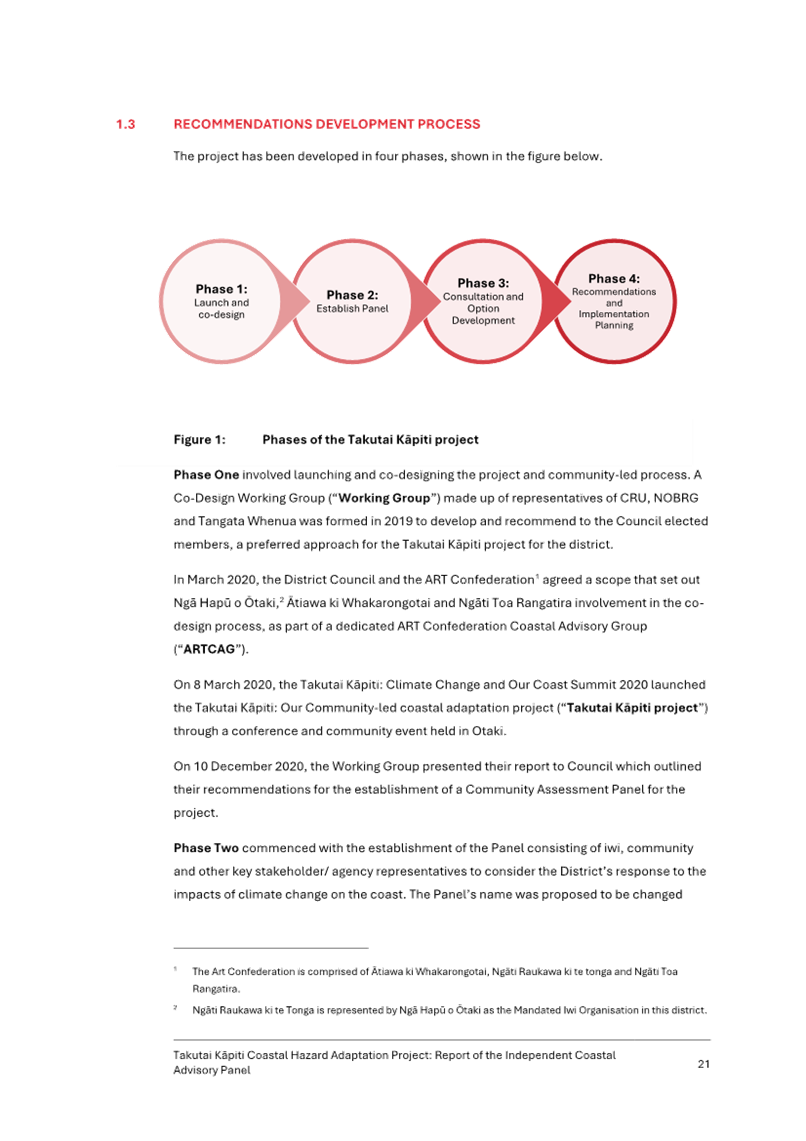
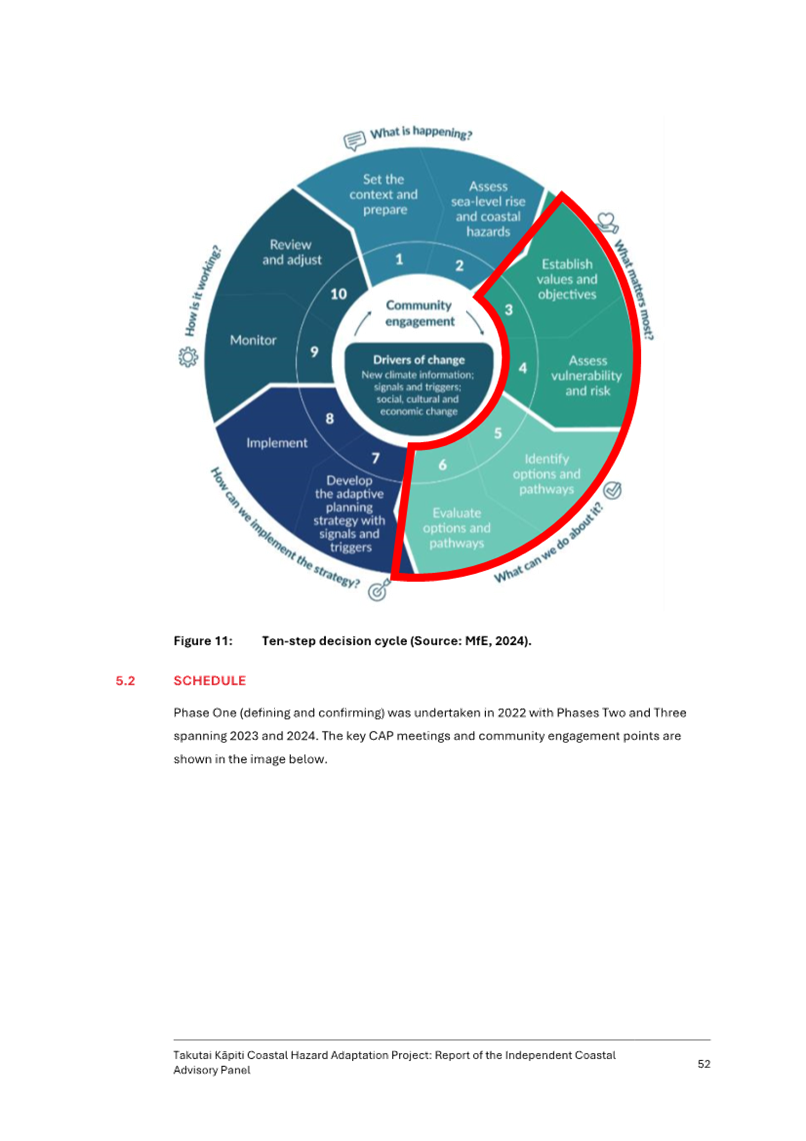
10 Following
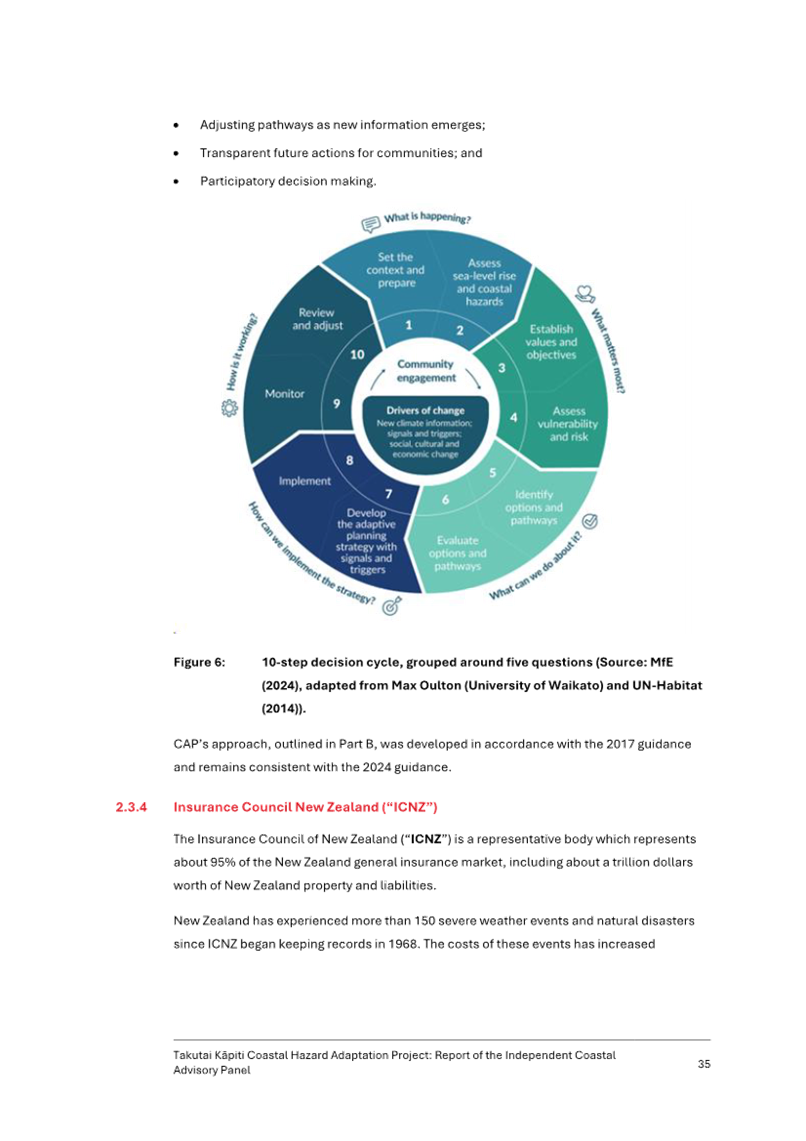
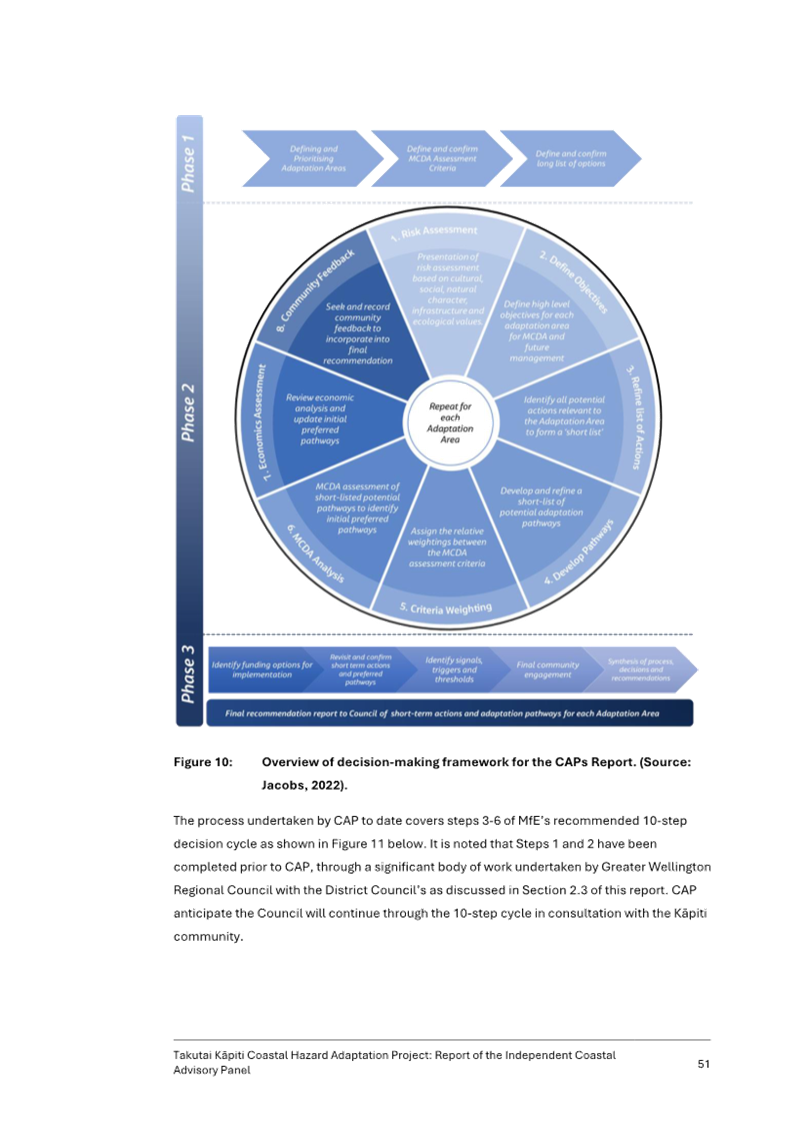
the Panel’s appointment, it followed a structured process to prepare its
recommendations which took into account national guidance from the Ministry for
the Environment (“MfE”). Work undertaken by the Panel,
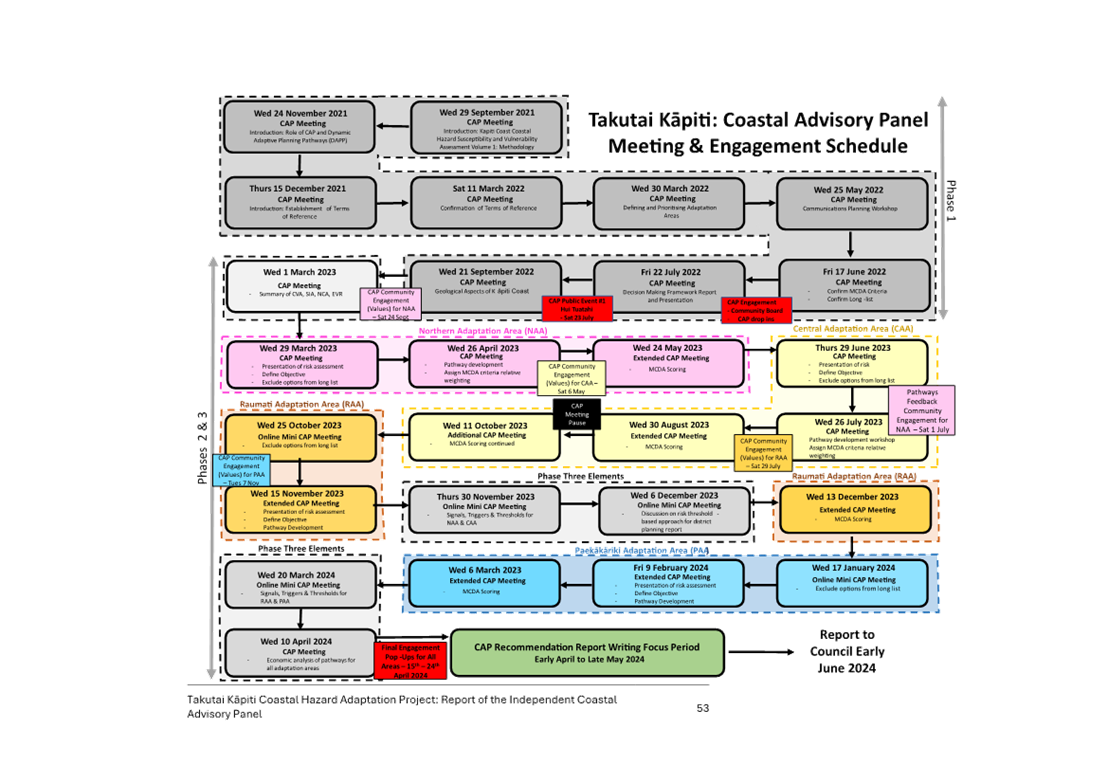
supported by the Council, included (but was not limited to):
10.1 over
20 Panel meetings and workshops
10.2 consideration
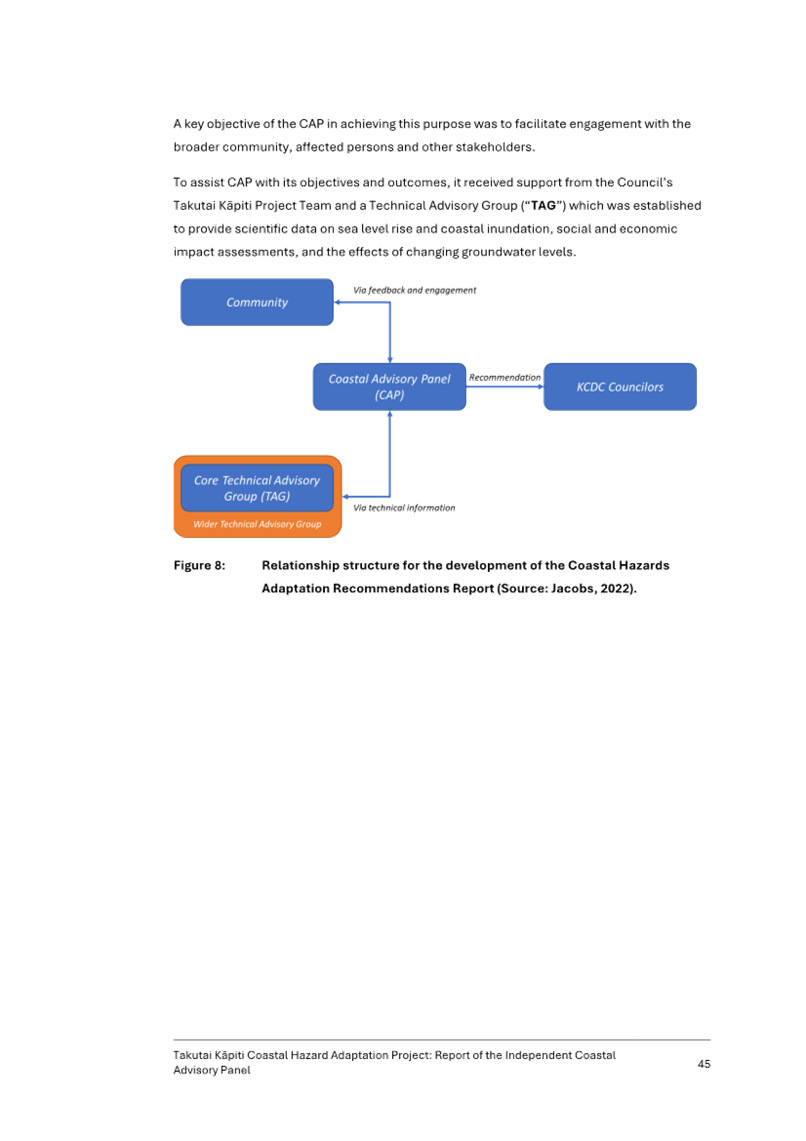
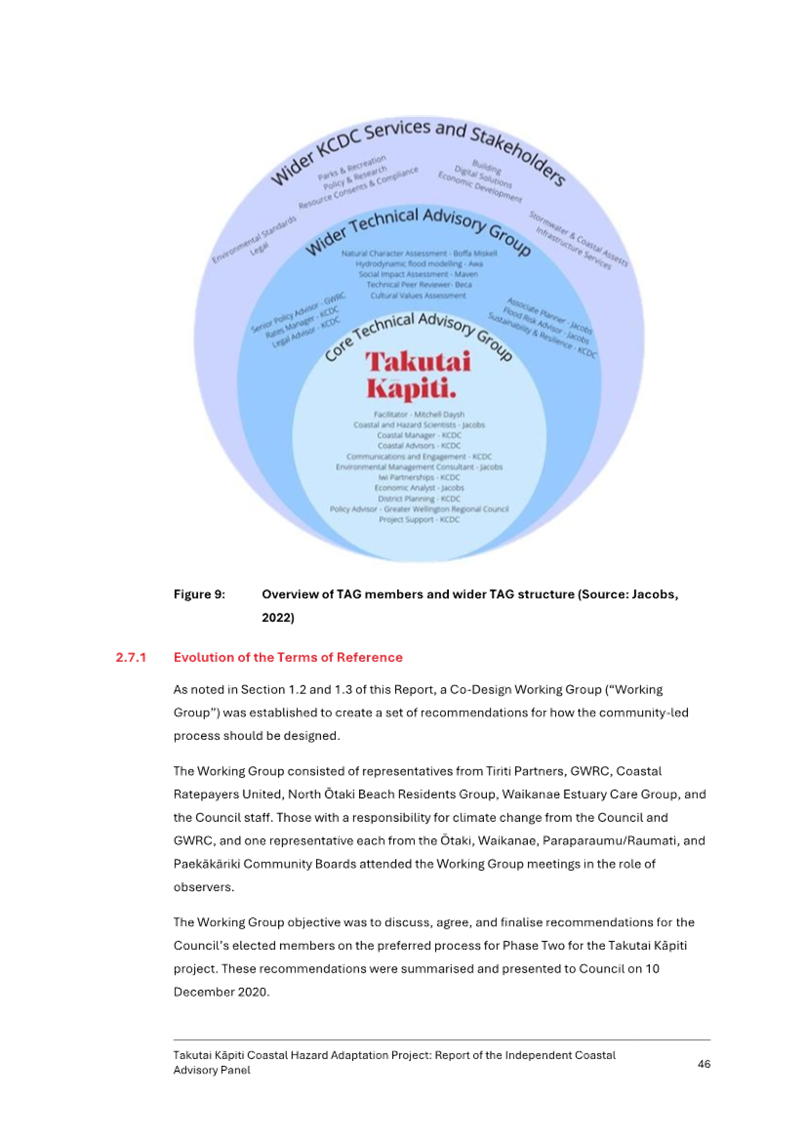
of advice from a Technical Advisory Group (“TAG”)
10.3 engaging
with the community to raise awareness of the process and to seek
feedback.
11 Panel
meetings were regularly attended by Community Board members and Councillors in
an “observer” role. While Panel meetings were not open to the
public, the meeting agendas, minutes and supporting technical information have
been publicly available from the Council’s website throughout the
Panel’s process.
12 Advice
from the TAG covered coastal science, cultural, ecological, human domain
(social science), natural character, regulatory and financial/economic matters.
Many of the TAG’s reports have already been subject to independent expert
peer review (including coastal science), while other reports have been released
as “draft” and will be subject to independent expert peer review
before any future use by Council for district planning, Long Term Plan or
Annual Plan purposes.
13 In
addition to advice from the TAG, the Panel also considered information from
other sources, including from the Insurance Council of New Zealand.
14 Feedback
from the community was sought at two main stages of the Panel’s process.
14.1 Community
workshops in Ōtaki, Otaihanga, Raumati and Paekākāriki were held
to understand the values held by the community for their coast.
14.2 “Pop-up”
style engagement hubs in Ōtaki, Paraparaumu and Paekākāriki
provided an opportunity for anyone to provide their feedback on adaptation
pathway options, a potential approach to district planning, and optional
thresholds.
15 Across
these engagements, almost 4,000 pieces of community feedback were received and
considered by the Panel[2]
when preparing their recommendations.
16 Further
to this, the Panel provided updates to the community on their progress at
Community Board meetings on all areas of the District.
He
kōrerorero | Discussion
17 The
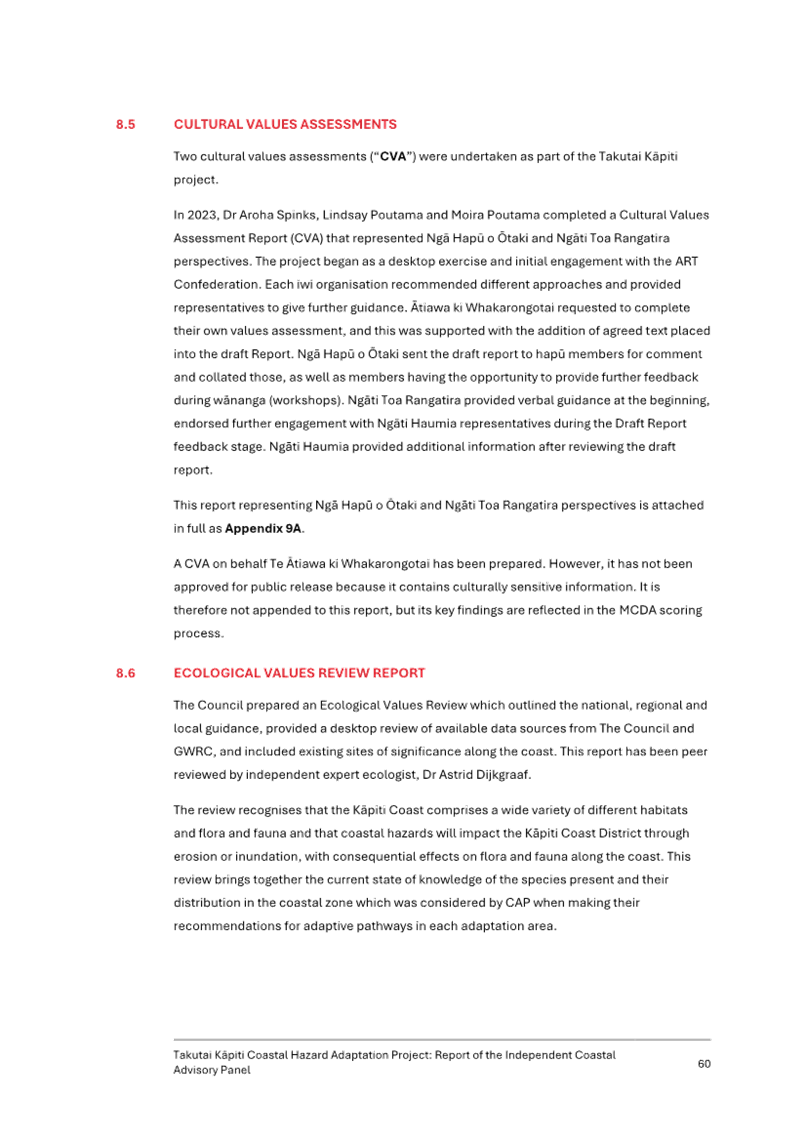
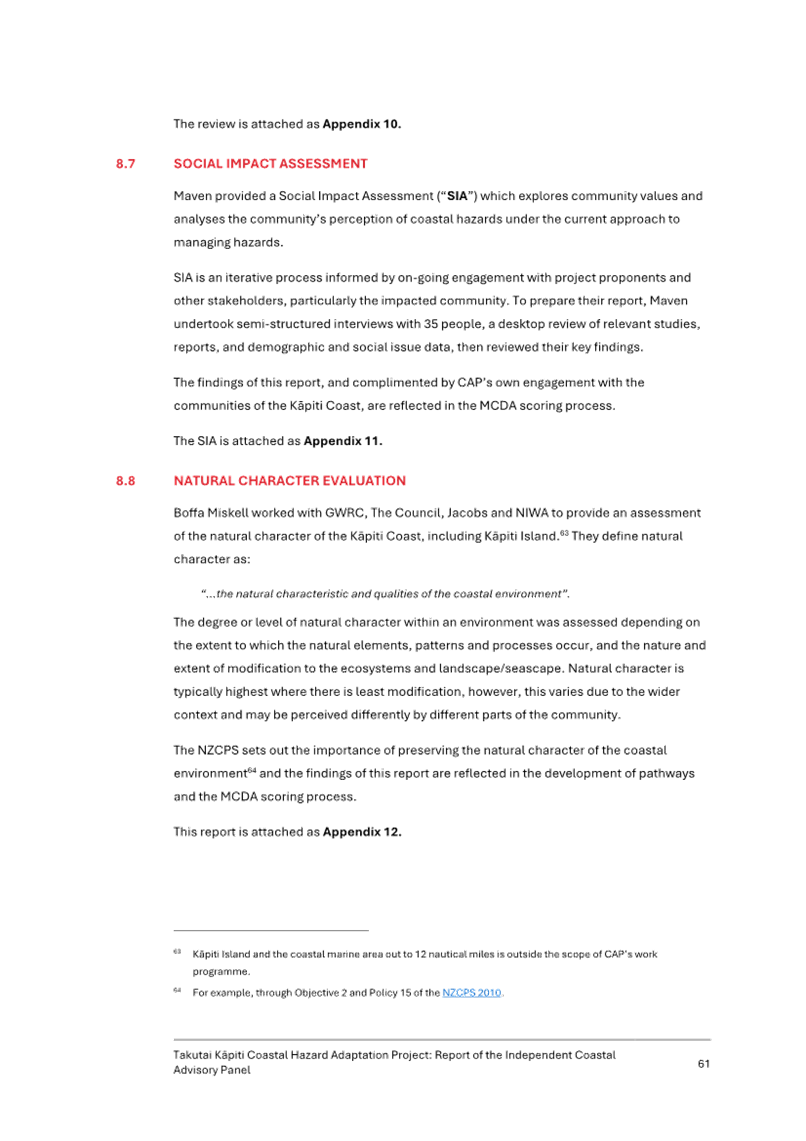
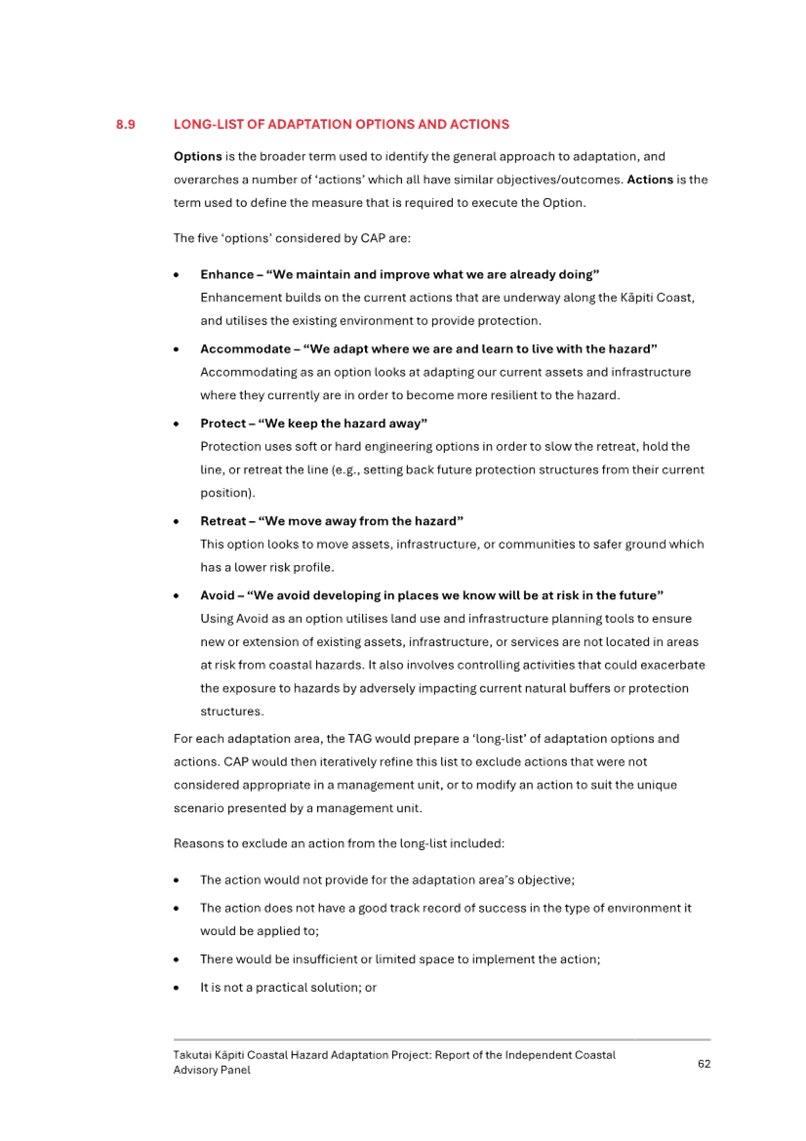
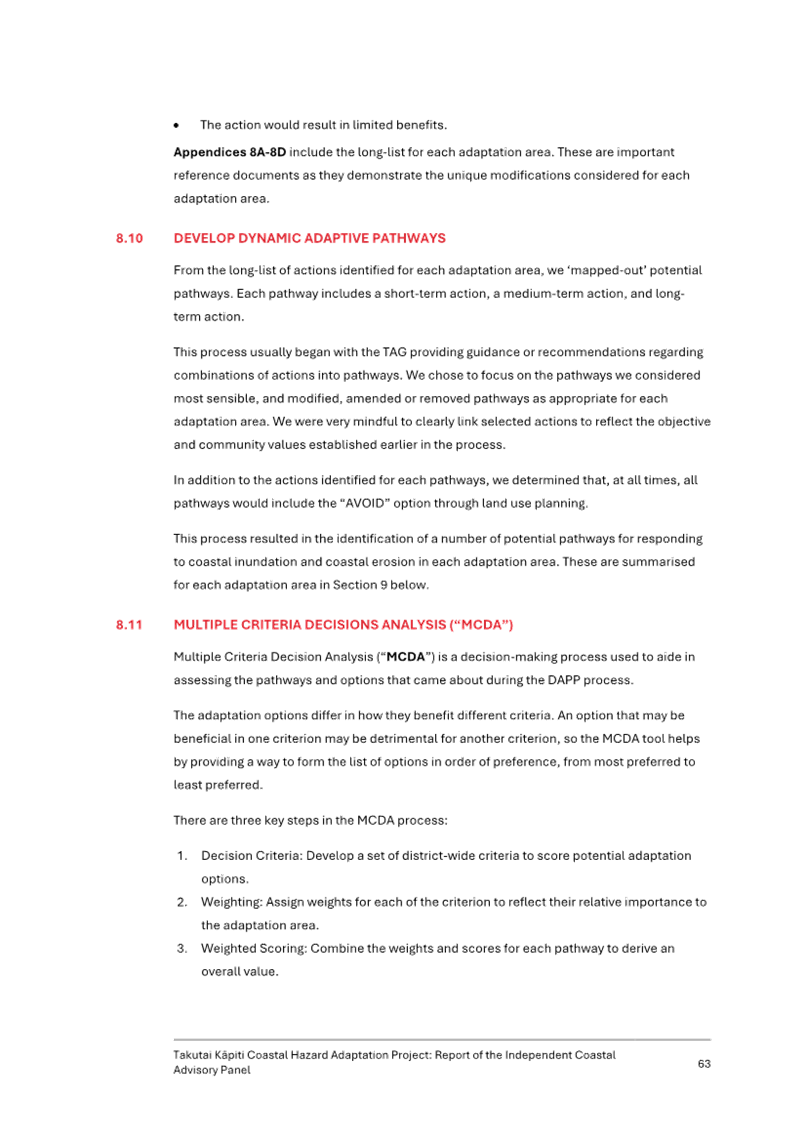
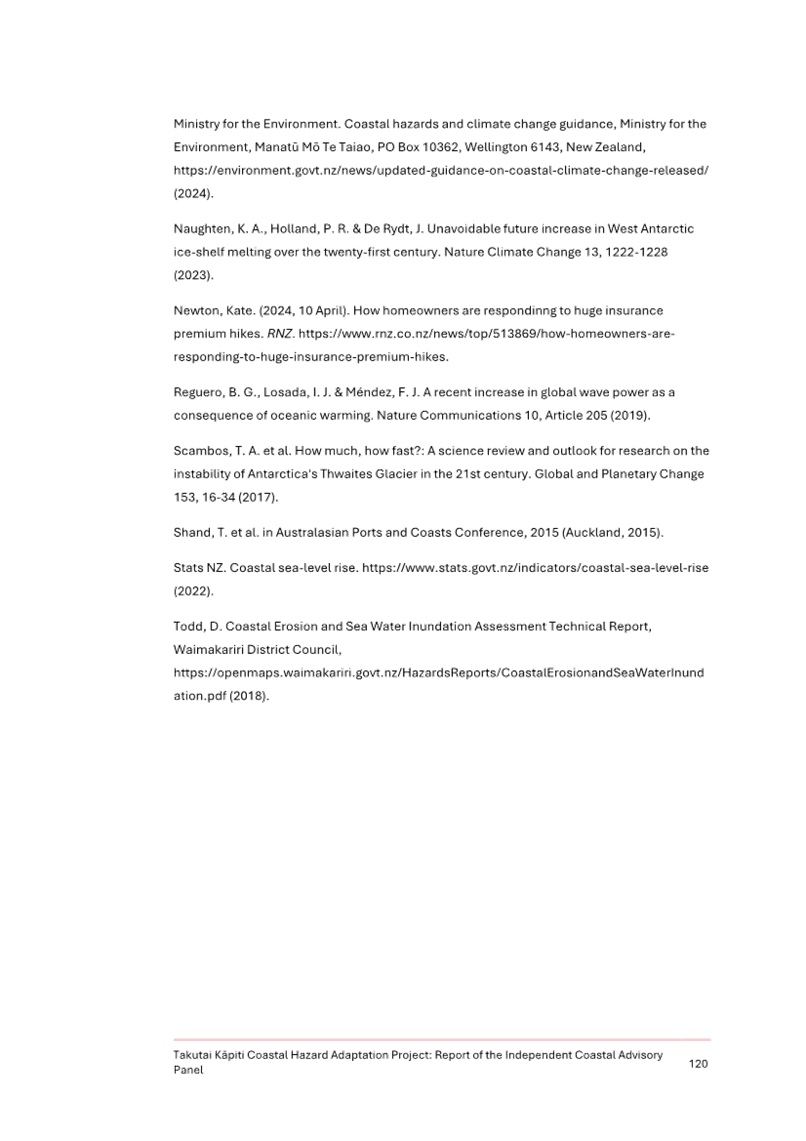
Panel’s Report is attached as Attachment 1 to this report. It is a
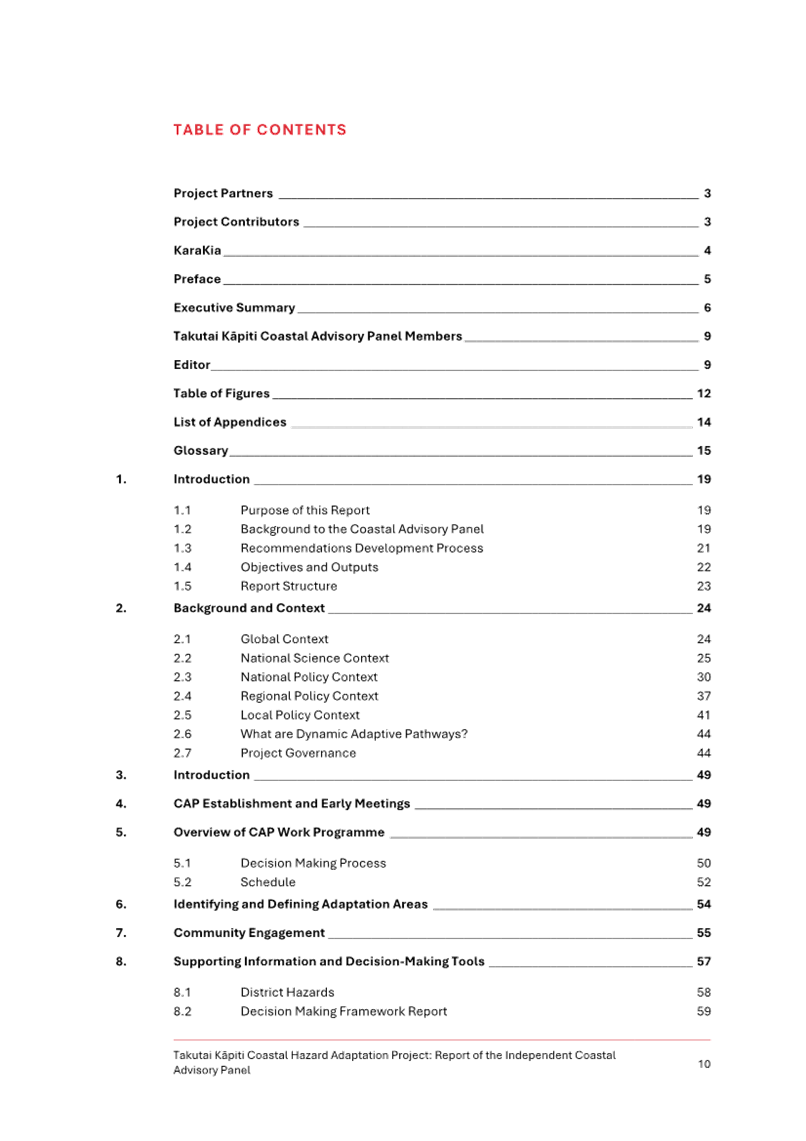
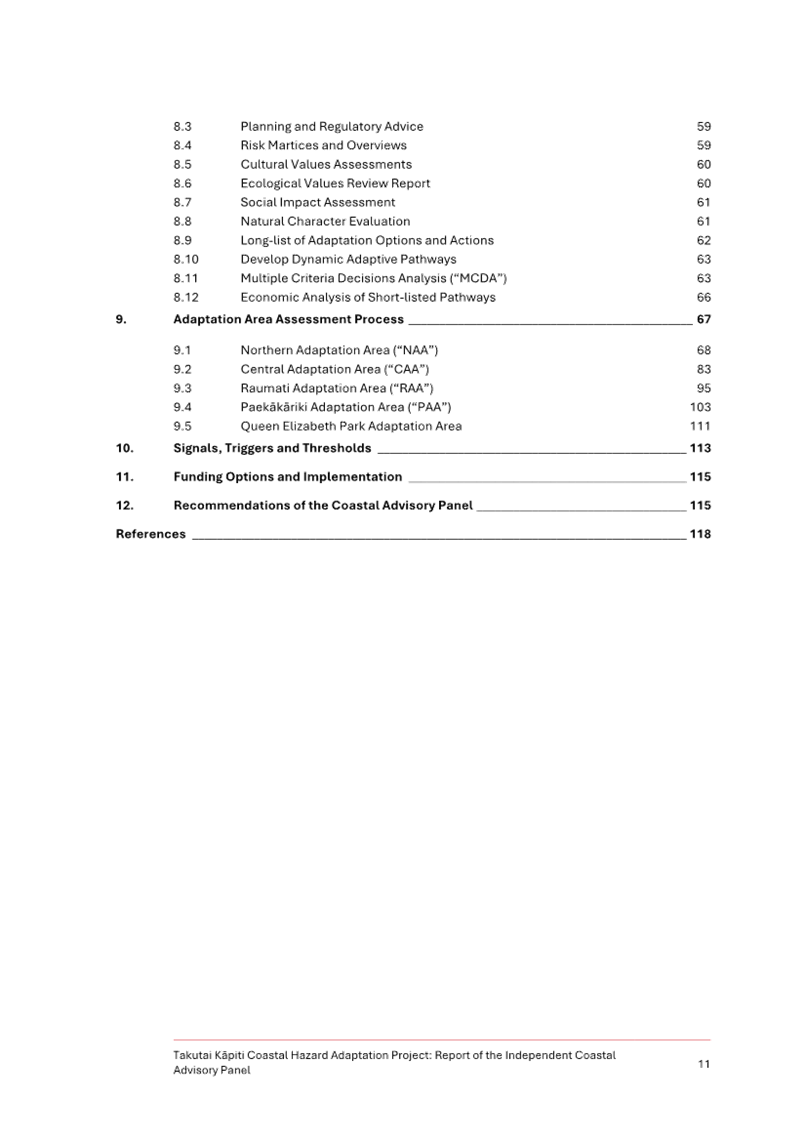
substantial report comprised of 120 pages plus appendices (listed on p.14).
While timeframes have not allowed for analysis of the Report, some highlights
are noted below.
17.1 The
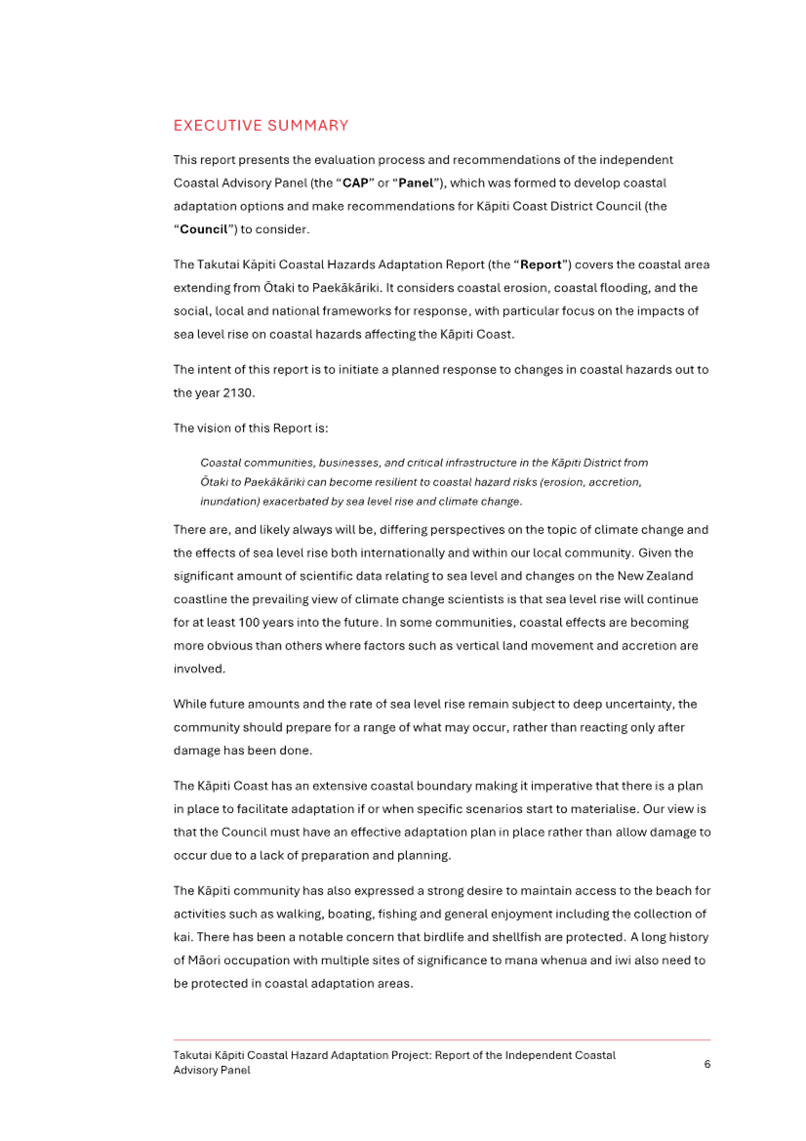
Panel describe the “vision” of its Report on p.6 as:
Coastal communities,
businesses, and critical infrastructure in the Kāpiti
District from Ōtaki to Paekākāriki
can become resilient to coastal hazard risks (erosion, accretion, inundation)
exacerbated by sea level rise and climate change.
17.2 Councillors
may be interested to consider the potential utility of this
“Vision” in the context of the Vision Kāpiti project which
separately seeks community views on priorities for the future.
17.3 The
following statements in the Executive Summary (pp.6-8) give a sense of the
approach that the Panel is recommending to Council following its consideration
of concerns it has heard from some community members. In respect of whether or
not Council should act in the face of uncertainty, the Report states (pp. 6 and
7):
While future amounts and the
rate of sea level rise remain subject to deep uncertainty, the community should
prepare for a range of what may occur, rather than reacting only after damage
has been done.
…
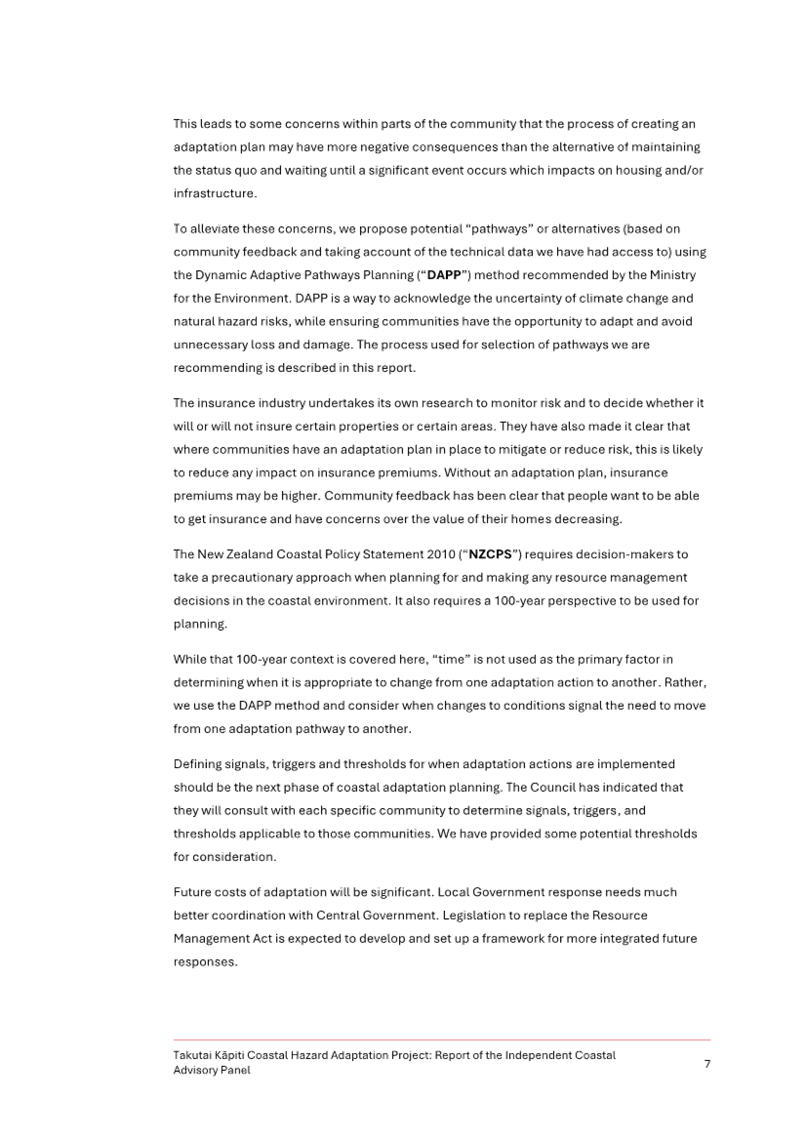
[There are] some concerns
within parts of the community that the process of creating an adaptation plan
may have more negative consequences than the alternative of maintaining the
status quo and waiting until a significant event occurs which impacts on housing
and/or infrastructure. To alleviate these concerns, we propose potential
“pathways” or alternatives (based on community feedback and taking
into account of the technical data we have had access to) using the Dynamic
Adaptive Pathways Planning (“DAPP”) method recommended by
the Ministry for the Environment. DAPP is a way to acknowledge the uncertainty
of climate change and natural hazard risks, while ensuring communities have the
opportunity to adapt and avoid unnecessary loss and damage.
17.4 The
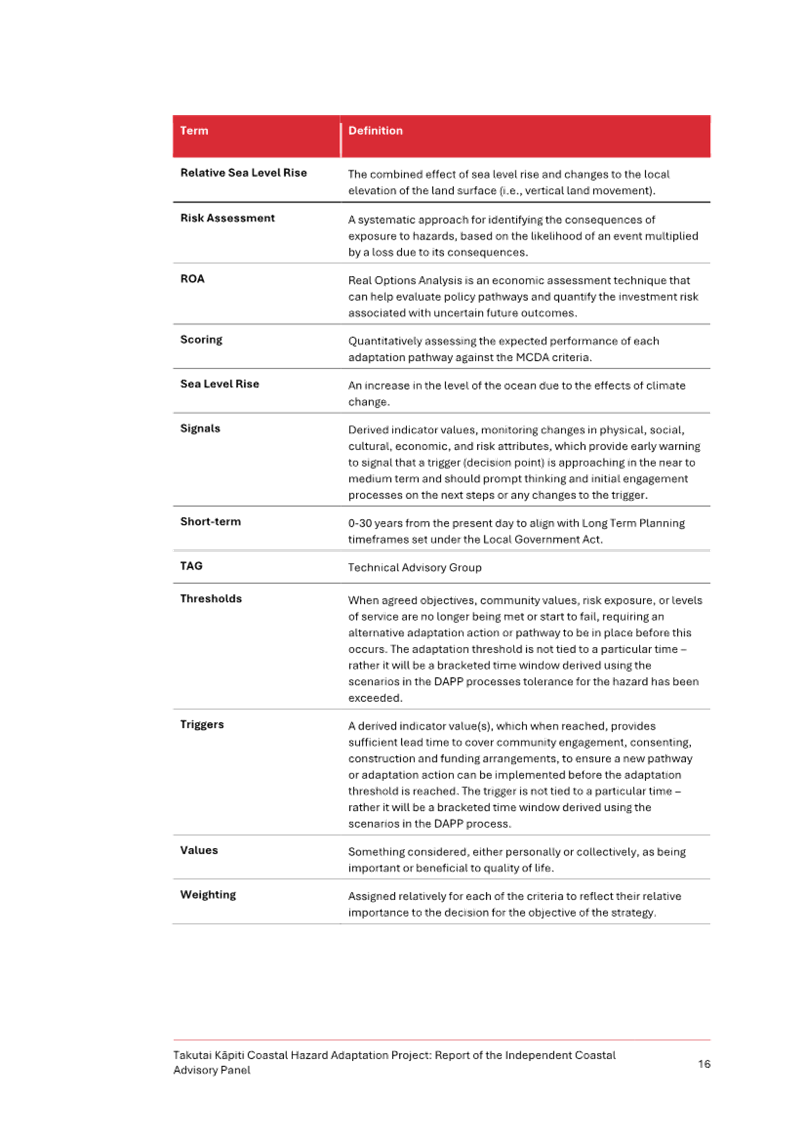
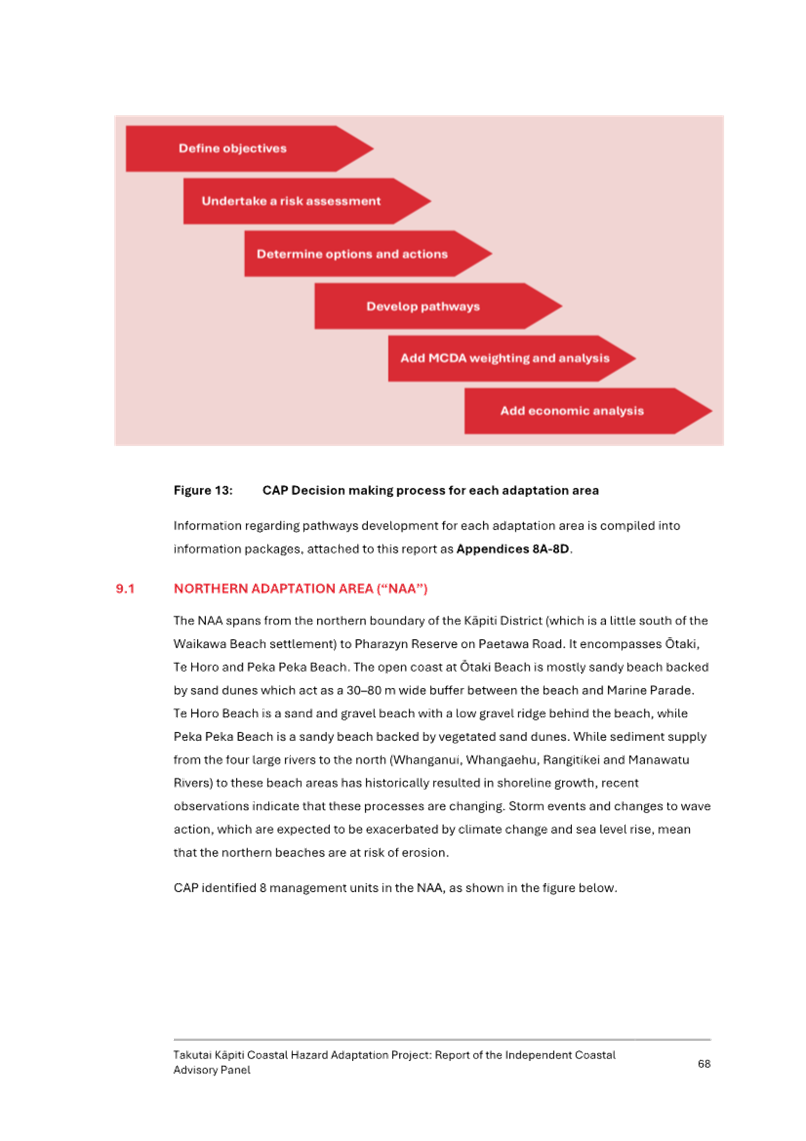
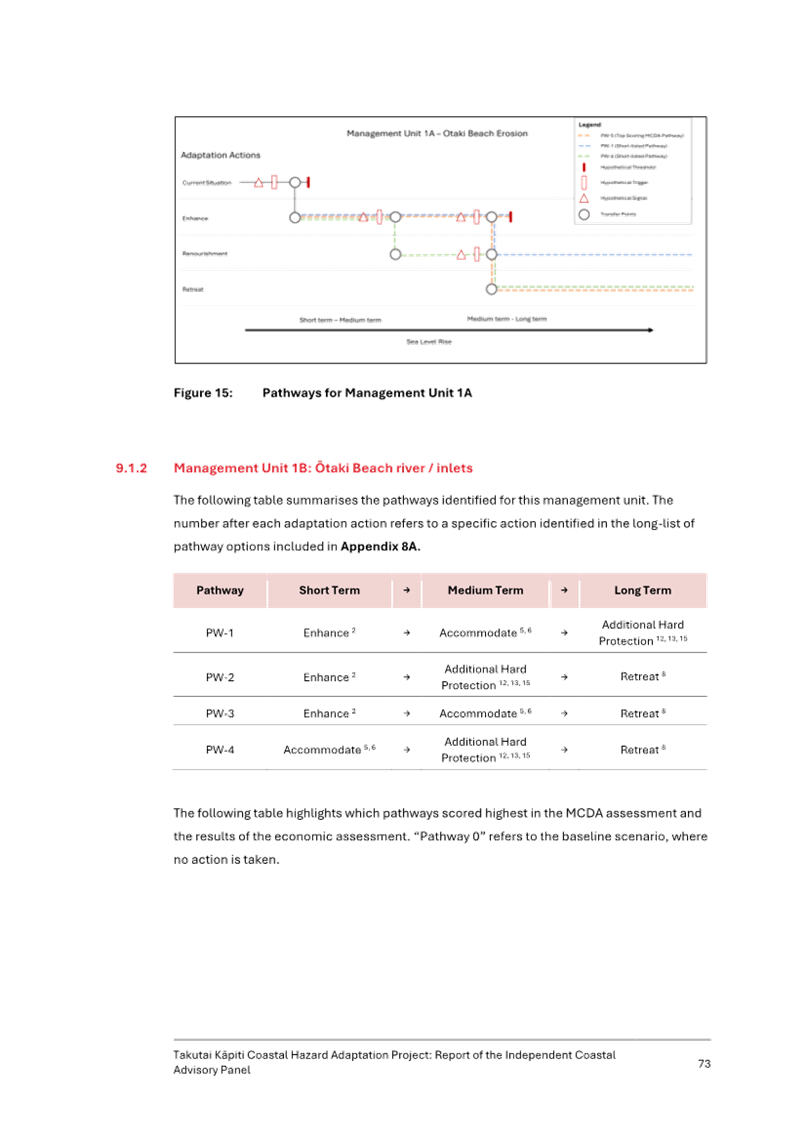
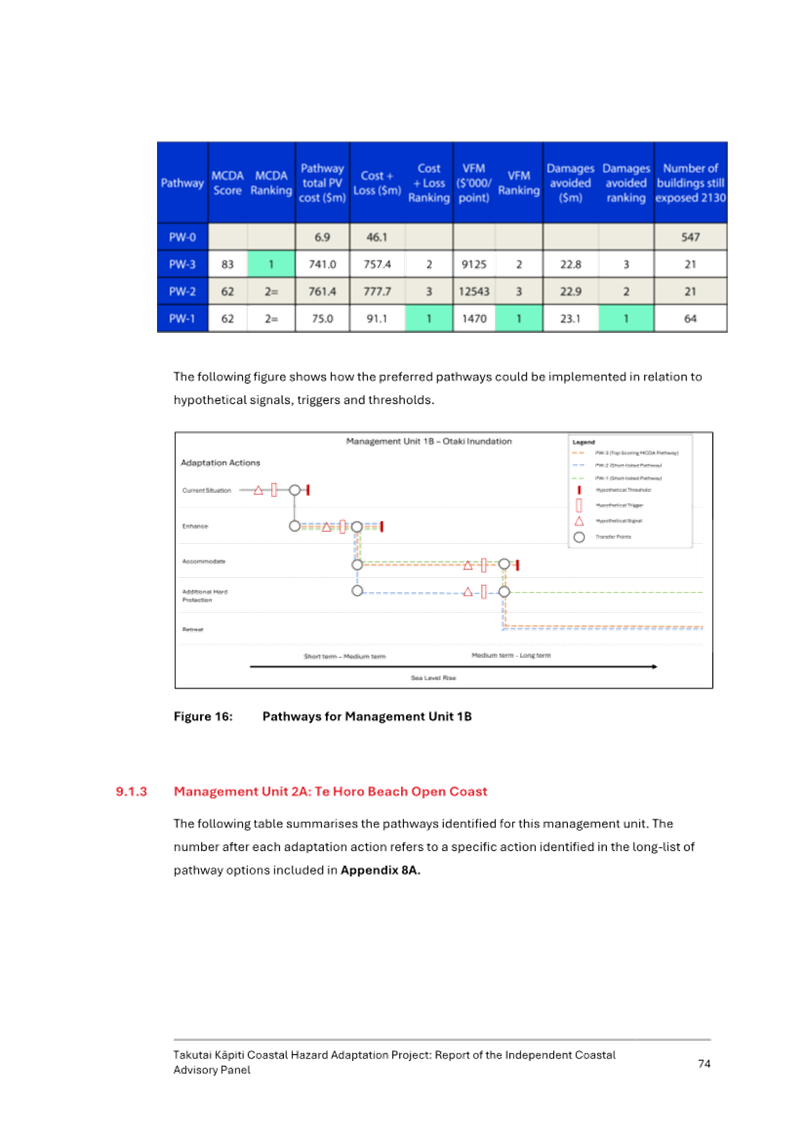
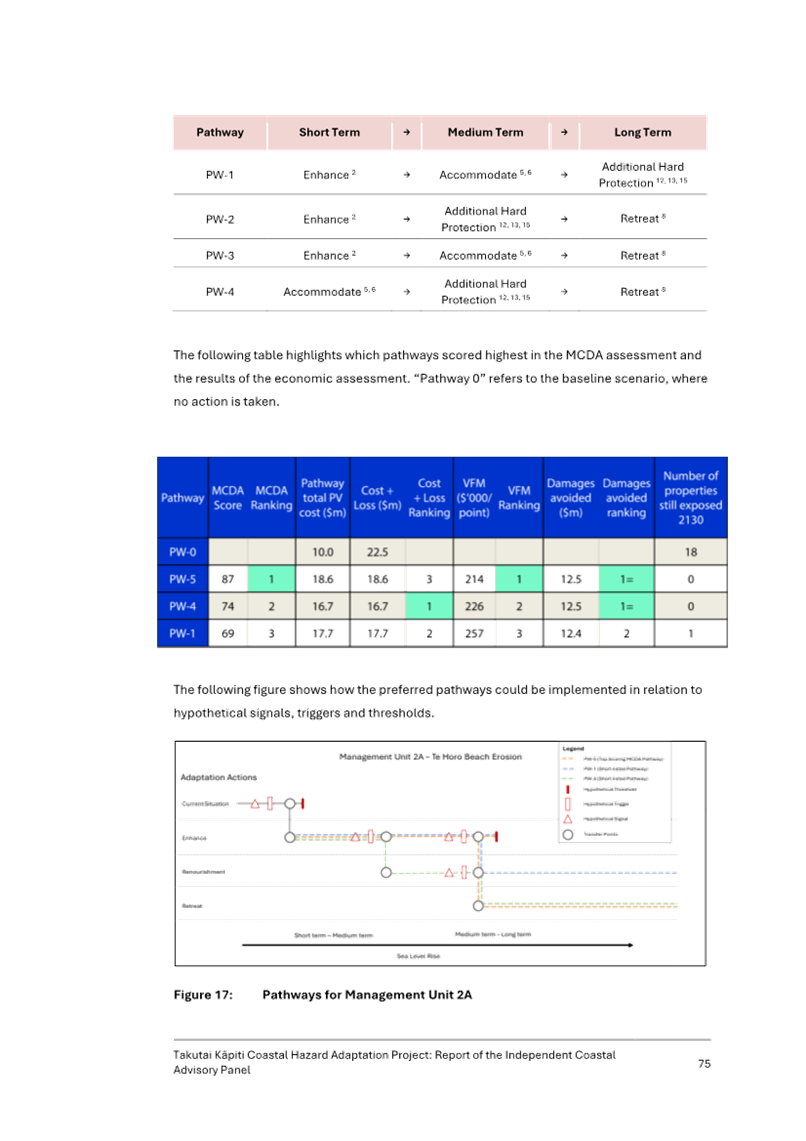
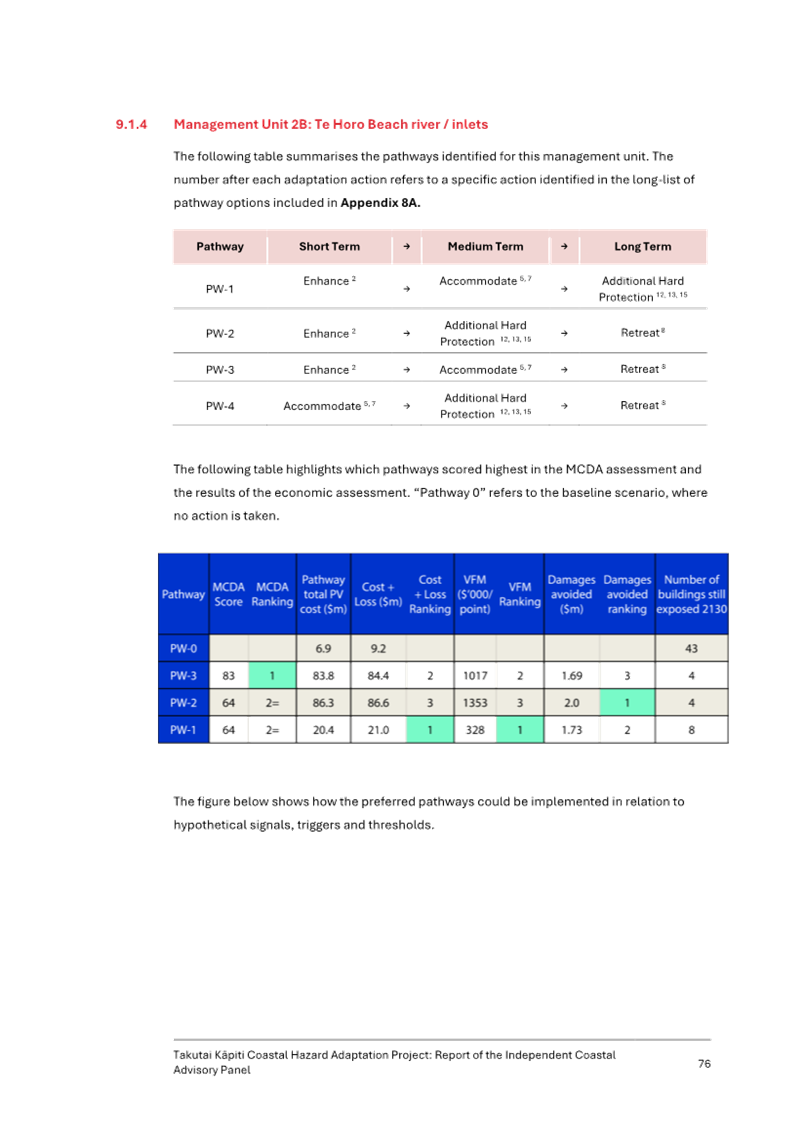
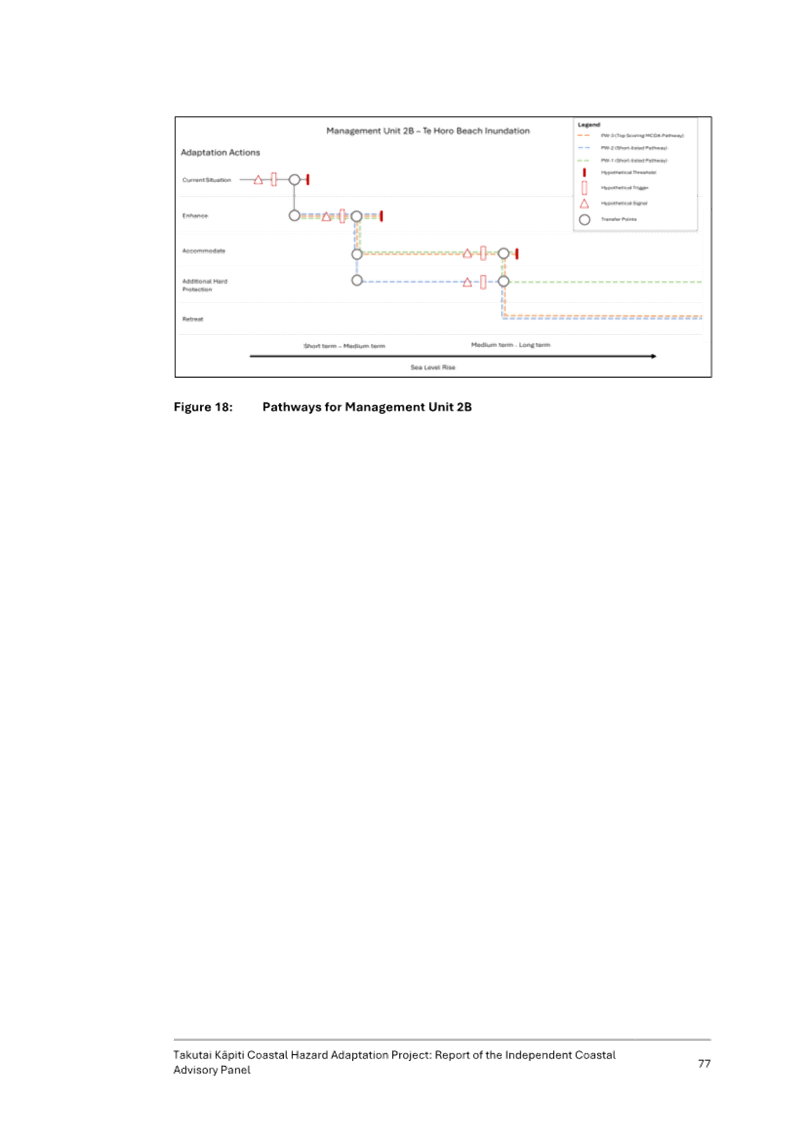
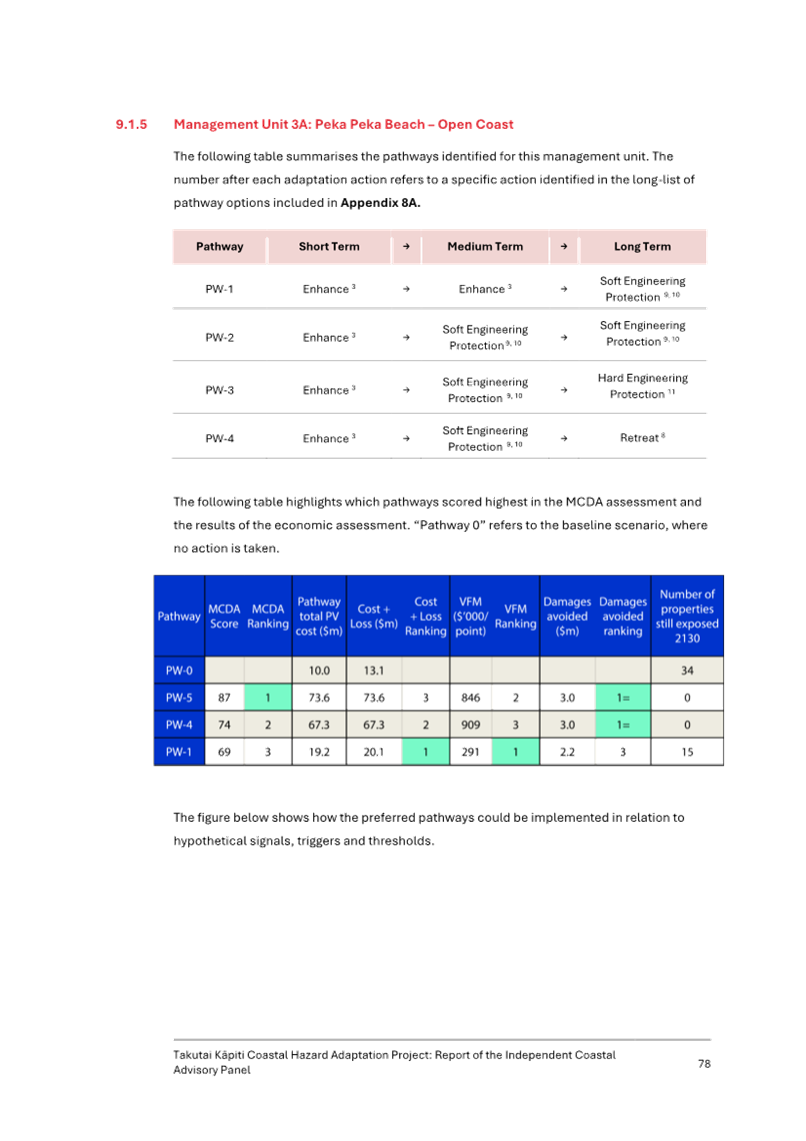
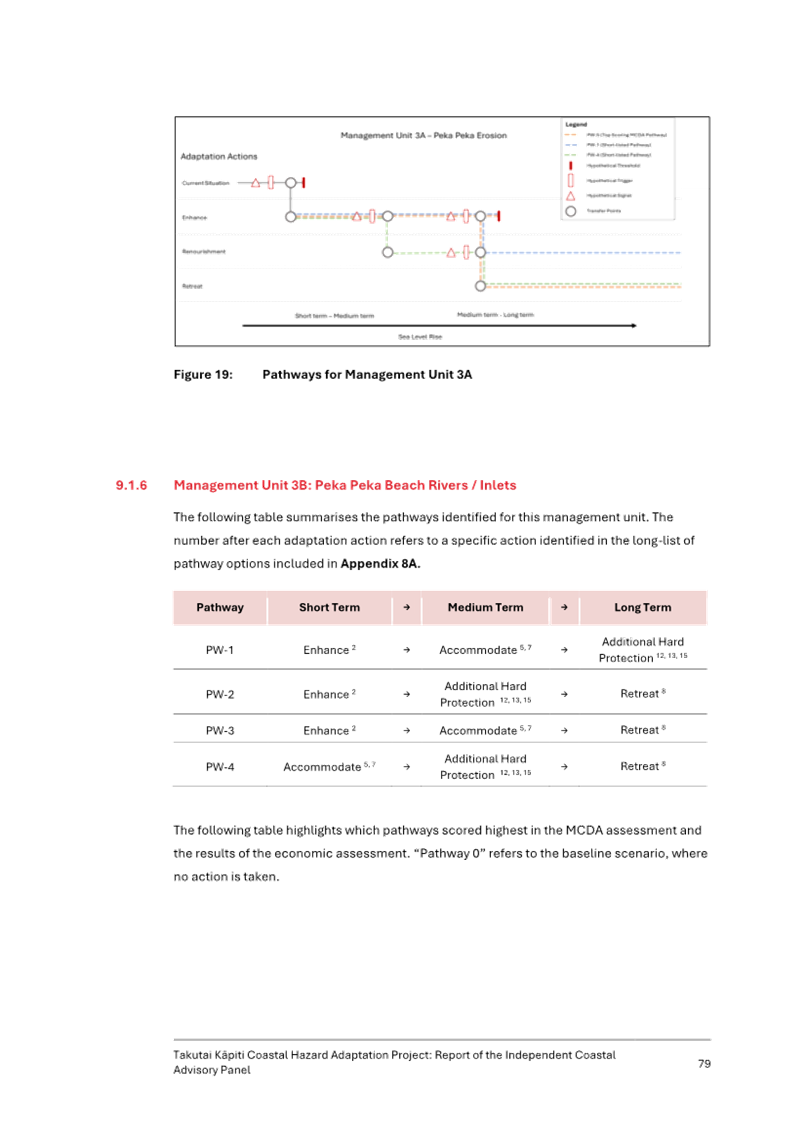
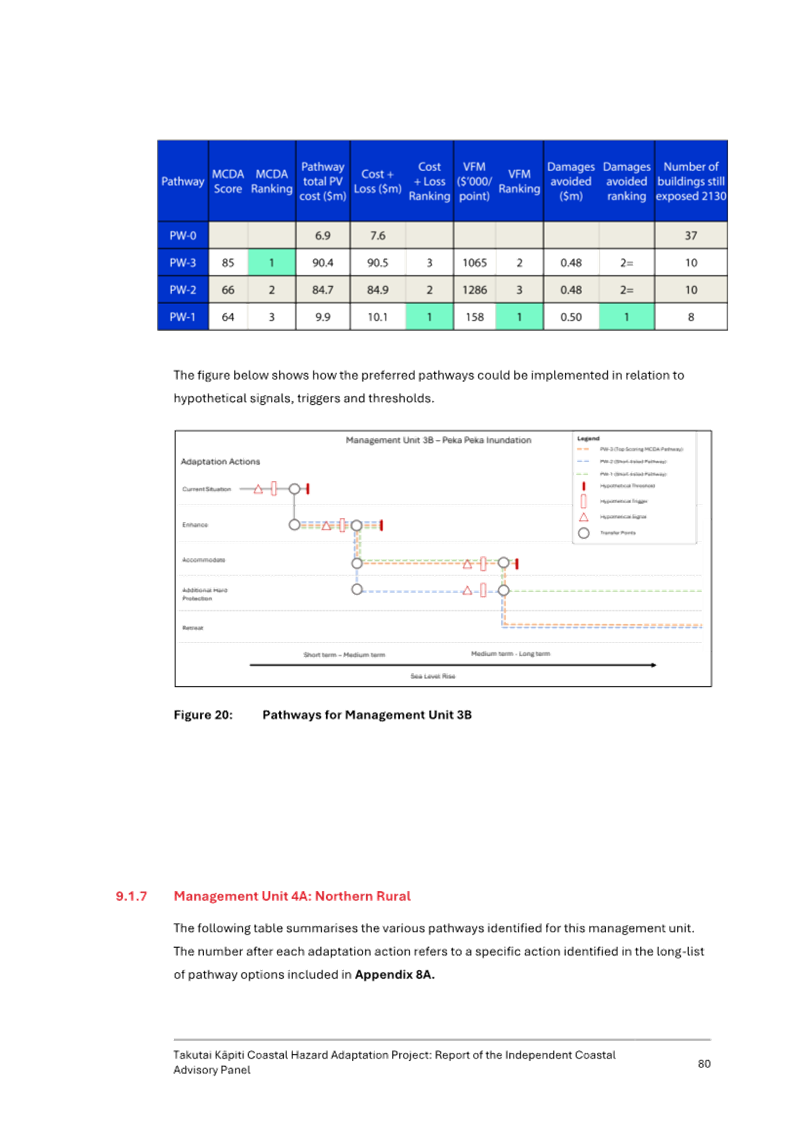
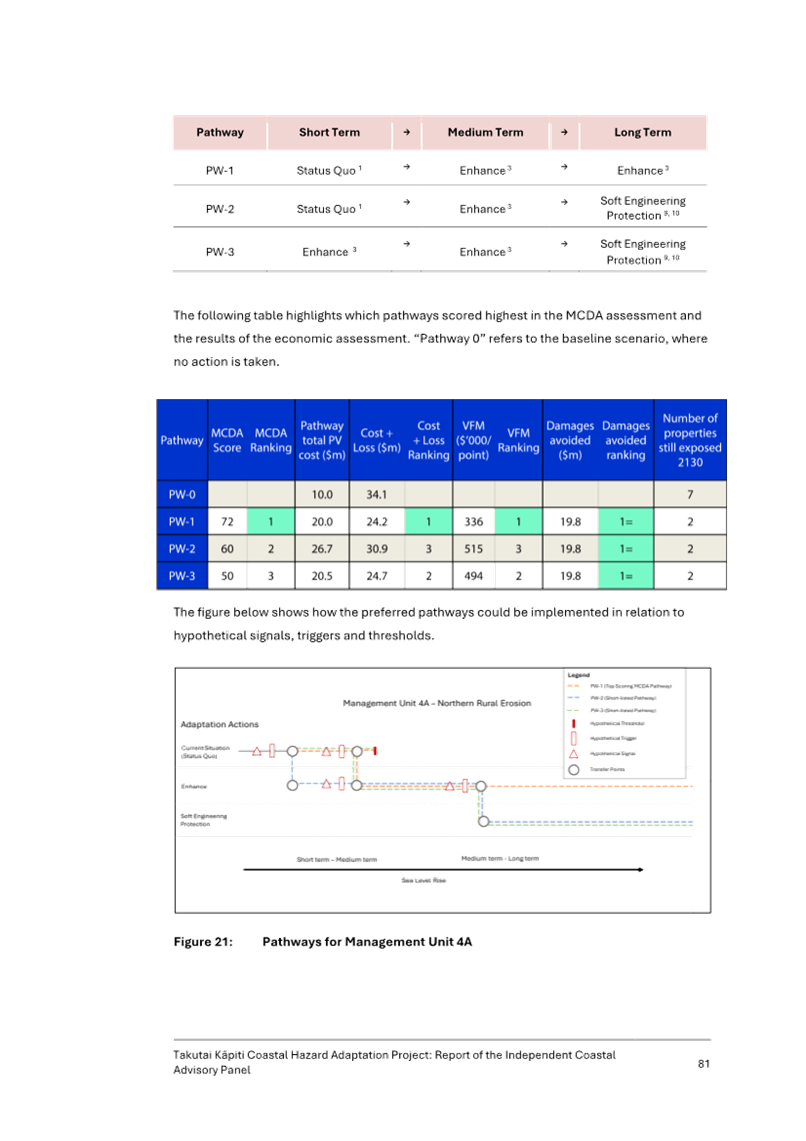
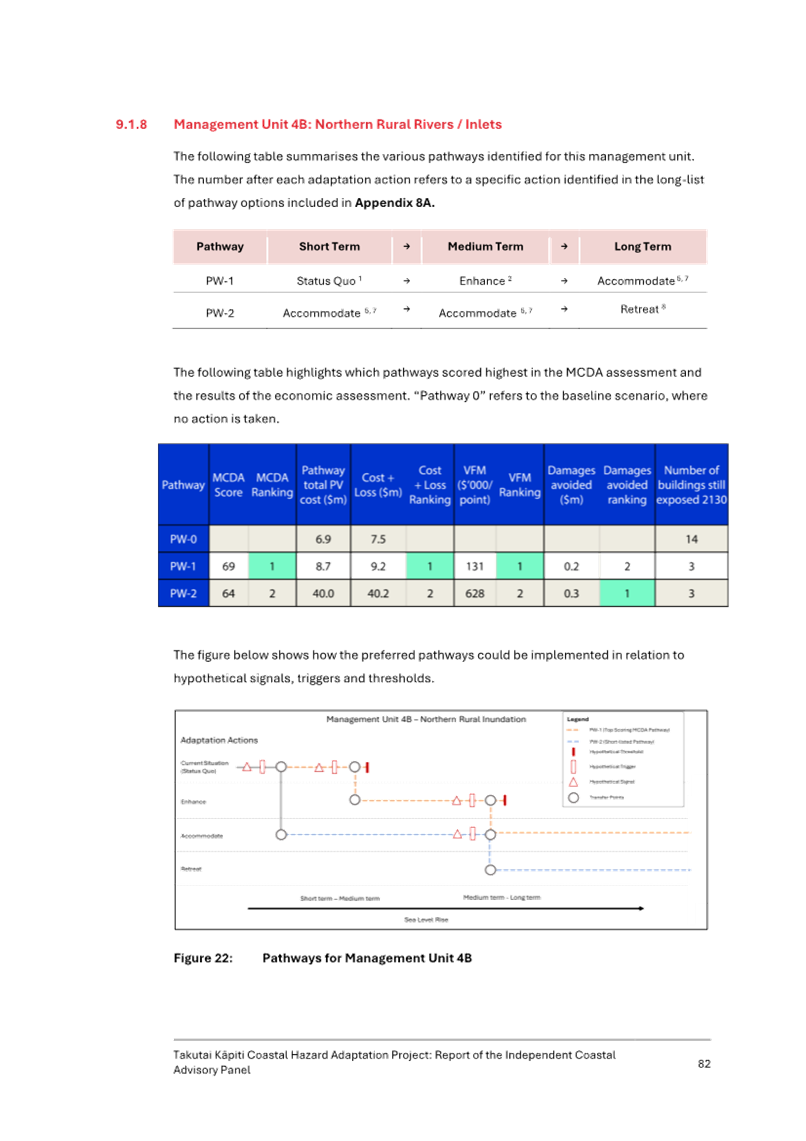
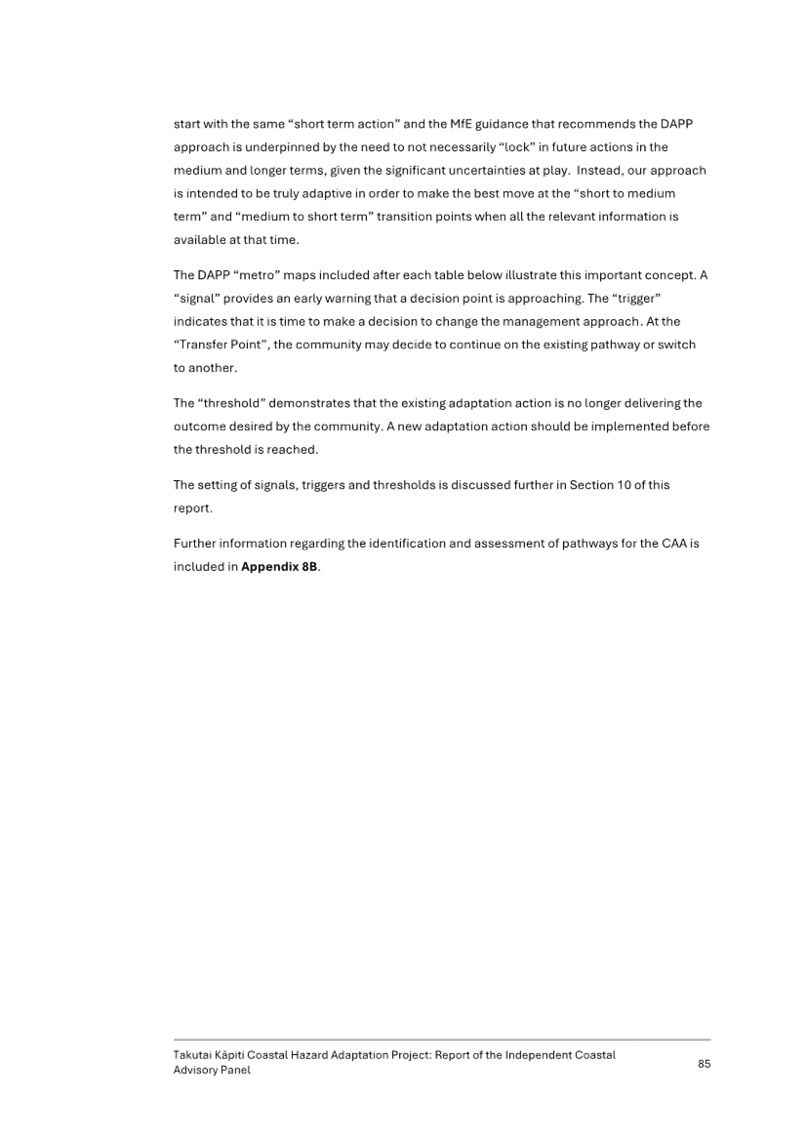
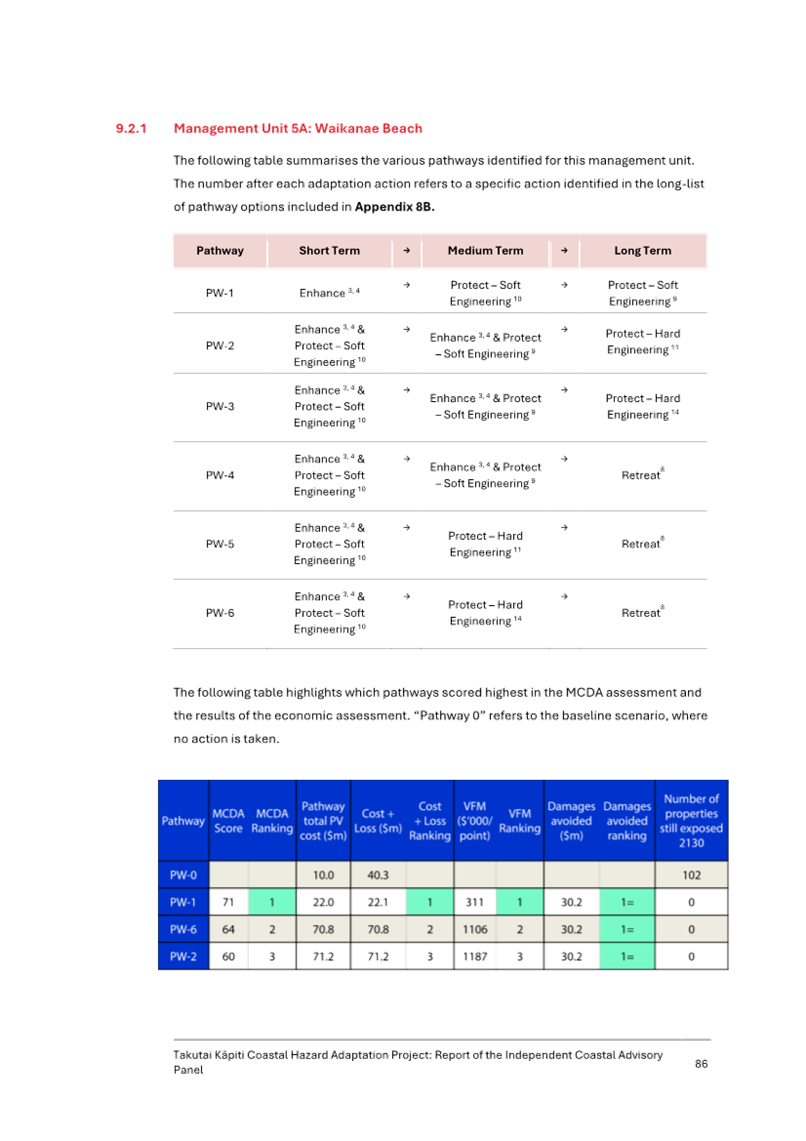
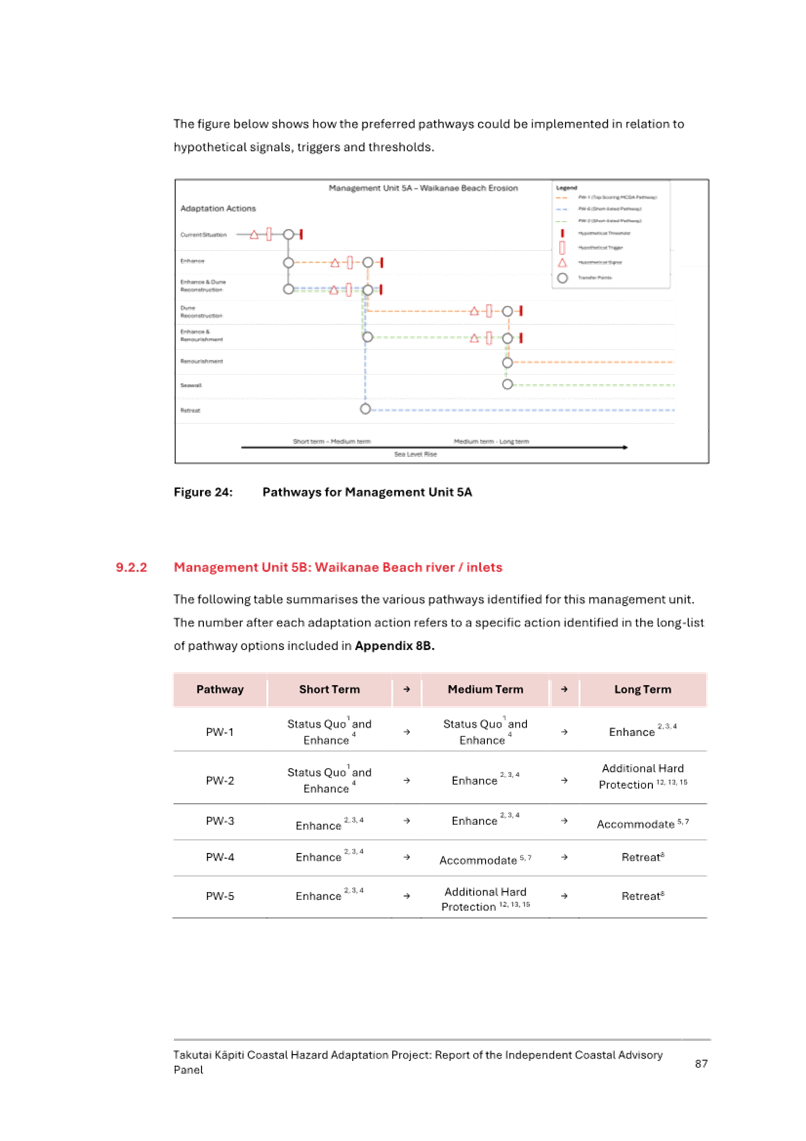
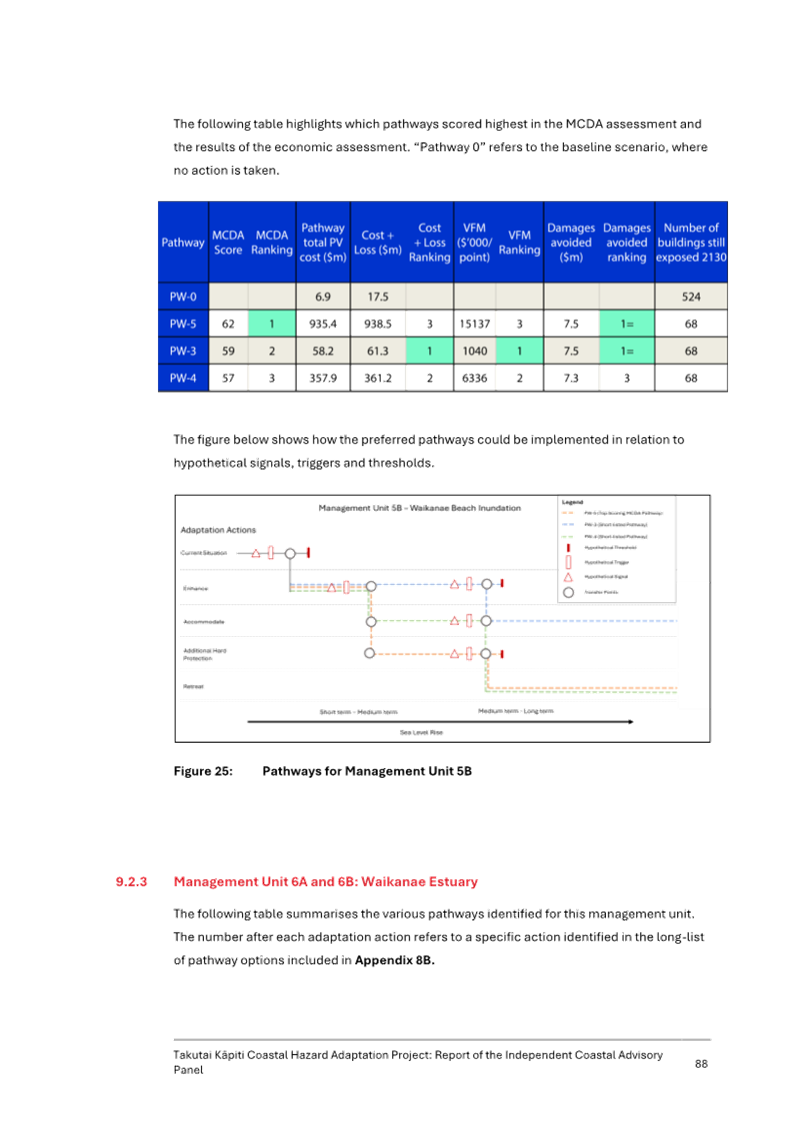
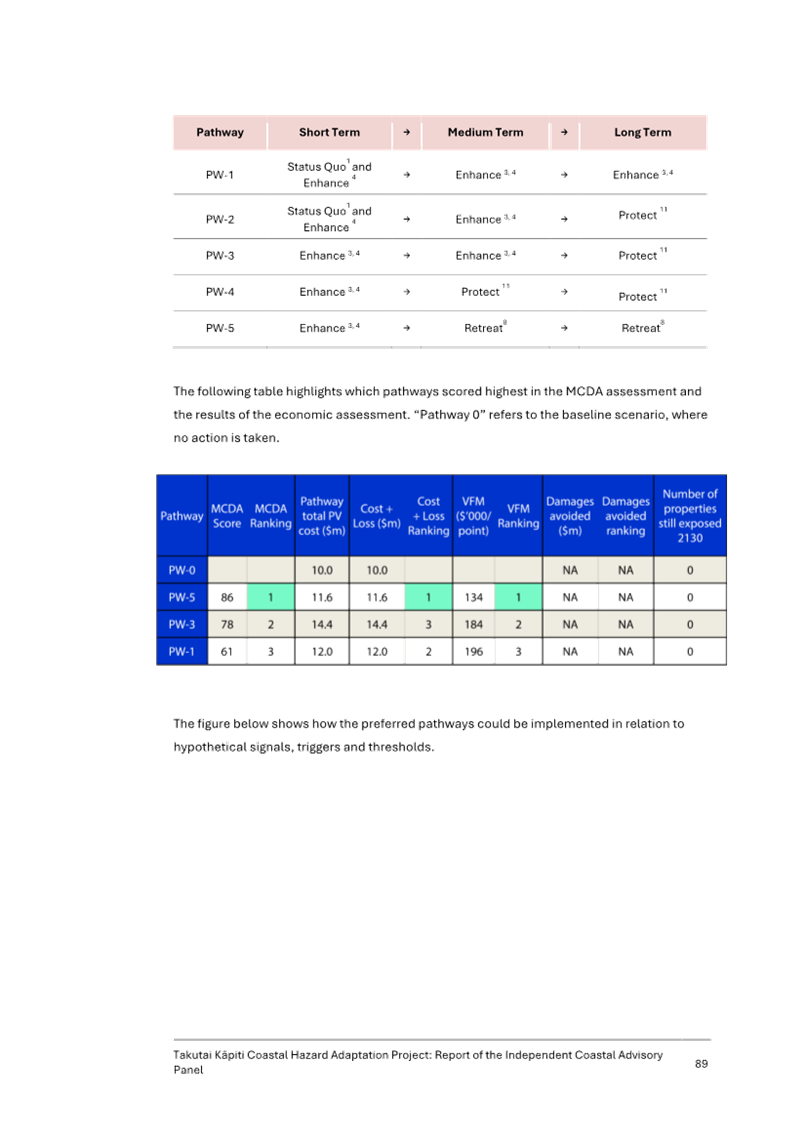
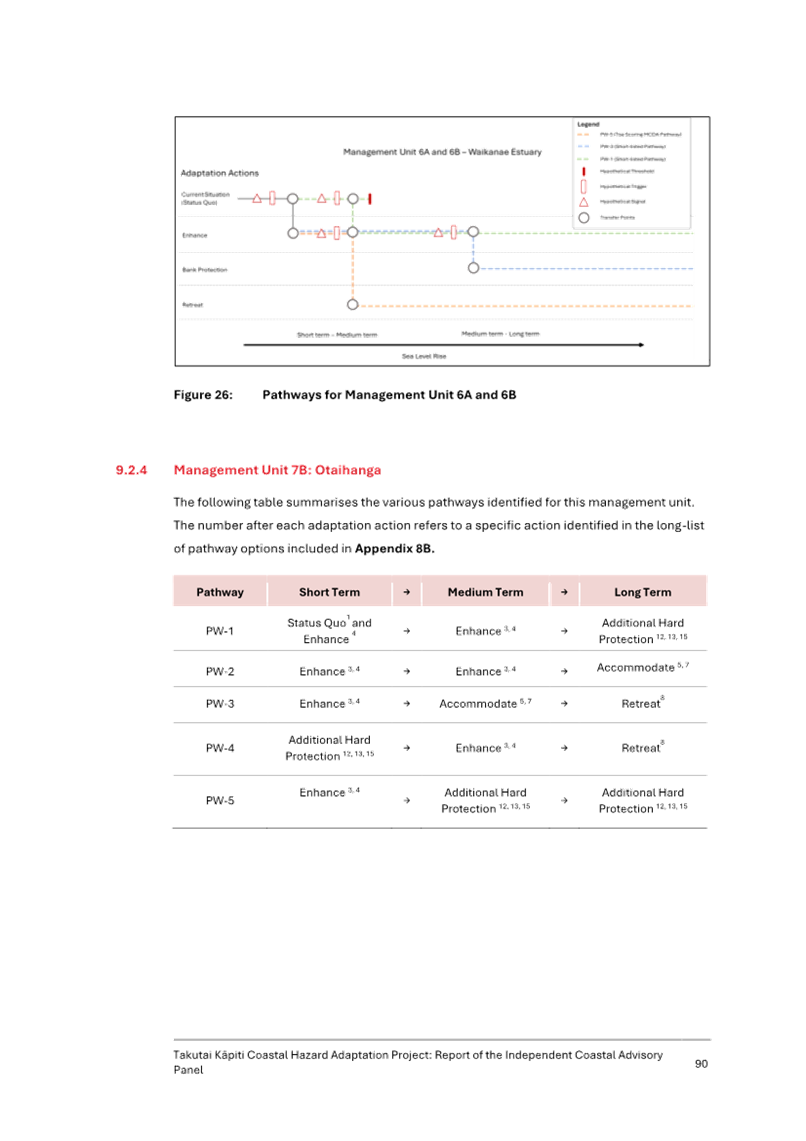
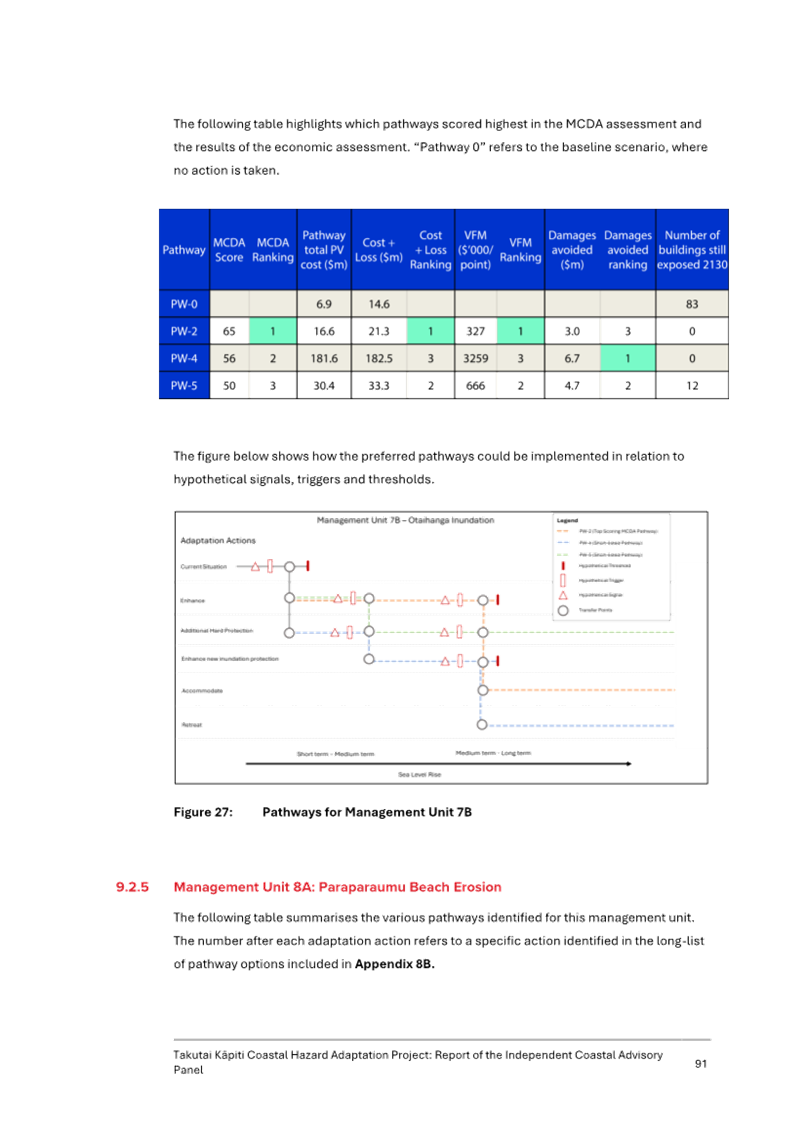
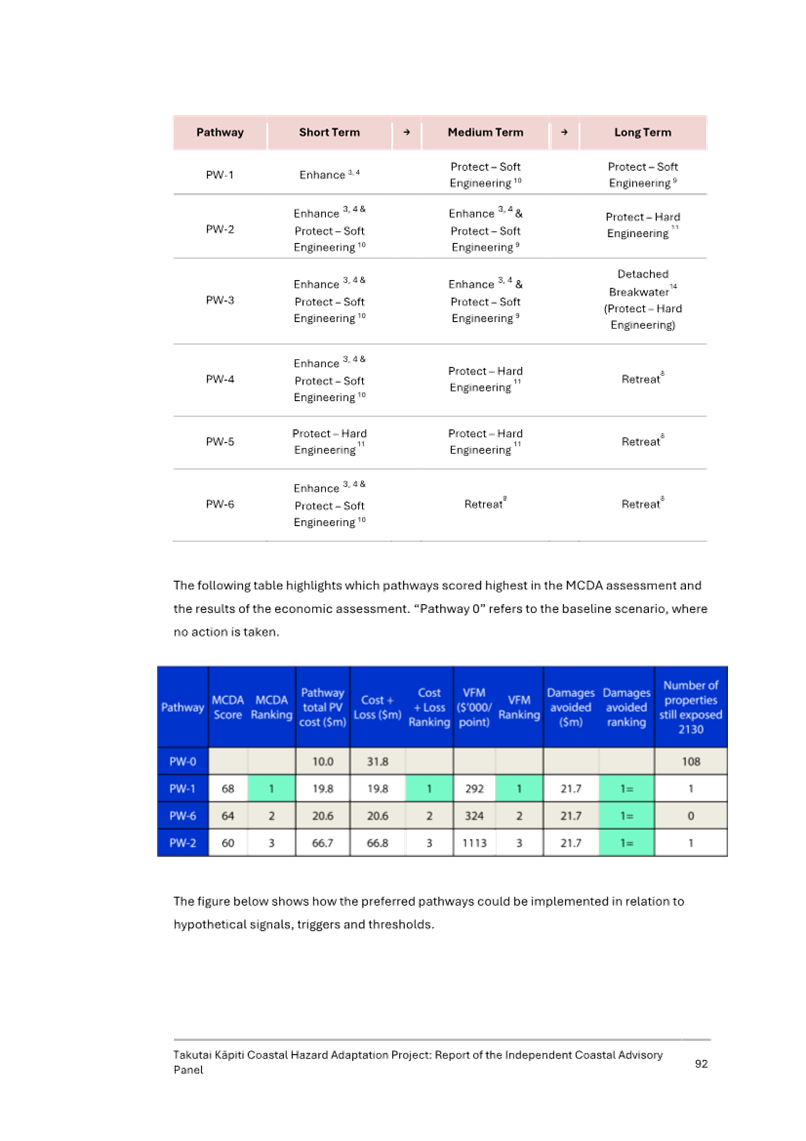
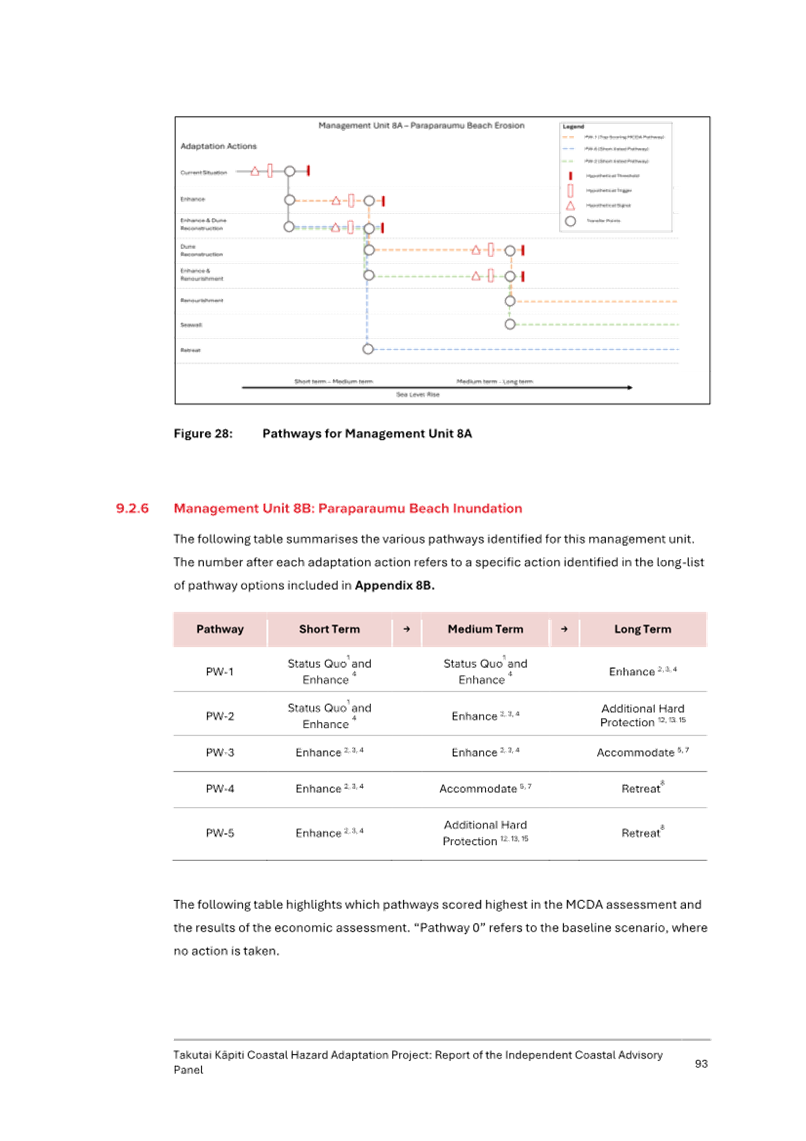
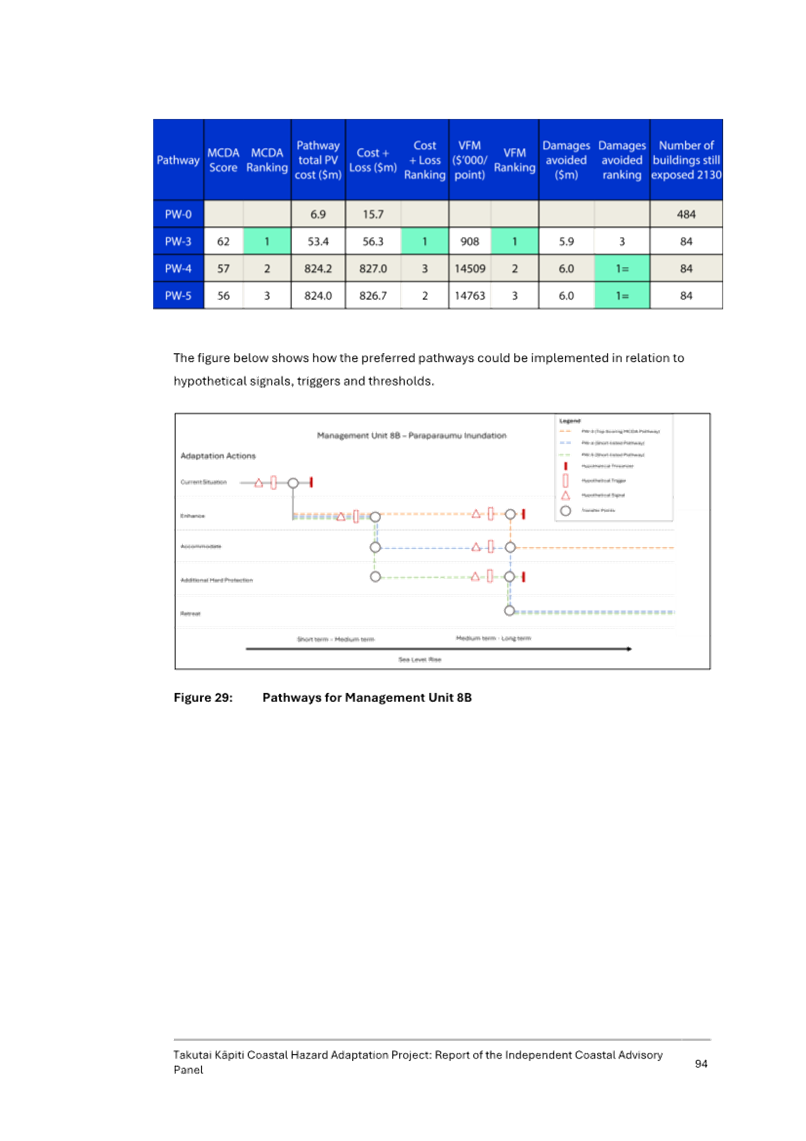
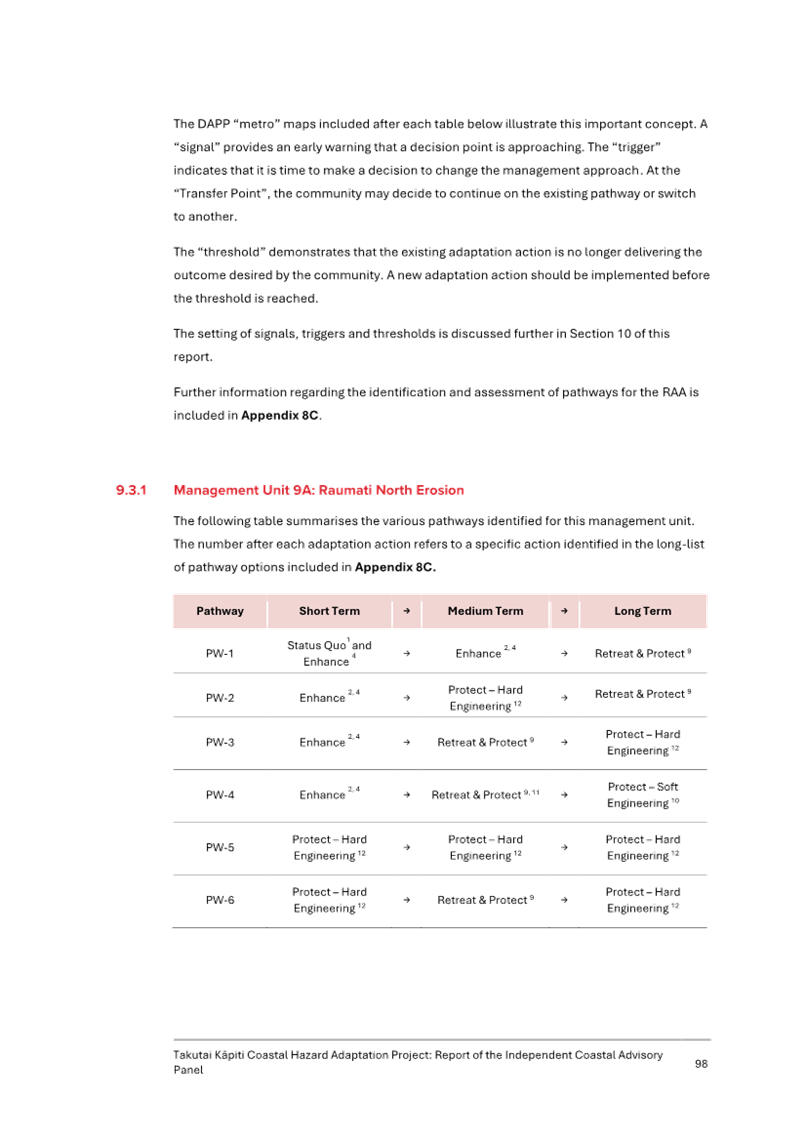
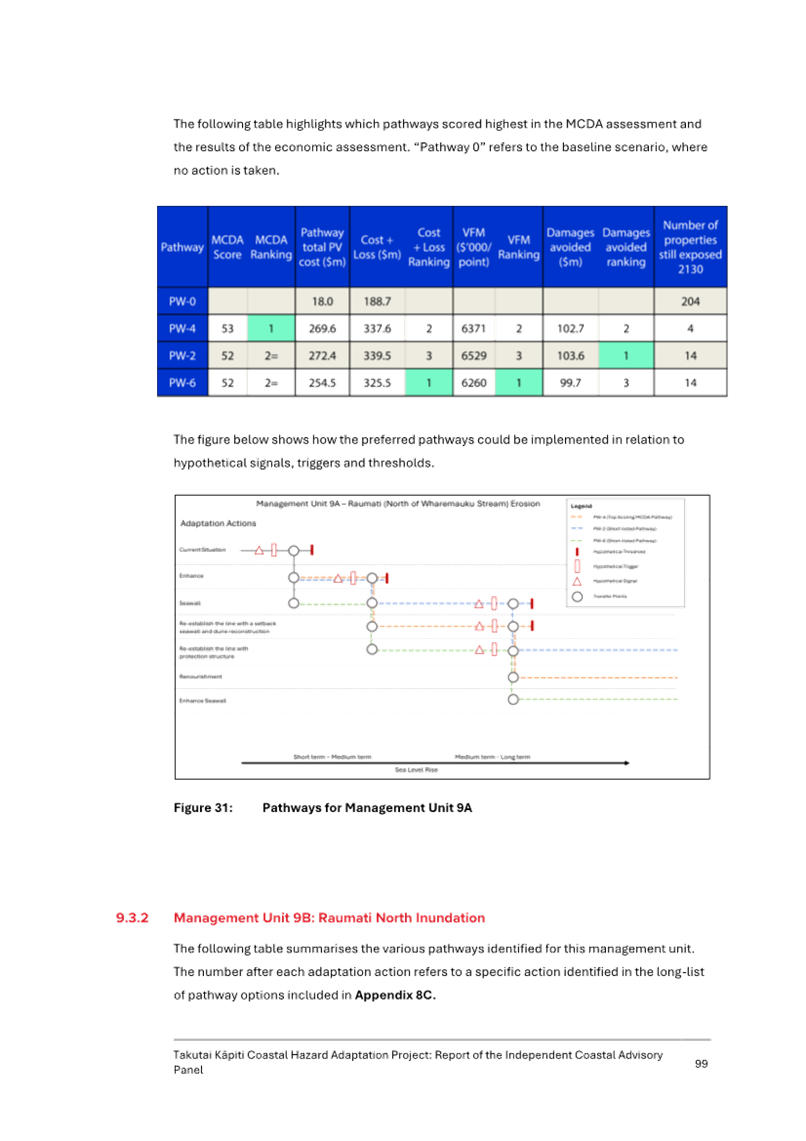
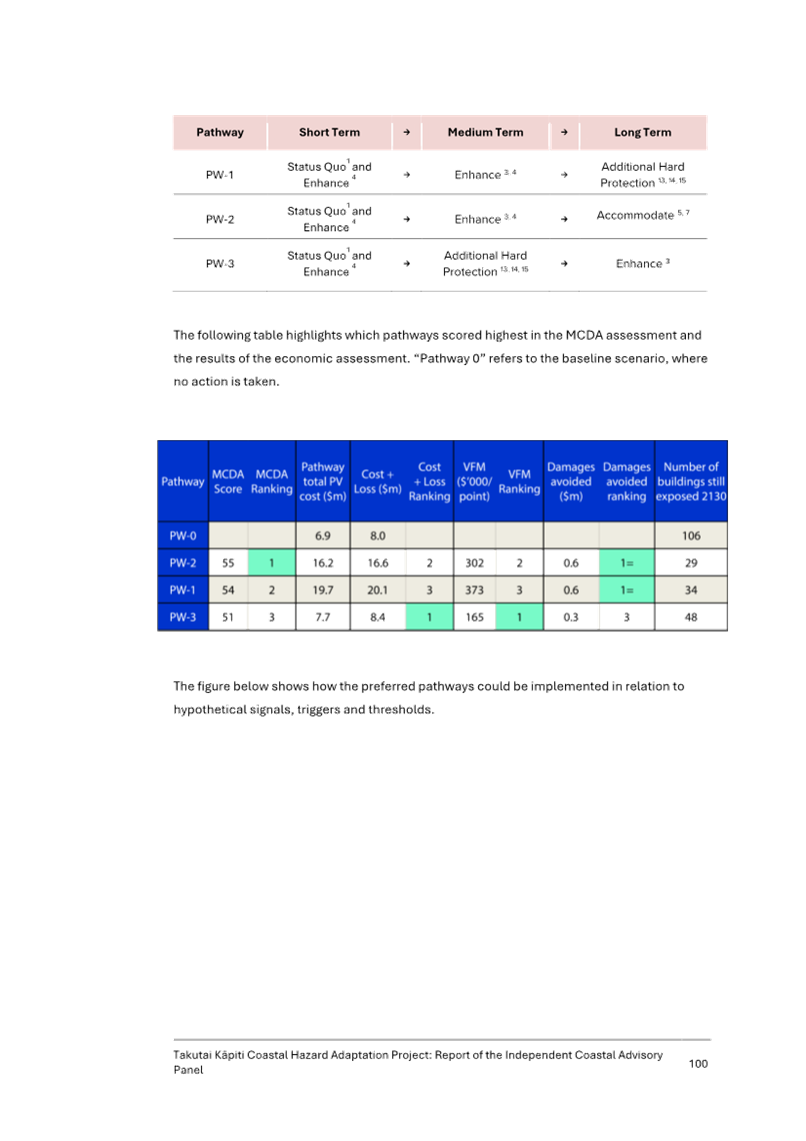
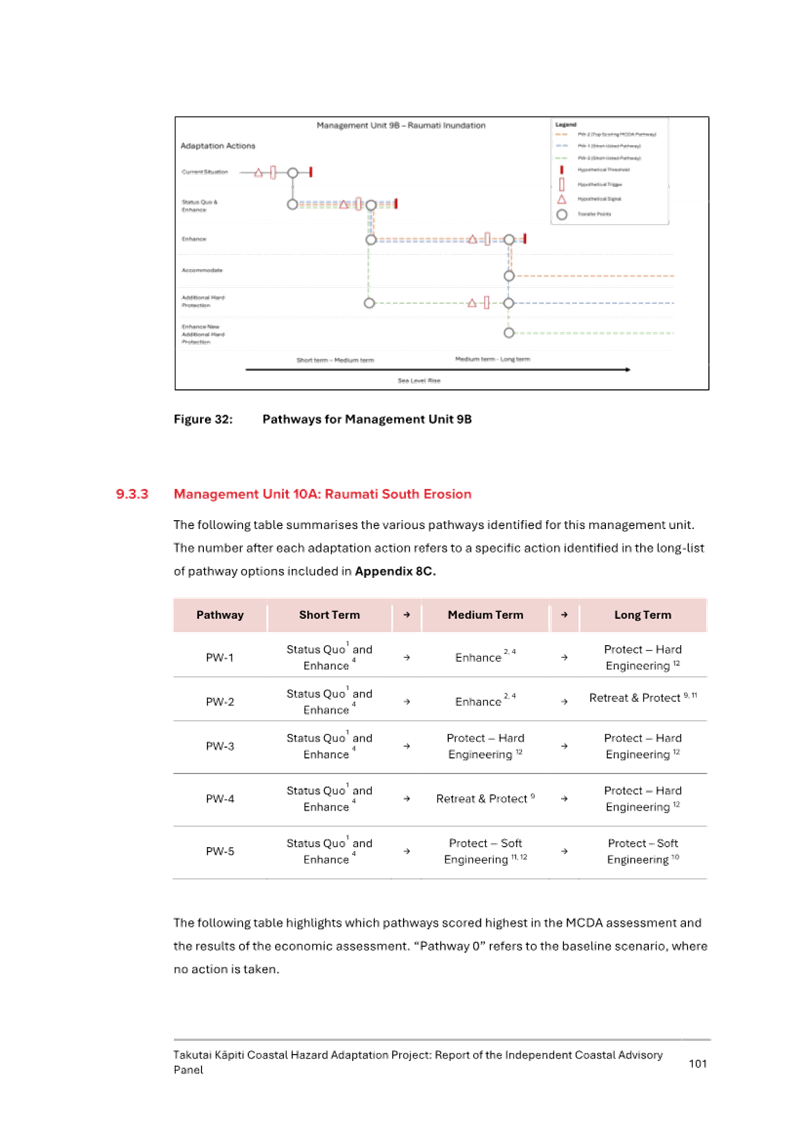
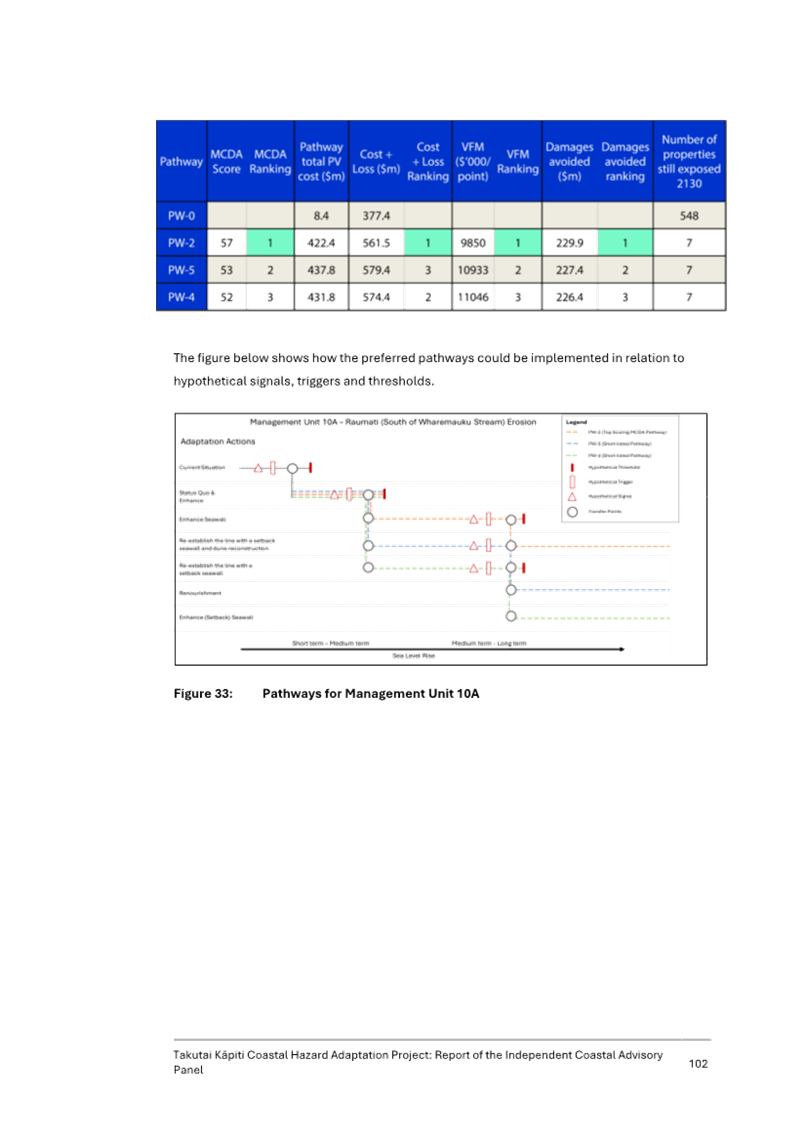
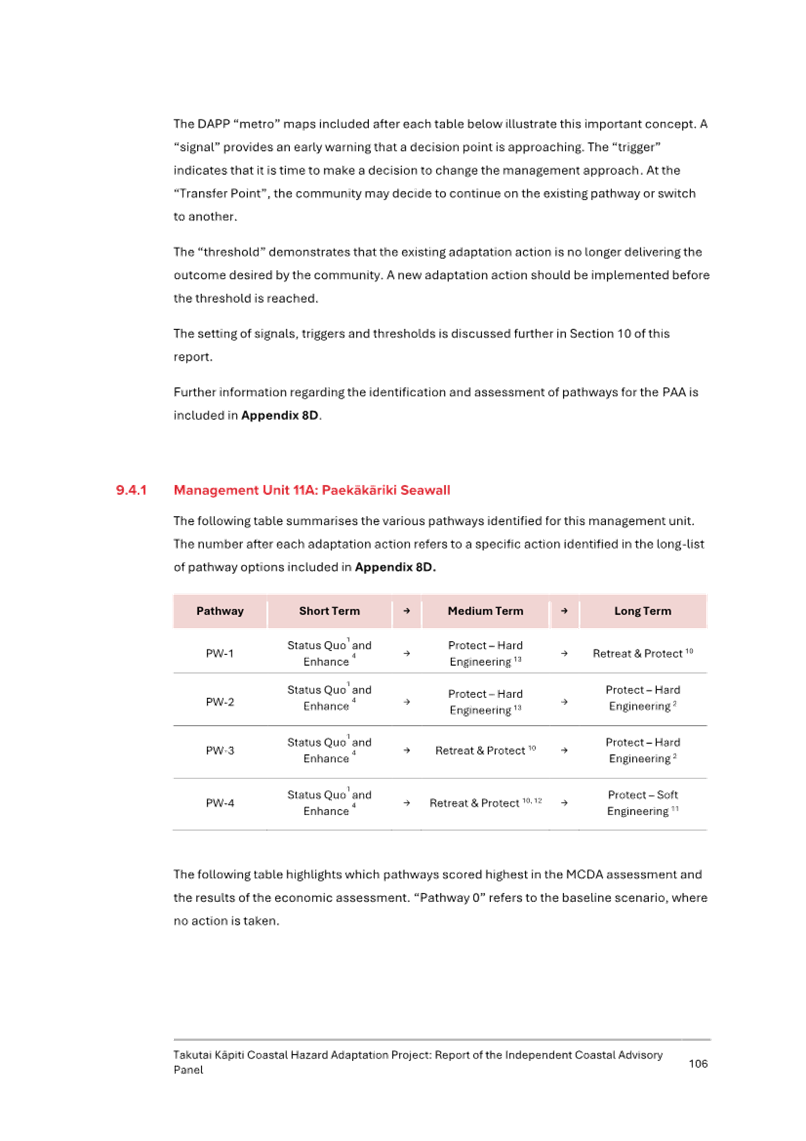
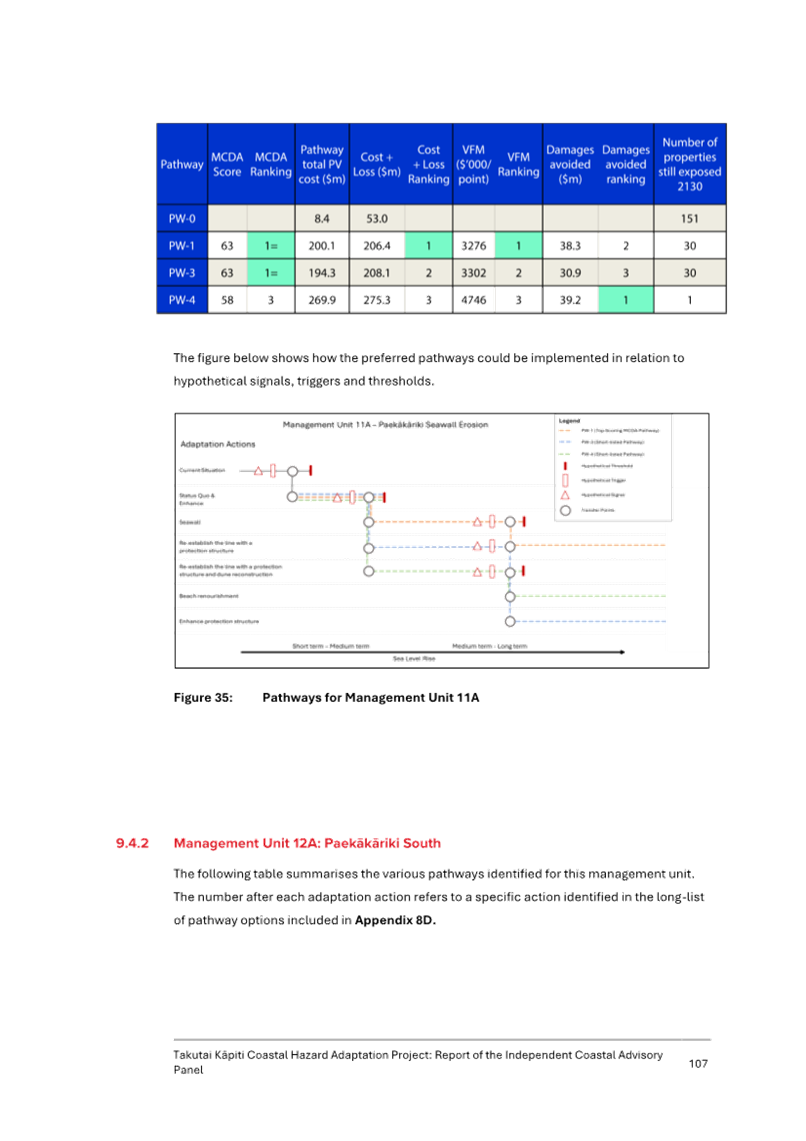
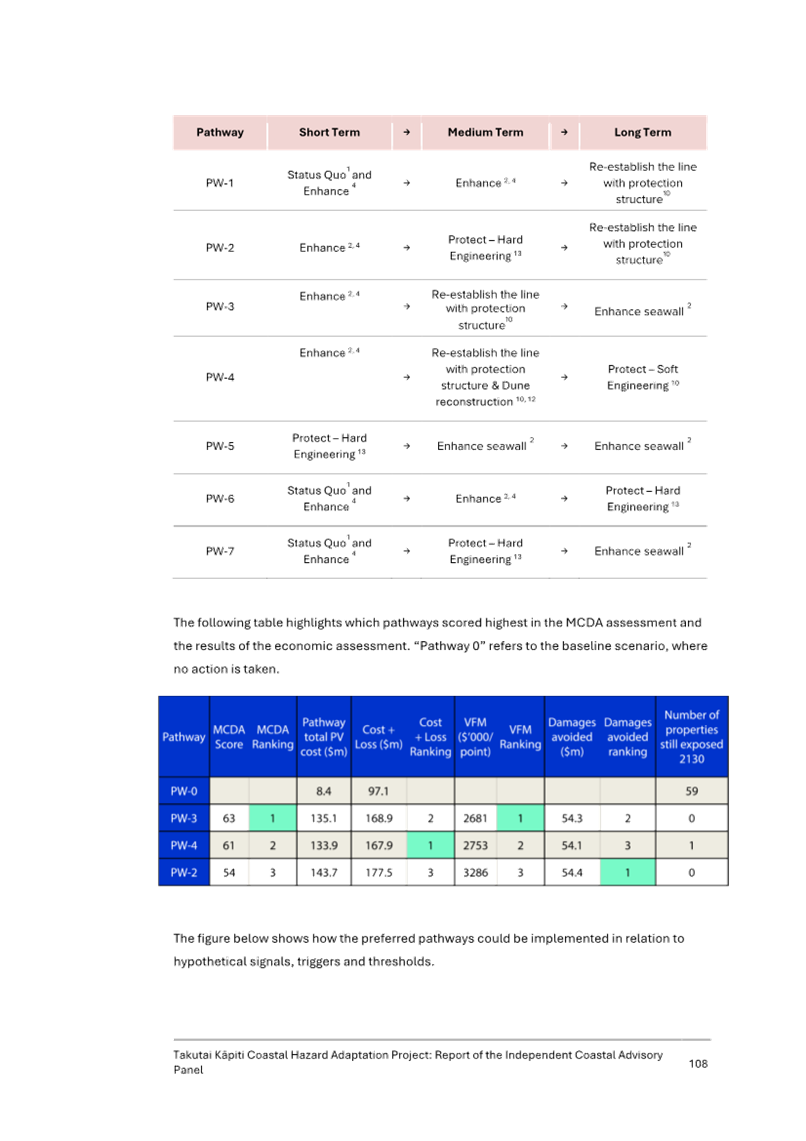
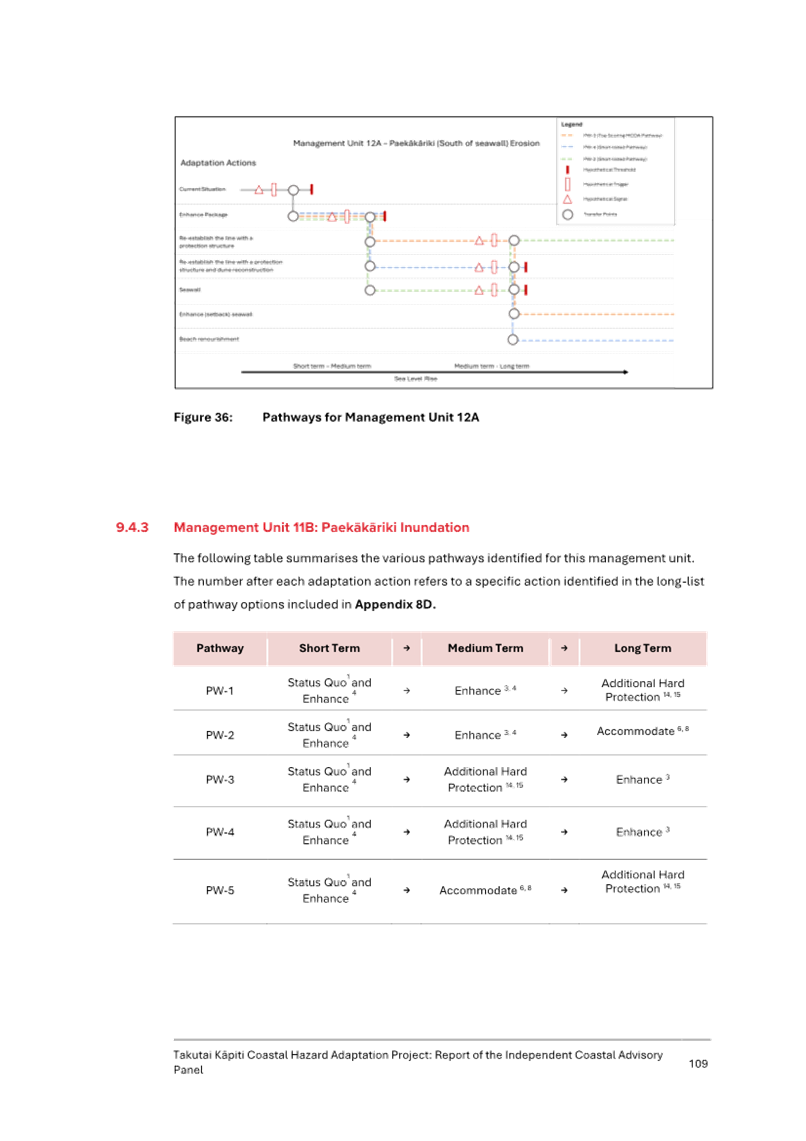
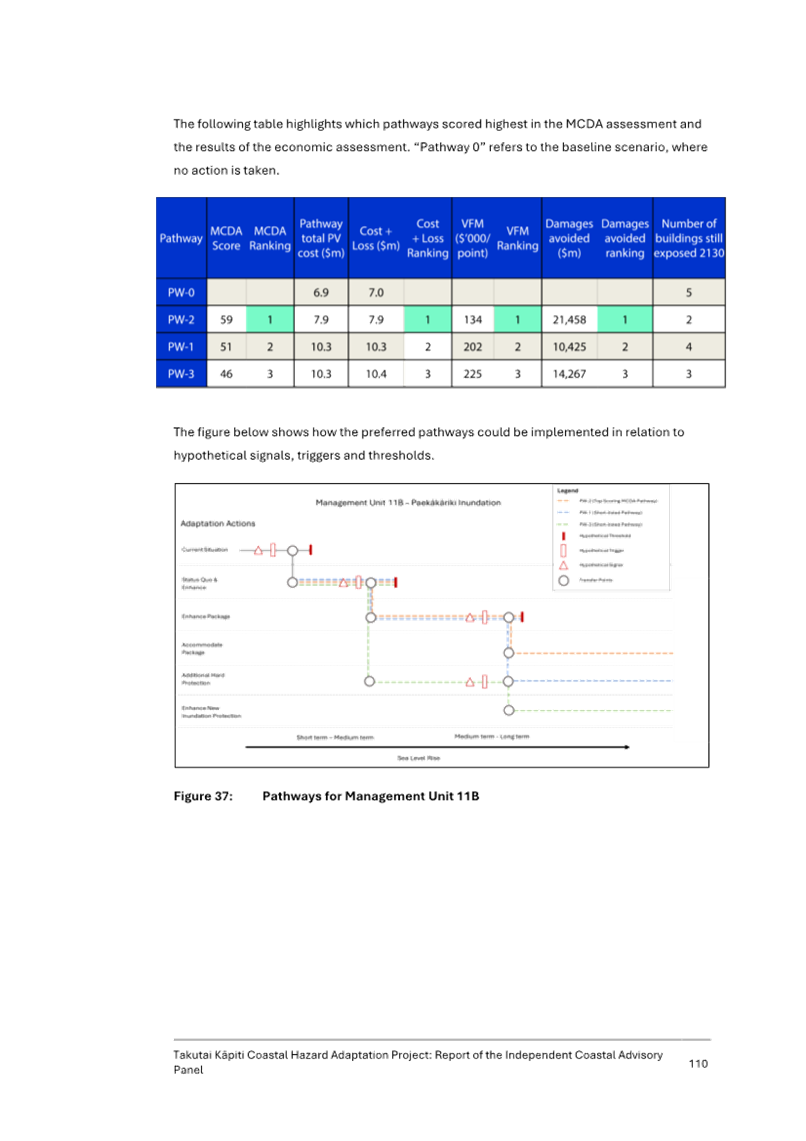
DAPP method involves developing “pathways” which are a package
comprising a “short-term”, “medium-term” and
“long-term” adaptation action. The Panel have chosen in their
report to provide multiple adaptation pathways for each of the coastal areas
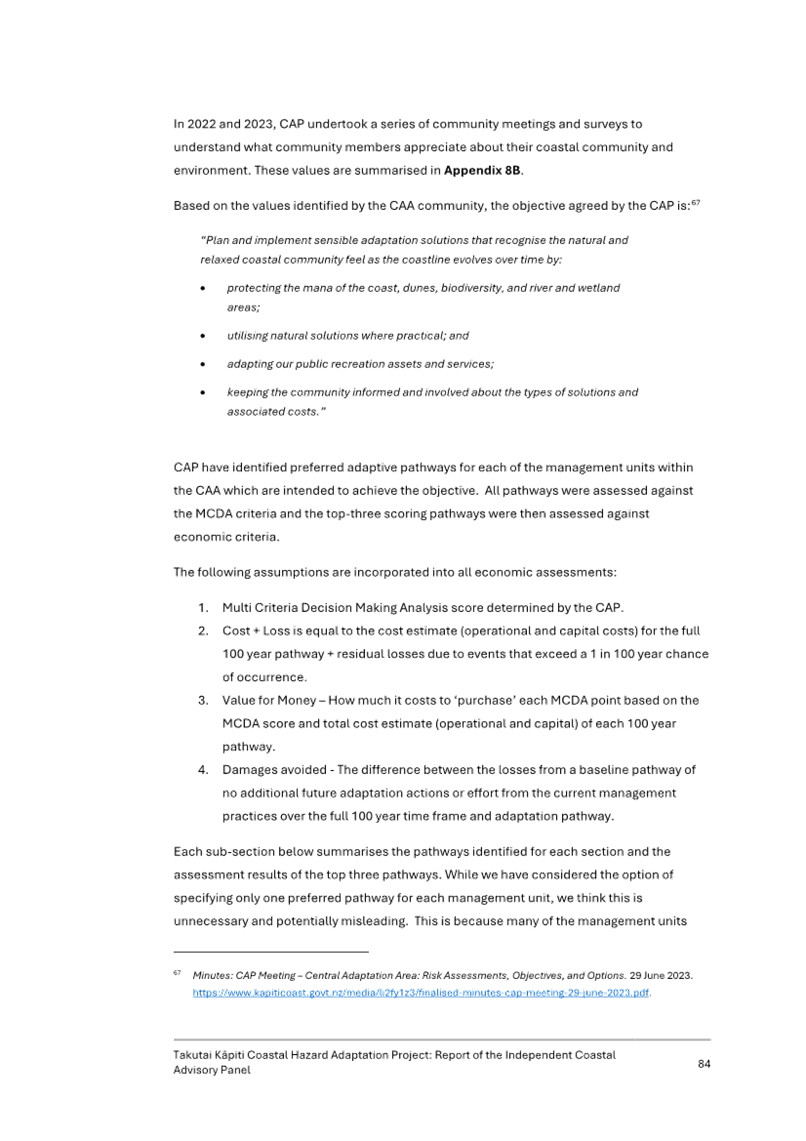
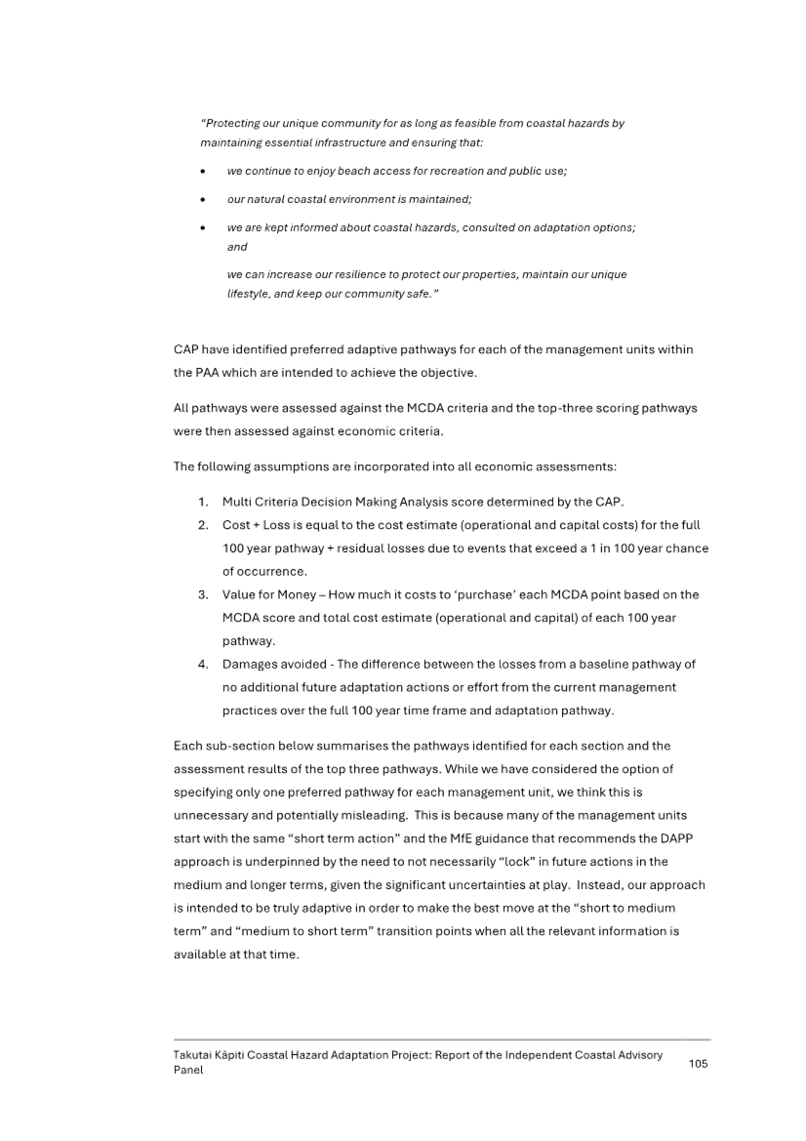
(called “management units”) it has investigated. Their reasoning is
described on p.70 of the Report:
While we have considered the
option of specifying only one preferred pathway for each management unit, we
think this is unnecessary and potentially misleading. This is because many of
the management units start with the same “short term action” and
the MfE guidance that recommends the DAPP approach is underpinned by the need
to not necessarily “lock” in future actions in the medium and
longer terms, given the significant uncertainties at play.
17.5 The
approach of providing pathway options, rather than specifying one preferred
pathway, is consistent with the Scope set for this Project by Council in
December 2020 which states:
The Panel is
to recommend coastal adaptation options for Council’s consideration.
17.6 The
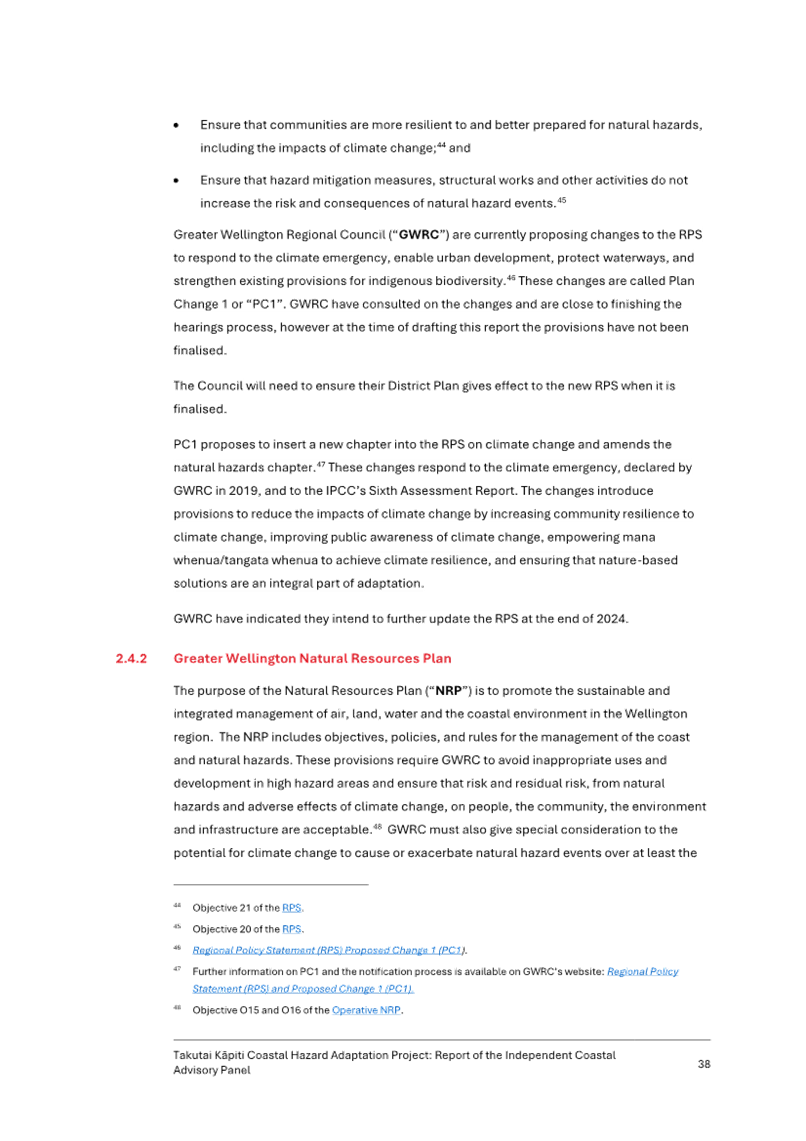
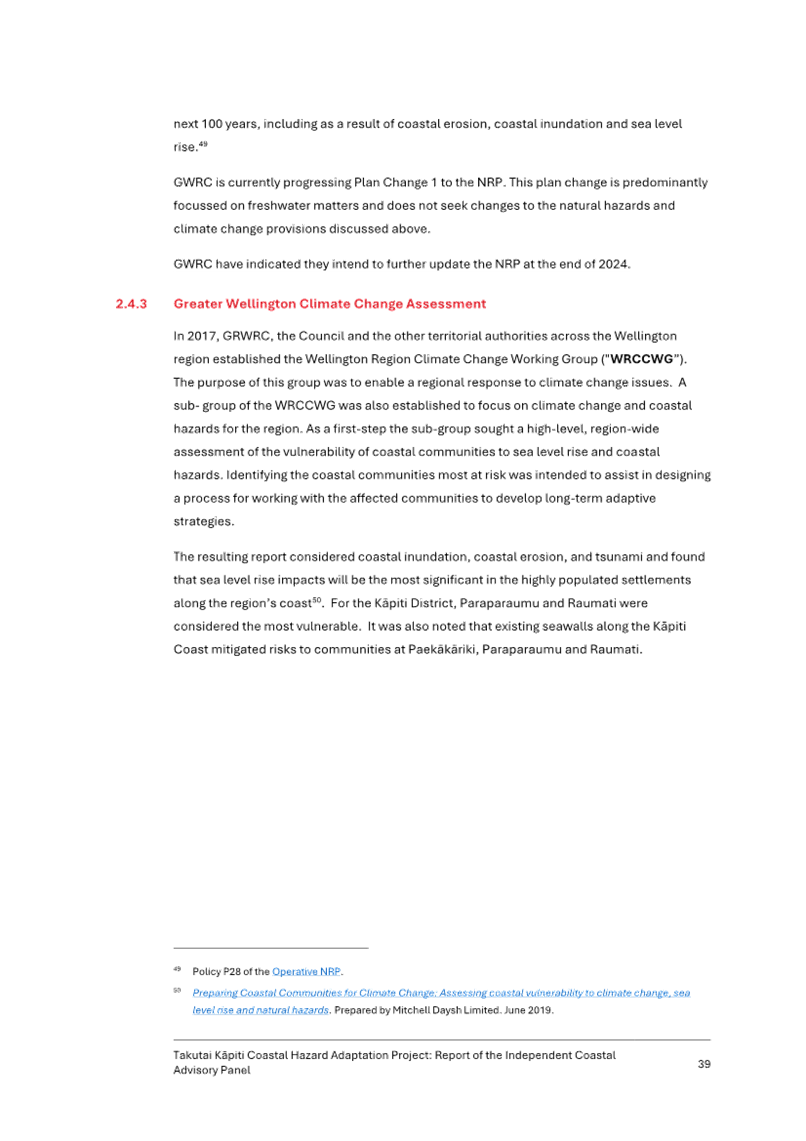
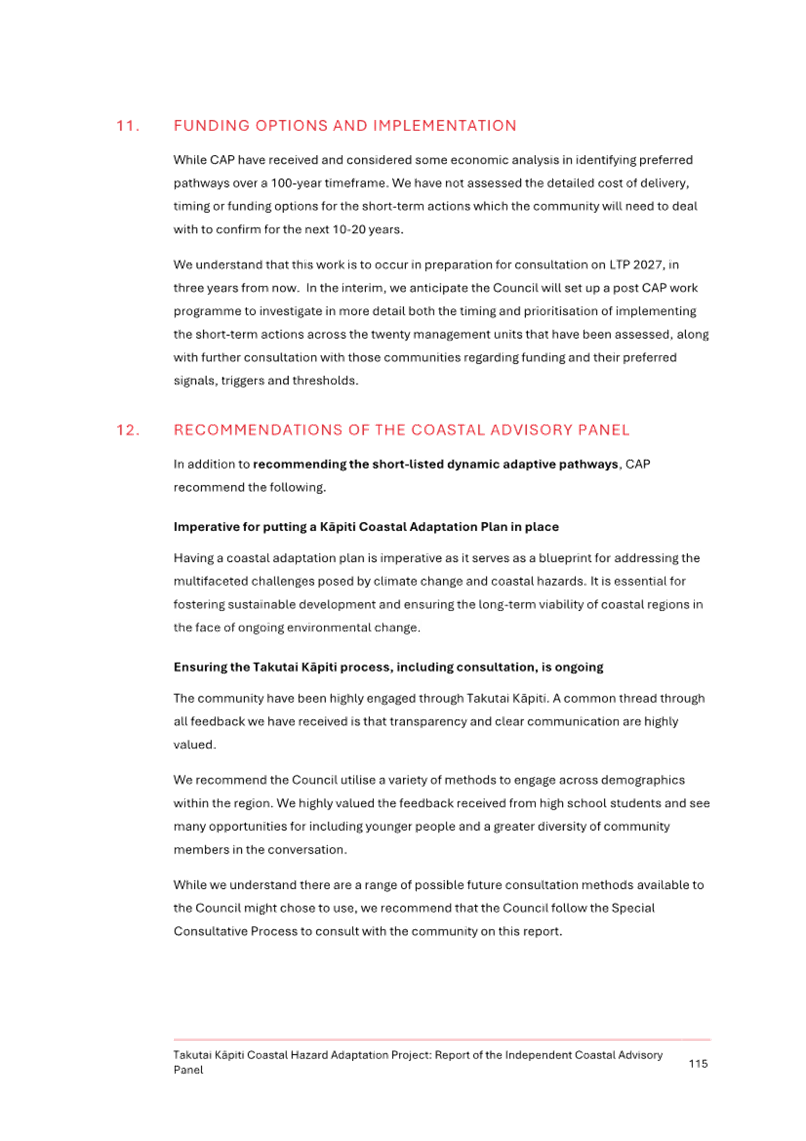
Panel’s recommendations to Council are set out on pp.115 – 118 of
the Report. In addition to recommending the short-listed pathway options for
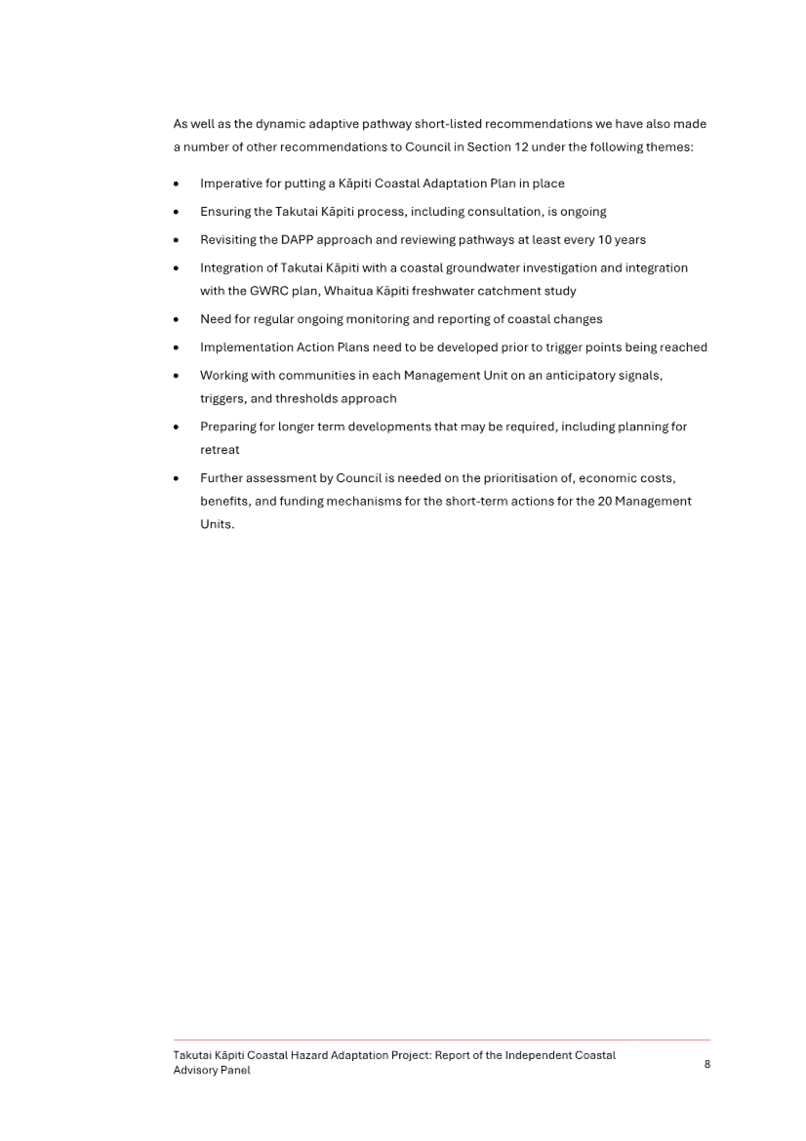
the 20 management units, the recommendations include:
· Putting a Kāpiti
Coastal Adaptation Plan in place.
· Ensuring ongoing
community consultation post-Takutai Kāpiti, including further work with
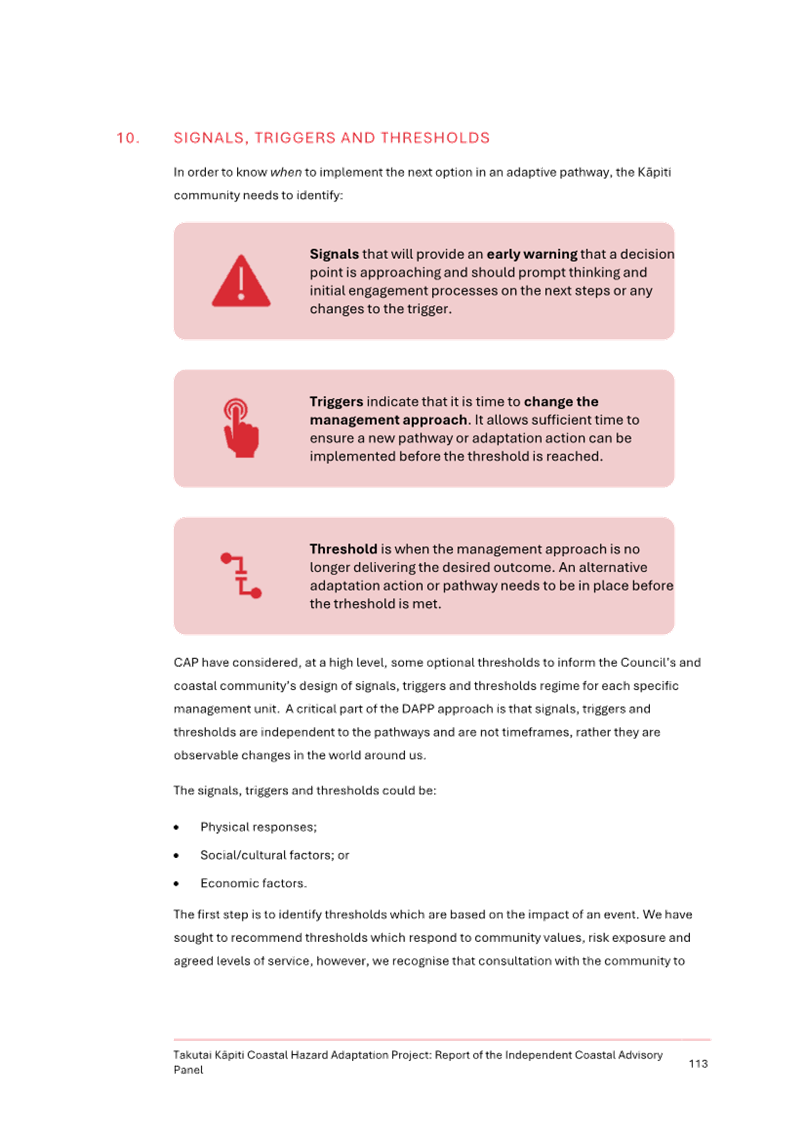
communities post-Takutai Kāpiti on signals, triggers and thresholds.
· 10 yearly reviews
of the pathways.
· Integrating the
Coastal Adaptation Plan with Greater Wellington work on rivers, streams and
groundwater.
· Need for formal
regular ongoing monitoring.
· Develop action
plans ready for when trigger points are activated.
· Avoid new
development in risk areas and, when the time is right, plan ahead for retreat
where necessary.
· Council to do more
work on the prioritisation of, economic costs, benefits and funding mechanisms
for short-term actions across the 20 management units.
· Council to take a
risk-based approach to its future district plan change on coastal hazards,
similar to that adopted by Porirua and Wellington, with constraints on
subdivision, use and development according to levels of risk.
He
take | Issues
18 Concerns
have been expressed by some members of the community that the Project may
impact insurability of private properties. The Panel expresses a view on this
on p.7 of its Report as follows:
The insurance industry
undertakes its own research to monitor risk and to decide whether it will or
will not insure certain properties or certain areas. They have also made it
clear that where communities have an adaptation plan in place to mitigate or reduce
risk, this is likely to reduce any impact on insurance premiums. Without an
adaptation plan, insurance premiums may be higher. Community feedback has been
clear that people want to be able to get insurance and have concerns over the
value of their homes decreasing.
19 It
is recommended that Council share the Panel’s Report with the Insurance
Council of New Zealand (who are responsible for insurance settings) to seek
their feedback.
20 Some
members of the public have also been critical about viewing risk over a
timeframe as long as 100-years, given the inherent uncertainty. In response,
the Panel have noted (p.7):
The New Zealand Coastal Policy
Statement 2010 (“NZCPS”) requires decision-makers to take a
precautionary approach when planning for and making any resource management
decisions in the coastal environment. It also requires a 100-year perspective
to be used for planning.
21 Staff
note that it is the Department of Conservation (DOC) who are responsible for
administering the New Zealand Coastal Policy Statement 2010. It is recommended
that Council follow up with DOC to confirm Council’s obligations (or
otherwise) to take a “100-year perspective for planning.”
Ngā
kōwhiringa | Options
22 The
recommended approach is for Council to receive the Panel’s Report,
acknowledge and thank the Panel for their work, to confirm completion of the
Project and to direct Council staff to follow up on the concerns raised to the
Panel by the community, with relevant authorities.
23 Given
the significance of the matters addressed in the Report, it is recommended that
further analysis is carried out before Council makes any decisions regarding
next steps.
Mana whenua
24 Mana
whenua have partnered with Council on this Project through:
24.1 Membership
of the Co-Design Working Group which established the Panel’s operating
design.
24.2 Membership
on the Panel, and inclusion of cultural experts on the TAG.
25 The
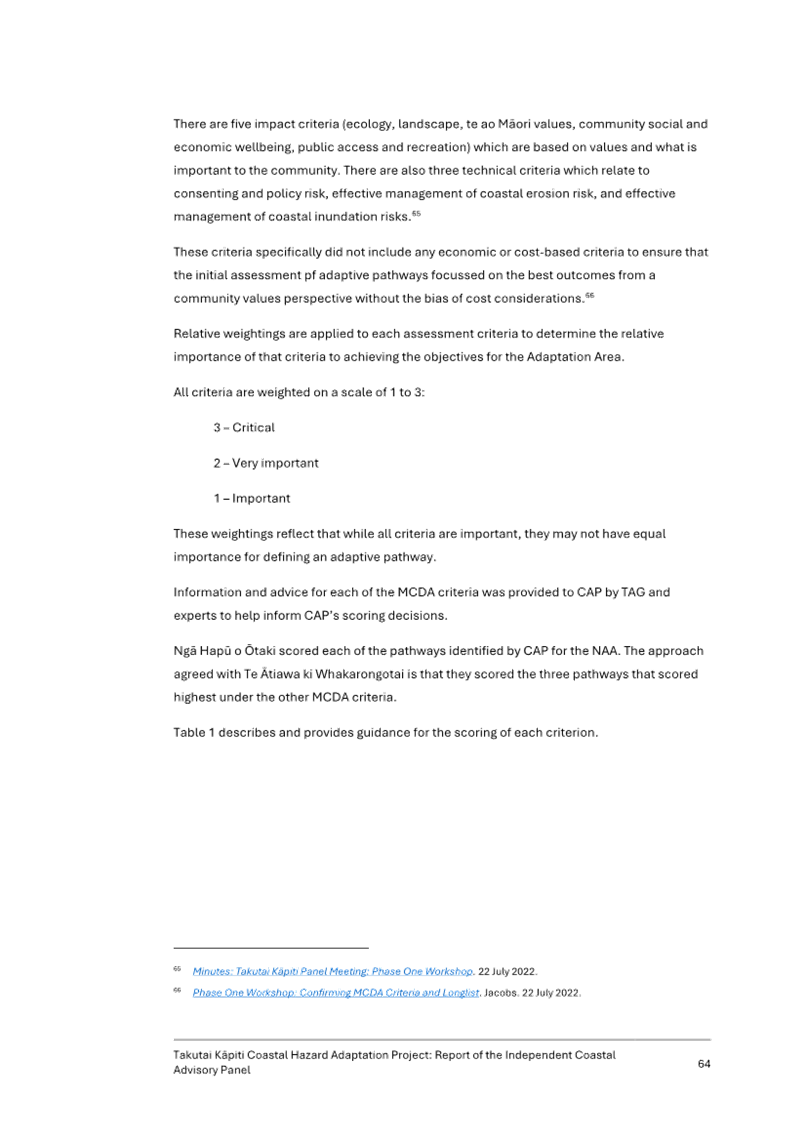
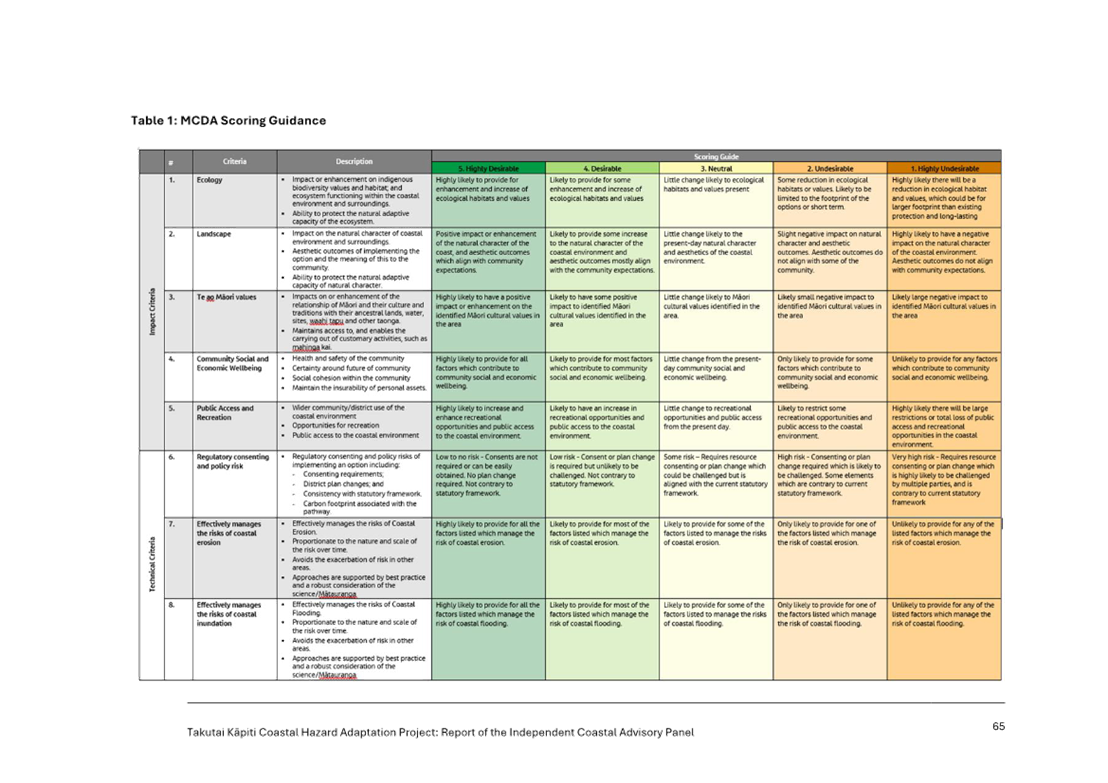
Panel’s “multi-criteria decision-making analysis” (MCDA)
included scoring adaptation options based on Te Ao Māori. Additionally,
the Panel benefitted from consideration of cultural reports produced
specifically to inform this Project.
Examples:
® In recognition of the Crown’s
responsibility under the Treaty of Waitangi, the Local Government Act sets out
principles and requirements for Council to facilitate Māori participation
in all decision-making processes, which includes appropriate consultation with
Māori on different issues (refer section 4, Parts 2 and 6 of the Local
Government Act). Council’s Long-term Plan 2021-41 commits to an enduring
relationship between Mana Whenua and Kaunihera (Council) at the heart
of our activities for the community and the wider relationships that surround
us. As mana whenua of
the Kāpiti Coast District, Council has been guided by the views of its iwi
partners and has consulted with each iwi partner separately on the matters
proposed in this report.
® The matters in this report relate to Kāpiti Coast Airport land.
The land is currently subject to a number of active Waitangi Tribunal claims.
The Council is committed to upholding a meaningful with partnership with mana
whenua and recognises the important of Waitangi Tribunal processes to its iwi
partners. To this end, Council is committed to ensuring that Council decisions
are consistent with its partnership obligations with iwi.
Panonitanga Āhuarangi me te Taiao | Climate change
and Environment
26 The
purpose of this Project, per the Panel’s scope, is to inform
Council’s future approach to coastal adaptation. The Panel’s
findings were prepared following a comprehensive process, including
consideration of technical information and feedback from the community.
Examples:
® This decision will have a
positive impact on Council’s ability to respond to the impacts of climate
change. Council is aware that this specific location is prone to
flooding. In July 2016, a one-in-30-year storm event caused X number of
properties to flood in this area. As was identified in the 2018 LTP, an
upgrade was then planned for this location to increase the pipe size, thereby
allowing for greater resilience in high rainfall events.
® This decision to install
larger waste bins in well used parks means less frequent emptying is needed,
resulting in less transport which will reduce emissions and save fuel costs and
staff time.
Ahumoni me ngā rawa | Financial
and resourcing
27 It
is recommended that Council officially conclude the Project following receipt
of the Panel’s Report. This will mean that no further expenditure on the
Project will occur. Further, there is no budget for the Project outlined in the
Long-Term Plan 2024-34.
28 Expenditure
on the Project has been reported in past Annual Reports, with current year
expenditure due to be reported as part of the 2023/24 Annual Report.
Examples:
® Issuing of infringements for
illegal dumping may increase demand on the compliance team, but at present
additional resourcing is not proposed.
® The engagement of [supplier]
for this work carries a total contract expenditure of $2M over a term of three
years. This expenditure is within the allocated budget for each year as
approved in the Long-term Plan.
® The adoption of this policy
involves additional compliance monitoring costs between x and y which
can’t be absorbed within current budgets. Additional operating budget to
meet these costs will be sought in the next annual plan.
Tūraru ā-Ture me te Whakahaere
| Legal and Organisational Risk
29 There
are no legal or organisational risks associated with the recommendations noted
in this paper.
Examples:
® The proposed activity will involve the
collection of personal information and as such, a privacy impact statement has
been undertaken to ensure the activity meets requirements in the Privacy Act
2020.
® Legal advice has been sought from
Council’s Senior Legal Counsel to inform the options set out above.
Ngā pānga ki ngā kaupapa here | Policy impact
30 There
are no current or future impacts to Council policies associated with the
recommendations noted in this paper.
TE whakawhiti kōrero me te
tūhono | Communications &
engagement
Te mahere tūhono | Engagement
planning
31 An
engagement plan is being developed to communicate Council’s
decisions.
Examples:
® An engagement plan is not needed to
implement this decision. Council will communicate this decision through its
established communication channels.
® At this early stage in the process, the
engagement plan is focused on informing the community of proposal and
encouraging community feedback through a range of activities.
® An engagement plan has been developed to
support consultation on Council’s proposal. Refer to Attachment 1.
® Council has recently consulted on this
strategy. Council will engage a range of communication channels to inform the
community and key stakeholders of Council’s decision and to explain the
rationale for why it made that decision.
Whakatairanga |
Publicity
32 Publicity
channels will include direct communication with subscribers to the Takutai Kāpiti
and “Everything Kāpiti” e-newsletters; and media releases.
Examples:
® Council will use its established
communications channels to inform the community of this decision and to explain
the rationale for why it made this decision.
® A communications plan has been developed to
support communications with the community and key stakeholders about this
issue.
® A communications plan has been/will be
developed to inform the community and key stakeholders of Council’s
decision and to explain the reasons for its decision.
Ngā āpitihanga | Attachments
1. Coastal
Advisory Panel's Recommendation Report ⇩