|
Climate and Environment Committee Meeting Agenda
|
22 May 2025
|
8 He
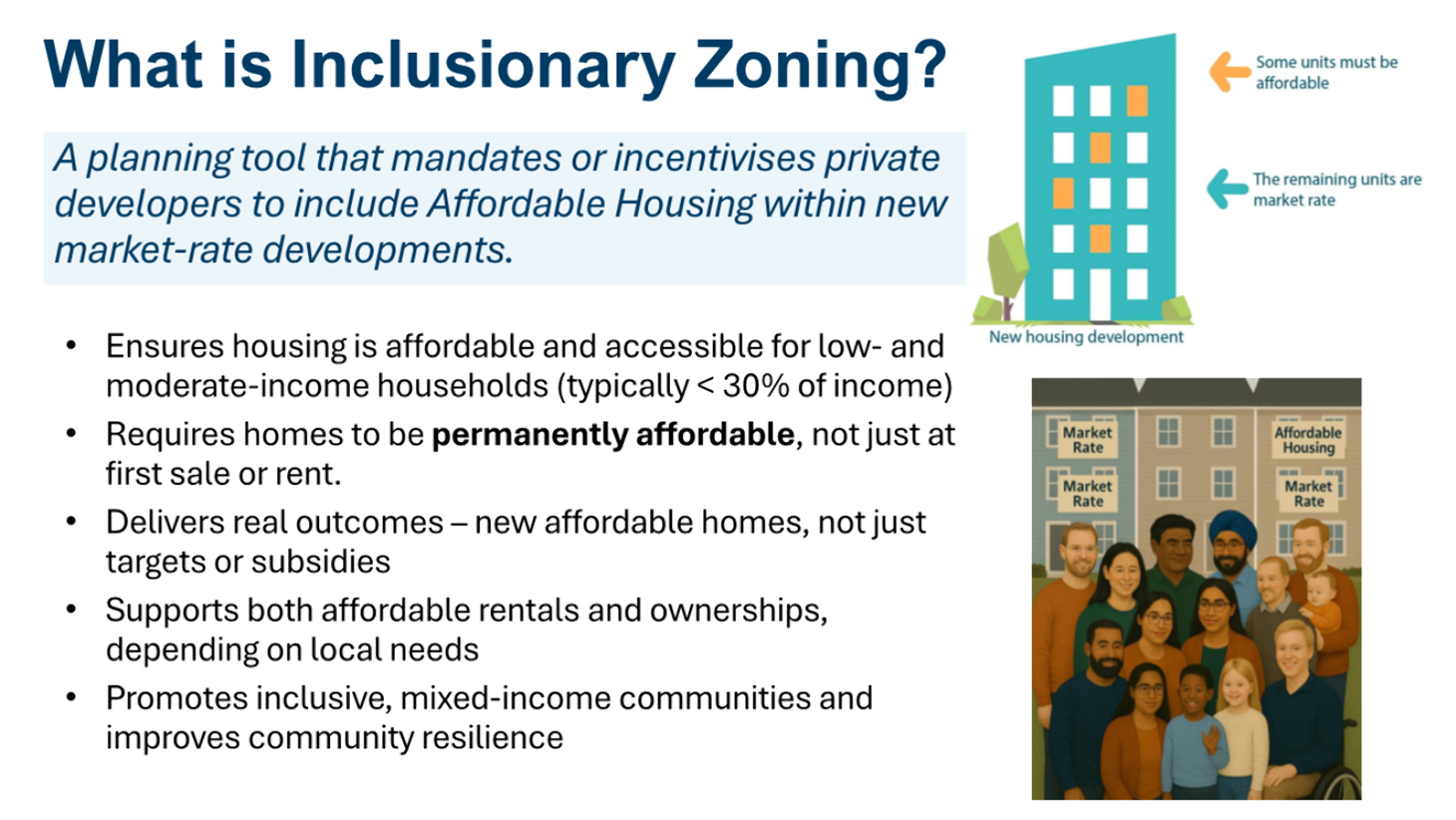
Kōrero Hou | Updates
8.1 Preliminary
Investigation into Inclusionary Zoning
Kaituhi |
Author: Aastha
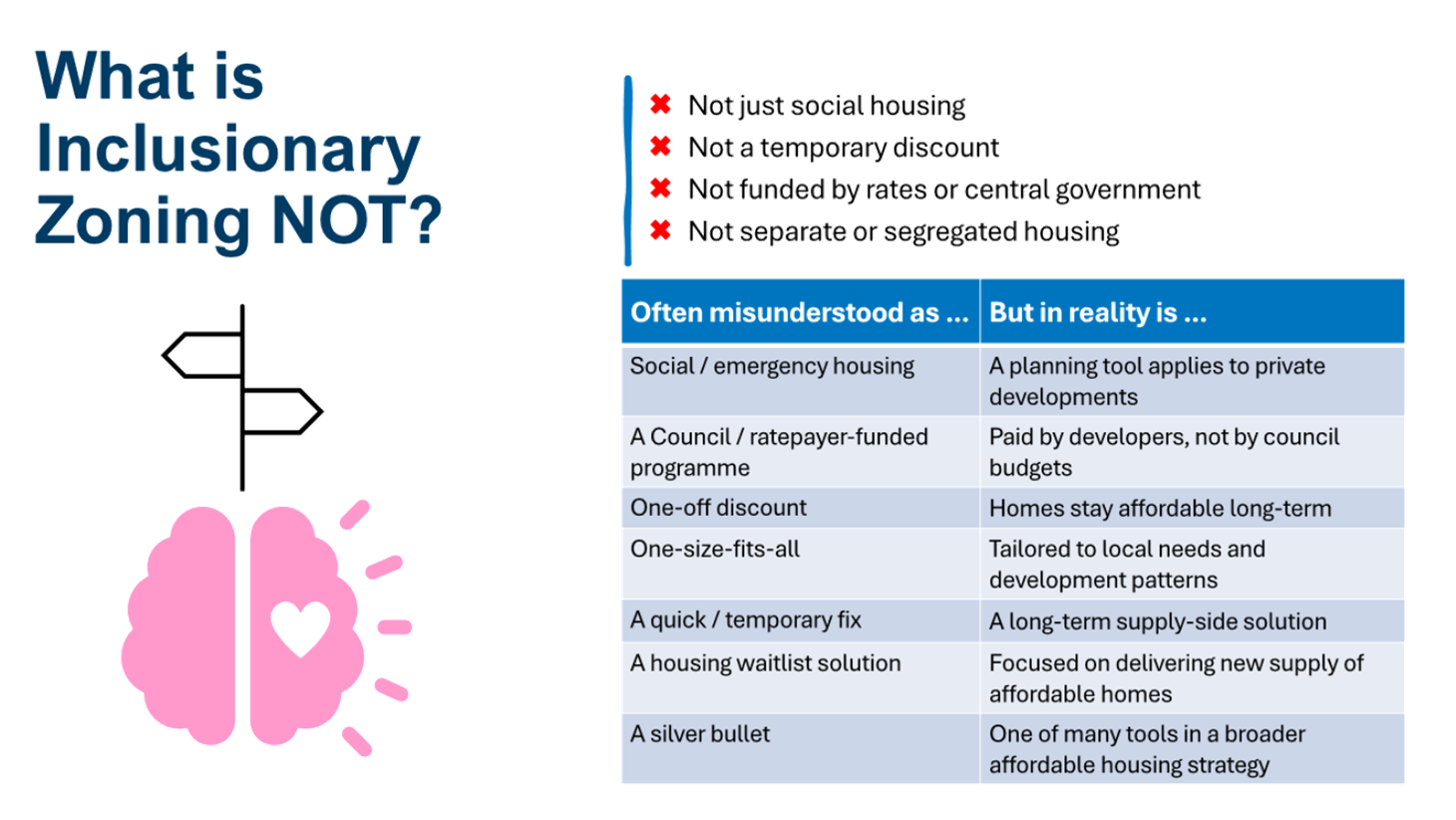
Shrestha, Intermediate Policy Planner
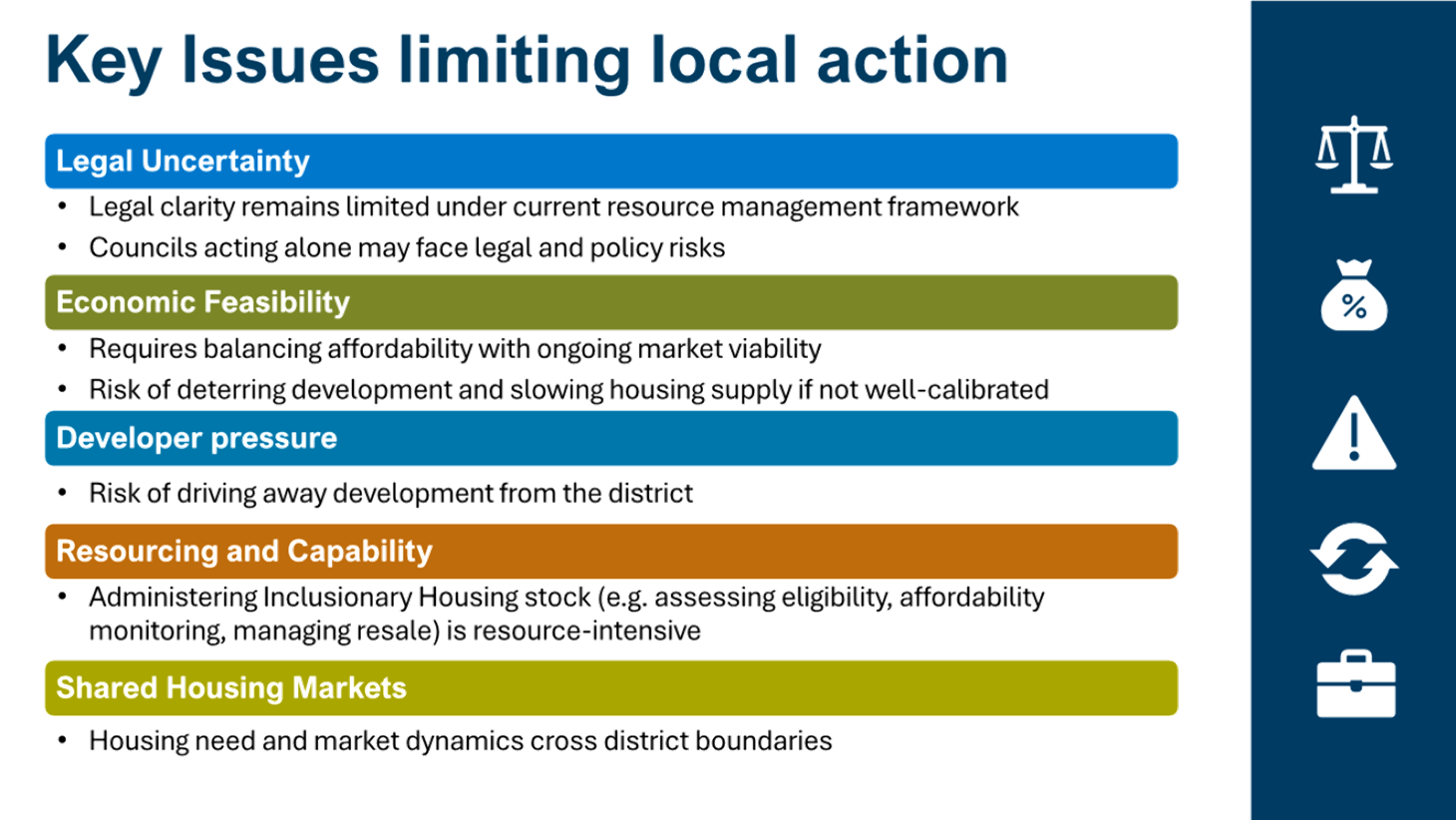
Kaiwhakamana
| Authoriser: Kris Pervan, Group Manager Strategy & Growth
Te pūtake |
Purpose
1 In
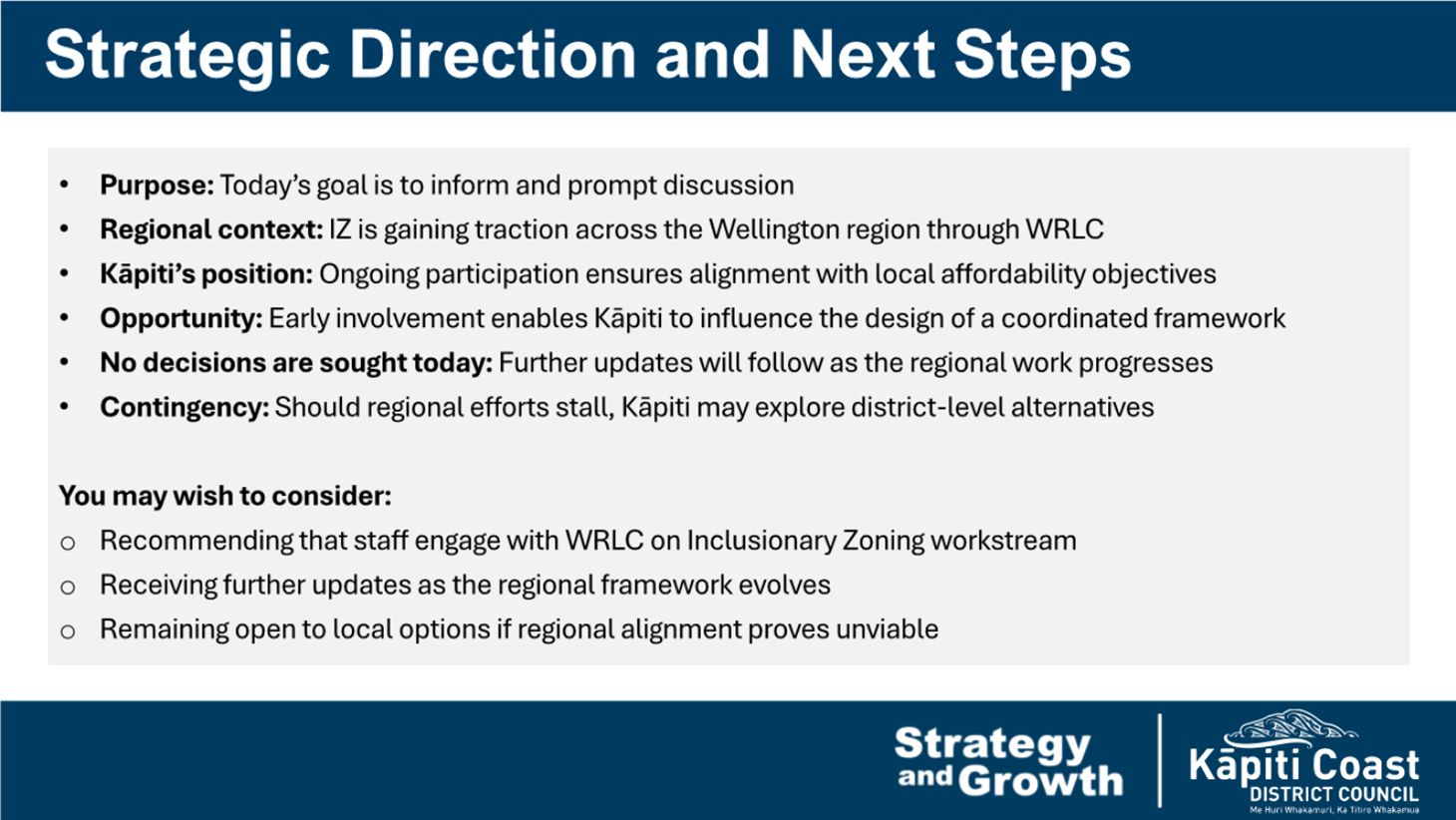
follow-up to Council’s resolution to make Plan Change 2 –
Intensification (PC2) operative, this paper provides a report-back on
inclusionary zoning and seeks discussion on the value of and support for
Council officers taking a lead in the development of a regional approach given:
a) findings
from preliminary investigation initiated in 2023 into the potential for
inclusionary zoning to help deliver affordable and inclusive housing outcomes
in Kāpiti; and
b) national
and international examples, key implementation considerations, and the
rationale for supporting a regionally coordinated approach to inclusionary
zoning.
Taunakitanga | RECOMMENDATIONS
A. That
the Climate and Environment Committee:
A.1 Note
the findings of the preliminary investigation into inclusionary zoning
(attached in Appendix 1) and its relevance to Kāpiti’s affordable
housing objectives / outcomes.
A.2 Discuss
and provide direction and/or support for Council taking a lead role in the
development of a regional approach to inclusionary zoning, through collaboration with the Wellington Regional
Leadership Committee (WRLC), while remaining open to alternative options if
regional efforts stall.
Tūāpapa | Background
2 Housing
affordability remains a critical issue in Kāpiti and across New Zealand.
Of note:
2.1 The
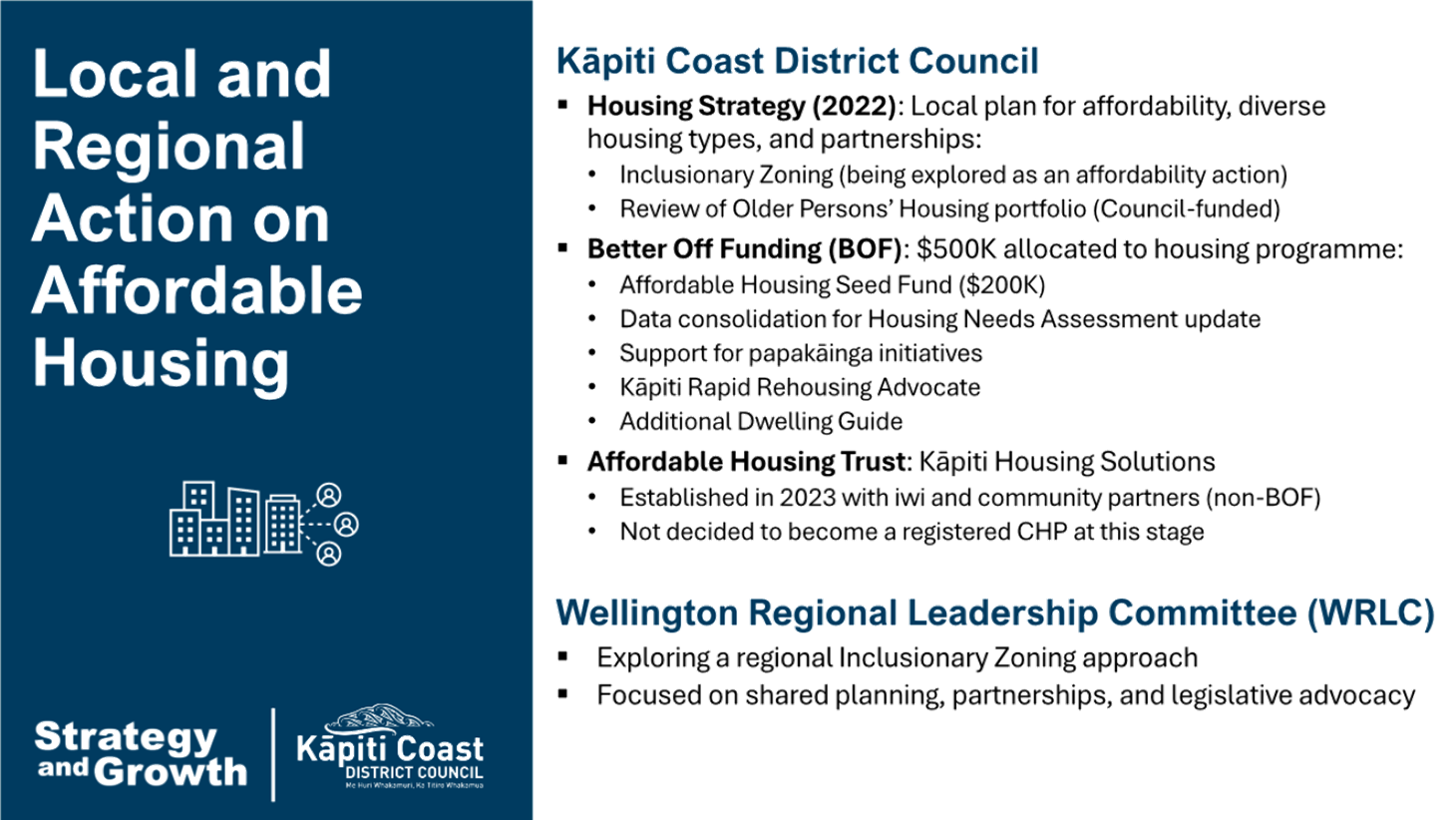
Council’s Housing Needs Assessment and the subsequent Housing Strategy
2022 identified that while population growth and housing pressures continue to
rise, access to affordable, secure, and diverse housing has not kept up,
particularly for low- to moderate income-households[1].
2.2 The
Strategy identified seven focus areas for addressing housing challenges,
including housing affordability. One of the actions under this focus area was
to explore Inclusionary Zoning to support tenure diversity and increase housing
supply. It also encouraged partnerships with iwi, Community Housing Providers
(CHPs), and other local partners to enable collaborative housing delivery.
2.3 Further
to this, the 2023 Housing and Business Development Capacity Assessment (HBA)[2] confirmed that while
there is sufficient zoned capacity to meet projected housing demand,
significant challenges remain around development feasibility and the delivery
of affordable homes. This underscores the need for planning tools that not only
enable growth but also secure affordable outcomes.
3 In
August 2023, when the Council resolved to make Plan Change 2 –
Intensification (PC2) operative, its limited scope meant that broader urban
development matters (like exploring tools for diverse housing) were deferred.
As a result, staff committed to investigating inclusionary zoning as a
complementary planning response to support the provisions enabled by PC2[3] and contribute to
more affordable and inclusive housing outcomes aligned with the
district’s strategic housing objectives. With PC2 now operative, and as
part of the Council’s Future Urban Development Plan Change pathway, there
is now an opportunity to consider and investigate additional planning tools
such as inclusionary zoning, that could complement intensification and
contribute to more affordable and inclusive housing outcomes in Kāpiti.
4 Within
the national and regional context, our Council has taken proactive steps to
strengthen its local housing system and improve affordability outcomes. In
particular:
4.1 In
2023, the Council formalised Kāpiti Housing Solutions Trust (the Trust) as
a local vehicle for delivering social and affordable housing. Its establishment
followed the Council resolutions endorsing a partnership-based approach to
housing delivery.
4.2 The
Trust now provides an institutional home for progressing community-led housing
projects and is expected to serve as a key delivery partner in any future
Inclusionary Zoning or Inclusionary Housing framework. By aligning with the
Trust, the Council can leverage trusted delivery expertise while ensuring that
affordability outcomes are secured and maintained over time.
4.3 In
2024, the Council launched a Community and Affordable Housing Seed Fund,
offering up to $200,000 to support iwi, social enterprises, and CHPs wanting to
develop housing initiatives.
4.4 Alongside
its Housing Strategy and other targeted initiatives, these investments reflect
an evolving approach to housing delivery, which recognises the need for both
regulatory tools and resourced delivery mechanisms to respond to local housing
needs.
5 However,
due to the complexity of factors contributing to the housing crisis, increasing
housing supply alone will not be enough to ensure that homes become more
affordable (especially for low- to moderate-income households), without
additional targeted mechanisms to direct delivery towards genuinely affordable
options. Inclusionary zoning is one of several additional levers that will need
to be considered to more fulsomely address the housing crisis, and to deliver
both supply and affordability.
He take |
issues
Scope for Inclusionary Zoning / Housing
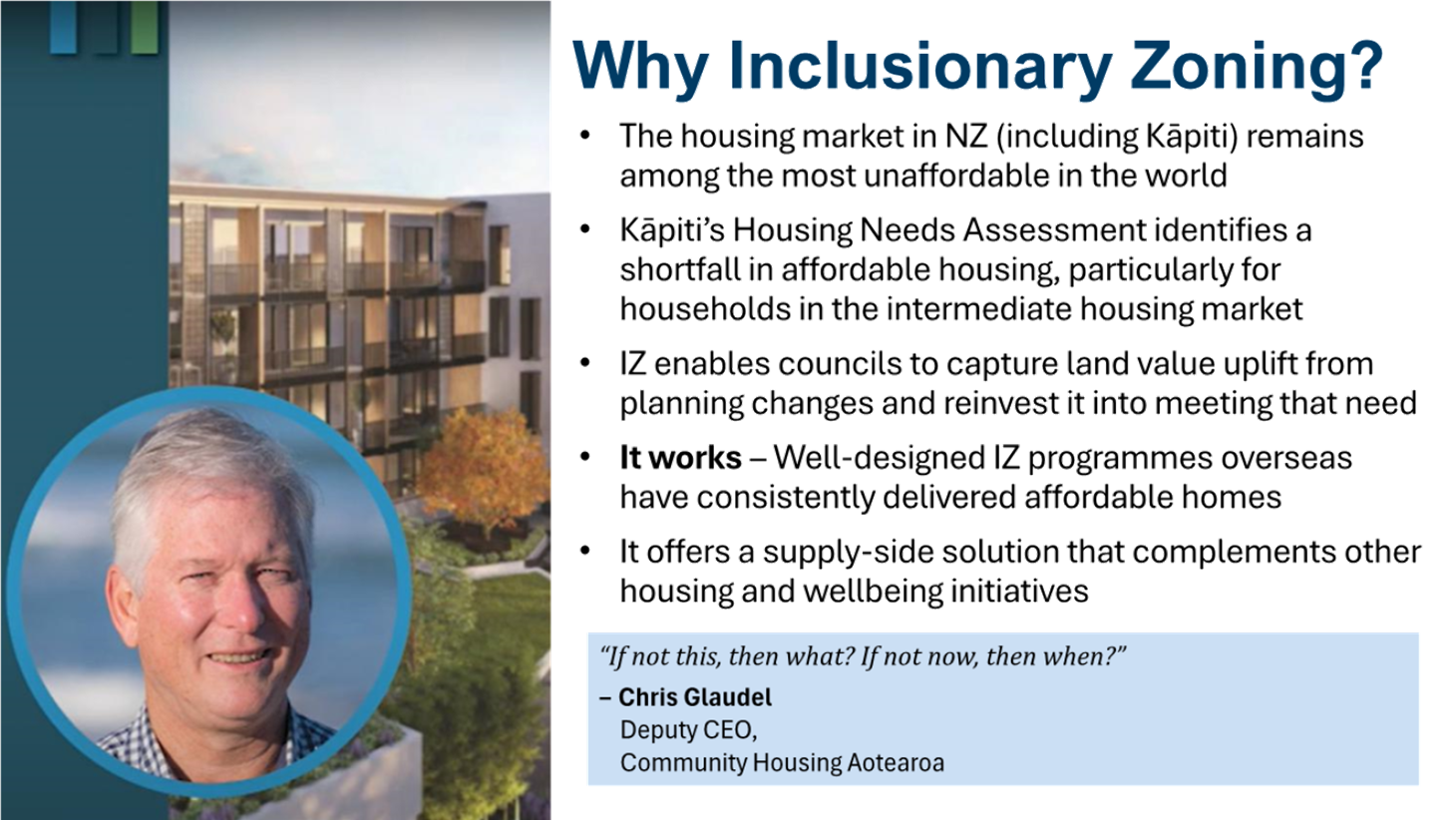
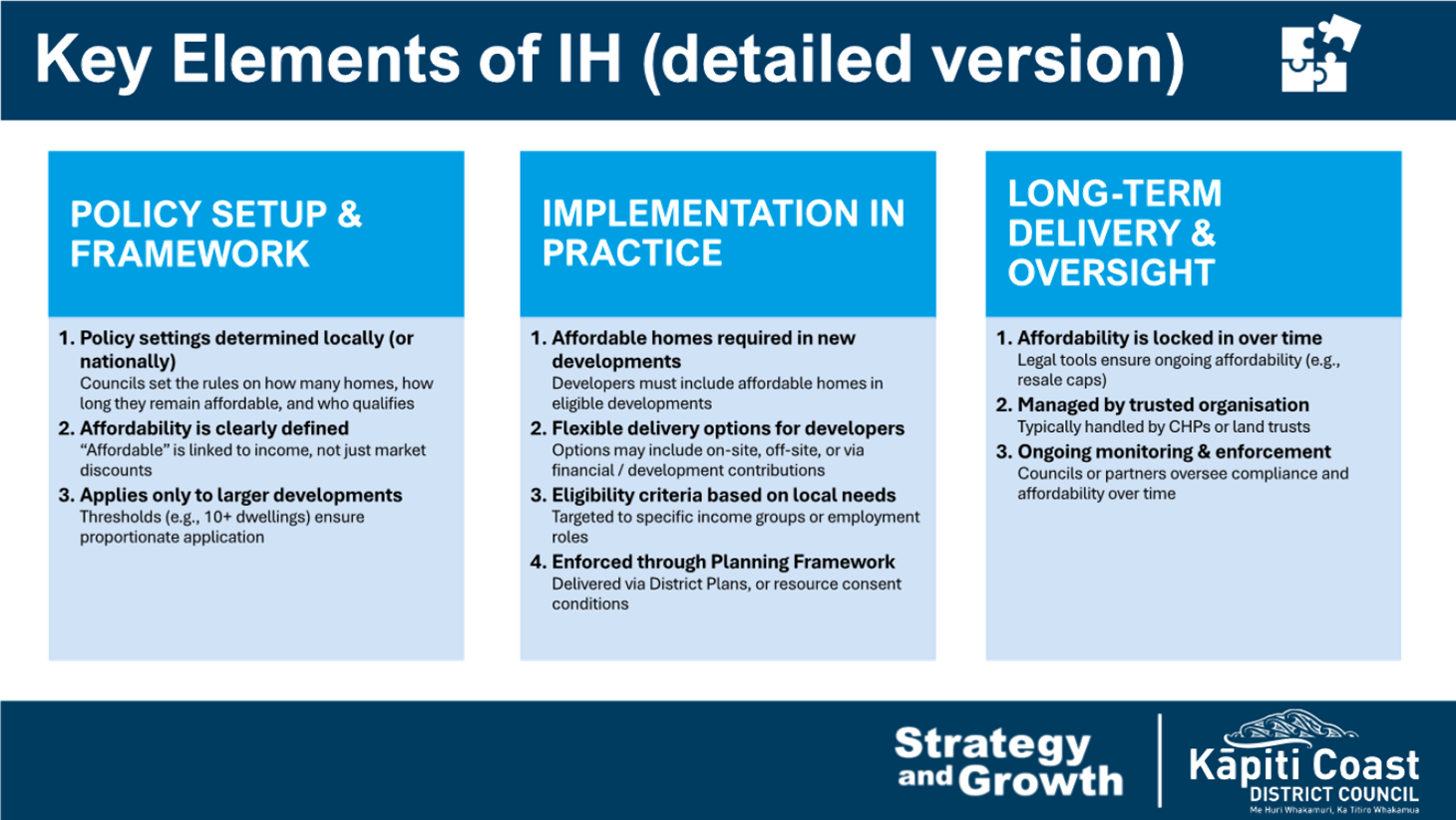
6 Inclusionary
zoning (IZ), also known as inclusionary housing, is a planning tool that
enables councils to require or incentivise private developers to include
affordable homes in residential or mixed-use developments. It is designed to
integrate affordability into the development process and can be implemented
through mechanisms such as district plan rules, resource consent conditions, or
negotiated agreements.
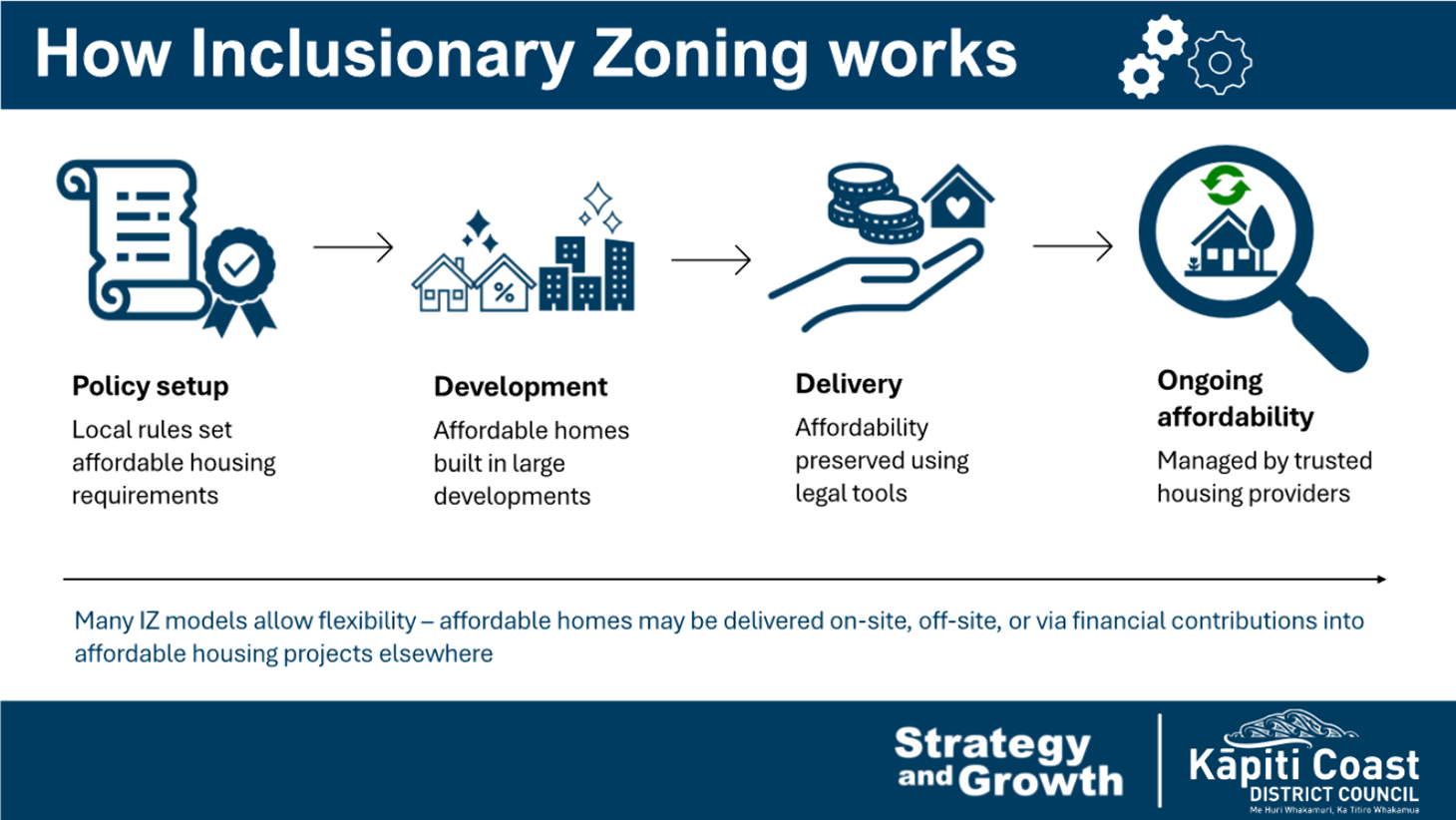
7 IZ
typically applies above a development threshold (commonly 10 or more dwellings)
and allows flexibility in how affordable housing contributions are delivered.
This may include on-site provision (generally preferred), off-site delivery, or
financial contributions to a dedicated affordable housing fund (via Financial
Contributions or Development Contributions).
8 Homes
delivered through IZ are usually targeted towards households earning below the
median income and secured as permanently affordable using legal mechanisms such
as covenants, ground leases, resale caps, or shared ownership models to
preserve affordability over time.
9 By
capturing some of the land value uplift associated with zoning changes or
intensification, IZ can ensure that new development contributes directly to
affordable housing outcomes.
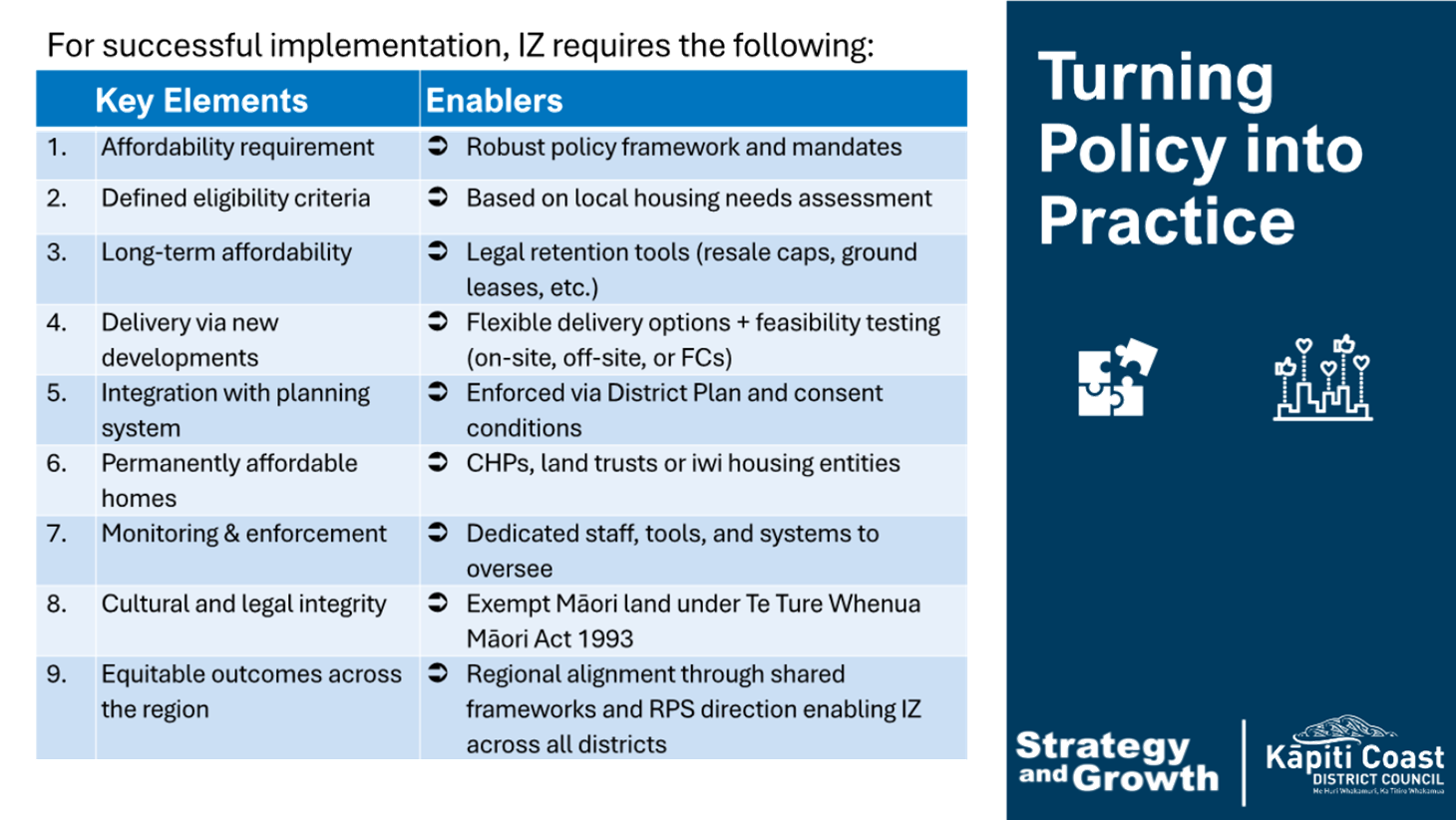
10 Effective
IZ frameworks depend on clearly defined planning provisions, robust legal
instruments, and partnerships with trusted delivery agencies such as Community
Housing Providers (CHPs) or housing trusts. Councils typically determine when
and where IZ applies (often triggered by the scale of development) and how
contributions are calculated and secured.
11 It
is important to note that IZ is not seen as the same as social housing, nor is
it a ratepayer-funded subsidy. It is a supply-side tool that leverages the
private development process to secure a portion of affordable homes. The
ongoing management and stewardship of these homes are typically undertaken by
CHPs, iwi organisations, or housing trusts to ensure affordability is retained
and appropriately allocated over time.
Preliminary findings from investigation
12 Several
issues have been identified through the preliminary investigation that is
outlined in paragraph 13 (below):
12.1 The
current resource management framework does not explicitly support mandatory IZ,
creating legal uncertainty around its enforceability under the RMA. This has
been a key factor in several councils withdrawing or softening IZ proposals
during plan-making processes[4].
12.2 Pursuing
IZ at a local level (district-only approach) risks creating fragmented policy
approaches, which can lead to market confusion, policy inefficiency, and
conflict in managing regional housing pressures.
12.3 Due
to its technical nature, Inclusionary Zoning requires expert legal, planning
and economic expertise to develop and implement it, including economic
modelling, legal drafting, and ongoing compliance monitoring, which can place
significant pressure on existing in-house staff resources.
13 Key
areas of focus and points of note from the review are as follows:
13.1 Inclusionary
zoning is used widely, and effectively, by international jurisdictions as a
planning tool:
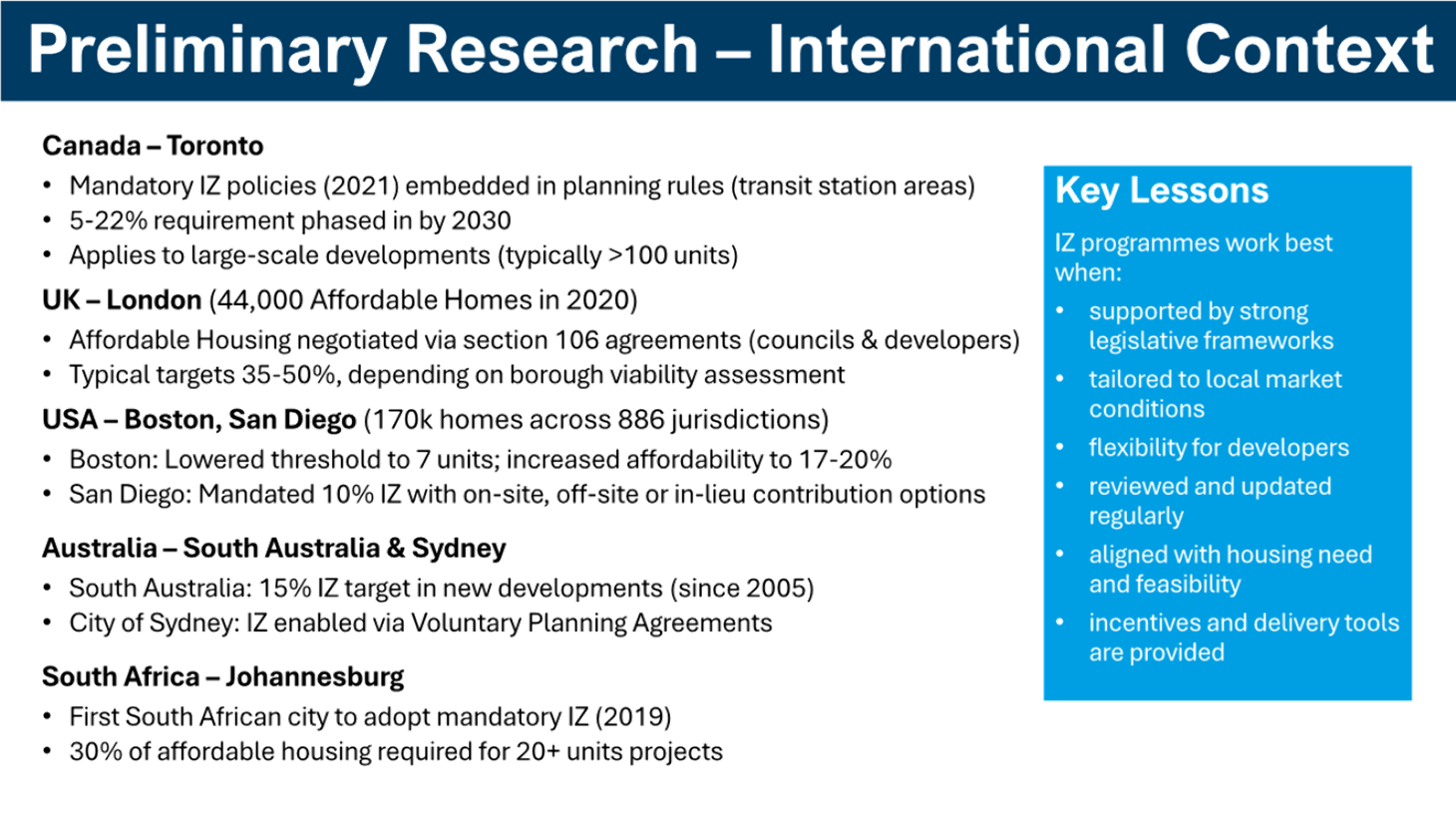
13.1.1 IZ
is used internationally to address housing affordability pressures and promote
diverse communities, particularly in growing urban areas. Some examples
include:
· Toronto,
Canada: IZ was introduced in 2021 and applies to Protected Major Transit
Station Areas (PMTSAs). The policy requires between 5% and 22% of residential
gross floor area in new developments to be affordable housing, depending on
location and phasing[5].
Affordability is secured for 99 years through legal agreements.
· London,
UK: Affordable housing is delivered through “Section 106”
agreements, where developers negotiate with planning authorities to provide
35%–50% of homes as affordable in qualifying developments. Nationally,
Section 106 has been the dominant delivery mechanism, accounting for 47% of
affordable homes in 2022–23 and 44% in 2023–24[6]. Developers build these homes
and transfer them to housing associations (Registered Providers) for long-term
management.
· Boston,
USA: The city’s Inclusionary Development Policy applies to
developments of seven or more units. It mandates 13%–20% affordability[7], with options for
off-site delivery or in-lieu payments. Developers often partner with CHPs for
implementation.
· Johannesburg,
South Africa: A mandatory IZ policy introduced in 2019 requires at least
30% affordable units in residential developments of 20 or more. The policy is
embedded in the city's spatial planning framework and applies to rezoning and
development approvals. By late 2023, nearly 8,000 units had been approved under
this policy[8].
13.1.2 These
international examples demonstrate the core components of effective IZ
frameworks. Successful implementation depends on integrating IZ requirements
within statutory planning instruments, tailoring affordability thresholds to
reflect local housing market conditions, enabling a range of delivery options
including on-site or financial contributions, and establishing clear mechanisms
for ongoing monitoring, enforcement, and long-term affordability retention.
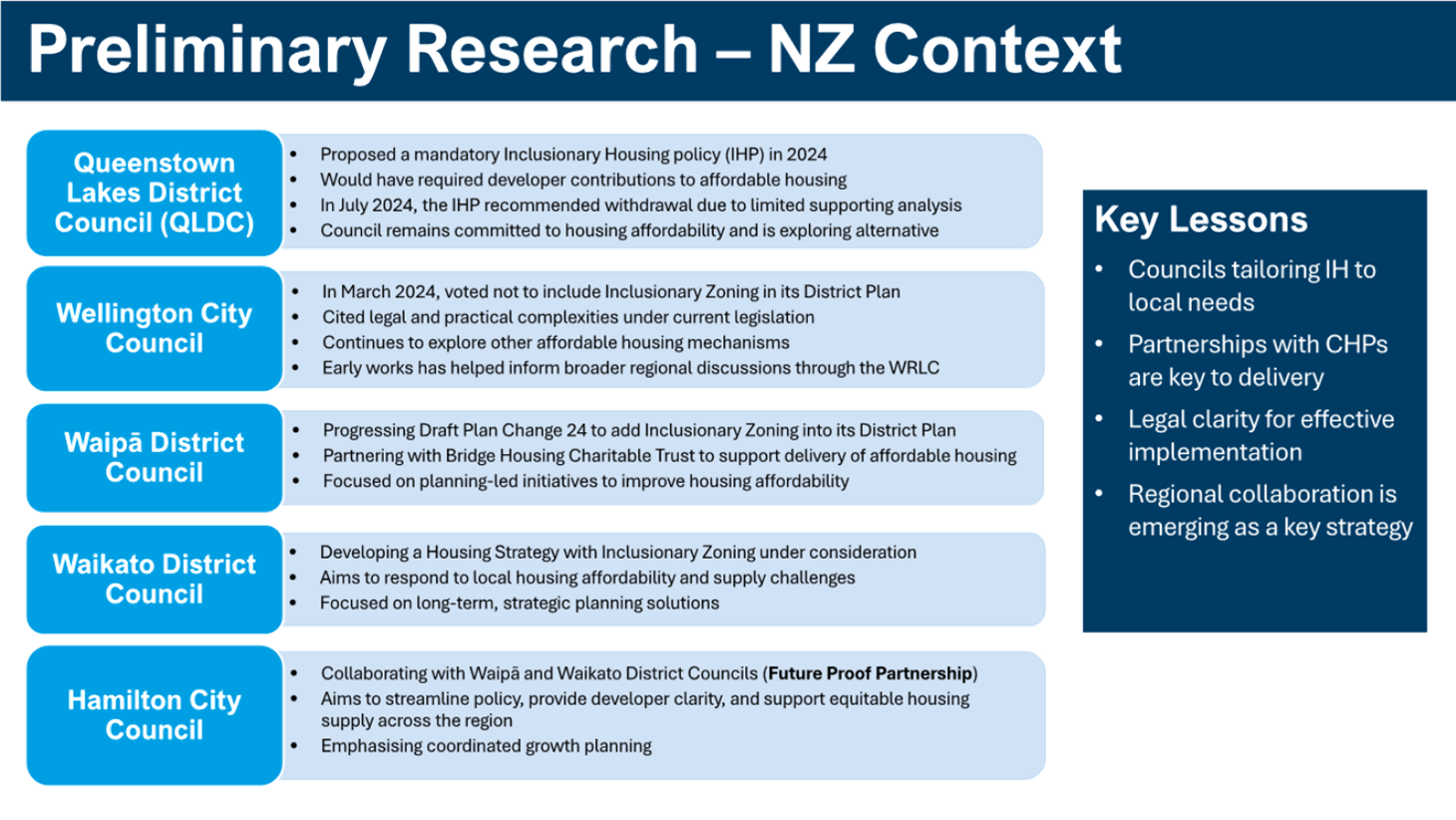
13.2 In New Zealand, inclusionary zoning is not yet widely
used but interest is increasing in it use as a planning tool:
13.2.1 IZ is still emerging as a policy option in New Zealand. While it is
not yet widely implemented, housing affordability pressures have prompted many
councils to explore IZ as a tool to better align private development with
public housing outcomes through the planning system.
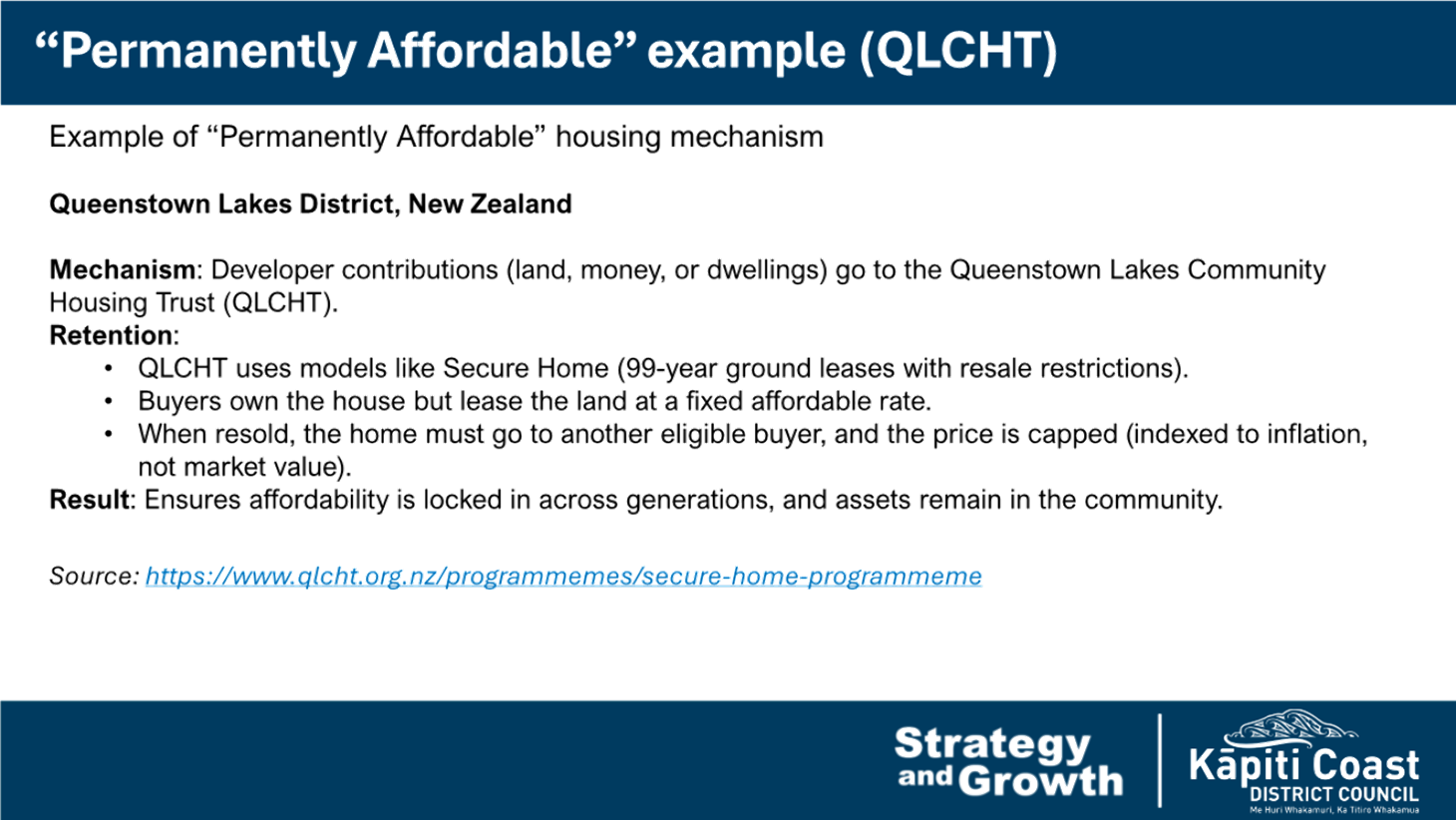
· Queenstown
Lakes District Council (QLDC): Since 2003, QLDC has implemented a form of
Inclusionary Housing, requiring developer contributions (such as land,
dwellings, or cash payments) for affordable housing[9]. These contributions are
directed to the Queenstown Lakes Community Housing Trust (QLCHT), which
provides affordable homes through long-term ground leases, capped resale
pricing, and assisted ownership models like the Secure Home programme[10].
In 2024, QLDC withdrew Plan
Change 24, which proposed a mandatory IZ variation to the District Plan,
following the Independent Hearings Panel's recommendation against it. The panel
cited insufficient evidence and analysis of alternative options to address
housing affordability[11].
· Auckland
Council considered mandatory IZ during the development of its Unitary Plan
in 2016 but ultimately withdrew the proposal due to legal uncertainty under the
Resource Management Act 1991 (RMA). It now supports affordable housing through
partnerships, voluntary negotiated agreements, and targeted infrastructure
investment.
· Tauranga
City Council employs site-specific negotiated agreements and planning
incentives under the City Plan and Housing Accord. Although it has not
introduced a formal IZ provision, it continues to secure developer
contributions toward affordable housing delivery.
· Waipā
District, Waikato District, and Hamilton City Councils are investigating IZ
through plan change processes, supported by shared research and collaboration
under the Future Proof Partnership. These councils are working toward a
regionally aligned and legally defensible IZ framework, drawing from local
conditions and shared policy goals.
· Wellington
City Council (WCC): In 2021, WCC explored implementing mandatory IZ through
the Assisted Housing chapter of its Draft District Plan, however, the Council
removed these provisions before public notification. The Council cited legal
and procedural limitations under the RMA[12],
indicating it did not provide a clear legal framework for enforcing mandatory
IZ, leading to concerns about the feasibility and legality of such provisions.
Despite this, WCC plays an
active role in the Wellington Regional Leadership Committee’s (WRLC)
Inclusionary Housing workstream. The WRLC, a partnership of councils, iwi, and
central government in the Wellington-Wairarapa-Horowhenua region, aims to
develop a consistent, coordinated IZ approach across the Wellington region[13]. This regional
initiative builds on lessons learned from district-level experiences, including
WCC's, to address housing affordability challenges collectively.
13.2.2 Community
Housing Aotearoa (CHA) in its 2024 report, Inclusionary Zoning – A
Path Forward in Aotearoa New Zealand[14],
highlights growing national interest in Inclusionary Zoning as a planning tool
to address housing affordability. The report also identifies significant
regulatory constraints, particularly the lack of explicit enabling provisions
within the RMA, which creates legal uncertainty / ambiguity and limits
councils' confidence to integrate IZ in their district plans.
13.2.3 CHA
advocates for a national IZ framework to provide standardised eligibility
criteria, enduring affordability mechanisms, and legal clarity to support
defensible local implementation. Without such direction, councils face legal
risk, inconsistent practice, and limited ability to translate planning-enabled
growth into affordable housing outcomes.
13.3 New Zealand’s existing legislative framework is
complex and provides a degree of uncertainty for planning tools like
inclusionary zoning at a district level:
13.3.1 Previous
legislative frameworks have sought to enable councils to play a more active
role in the delivery of affordable housing. The Affordable Housing: Enabling
Territorial Authorities Act 2008 provided a statutory mechanism for
councils to require developer contributions, contingent on the preparation of a
Housing Needs Assessment – a process already completed by the Council[15]. However, this Act
was repealed in 2010 before it was fully operationalised[16].
13.3.2 The
subsequent Housing Accords and Special Housing Areas Act (2013) provided
time-limited fast-tracking mechanisms with some affordability provisions but
was repealed in 2022 without establishing a durable framework. These past
efforts underscore the ongoing need for a lasting national mechanism to support
affordable housing delivery.
13.3.3 More
recently, national planning instruments such as the National Policy
Statement on Urban Development (NPS-UD) and Medium Density Residential
Standards (MDRS) have supported housing growth and intensification.
However, they do not provide mechanisms to secure affordability through zoning.
13.3.4 The
limited scope and duration of these measures demonstrate a continuing gap in
robust, enabling legislation to support the large-scale implementation of
Inclusionary Zoning. This further emphasises the need for regional coordination
and strong advocacy for national reform, alongside alignment with higher-order
policy instruments such as the Regional Policy Statement (RPS).
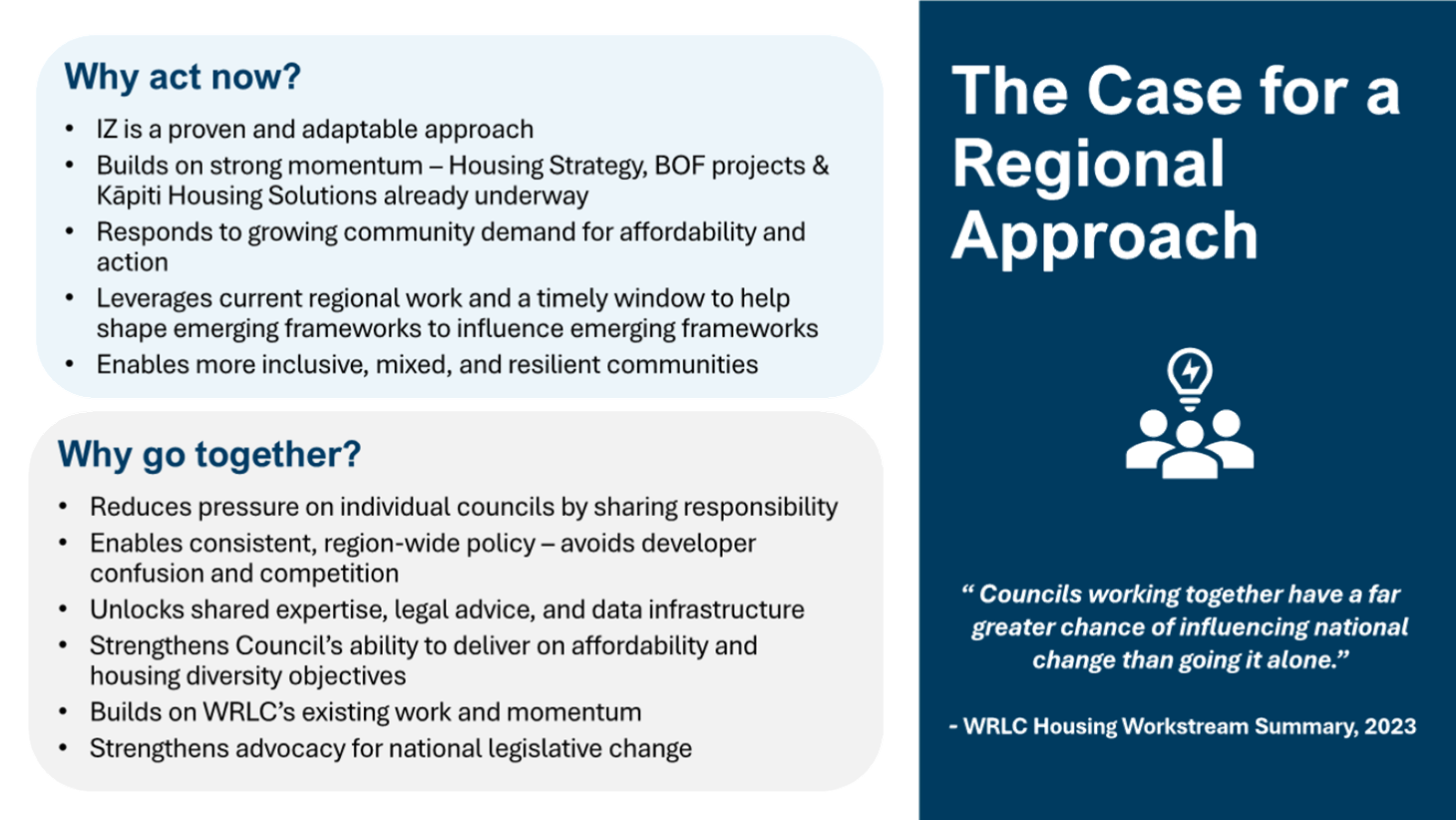
13.4 Coordination
of a strategic response across the region, if not NZ Inc as a whole, is needed
to effect real change:
13.4.1 The
scale and complexity of housing affordability challenges across the Wellington
region, as a microcosm of NZ Inc, highlight the need for a coordinated and
strategic response. While Kāpiti’s local initiatives lay important
groundwork, the complexity and legal uncertainty surrounding IZ highlight the
limitations of acting independently.
13.4.2 There
is opportunity to work with other districts through the WRLC to progress a
regionally aligned IZ framework to develop a shared legal and technical
expertise, strengthen collective advocacy for legislative reform, and ensure
consistency in planning approaches. This unified approach may also reduce
litigation risk, which is more likely if councils act independently in the
absence of a clear regional or national mandate.
13.4.3 Pooling
legal, economic, and planning resources across the region would enable a more
robust and defensible implementation. On the other hand, a fragmented approach
risks undermining policy effectiveness, as developers may avoid affordability
requirements by relocating to areas / jurisdictions without IZ provisions.
13.4.4 Establishing
a regional direction would also align with the CHA’s report, which
highlights the value of regional collaboration in delivering more effective and
enduring affordable housing outcomes. There is growing consensus that a shared
approach reduces duplication, improves delivery, and provides developers with
greater certainty.
13.4.5 For Kāpiti, IZ presents an opportunity to
complement existing planning tools and contribute to more predictable delivery
of affordable housing. Ongoing participation could ensure Kāpiti has a
voice in shaping the policy direction and implementation model, and any future
implementation may require alignment with, or amendments to, the Regional
Policy Statement (RPS).
13.4.6 This preliminary investigation identifies that
the district could both contribute to, and benefit from, a regional IZ
framework, particularly through access to shared legal, technical, and delivery
resources that align with local housing priorities.
13.4.7 However, regional collaboration may also bring
risks, including reduced flexibility to tailor solutions to local conditions,
possible delays due to misalignment with the district-specific needs, and
dependence on shared resources. These may limit Kāpiti’s ability to
progress independently.
13.4.8 These risks reinforce the need for Kāpiti
to maintain an active and visible role in shaping the regional framework while
ensuing its ability to act locally if required. As such, the Council should
remain open to exploring other mechanisms or fallback options if regional
efforts do not progress as expected (if regional efforts stall or diverge from
local needs).
13.4.9 Kāpiti has the opportunity to take a
leadership role in progressing Inclusionary Zoning across the region. By
contributing proactively to WRLC discussions and aligning regional framework
with existing local mechanisms (such as the Kāpiti Housing Solutions
Trust), the Council can help shape solutions that are both consistent and
locally responsive. This approach enables Kāpiti to leverage regional
capacity while maintaining ability to address its own priorities.
Ngā
kōwhiringa | Options
14 The
following table provides a summary of the benefits and risks related to
Inclusionary Zoning to support the Committee’s discussion today:
|
Kōwhiringa |
Options
|
Hua | Benefits
|
Tūraru | Risks
|
|
Option A: Collaborating regionally via WRLC’s
Inclusionary Zoning workstream
(Assessed as optimal)
|
· Shares
legal and technical resources
· Supports
regional consistency for developers
· Reduces
litigation risk through collective approach
· Enhances
collective advocacy for national reform
· Retains
ability to tailor or progress with local provisions if regional efforts stall
· Positions
the Council to take an active leadership role in shaping the regional
framework
|
· Dependent
on WRLC prioritisation and pace
· Potential
misalignment with local priorities
· Local
momentum may be slowed by regional governance/committee process
· Risk
of reduced flexibility if a strong local leadership role is not maintained
|
|
Option B: Progress Inclusionary Zoning
independently via a District Plan Change
|
· Allows
direct control over policy design
· Tailors
provisions to Kāpiti-specific needs
· Signals
local leadership on housing affordability
|
· High
legal and resource burden
· Greater
litigation risk without national or regional mandates
· May
prompt developer pushback or relocation to other areas
· Duplication
of effort with other councils in the region
|
|
Option C: Maintaining status-quo (relying on
existing tools and funding initiatives)
|
· No
additional resourcing required
· Utilises
current partnerships (e.g. Housing Solutions Trust)
· Avoids
complexity of policy development
|
· No
guarantee of affordable housing delivery
· Missed
opportunity for strategic influence
· Limited
ability to secure affordability through planning
· Greater
long-term reliance on external funding
|
ngā Mahi
panuku |
next steps
15 The
Social Sustainability Committee (SSC) will consider a similar paper as
discussed today, on the 19 June 2025, including a summary of feedback from this
Committee on this matter.
16 Following
this, on 24 July 2025, the Strategy, Operations and Finance Committee
(SO&F) will be briefed on preliminary investigation findings as part of the
“Report back on future District Plan changes and other potential actions
arising from Council decisions on Plan Change 2”.
17 If
SO&F resolves to proceed with the option currently assessed as
‘optimal’ (refer to Option A in paragraph 14), then following next
steps will occur:
17.1 Staff
will engage with the WRLC to further explore regional inclusionary zoning
opportunities that align with local housing delivery tools and emerging
regional policy recommendations.
17.2 Report
future updates as required to this Committee, the SSC, and SO&F, as
regional work progresses and a potential framework is developed.
17.3 If
regional alignment does not progress or fails to produce an implementable
framework, Council officers would draft further advice regarding opportunity to
progress district-level inclusionary zoning options or alternative planning
interventions.
Ngā āpitihanga | Attachments
1. Presentation:
Council briefing on Inclusionary Zoning ⇩