|
Strategy, Operations and Finance Committee
Meeting Agenda
|
13 March 2025
|
9 Pūrongo
| Reports
9.1 Initial Decision on Welhom Developments Ltd Private Plan Change
Kaituhi | Author: Jason
Holland, District Planning Manager
Kaiwhakamana | Authoriser: Kris Pervan, Group Manager Strategy & Growth
Te
pūtake | Purpose
1 This paper seeks a
resolution from the Committee as to how to proceed with the private plan change
request received from Welhom Developments Ltd (“Welhom”, or
“the requestor”), given the four options available under the
Resource Management Act 1991 (RMA).
2 This paper also provides
a summary of the private plan change request for the Committee.
He
whakarāpopoto | EXecutive
summary
3 Welhom
has applied to the Council for a private plan change (PPC) request to
change the Operative Kapiti Coast District Plan (District Plan). The PPC
request was lodged on 2 December 2024. The Council issued a further information
request on 16 January 2025. Welhom’s response to
further information which now forms part of the PPC request was completed on 27
February 2025. The PPC request is provided as Attachment 1.
4 The
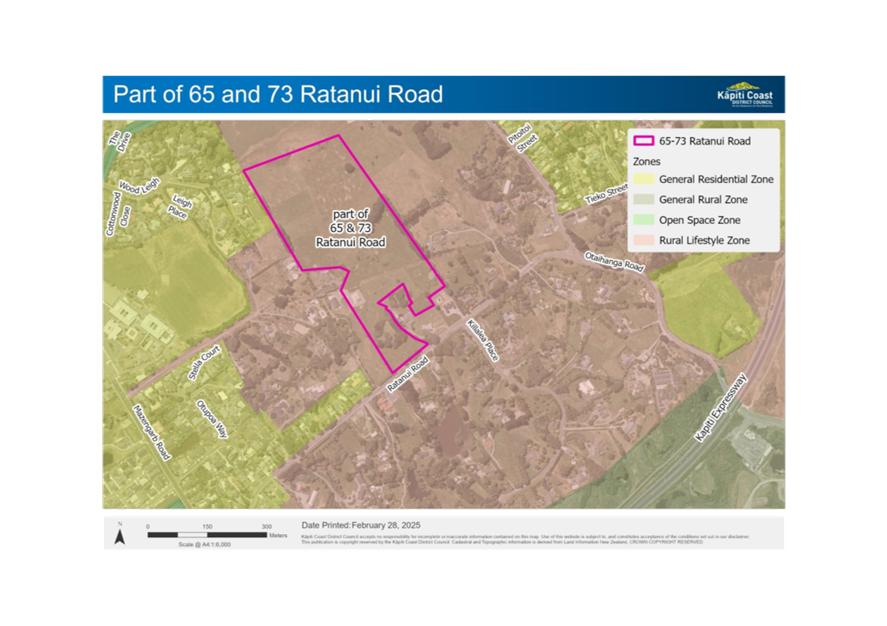
PPC request seeks to rezone approximately 12.65 hectares of land for part of 65
and 73 Ratanui Road from Rural Lifestyle Zone to General Residential Zone (a
map of this land is shown as Attachment 2). In addition to the rezoning,
the PPC request seeks to introduce a new Development Area, including an
associated Structure Plan, policies and rules. The PPC request includes bespoke
provisions for uses associated with a retirement village.
5 There are four options
under the RMA available to the Council on how to deal with the request:
5.1 To adopt the PPC request as a
Council plan change.
5.2 To accept the PPC request to
continue as a private plan change pursued by a private party (Welhom).
5.3 To reject the PPC request.
5.4 To convert the PPC request into a
resource consent.
6 Under
clause 25 of Part 2 of Schedule 1 of the RMA, the Council has to make a
decision whether to accept, adopt, reject or convert a private plan change
request within 30 working days of receipt of all further information.
7 Of
these four options, it is recommended the Committee accepts the PPC
request for the following reasons (which are addressed in more detail later in
this report) and provide for the PPC to move through the statutory RMA process:
7.1 Accepting the PPC request:
7.1.1 Does not pre-empt the final outcome of the
PPC through the formal Schedule 1 RMA process and the decision of the Hearings
Panel.
7.1.2 Allows the Council to maintain its
regulatory position, as well as providing the Council the opportunity to submit
on it, so that it can seek changes as appropriate.
7.1.3 As opposed to adopting, would allow the
Council to recover its costs in processing it through the Schedule 1 RMA
process.
7.1.4 Means it will follow the Schedule 1 RMA
process, including public notification, submissions and further submissions and
a hearing and recommended decision by a Hearings Panel. The recommendation then
comes back to Council for a decision.
7.2 There is no reason for the request to be
adopted by the Council.
7.3 There are no grounds under the RMA to reject
the request.
8 Welhom has noted a preference that the request be accepted and not
adopted.
9 For completeness, we
note that converting the request to a resource consent would not be
appropriate resource management practice as the District Plan zone provisions
would not support the outcome sought by the PPC. Further, the requestor would
not support that approach and indeed it provides no benefit to either the
requestor or the community.
Te
tuku haepapa | Delegation
10 Clause 25 of Schedule 1 of the RMA
sets out the process a local authority must follow when deciding whether to
reject, accept or adopt a private plan change request. It states:
(2) The local authority may either—
(a) adopt the request, or part of the
request, as if it were a proposed policy statement or plan made by the local
authority itself and, if it does so, —
(i) the request must be notified in
accordance with clause 5 or 5A within 4 months of the local
authority adopting the request; and
(ii) the provisions of Part 1 or 4 must apply; and
(iii) the request has legal effect
once publicly notified; or
(b) accept the request, in whole or in part,
and proceed to notify the request, or part of the request, under clause 26.
(3) The local authority may decide to deal
with the request as if it were an application for a resource consent and the
provisions of Part 6 shall apply accordingly.
(4) The local authority may reject the
request in whole or in part, but only on the grounds that—
(a) the request or part of the request is
frivolous or vexatious; or
(b) within the last 2 years, the substance
of the request or part of the request—
(i) has been considered and given
effect to, or rejected by, the local authority or the Environment Court; or
(ii) has been given effect to by
regulations made under section 360A; or
(c) the request or part of the request is
not in accordance with sound resource management practice; or
(d) the request or part of the request would
make the policy statement or plan inconsistent with Part 5; or
(e) in the case of a proposed change to a
policy statement or plan, the policy statement or plan has been operative for
less than 2 years.
11 The Committee has delegated
authority to consider this under Section B.1 of the 2022 – 2025 Triennium
Governance Structure and Delegations ‘Preparation of the District Plan
and Plan Changes’.
Taunakitanga | RECOMMENDATIONS
That the Strategy, Operations and Finance Committee:
A. Receives the report “Initial
Decision on Welhom Developments Ltd Private Plan Change”; and
B. Note that the RMA requires a
decision within 30 working days on whether to accept, adopt, reject or convert
the Private Plan Change from the date of receipt of all further information
from the requestor; and
C. Accepts the Request for the Private
Plan Change for part of 65 and 73 Ratanui Road (Attachment 1) as Private Plan
Change 4; and
D. Agrees independent commissioners
will be appointed to consider Private Plan Change 4 and to make recommendations
to Council; and
E. Agree that the decision-making
options are set out in clause 25 of the First Schedule of the Resource
Management Act 1991 and that this clause 25 decision is a process decision in
Council’s capacity as regulator; and
F. Agrees that the significance of
this process decision is low to medium because it is
the substantive decision on the Private Plan Change that has the potential
impact and that substantive decision will be subject to a public process,
prescribed by the RMA. Accordingly, consultation under the Local Government Act
on this clause 25 of the First Schedule of the Resource Management Act 1991
process decision under the RMA is neither necessary nor appropriate.
Tūāpapa | Background
Private Plan Change Requests
12 The
process for a private plan change (PPC) is set out in Schedule 1 of the RMA.
Any person may request a change to a district plan (or regional plan) and the
Council must consider how that request will be dealt with, once it is satisfied
it has all the information it needs.
13 A PPC follows the same statutory
process as a Council-initiated plan change, with one important additional step.
Clause 25 of Schedule 1 of the RMA requires the Council at the start of the
process to either:
13.1 Adopt the request (or part of it) as if it
were a plan change made by the Council itself.
13.2 Accept the request (in whole or part) which
enables it to proceed as a PPC through the normal submission and decision
process.
13.3 Reject the
request (in whole or part) on the grounds set out in clause 25(4)(a)-(e) of
Schedule 1 of the RMA (and only on those grounds).
13.4 Decide to deal with the
request (convert) as if it were an application for resource consent.
14 In terms of the rejection option,
this is constrained by the RMA and decision by the Council to reject a private
plan change is only available where one of five specific grounds in Clause
25(4) of Schedule 1 of the RMA are met:
14.1 the request or part of the request is frivolous or
vexatious; or
14.2 within the last 2 years, the substance of the
request or part of the request has been considered and given effect to, or
rejected by, the local authority or the Environment Court; or has been given
effect to by regulations made under section 360A; or
14.3 the request or part of the request is not in
accordance with sound resource management practice; or
14.4 the request or part of the request would make the
policy statement or plan inconsistent with Part 5; or
14.5 in the case of a proposed change to a policy
statement or plan, the policy statement or plan has been operative for less
than 2 years.
15 If there are no grounds for
rejection then the Council must decide to adopt it, accept it or convert it to
a resource consent application.
16 The Council's decision under Clause
25 is made in advance of public notification of the PPC and therefore does not
have the benefit of public submissions, evidence and a full analysis from the
Council officers or experts engaged by the Council. It is accordingly
described by the High Court as a 'coarse filter'[1] of the PPC - in
effect, a screening exercise. It is not the Council’s full merits
decision based on all relevant submissions and information. That comes later,
after a full RMA process and opportunity for public involvement.
17 At this stage, the Council's
decision is only whether the PPC should be able to continue being processed as
a plan change and if so, whether it is treated as a Council initiated plan
change (the adopt option) or whether it continues as a PPC request (the accept
option).
Private Plan Change Proposal
18 The
PPC request is Attachment 1 to this report. The proposed changes to the
District Plan are located at Appendix A of the PPC request and the RMA section
32 evaluation is located at section 5 of the PPC request. The PPC relates to
the sites shown in the map as Attachment 2 being part of 65 and 73 Ratanui
Road.
19 In
brief, the PPC seeks to:
19.1 Rezone the land from its current Rural Lifestyle
Zone to General Residential Zone.
19.2 Include a new Development Area Chapter within the
Operative District Plan.
19.3 Include a new Structure Plan within the Operative
District Plan.
19.4 Include bespoke provisions within the Development
Area Chapter, associated with the Structure Plan. This would include specific
provision for a retirement village.
20 The
requestor has provided the following information within the PPC request:
20.1 The PPC request document itself (as updated with
further information).
20.2 The Structure Plan (as updated with further
information).
20.3 Amendments to the District Plan Maps.
20.4 Technical assessment documents as follows:
20.4.1 Landscape and visual assessment.
20.4.2 Ecological assessment.
20.4.3 Archaeological assessment.
20.4.4 Integrated transport assessment.
20.4.5 Civil engineering infrastructure assessment.
20.4.6 Geotechnical assessment.
20.4.7 Economic assessment.
20.4.8 Preliminary site investigation (report into
contaminated land issues).
20.5 Letters of support from Ātiawa ki
Whakarongotai and Te Rūnanga o Toa Rangatira.
21 In response to the Council’s
further information request, the requestor provided:
21.1 Further information in respect to landscape, urban
design and ecology.
21.2 Further information regarding traffic and
transport.
21.3 An updated structure plan, showing more information
to guide any future development.
21.4 Updated provisions.
22 At the Council’s request,
this further information has now been incorporated into the updated PPC request
(Attachment 1).
Higher level and relevant planning documents
23 Section
74 of the RMA outlines matters to be considered by a territorial authority in
preparing or changing its district plan. This is relevant to a PPC request.
Considerations include:
23.1 An
evaluation report prepared in accordance with section 32 of the RMA.
23.2 A national policy statement, a New Zealand coastal
policy statement and a national planning standard.
23.3 Any
regulations.
23.4 Relevant
management plans and strategies prepared under other legislation.
23.5 Any
relevant planning document prepared by an iwi authority.
24 The
requestor has provided an assessment against relevant documents in Section 4 of
the PPC request.
Section 32 evaluation
25 Clause 25(1A) requires that the
local authority must have particular regard to the evaluation report prepared
for the PPC in accordance with clause 22(1) when determining whether to adopt,
accept, reject or convert the request.
26 The requestor has provided a
section 32 evaluation report (Section 5 of the PPC request). Officers consider
that the evaluation report addresses the relevant tests under section 32 of the
RMA in terms of the appropriateness of the objective(s) to achieve the purpose
of the Act and whether the proposed provisions are the most appropriate means
to achieve the objective(s). The requestor has undertaken an analysis of the
different options available to pursuing a PPC request.
27 Having
reviewed the section 32 evaluation report, officers consider that it
demonstrates that the PPC request is an appropriate RMA response and can
achieve the purpose of the RMA. A more substantive evaluation of the section 32
report would occur through the formal RMA process as relevant in response to
any submissions, should the PPC be accepted or adopted.
National Policy Statements
28 The
request identifies the New Zealand Coastal Policy Statement, National Policy
Statement for Freshwater Management, National Policy Statement on Urban
Development and the National Policy Statement for Indigenous Biodiversity as
being relevant to the request. Officers agree that these are the relevant
national policy statements. Officers also agree that the National Policy
Statement for Highly Productive Land is not relevant given the land is zoned
Rural Lifestyle.
29 Having reviewed the assessment of
these national policy statements at a high level, officers agree with the
requestor that there are no aspects of the request that would make it
inconsistent with any of the national policy statements.
National Planning Standards
30 Officers
are satisfied that the request has been prepared in accordance with the
National Planning Standards and the format of the Operative District Plan which
already implements the National Planning Standards.
National
Environmental Standards
31 The
request identifies the National Environmental Standard for Assessing and
Managing Contaminants in Soil to Protect Human Health and the National
Environmental Standard for Freshwater as being relevant to the request.
Officers agree that these are the relevant national environmental standards.
32 Having reviewed the assessment of
these national environmental standards at a high level, officers agree with the
requestor that there are no aspects of the request that would make it
inconsistent with either of them. In both instances, relevant resource consents
will be required at the time of site development.
Regional
Policy Statement for the Wellington Region, including Change 1
33 Appendix
B of the PPC request provides an assessment against the relevant objectives and
policies of the Regional Policy Statement, including Change 1. Officers
consider that there are no aspects of the proposal that would make it
inconsistent with the RPS, including Change 1. However, should the PPC be
accepted or adopted, it will require a more substantive assessment against some
of the policies, in particular:
33.1 Policy 55: Managing greenfield development to
contribute to well-functioning urban areas and rural areas.
33.2 Policy
UD.5: Contributing to well-functioning urban areas.
33.3 Policy
56: Managing development in rural areas.
33.4 Policy
UD.3: Plan changes that provide for significant development capacity.
33.5 Policy
UD.4 Achieving a compact regional form – district and regional plans.
Wellington
Natural Resources Plan
34 Having
reviewed the assessment of the Natural Resources Plan at a high level, officers
agree with the requestor that there are no aspects of the PPC request that
would make it inconsistent with it. Officers agree that relevant resource
consents will be required from the Regional Council at the time of site
development.
Operative
Kapiti Coast District Plan
35 Having
reviewed the assessment of the objectives and policies of the Operative
District Plan at a high level, officers agree with the requestor that there are
no aspects of the PPC request that would make it inconsistent with it. A
further detailed assessment would occur should the PPC be accepted or
adopted.
Wairarapa-Wellington-Horowhenua
Future Development Strategy
36 Officers
agree with the requestor that the Wairarapa-Wellington-Horowhenua Future
Development Strategy 2024-2054 (FDS) is a relevant consideration. Officers also
agree that:
36.1 The site does not appear to be identified as an
area where development is to be avoided or is subject to constraints
36.2 The
site does not appear to be in a location that is prioritised for development.
37 Officers note that the maps are of
a scale that it is very difficult to identify sites at a granular level.
38 At a high level, officers agree
that the PPC request is generally consistent with the FDS, subject to a more
detailed assessment should the PPC be accepted or adopted.
Te Tupu Pai
Growth Strategy 2022
39 Officers
agree that Te Tupu Pai is a relevant consideration, and that the site is
located in a medium-priority greenfield growth area. Te Tupu Pai is at a more
granular level than the FDS, given it is specific to the Kāpiti District.
At a high level, officers agree that the PPC request is consistent with Te Tupu
Pai, subject to a more detailed assessment should the PPC be accepted or
adopted.
Iwi
management plans
40 There
are three iwi management plans (IMP) that have been lodged with the Council
that are relevant to the PPC request, as follows:
40.1 Nga Korero Kaupapa mo Te Taiao: Policy Statement
Manul for Kapakapanui: Te Runanga o Ati Awa ki Whakarongotai (2001);
40.2 Te Haerenga Whakamua – A review of the
District Plan Provisions for Māori: A vision to the Future for the
Kāpiti Coast District Council District Plan Review (2012);
40.3 Whakarongotai o te moana o te wai Kaitikitanga Plan
for Te Ātiawa ki Whakarongotai (2019).
41 Te Ātiawa ki Whakarongotai has
expressed support to the PPC request, and as such, officers assume that they
are comfortable that the request appropriately takes into account their IMPs.
Ngā Hapū o Otaki has deferred to Te Ātiawa ki Whakarongotai. Te
Rūnanga o Toa Rangatira does not have an IMP.
Other
strategies
42 The
PPC request also references the Government Policy Statement on Housing and
Urban Development and Better Later Life – He Oranga Kaumātua 2019 to 2034 as being relevant.
Officers consider that the PPC generally sits comfortably with these high-level
strategies.
43 The PPC also references Te Whaitua
o Kāpiti Implementation Programme. This is a non-statutory strategy
that is proposed to inform a future plan change to the NRP. Officers agree that
this programme sets out mana whenua aspirations for freshwater, noting that the
Regional Council has the function of freshwater management under the RMA.
He
kōrerorero | Discussion
Private Plan Change Request
44 Section
73 of the RMA provides that any person may request a change to a district plan
and the plan may be changed in the manner set out in the First Schedule of the
RMA. The first step in the process is that the Council must consider the
request and how it will be dealt with. This is the clause 25 decision.
45 Clause
25 of Schedule 1 of the RMA requires the Council to do one of four things with
this PPC:
45.1 Adopt it in whole or in part as if it were a
plan change by Council itself, and notify it as a Council initiated plan
change; or
45.2 Accept it in whole or in part, which allows
it to proceed as a PPC through the normal submission and decision process (it
is notified as a PPC); or
45.3 Decide to deal with it as a resource consent (convert
to a resource consent); or
45.4 Reject it in whole or in part on the grounds
set out in clause 25(4)(a)-(e) of Schedule 1 of the RMA (and only on those
grounds).
46 If the
Council decides to adopt the plan change, it is treated as if it is a
plan change made by the Council itself. The plan change must be publicly
notified within four months of adoption and follow the process set out in Part
1 of the First Schedule of the RMA. All costs associated with the plan change
would be borne by Council and not Welhom, unless agreed otherwise. For the
reasons set out in paragraphs 70 and 71, officers recommend the PPC should not
be adopted.
47 If the
Council decides to accept the plan change (as opposed to adopt) then
Council agrees that the plan change can proceed to notification. As the clause
25 decision is made prior to public notification of the PPC there are no
submissions, evidence or full analysis from the Council officers or experts
engaged by Council. It is accordingly described
by the High Court as a 'coarse filter'[2] of the PPC - in effect, a screening exercise. It is
not the Council’s full merits decision based on all relevant submissions
and information. This consideration occurs at the
hearing of the plan change.
48 If accepted
under clause 25, the process then follows the PPC decision-making procedures
set out in Part 2 of the First Schedule of the RMA. The request must be
publicly notified within four months of Council agreeing to accept the request.
The plan change remains a PPC. Under this option, all costs associated with the
plan change are borne by the person who made the request, in this case Welhom. For the
reasons set out in paragraphs 70 to 74, officers recommend the PPC should be
accepted.
49 Irrespective
of whether a decision to accept or adopt is made (i.e. what path the request
takes) the proposed plan change will be considered fully by the Council as to
whether it is necessary and appropriate ((in this case delegated to Hearing
Commissioners) and (if appealed) the Environment Court. The fact that the
request was adopted or accepted under clause 25 is irrelevant to the
substantive assessment.
50 The third option the Council has
under clause 25 is to convert the PPC request into a resource consent
application. This means that the application goes through the usual
resource consent procedures of notification, submissions, hearing, decision,
and appeal. This option would not change the current zoning of the site, and
the proposal would have to be considered under the existing provisions of the
Operative District Plan. For the reasons set out in paragraph 69,
officers recommend that there are no reasons to support converting the request
to a resource consent.
51 The final option under clause 25 is
for Council to reject the plan change request. The only grounds for
rejection are listed in Clause 25(4) of the First Schedule of the RMA. They are
limited to:
51.1 The request is in whole or in part, frivolous or
vexatious; or
51.2 The substance of the request or part of the request
has been considered and given effect to or rejected by the local authority or
Environment Court within the last two years or has been given effect to by
Regulations; or
51.3 The request or part of the request is not in
accordance with sound resource management practice; or
51.4 The request or part of the request would make the
policy statement or plan inconsistent with Part 5 of the RMA; or
51.5 The plan has been operative for less than two
years.
52 These
narrow grounds for rejecting a plan change reflect that this stage of the
process is simply to determine whether a request should proceed to full
consideration, through the process of notification, submissions and
determination of the merits, but it is not determinative of the outcome
(i.e., whether the plan change is ultimately approved or not). Officers
recommend that there are no legally defensible grounds for rejecting the PPC
and this is discussed further at paragraphs 66 to 68.
53 If the Council decides to reject
the PPC request the requestor can appeal that decision to the Environment Court
or challenge Council’s decision on procedural grounds by way of High
Court judicial review.
54 Accepting the PPC will allow the
community the opportunity to submit on the request through a formal RMA
process. The Council would also retain the right to lodge submissions or
further submissions to ensure there is sufficient scope to support amendments
to the PPC.
55 Finally, the requestor has formally
sought that the PPC request be accepted, and not adopted, by Council. They have
also provided their views that there are no valid grounds for it to be rejected
in whole or in part and it is not a proposal that could be processed as an
application for resource consent, as it has not been designed to the standard
required for that to occur.
Views of
those affected/consultation
56 If
the recommendation to accept the request for notification is agreed by Council,
the content of the PPC will be subject to statutory consultative provisions of
the RMA where the opportunity for public involvement is mandatory. There is a
requirement to publicly notify the PPC and serve notice on all directly
affected parties, who will then have the opportunity to lodge submissions,
further submissions and be heard at a hearing.
57 The
PPC request identifies that the requestor has consulted with the Council in
preparing the PPC. Section 6, Consultation, of the PPC sets out who the
requestor has consulted with, and it includes the Council, Greater Wellington
Regional Council, Ngā Hapū o Otaki, Ātiawa ki Whakarongotai and Te Rūnanga o Toa Rangatira. The request includes letters of support from Ātiawa ki Whakarongotai and Te Rūnanga o Toa Rangatira. Officers are
also aware that the requestor has undertaken a letter drop and attended a
Paraparaumu Community Board meeting subsequent to lodging the PPC request with
the Council.
Local Government Act decision making principles
58 Council
is required to apply the decision-making principles in Part 6 of the Local
Government Act 2002 (LGA) to every decision made by it, unless they are
inconsistent with specific requirements in the relevant Act under which it is
making a decision (in this case, the RMA).
59 Section 79(2)(c) of the LGA
requires that when Council is making a judgement about how to achieve
compliance with sections 77 and 78 of the LGA, it must have regard to the
nature and circumstances in which a decision is taken. Section 79(3)
provides that:
The nature and circumstances
of a decision referred to in subsection 2(c) include the extent to which the
requirements for such decision-making are prescribed in or under any other
enactment (for example, the Resource Management Act 1991).
60 This clause 25 decision is a
process decision only in Council's capacity as regulator and the
decision-making options are set out in clause 25 itself. The significance
of this process decision is low to medium because it is the substantive
decision on the PPC that has the potential impact and that substantive decision
will be subject to a public process, prescribed by the RMA. On that
basis, officers recommend that consultation under the LGA on this process
decision under the RMA is neither necessary nor appropriate.
He take | Issues
61 The
matter considered in this paper is the decision required of Council under
clause 25 of the RMA relating to the PPC request by Welhom. This matter has a
low degree of significance under the Council’s Significance and
Engagement Policy because it is the substantive decision on the PPC that has
the potential impact and that substantive decision will be subject to a public
process, prescribed by the RMA.
Ngā kōwhiringa | Options
62 The
available options for deciding how this PPC requested is processed, and their
respective advantages and disadvantages, are summarised below.
Table 1: Options
for deciding how the PPC request is processed
|
Kōwhiringa
| Options
|
Hua |
Benefits
|
Tūraru
| Risks
|
|
Option A
Adopt the PPC
|
· Council controls what is
notified and its scope and the process.
· Aligned with
Council’s FDS, which identifies this site by broad location as a
potential growth area subject to plan change and/or zoning change processes.
· Council would be giving
effect to the NPSUD.
· Council would manage the
process for engaging with iwi, agencies and the community.
|
· Council has to take the
position that it supports the plan change at a policy level as it adopts it
as “if it were its own”.
· Council bears the cost
and potential legal challenges. No provisions have been made in the Long-Term
Plan for this plan change, so it would require additional funding and have
impact an on rates.
|
|
Option B
Accept the PPC (recommended)
|
· The requestor
bears the cost of the complete plan change process (including costs for
hearings, experts and costs associated with the resolution of any appeals).
· Council would be
supporting the implementation of its Growth Strategy, which identifies this
site by broad location as a potential growth area subject to plan change
and/or zoning change processes.
· Council would be giving
effect to the NPSUD.
· Council would manage the
process for engaging with iwi, agencies and the community.
|
· It can be perceived that
the Council supports the plan change by accepting it. However, this option
still enables the Council to submit on the plan change and does not mean it
would be approved.
|
|
Option C
Reject the PPC
|
· Limited impact on
Council resources and capacity to process the PPC.
|
· The decision could
be challenged through the Courts and Council would be vulnerable if it
rejected the PPC on unreasonable grounds that are not in the accordance with
the criteria in the RMA.
· The Council could
be seen as not implementing or supporting its own Growth Strategy.
· May affect long term
housing supply/capacity and out of alignment with NPSUD requirements.
|
|
Option D
Convert the PPC to a resource consent
|
· This removes the
need for a PPC and could achieve a faster decision for the requestor (if
there are no appeals).
· Capacity may be
delivered to the market faster.
|
· This may not be
the most appropriate vehicle to achieve the outcome sought by the requestor,
as the application may not sit comfortably with the
current Plan provisions.
· This is not the option
sought by the requestor, and they may choose to appeal.
|
Mana whenua
63 Section 6 of the PPC request
confirms that mana whenua through iwi authorities have been consulted by
Welhom. The PPC also attaches letters of support from Ātiawa ki Whakarongotai and Te Rūnanga o Toa Rangatira.
64 The substantive decision on the PPC
will be subject to a public process, which as prescribed by the RMA will
provide an opportunity for mana whenua to make a submission on the PPC.
Panonitanga Āhuarangi me
te Taiao | Climate change and Environment
65 In section 4 of their PPC request, Welhom
assessed relevant higher order planning documents including several that
require consideration of climate change in resource management decision-making.
At a high level, officers agree that the request is generally consistent with
higher order directions to consider climate change. This will be subject to a
more detailed assessment should the PPC be accepted or adopted.
Ahumoni me ngā rawa | Financial and resourcing
66 The costs to Council of processing
this PPC to date have all been recovered from Welhom. A decision by this
Committee to accept the PPC for further processing would see Council continue
to recover all of its costs from Welhom. Alternatively, a decision to adopt the
PPC would mean Council would take on additional costs including (but not
limited to) its consultants and all costs associated with hearing submissions.
These costs would be subject to confirmation but exceed $100,000.
Tūraru ā-Ture me te
Whakahaere |
Legal and Organisational
Risk
67 Council is managing risk by engaging
suitably qualified and experienced professionals to evaluate the PPC.
Ngā pānga ki ngā kaupapa here | Policy impact
68 The decision Council is required to
make under clause 25 of the RMA does not have any impact on Council policy. The
appropriateness of the PPC will be tested through a full RMA process including
the opportunity for public involvement.
TE whakawhiti
kōrero me te tūhono | Communications
& engagement
Te mahere tūhono | Engagement planning
69 If the Committee accepts or adopts
the PPC, the RMA requires Council to issue a public notice within four months
of that decision. This public notice will:
69.1 Include details about how to make a formal
submission on the plan change.
69.2 Be published in a local newspaper and online.
69.3 Be sent directly to every ratepayer that Council
considers to be in an area likely to be directly affected by the PPC (Council
also has discretion to send the public notice to any other person).
70 Prior to public notification,
Council will continue to maintain a dedicated Welhom Developments Ltd PPC
webpage.[3] This webpage has already been used to explain the steps in the PPC
process and to proactively release key documents about the PPC. Following
Council’s decision, the webpage will be further updated to explain the
decision that the Committee makes under clause 25 of the RMA.
Whakatairanga | Publicity
71 A
brief media statement will be developed to explain the Committee’s
decision and to clarify the next steps in the PPC process.
RECOMMENDATION
72 In
respect of the five grounds on which a request can be rejected, as set out in
paragraphs 11 to 12, neither (2) or (5) apply (relating to the substance of the
request being previously considered within the last 2 years or the district
plan being operative less than 2 years). In terms of the other three grounds:
72.1 The request is frivolous or vexatious: In
this case, the request is not frivolous. The requestor provided supporting
technical information and the PPC has a resource management purpose. The
request is not vexatious. The requestor is not acting in bad faith by lodging a
PPC request.
72.2 The request is not in accordance with sound
resource management practice: The 'coarse grain' assessment of the request (as required at this
stage of the PPC process) does not indicate that the PPC is not in accordance
with sound resource management practice. Whether the PPC request’s
objectives are the most appropriate way of achieving the promotion of
sustainable management will be tested through the submission and hearing
processes. The RMA’s purpose is set out at section 5 and the principles
are set out in sections 6 to 8. In respect of these Part 2 matters, the PPC
proposes to rezone private property to enable its development for additional
housing to provide for the social, economic and environmental wellbeing of the
community. The initial review of the PPC has at a coarse level identified that
any adverse effects will be able to be avoided, remedied or mitigated, either
through the PPC itself or subsequent resource consents. At a coarse level, the
PPC demonstrates that it generally responds to the principles in sections 6 to
8, which will be able to be evaluated through a subsequent process.
Having reviewed the requestor's expert reports, undertaken a coarse scale
merits assessment of the PPC request, and taken the purpose and principles of
the RMA into account, officers consider the PPC is in accordance with sound
resource management practice for the purposes of consideration under Clause
25(4)(c), Schedule 1.
72.3 The request would not make the Plan inconsistent
with Part 5 of the RMA: Part 5 of the RMA sets out the role and purpose of
planning documents created under the RMA, including that they must assist a
local authority to give effect to the sustainable management purpose of the
RMA. District plan provisions must give effect to the regional policy statement
and higher order RMA documents and not be inconsistent with any regional plan.
The objective of the PPC is to rezone the properties to enable either a bespoke
retirement village development or residential development. The proposed zoning
at a coarse level appears to give effect to both the RPS and NPSUD in this
regard.
73 In
respect to Clause 23 and the provision of further information, Council officers
consider they have sufficient information to understand the requestor and for
it to be publicly notified, if accepted.
74 For these reasons, officers
recommend that there are no grounds under the RMA to reject the PPC.
75 Officers
consider that converting the request to a resource consent is not
appropriate resource management practice as the Operative District Plan zone
provisions would not support the outcome sought by the PPC and the proposal is
not in a form that would enable it to proceed through a resource consent
process. Further, the requestor would not support that approach and
indeed it provides no benefit to either the requestor or community.
76 In respect of whether the Council
should consider adoption or accepting the PPC:
76.1 Officers consider that the proposal is generally
aligned with the District Plan’s approach to sustainable management, in
that it follows the same approach to other new development areas that have been
included in the District Plan and it would be subject to the District Plan
provisions.
76.2 It generally aligns with the ambitions of the
Growth Strategy, FDS and higher order documents.
76.3 The requestor’s technical documents show that
the PPC area would be able to be serviced by infrastructure.
76.4 The request itself is not complex.
76.5 The requestor would not necessarily benefit from
Council co-ordinating the PPC process.
76.6 The requestor has requested that the PPC be
accepted and not adopted.
76.7 Council meets all the costs of processing the plan
change if the request is adopted. If accepted, the requestor bears those
costs.
77 Officers
do not consider it necessary or appropriate for the Council to adopt the
PPC request as its own. Adopting the PPC would mean that the Council would
attract all costs associated with its resourcing and associated costs and
Council would need to be satisfied that it supports the plan change at a policy
level. Accepting the PPC request allows the requestor the ability to
have the request tested and considered against the RMA requirements, it also
allows the community, iwi and relevant stakeholders to participate in that
process and for Council to on-charge its costs to the requestor.
78 As
outlined earlier, accepting the PPC request does not pre-empt the final
outcome of the PPC through the formal Schedule 1 RMA process and the decision
of the Hearings Panel.
79 Accepting a PPC also allows
the Council to maintain its regulatory position, as well as providing the
Council the opportunity to submit on it, so that it can seek changes as
appropriate. If it chooses to do so, the purpose of the Council
submitting on the PPC would ensure jurisdiction (scope) for seeking any
necessary changes to be made at the substantive hearing.
80 Overall, it is recommended that the
PPC be accepted for processing under clause 25 of Schedule 1 of the RMA.
conclusion
81 Welhom
has applied to the Council for a PPC request to the Operative District Plan and
seek that it be accepted by the Council for processing under clause 25 of
Schedule 1 of the RMA.
82 Of the four options available to
the Council under clause 25 of Schedule 1 of the RMA, it is recommended that
there are no grounds for rejecting the request or converting it to a resource
consent and that PPC request be accepted for processing rather than
adopted as a Council initiated plan change.
Next steps
83 If the
Council accepts the PPC request, officers will prepare it for public
notification and publicly notify it within four months of the date of
acceptance.
Ngā
āpitihanga
| Attachments
1. Welhom
Developments Ltd Private Plan Change Request (under separate cover) 
2. Map showing Part of 65 and 73
Ratanui Road ⇩ 
|
Strategy, Operations and Finance Committee
Meeting Agenda
|
13 March 2025
|
9.2 Review of
draft Climate Change Mitigation Strategy
Kaituhi |
Author: Damian
Ryan, Principal Advisor Strategy
Kaiwhakamana
| Authoriser: Kris Pervan, Group Manager Strategy & Growth
Te pūtake |
Purpose
1 This
paper provides introduces the first draft of the Climate Mitigation
Sub-Strategy for initial high-level feedback, following this Committee’s
decision in December 2024 to recommence and advance work as quickly as
possible.
He
whakarāpopoto | EXecutive summary
2 No
executive summary is required
Te tuku haepapa
| Delegation
3 The
Strategy, Operations and Finance Committee has the authority to approve the
Climate Mitigation Sub-Strategy under section B.1. of the 2022-2025 Triennium
Governance Structure and Delegations.
Taunakitanga | RECOMMENDATIONS
That the
Strategy, Operations and Finance Committee:
A. Provide
feedback focused on key substantive content of the draft Climate Change
Mitigation Sub-Strategy attached as Appendix A of this report.
B. Note
that this draft document builds on previous councillor, mana whenua, community,
and Climate Change and Resilience Community Thinktank.
C. Note
that early engagement with mana whenua partners, Council advisory groups and
stakeholders on this draft document will occur in mid-to-late March 2025, ahead
of the formal public consultation process in May 2025.
D. Note
that a revised draft document will be presented to the Climate and Environment
Committee for information and endorsement on 8 April 2025.
E. Note
that the revised draft document will also be presented to this Committee on 10
April 2025 for approval for public consultation from late-April through May
2025.
Tūāpapa | Background
4 The
role of local government in supporting and driving climate action is well
established. Under the Resource Management Act 1991, local authorities are
required to consider the effects of climate change on the community and
incorporate climate change considerations into their planning, projects and
decision-making processes. Statutory central government climate plans, such as
the Emissions Reduction Plan and the National Adaptation Plan, also emphasise
the importance of local government in supporting national climate goals.
5 Kāpiti
Coast District Council has often been at the forefront of climate action within
local government. Of note:
5.1 In
2009/10 we began measuring and managing our organisational carbon footprint.
Progress has continued since then, and preliminary results from our 2023/24
emissions inventory (still subject to final verification) indicate that we have
reduced our corporate emission by 72% since 2009/10.
5.2 In
2019/20, Council declared a Climate Emergency to focus attention on climate
action, including a commitment to being a carbon neutral council and
incorporating climate considerations in all future council decisions.
5.3 In
2021/22, a Climate Emergency Action Framework was adopted to give a structure
to this ambition.
5.4 In
2022/23, a Climate Emergency Action Plan was published identifying specific
actions the Council should take to achieve its goals.
5.5 In
December 2023, Council adopted an aspirational district-wide net-zero target.
6 In
July 2023, this Committee approved development of a Climate Change and
Resilience (CCR) Strategy under the Council’s Policy Work Programme
(PWP). This reflected the need to improve overall cohesion and long-term
direction to Council’s climate-related activities, including mitigation
(emissions reduction), adaptation (to the impacts of climate change) and
resilience (community ability to respond to climate events). Given its
importance, development of the CCR strategy was included as one of the
Council’s Top 10 priorities for the current triennium.
7 Progress
on developing the Strategy has included:
7.1 In
September 2023, establishing a Climate Change and Resilience Community Think
Tank (CCRCTT) to provide community input into the strategy development process.
7.2 In
December 2023, this Committee received the draft ‘Direction of
Travel’ (DoT) paper, setting out the scope, key focus areas, and
stakeholders as a basis for the strategy, was presented to SOF.
7.3 In
February 2024, the CCRCT provided feedback on the draft DoT, recommending more
input from mana whenua and incorporation of adaptation as a key area of focus.
7.4 In
April 2024, on the basis of feedback, this Committee agreed to extend the
delivery deadline to September 2024, reflecting the need for further
consultation and the resourcing constraints created by competing PWP
priorities.
7.5 In
June 2024, the Takutai Kāpiti report was received by the Council,
including a range of issues relevant to climate change adaptation. Council
resolved to take further analysis before making any decisions on the
report’s recommendations. As a consequence of this decision, work on the
draft CCR strategy was paused.
7.6 In
December 2024, to recommence and advance work as quickly as possible, this
Committee resolved to split the CCR Strategy into three sub-strategies covering
mitigation; adaptation; and resilience. It was agreed that the Climate
Mitigation Sub-Strategy would progress first, and timing for the remaining
components would be determined at a later date.
8 As
a result of the most recent decisions, three separate sub-strategies will be
developed. Once completed, an overarching strategy will be formed. This paper
progresses discussion on the first sub-strategy, Climate Change Mitigation.
9 On
18 February 2025, information on the substantive content of the Climate Change:
Mitigation Sub-Strategy was provided to councillors. Questions raised by
councillors on this material has been addressed in the development of the
document appended to this paper.
He
kōrerorero | Discussion
He
take | Issues
10 The
redrafted Climate Change: Mitigation Sub-Strategy (CCM), is attached for this
Committee’s consideration. The structure and content of the CCM build and
expand on the DoT paper and CCRCT input, as noted in the background of this
paper. Of note:
10.1 The
draft document includes detail for full context but it is expected that the
final version for public consultation will be a much shorter document.
10.2 This
final version will be reviewed by the Climate and Environment Committee on 8
April and then presented to this Committee in May 2025 for approval to consult
with the public.
11 The
CCM includes five sections including:
‘Purpose’
11.1 This
section has been drafted to set the tone of the strategy by introducing and
emphasising a positive, opportunity-based narrative for climate mitigation.
11.2 Thus
the ‘purpose’ of the strategy is to create a more prosperous,
healthier, low-carbon Kāpiti as the primary
objective driven by ambitious emission reductions to reflect some of the key
benefits from decarbonisation.
11.3 It
contains some additional and important contextual information including the
time horizon of the strategy (15 years), the review period (every 5 years), the
practical implementation of the strategy through separate action plans, the
scope and intent of the strategy to enable district-wide emission reduction,
the importance of partnerships to the strategy’s success, and the fact
that climate adaptation will be addressed in a separate strategy.
‘Strategic Framework’
11.4 This
section will include an A3 overview, similar to that used in the Economic
Development Strategy, to summarise the sub-strategy on one page.
11.5 Currently,
a one page ‘placeholder’ is included because the A3 is still in
development. It will be included in the next version of the draft strategy that
this Committee will receive in May 2025.
‘Where are we now’
11.6 This
section describes the factual baseline for the strategy. It briefly summarises
how the Council and the district got to where it is now, the operating
environment for climate action, the current emissions profile of the district,
and the key challenges and opportunities to accelerating our decarbonisation
efforts.
‘Where we want to
be’
11.7 This
section describes a positive, optimistic vision for the district in 2040 as a
result of ambitious decarbonisation in key sectors (transport, energy, and
waste) supported by increased levels of sequestration.
‘How do we get
there’
11.8 This
section is in three parts. The first covers the strategy’s principles,
the second the key pathways for emissions reduction, and the third the partners
and stakeholders that Council needs to work with.to achieve success.
11.9 The
addition of principles to this Strategy reflects some of the key considerations
highlighted in conversations with the CCRTT. These have been updated to reflect
workshop feedback, including the addition of two new principles– one
relating to fiscal management and the other to setting of ambitious but
achievable objectives.
11.10 The
pathways sub-section details the key shifts, levers and partners for driving
emission reductions/removals in the key emission areas of travel, energy, waste
and sequestration. Key levers include use of Council powers (e.g. district
planning), advocacy (to central government), and partnerships. A balance has
been sought in this section between providing enough guidance and direction to
be credible while avoiding prescription, recognising that pathway details will
be described in separate action plans that will be developed later.
11.11 The
partners section identifies and describes in more detail the key partners /
stakeholders, their roles and what the partnership with Council should look
like. The list of partners and stakeholders is the same as presented in the
briefing prepared for Councillors ahead of the February workshop.
Ngā
kōwhiringa | Options
12 No
options are set out, as this report seeks feedback on the substantive direction
of draft sub-strategy.
Mana whenua
13 Consideration
of mana whenua interests and concerns, as well as Council’s obligations
to tangata whenua under Te Tiriti o Waitangi, informed drafting the CCM.
14 Initial
engagement occurred through Te Whakaminenga o Kāpiti (TWOK). In October
2023, TWOK agreed to advise Council on how best to engage with mana whenua to
jointly develop the strategy and agreed that ideally two mana whenua
representatives be identified for appointment to the CCRTT. TWOK appointed a
representative for mana whenua, but unfortunately, they were unable to attend
any meetings of the CCRTT. We will, however, approach the appointed
representative to seek engagement on the draft sub-strategy.
15 Council’s
Iwi Partnerships team is working with mana whenua to identify the best means to
engage on next steps, ahead of the public consultation process. This is in
addition to existing involvement of mana whenua representatives through
Committee discussions.
Panonitanga Āhuarangi me te Taiao | Climate change
and Environment
16 Once
approved, the strategy will provide the long-term direction and focus for all
climate mitigation action undertaken and enabled by Council, including
partnering with business and community groups to effect change, in the district
over the next 5-15 years. It will be a key document for guiding a range of
climate and environment-related activities and objectives under the
Council’s ‘People, Place, Partnership’ community outcomes
framework.
Ahumoni me ngā rawa | Financial
and resourcing
17 There
are no additional financial or resourcing costs associated with the development
of this strategy.
18 Implementation
of this strategy, however, will likely lead to new activities, changes to
existing activities, or spending and investment decisions in the future that
will need to be incorporated into future budgets, annual plans, and long-term
plans. Any financial implications related to these changes will need to be
considered as and when they are made.
Tūraru ā-Ture me te Whakahaere
| Legal and Organisational Risk
19 No
legal or organisational risks have been identified concerning the draft
strategy.
20 However,
transparent public engagement and communication will be critical to ensuring
the wider community is able to have input into the document, and support
community understanding of the aims of this strategy.
Ngā pānga ki ngā kaupapa here | Policy impact
21 There
are immediate policy impacts related to the development of this draft strategy.
The draft strategy builds on and provides more specificity to the emission
reduction elements of Council’s existing Climate Emergency Action
Framework. The Climate Emergency Action Framework will remain active for the
foreseeable future, as it also sets out the Council’s current approach to
adaptation
22 Implementation
of the strategy, however, may lead to policy changes in the future given the
broad scope and impact of climate action across multiple Council work
programmes. No specific future policy changes have been identified at this
point.
TE whakawhiti kōrero me te
tūhono | Communications &
engagement
Te mahere tūhono | Engagement
planning
23 Given
the significance of this strategy to much of Council’s work, and the high
level of community interest in climate action, a detailed communication and
engagement plan has been created for the public consultation phase for this
strategy. This plan will be tabled in April 2025, as approval to consult is
sought. In summary:
23.1 Proposed
engagement will be in two phases. The first will occur in mid to late March
following this SOF meeting. This will involve engagement with mana whenua
partners, key Council advisory groups and stakeholders actively involved in
climate action in the community. The purpose of this targeted engagement is to
test the main substantive elements of the strategy ahead of full public
consultation.
23.2 The
second phase – formal public consultation – is planned from
late-April through May 2025 to test the draft with the general community. A
range of communication channels will be used for this phase, including social
media, the Have Your Say website, and in-person engagement in libraries and
other public spaces. FAQs will also be prepared to support councillors in their
interactions with community members.
Whakatairanga |
Publicity
24 The
communication and engagement plan will set out the channels, key messages and
timing for publicising the strategy and the opportunity for public input over
the coming three to four months.
Ngā āpitihanga | Attachments
1. Initial
Draft Climate Change Mitigation Sub-Strategy (under separate cover) 
|
Strategy, Operations and Finance Committee
Meeting Agenda
|
13 March 2025
|
9.3 Progressing
the establishment of an Urban Design Panel for the Kapiti District
Kaituhi |
Author: Jason
Holland, District Planning Manager
Kaiwhakamana
| Authoriser: Kris Pervan, Group Manager Strategy & Growth
Te pūtake |
Purpose
1 This
paper seeks approval from the Strategy and Operations Committee to progress
next steps towards establishing an urban design panel for the Kāpiti
district.
He
whakarāpopoto | EXecutive summary
2 An
executive summary is not required.
Te tuku haepapa
| Delegation
3 The
Strategy, Operations and Finance Committee has delegated authority to consider
this under Section B.1 of the 2022-2025 Triennium Governance Structure and
Delegations ‘Considering and confirming recommendations made by the
Social Sustainability Committee and the Climate and Environment
Committee.’
Taunakitanga | RECOMMENDATIONS
That
Strategy, Operations and Finance Committee:
A.
acknowledges and thanks Councillor Rob Kofoed for his efforts to promote
the urban design panel concept.
B.
notes the paper considered by the Social Sustainability Committee at its
meeting on 11 February 2025 titled “Exploring the Urban Design Panel
Concept” (Attachment 1).
C.
confirms its support for a resolution passed by that Committee to
“endorse progressing work to establish an Urban Design Panel for the
Kāpiti Coast district”.
D.
directs that staff report back to Council in early 2026 with a final
proposal for its approval.
Tūāpapa | Background
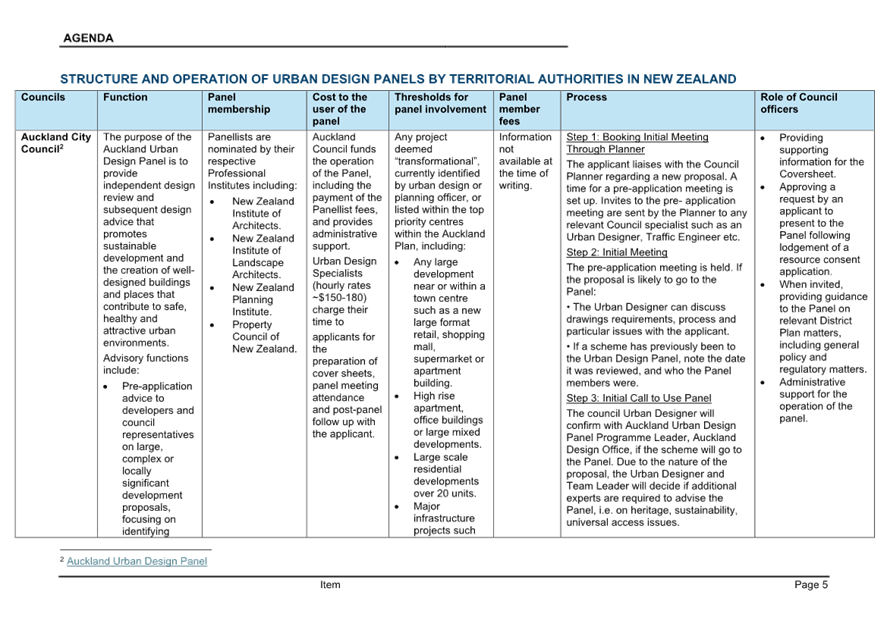
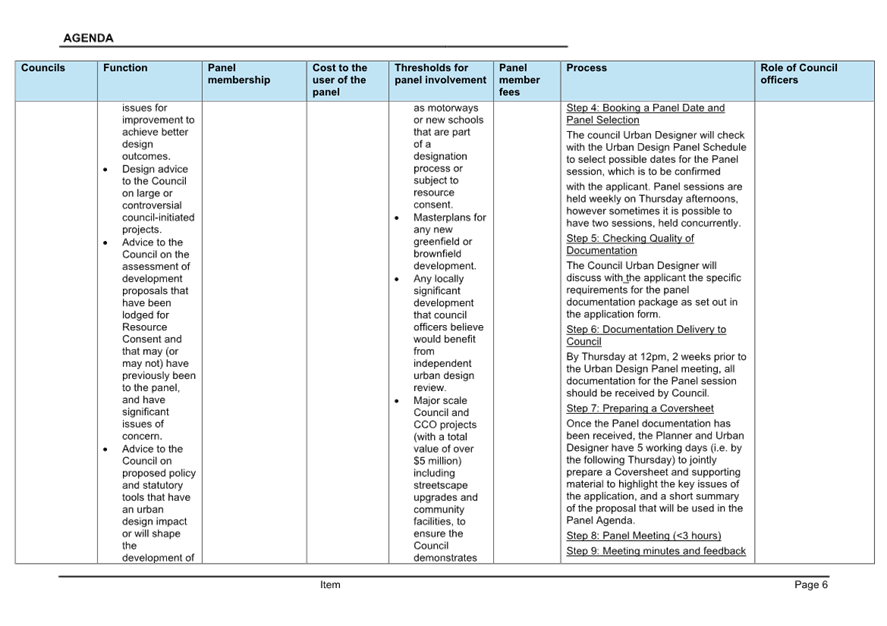
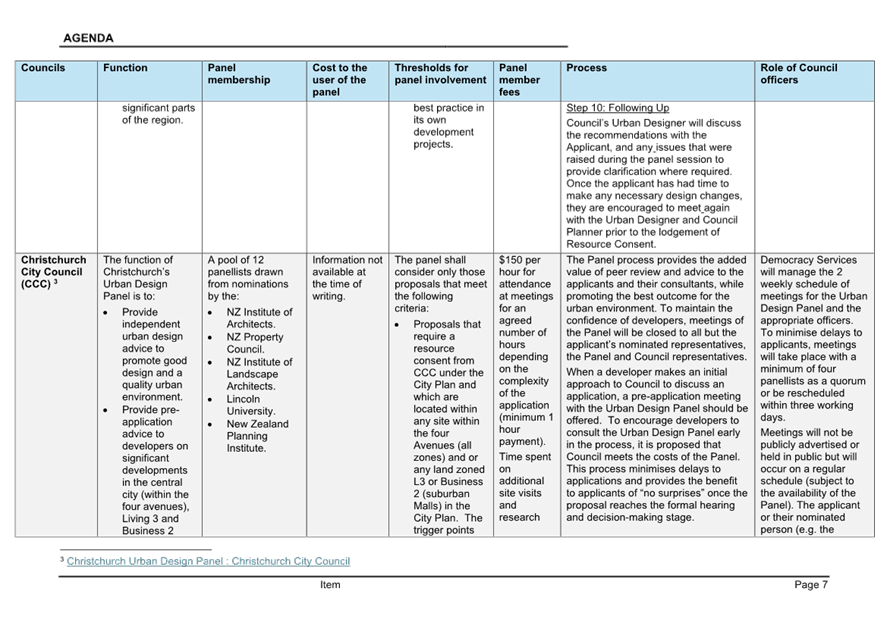
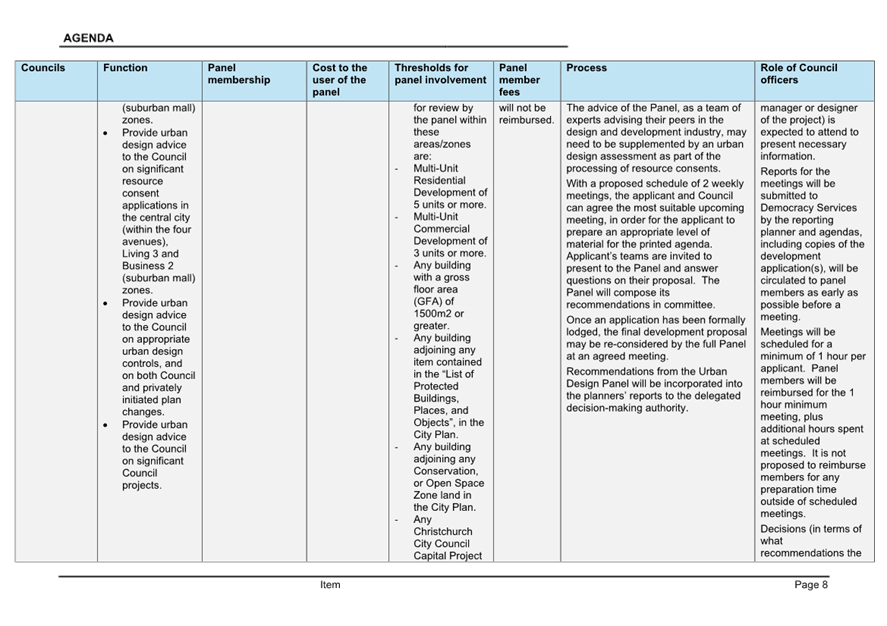
4 On
11 February 2025 the Social Sustainability Committee considered a paper titled
“Exploring the Urban Design Panel Concept” (Attachment 1). In
summary, the paper advised the Committee that:
4.1 The
mandate for exploring the urban design panel concept was provided by Council in
August 2023 as part of decisions on Plan Change 2 (Intensification), when it
directed staff to explore options for strengthening its urban design capacity
and expertise
4.2 Staff
have now completed desktop research into urban design panels operated by other
councils around New Zealand, have had initial discussions with staff and other
councils and experienced practitioners, and have been supported by advice from
Councillor Rob Kofoed.
4.3 The
urban design panel concept is supported by the Ministry for the Environment and
has been in use by many territorial authorities in New Zealand for a number of
years. Some of the benefits of urban design panels reported by those councils
include:
4.3.1 improved
urban design quality
4.3.2 streamlined
consenting processes
4.3.3 enhanced
collaboration with developers.
4.4 Establishing
an urban design panel requires decisions about:
4.4.1 a
terms of reference for the urban design panel, including its objectives, scope
and the types of projects it will review
4.4.2 sources
of funding and resources for panel members and administrative support (e.g.
general rates versus user pays)
4.4.3 composition
of the Panel (membership), noting that urban design panels are independent from
council and typically include a range of expertise (e.g. urban designers,
architects, cultural design experts and planners).
4.5 To
operate effectively staff also identified the need for clear operational
guidelines, including scheduling regular meetings, defining the review process,
and specifying how feedback will be communicated to applicants.
4.6 In
addition to work on the matters noted in paragraphs 4.3 and 4.4, staff
anticipated that preparations would also include:
4.6.1 collaboration
with mana whenua to ensure (to the extent desired by mana whenua) that the
panel’s processes integrated kaupapa Māori and tikanga
4.6.2 engagement
with developers, community groups and other stakeholders to build support and
refine the panel’s objectives
4.6.3 the
development of a comprehensive plan to Council for approval, including
recommendations and implementation details.
4.7 To
allow sufficient time for the necessary preparatory work, including iwi and
stakeholder engagement, staff indicated a final proposal could be presented to
the next Council for its approval in early 2026.
5 Following
discussion, the Committee resolved to:[4]
A. Note
the Urban Design Panel concept, which has a national protocol set by the
Ministry for the Environment, which is already in use by several councils in
New Zealand to support achieving good urban design outcomes.
B. Endorse
progressing work to establish an Urban Design Panel for the Kāpiti Coast
district.
C. Note
that following this Committee’s endorsement, approval will be sought from
the Strategy, Operations and Finance Committee in April 2025 to progress next
steps.
He
kōrerorero | Discussion
6 The
Committee is asked to confirm support for the Social Sustainability’s
recommendation to endorse progressing work to establish an Urban Design Panel
for the Kāpiti Coast district. The information supporting the Social
Sustainability’s recommendation is attached in Appendix 1. In summary, it
sets out:
6.1 Clear
benefit and value from introducing a further mechanism to support “good
growth” in our district, as development activity progresses over future
periods.
6.2 That
urban panels are already well utilised in other districts around New Zealand,
and supported by the Ministry for the Environment as an important component of
the wider regulatory system and its tools.
6.3 That
it was valuable to engage with other districts to learn about what has worked
well (or not) as they have established urban panels. The findings will support
Council Officials to develop options that take advantage of lessons learnt.
7 Following
the Committee’s decision today, if agreed, Council officers will progress
work to develop options for consideration, and outline more detailed
information around scope, focus, cost and place in the existing processes which
support development activity in the Kāpiti Coast district.
He
take | Issues
8 The
issues outlined in the 11 February 2025 paper (Attachment 1) still stand. There
are no further issues to note in this report.
Ngā
kōwhiringa | Options
9 The
options outlined in the 11 February 2025 paper (Attachment 1) still stand.
Mana whenua
10 As
part of next steps, staff propose to seek advice from mana whenua to inform the
proposal for the design and operation of an urban design panel, including with
regards to how the panel’s processes integrate kaupapa Māori and
tikanga.
Panonitanga Āhuarangi me te Taiao | Climate change
and Environment
11 Further
investigations and stakeholder engagement will provide an opportunity for staff
to explore how an urban design panel in Kāpiti could consider climate
change and environment issues.
Ahumoni me ngā rawa | Financial
and resourcing
12 Costs
to Council associated with progressing work to establish an urban design panel
will be met from the existing Districtwide Planning budget.
Tūraru ā-Ture me te Whakahaere
| Legal and Organisational Risk
13 Any
legal and organisational risks associated with establishing an urban design
panel will be identified (along with options to avoid or mitigate those risks)
as part of preparing a proposal for Council’s consideration in early
2026.
Ngā pānga ki ngā kaupapa here | Policy impact
14 Any
policy impacts that may arise from establishing an urban design panel will be
identified (along with options to avoid or mitigate any negative impacts) as
part of preparing a proposal for Council’s consideration in early 2026.
TE whakawhiti kōrero me te
tūhono | Communications &
engagement
Te mahere tūhono | Engagement
planning
15 An
engagement plan will be prepared to support the next phase of work.
Whakatairanga |
Publicity
16 In
the event that this Committee resolves to support the Social Sustainability
Committee’s resolution, a brief media statement is proposed highlighting
that Council is progressing work to establish an urban design panel.
Ngā āpitihanga | Attachments
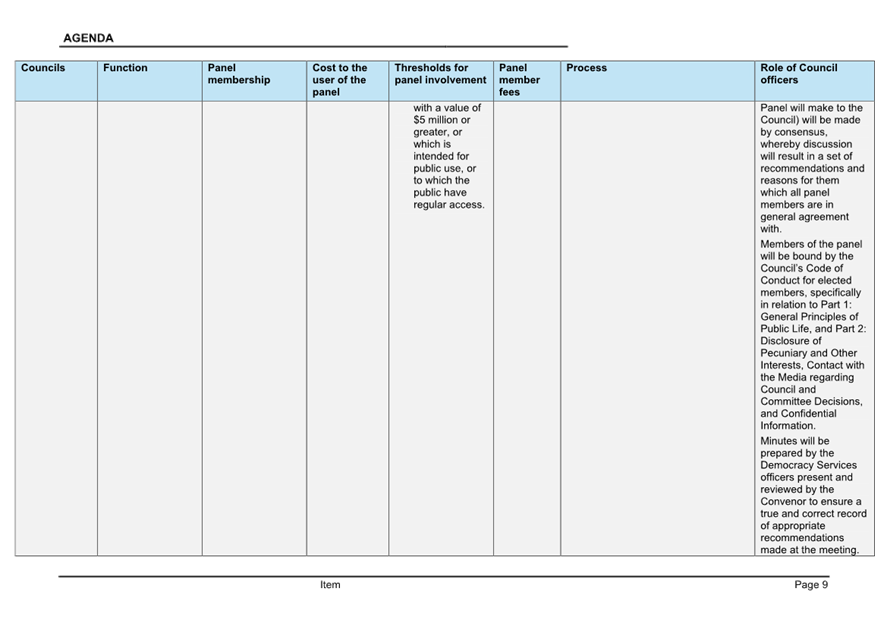
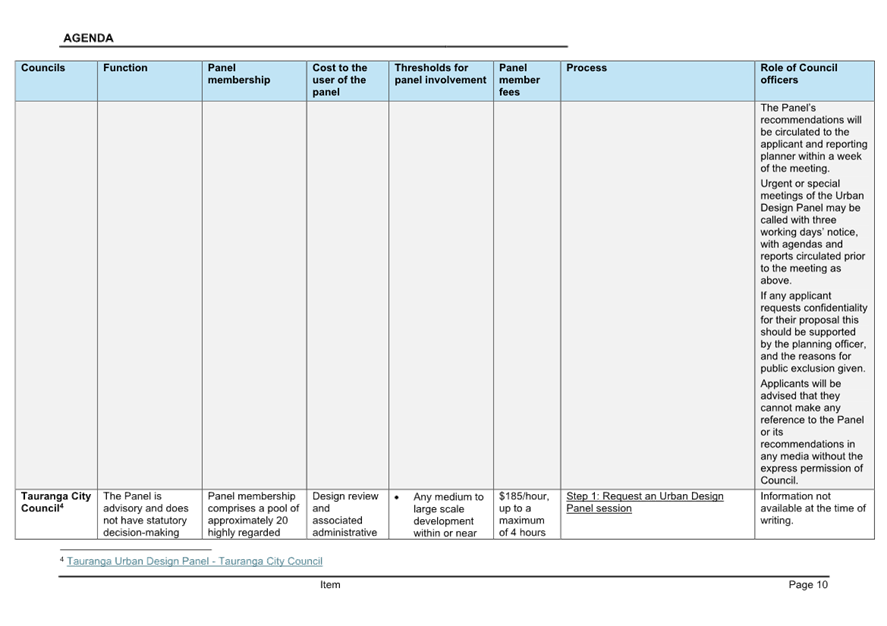
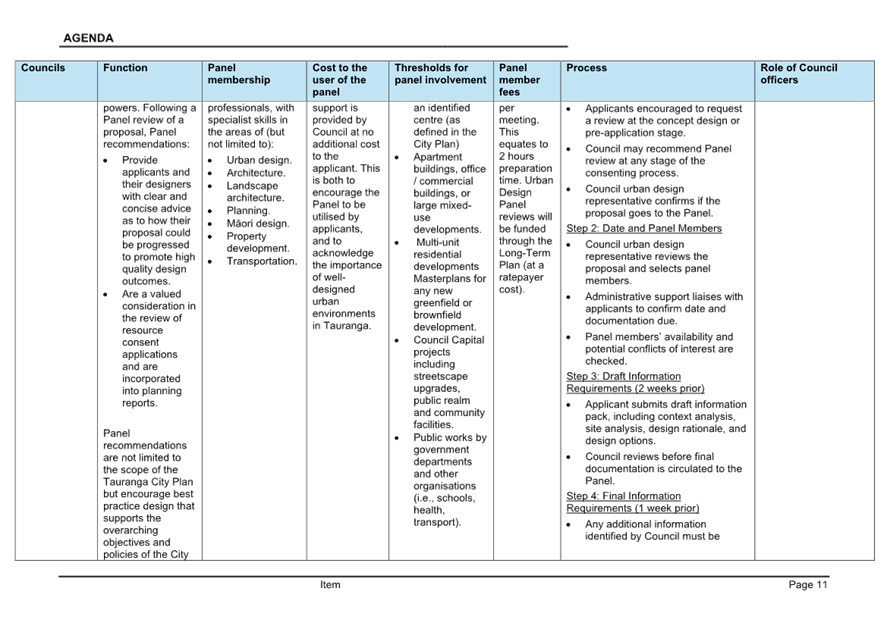
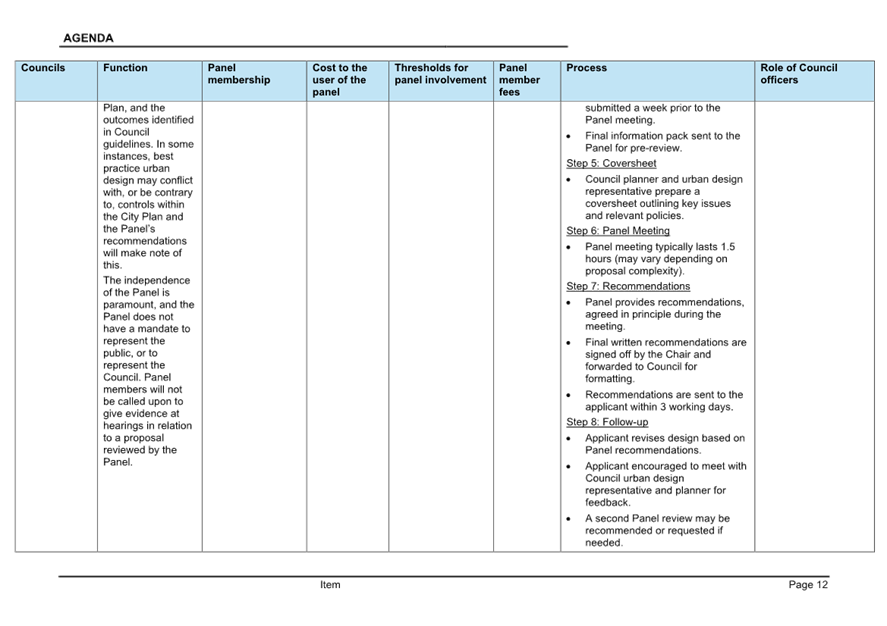
1. Paper
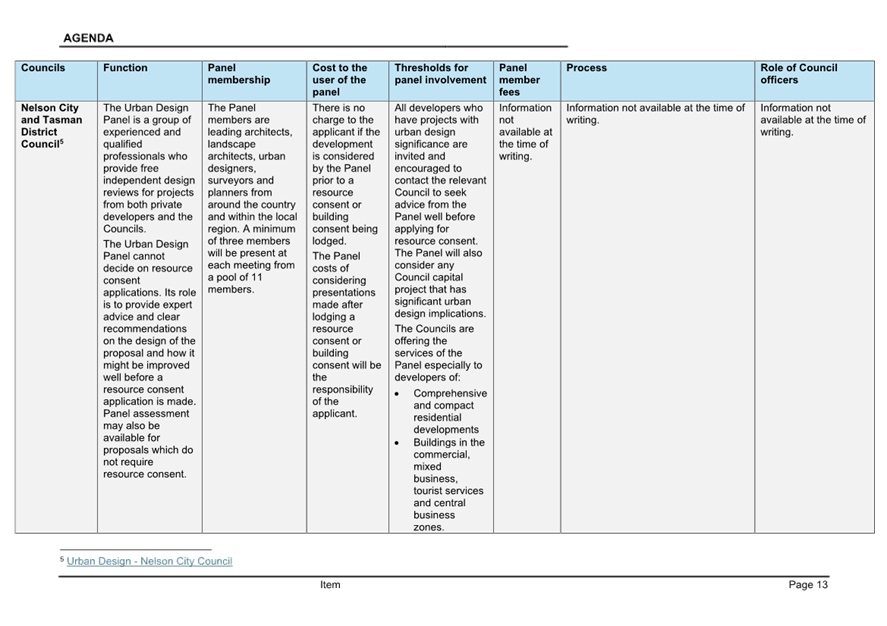
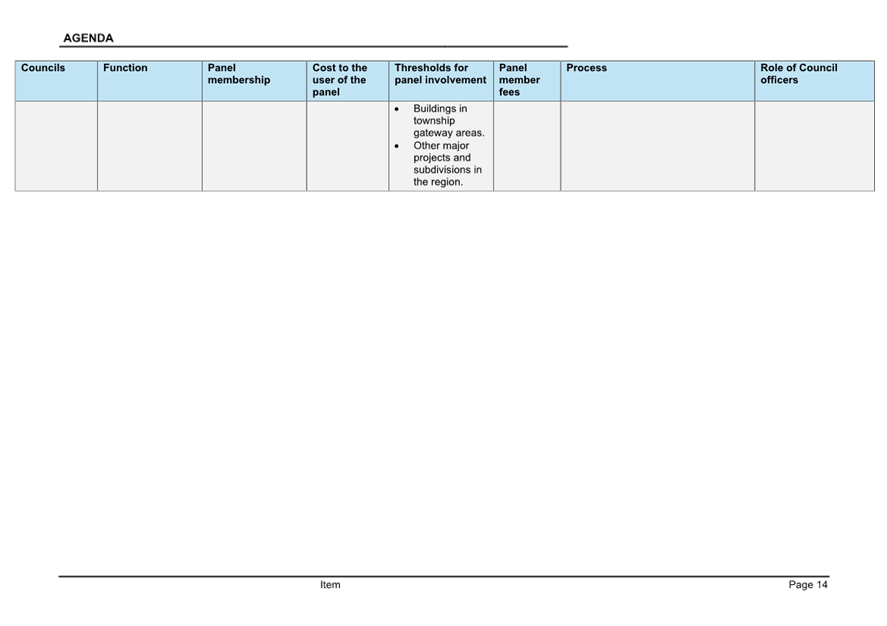
to Social Sustainability Committee, 11 February 2025 ⇩