|
Social Sustainability Subcommittee Meeting Agenda
|
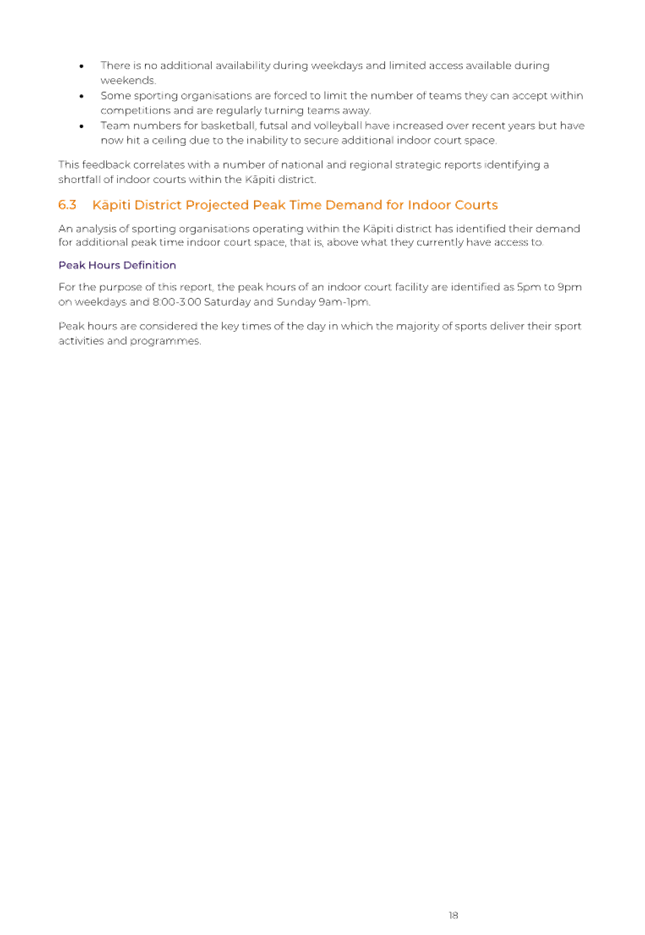
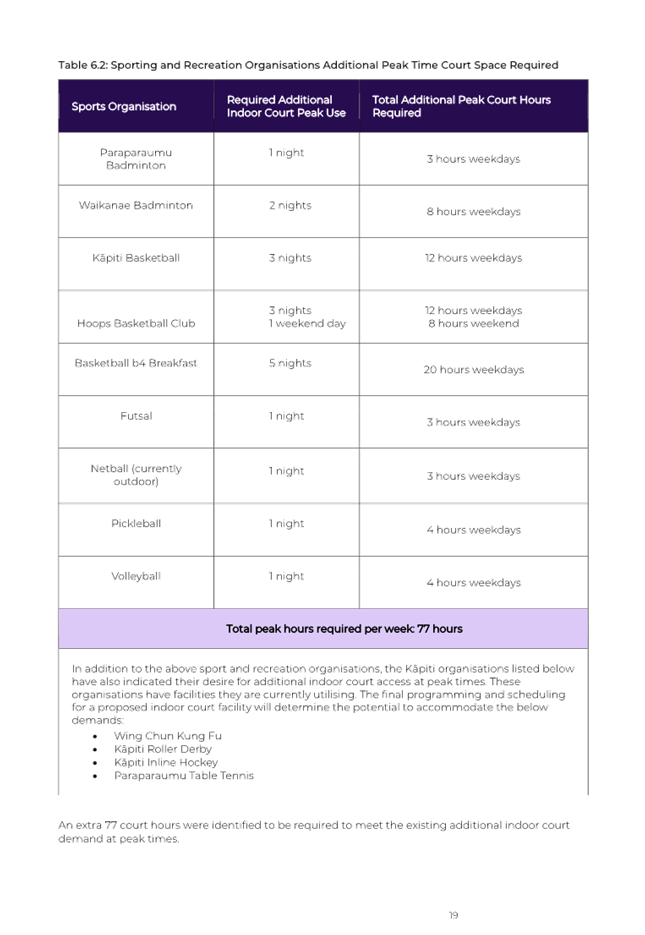
9 May 2024
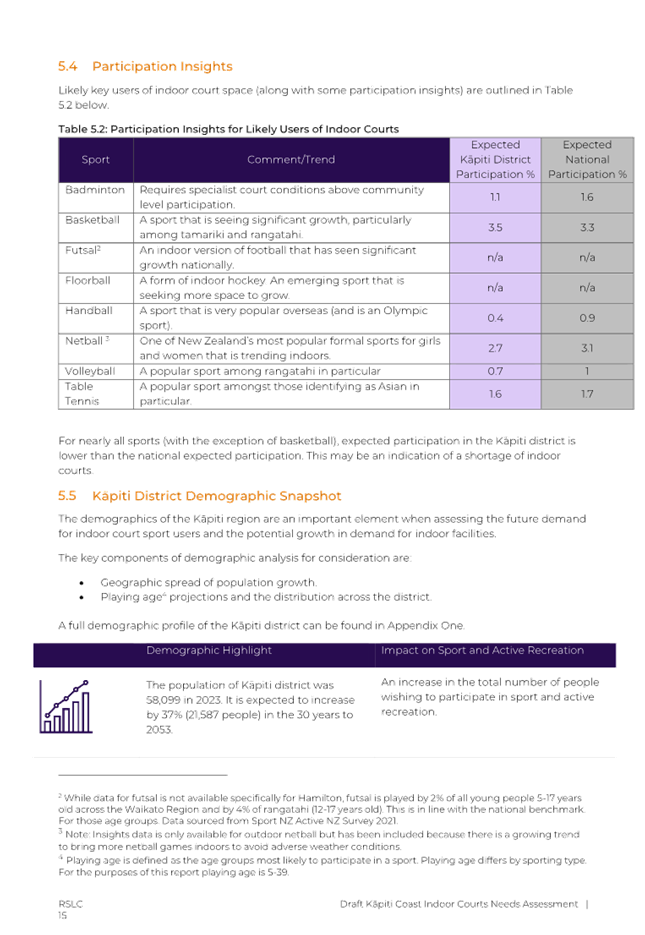
|
8.3 Indoor
Sports Feasibility Study
Kaituhi |
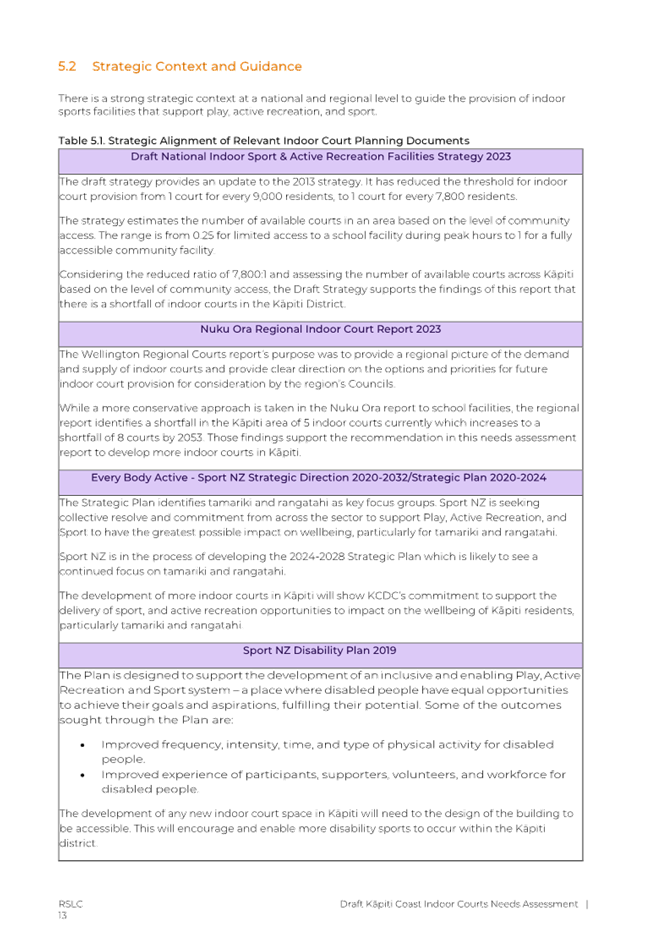
Author: Trevor
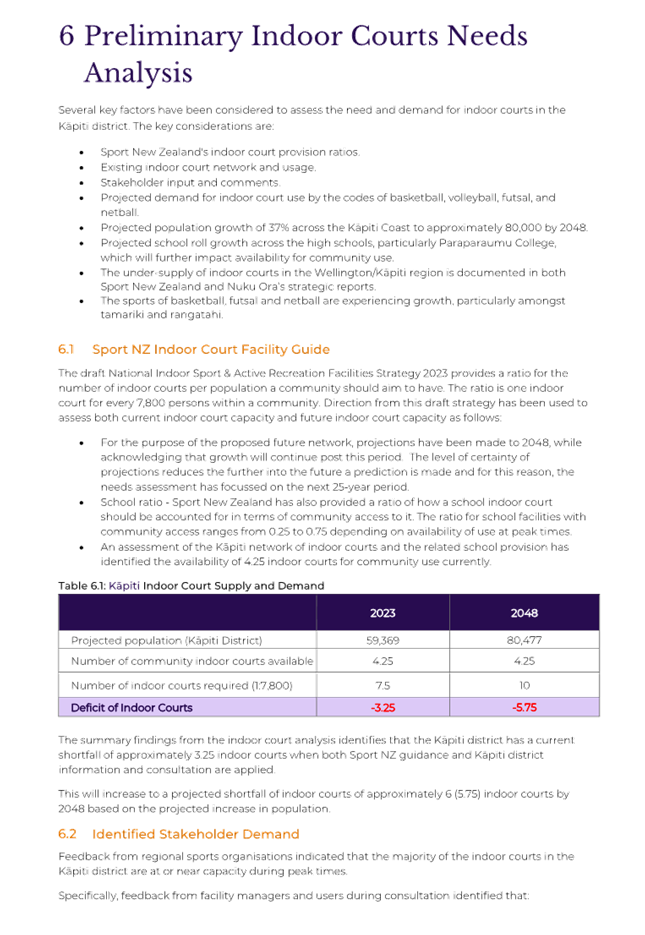
Jackson, Team Leader, Parks & Outdoor Recreation
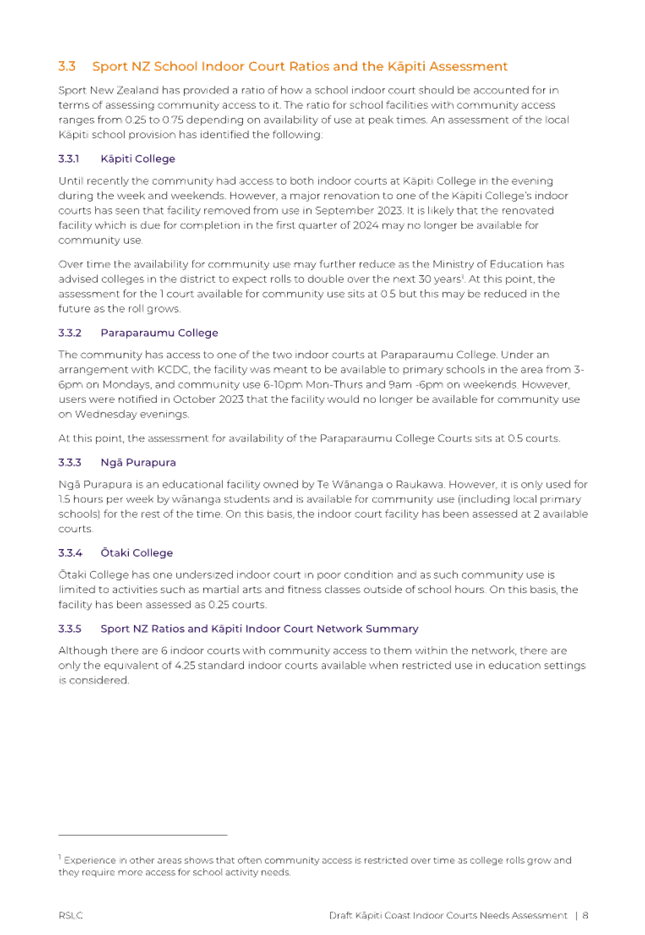
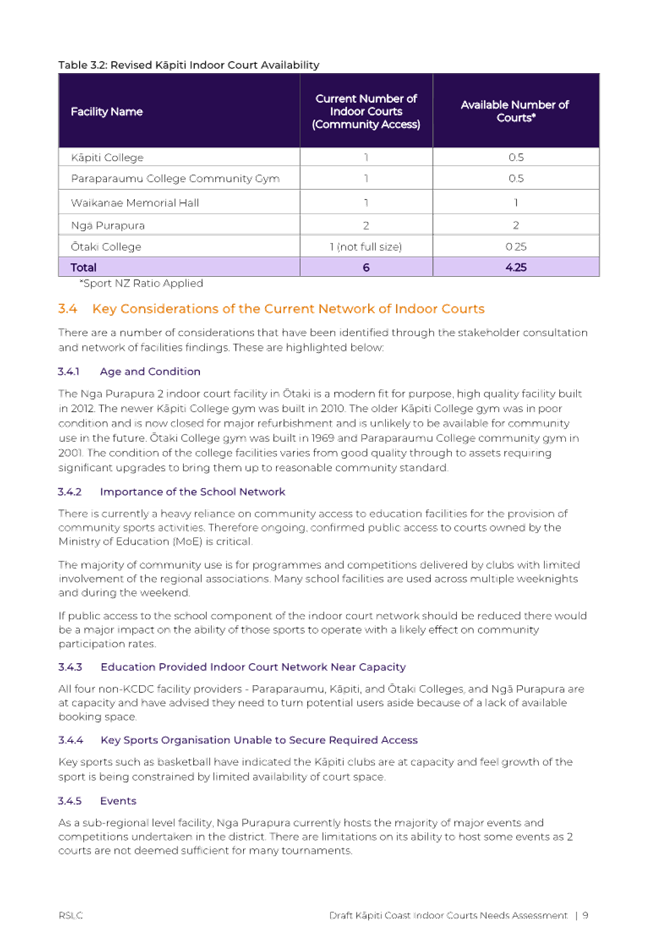
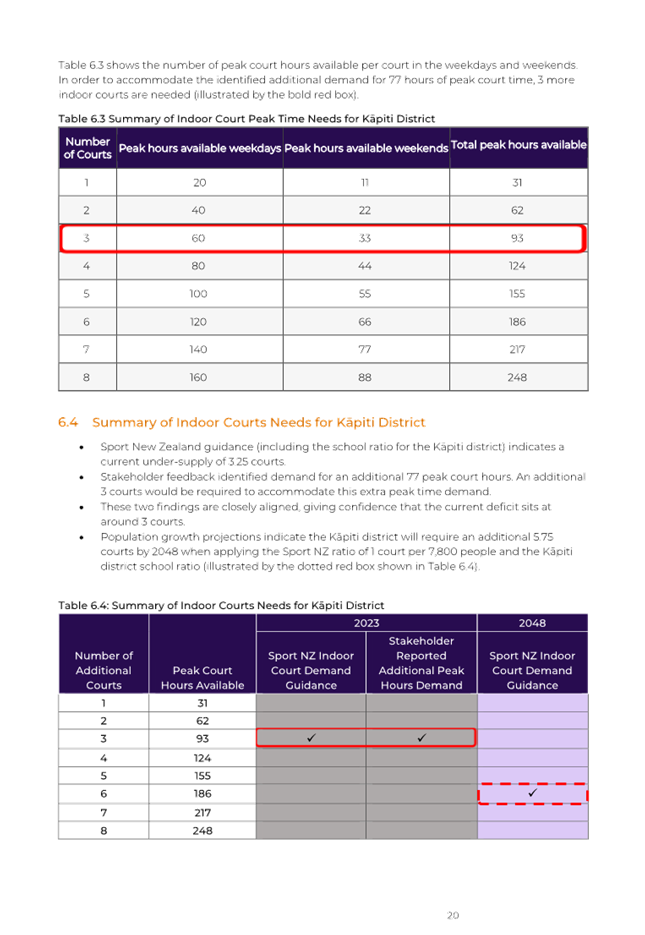
Kaiwhakamana
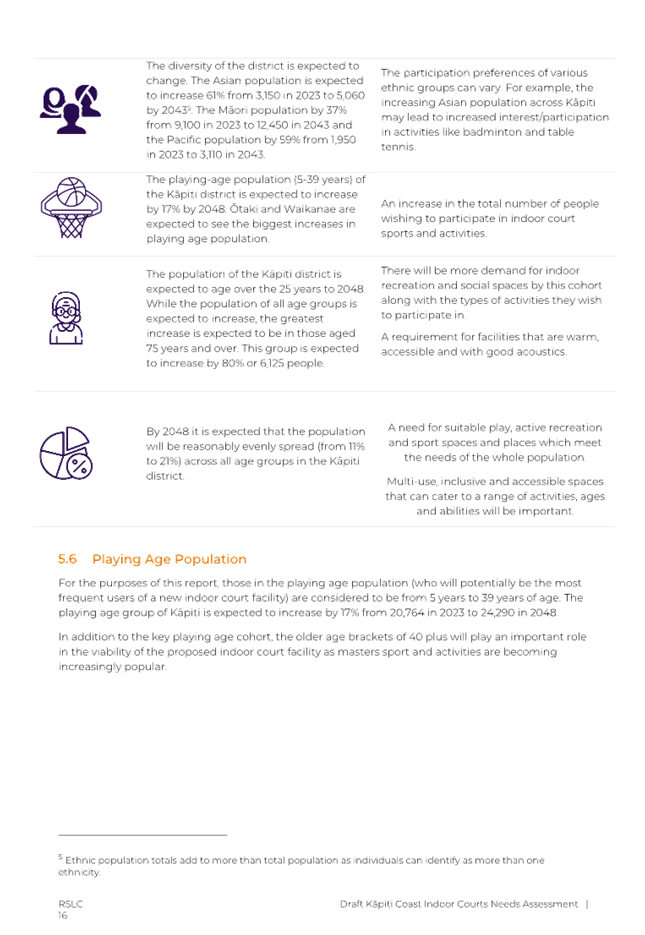
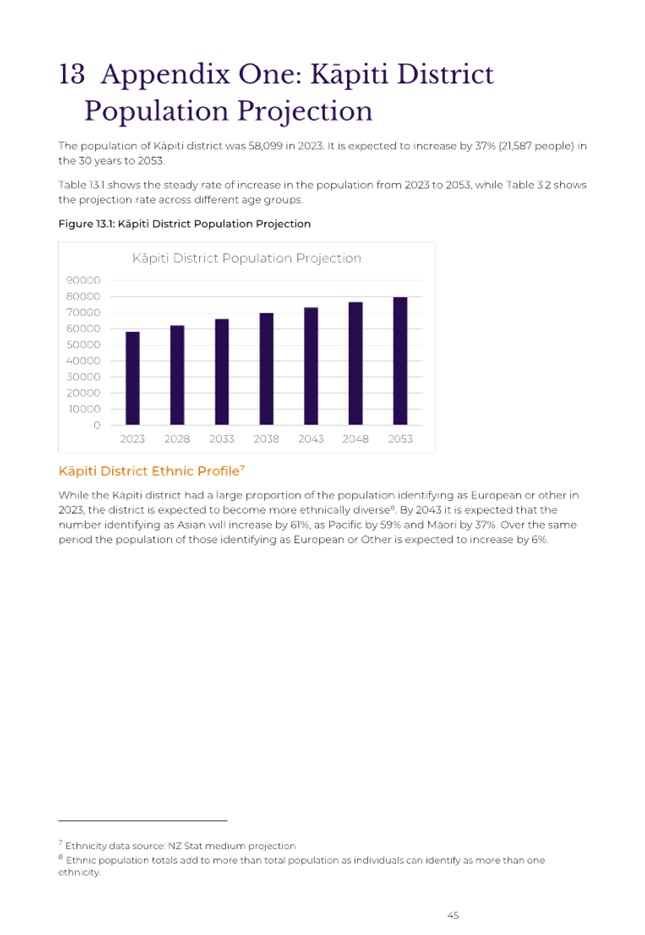
| Authoriser: Sonja Williams, Acting Group Manager Customer and
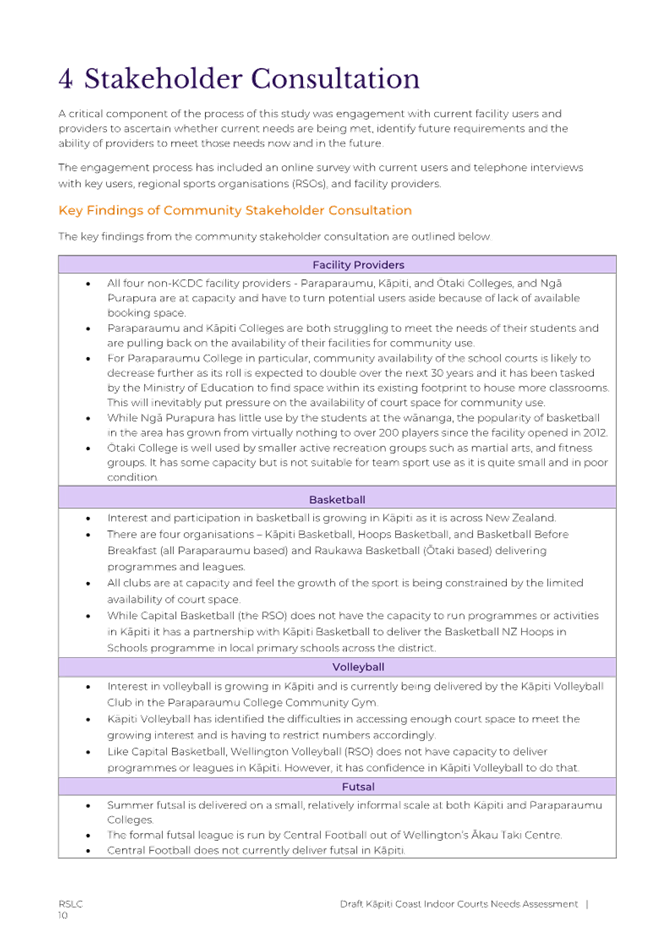
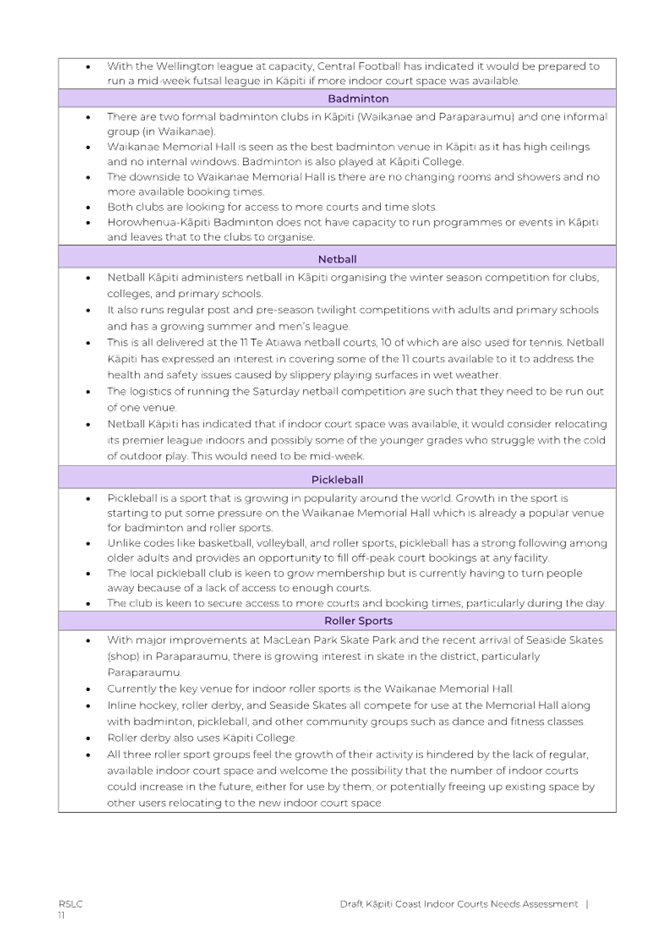
Community
Te pūtake |
Purpose
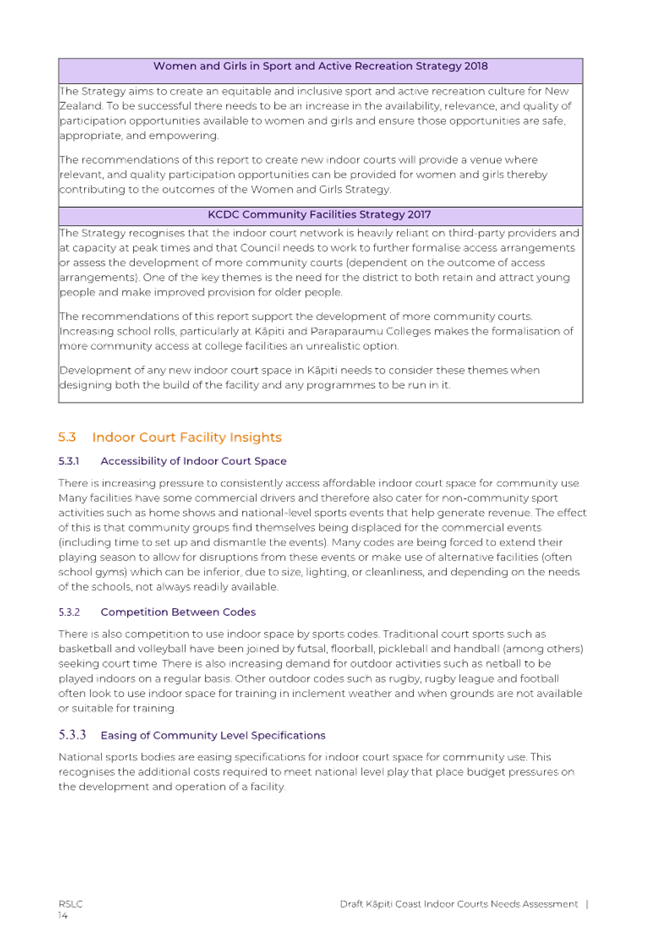
1 This
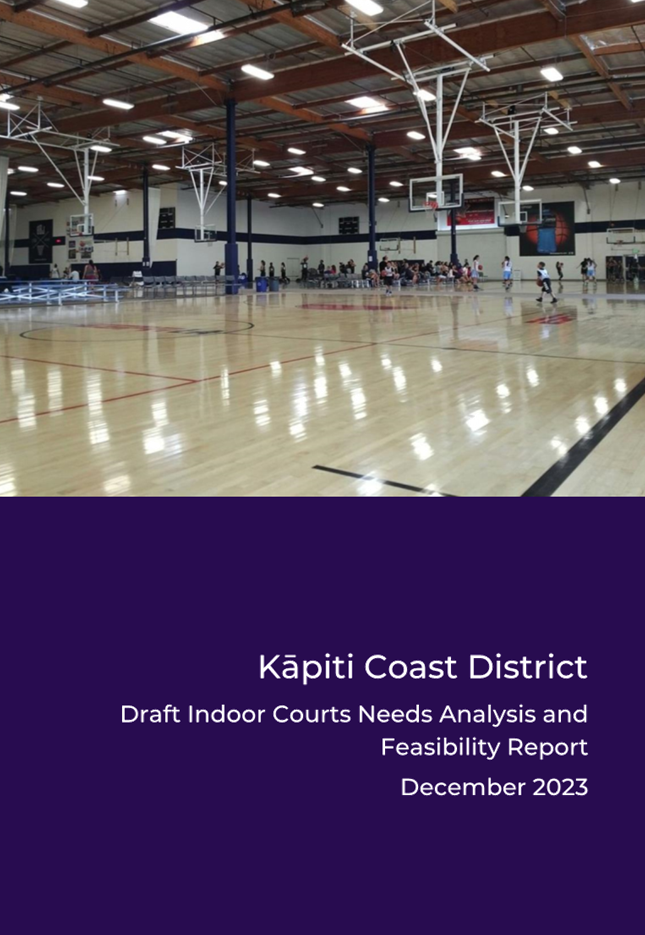
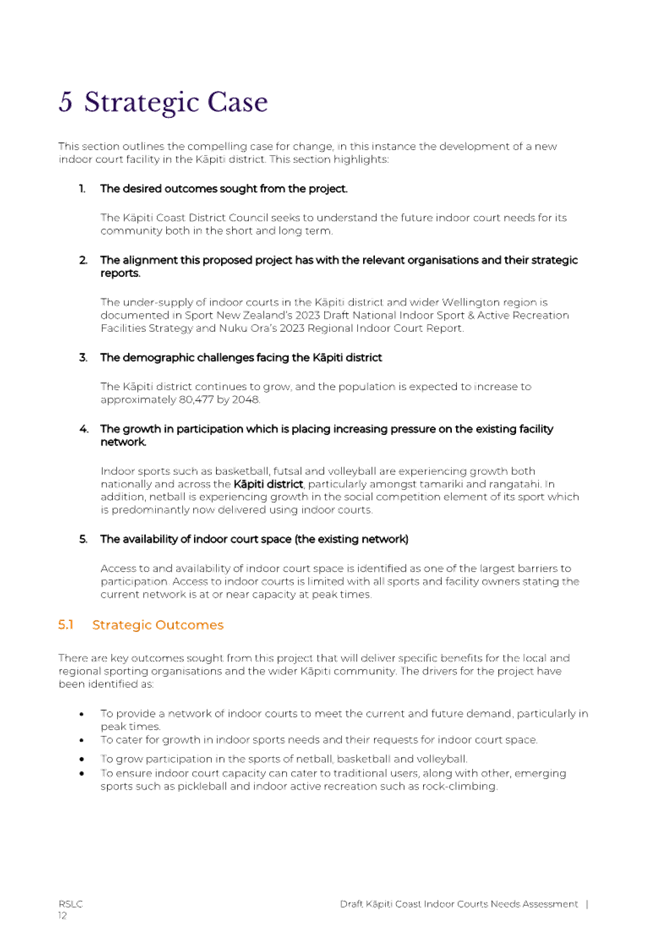
report provides an overview of the key findings from the Indoor Courts Needs
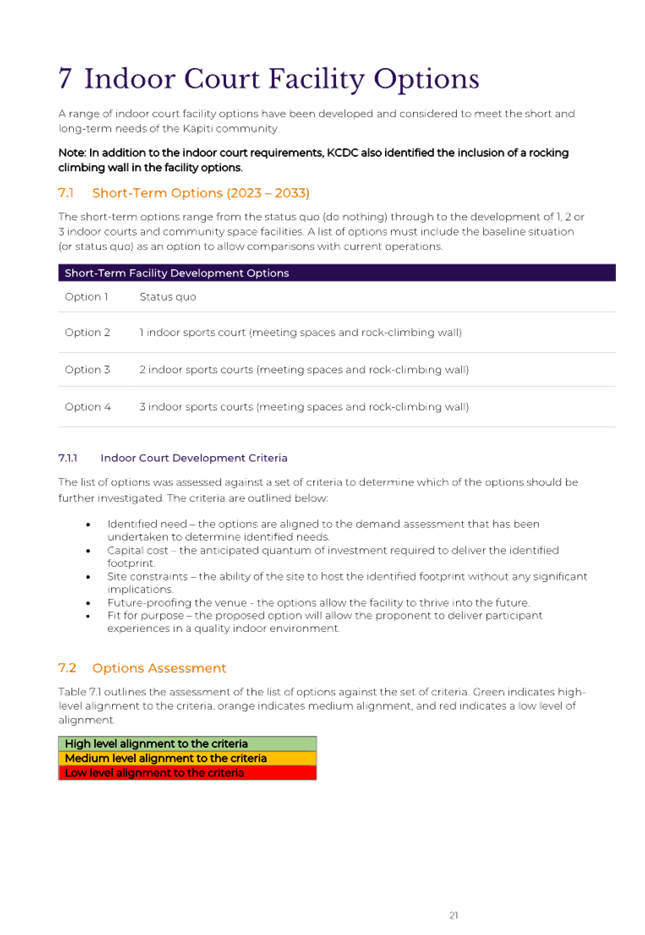
Analysis and Feasibility Report and discusses the financial implications and
considerations around the potential development of a dedicated community indoor
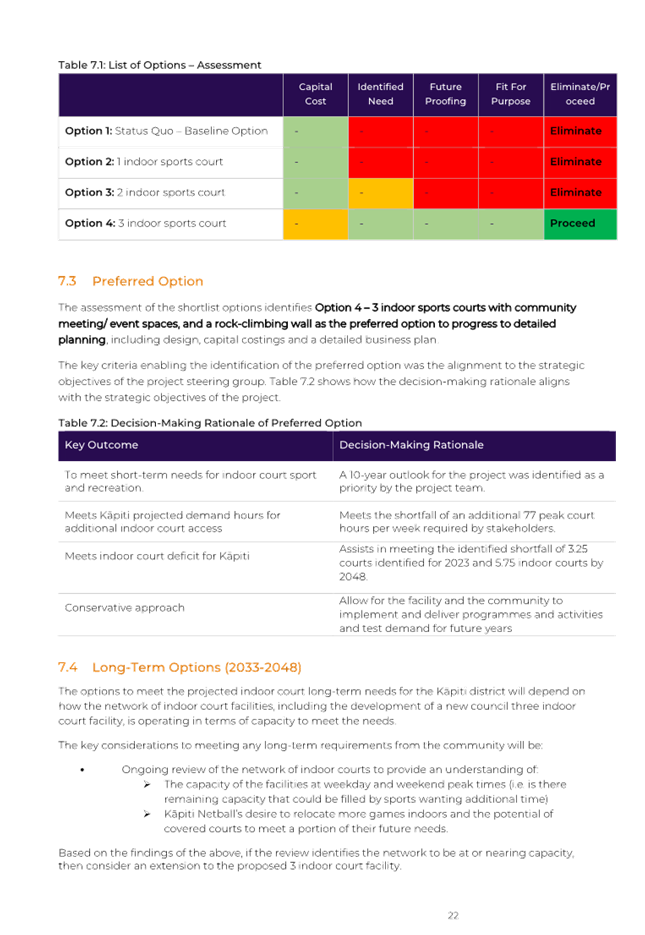
court facility in Kāpiti.
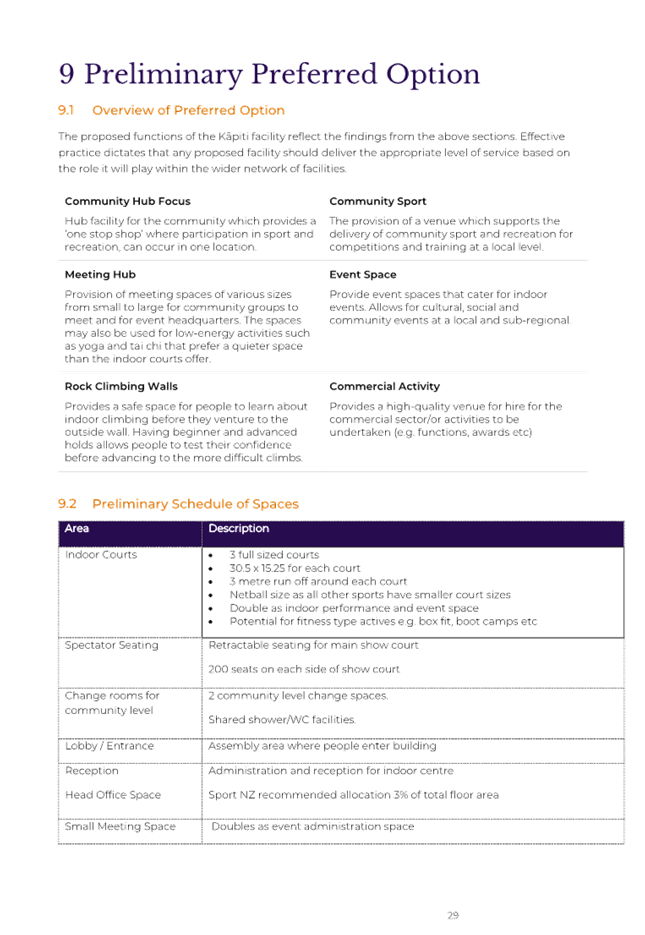
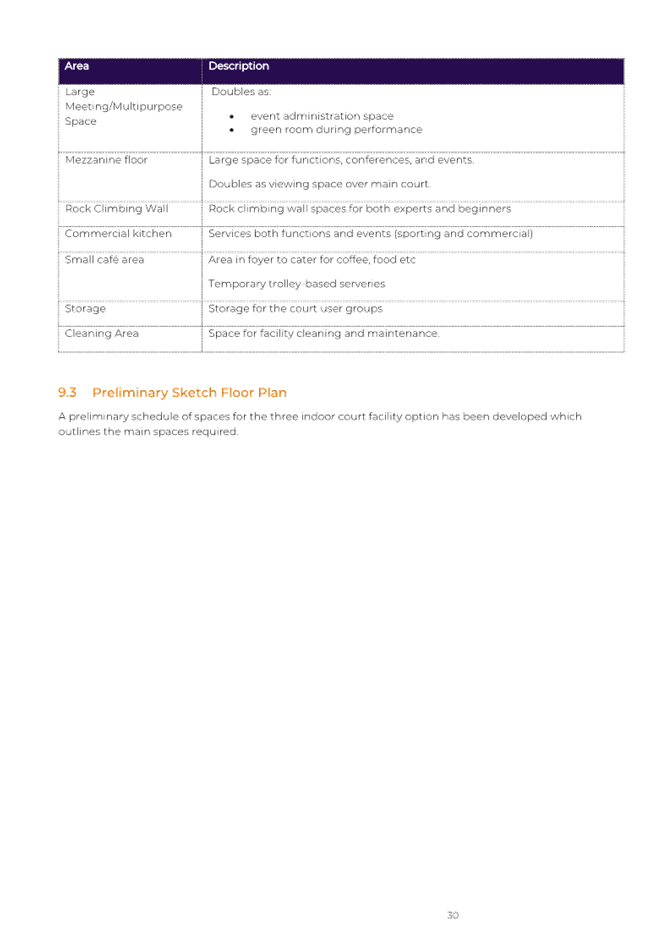
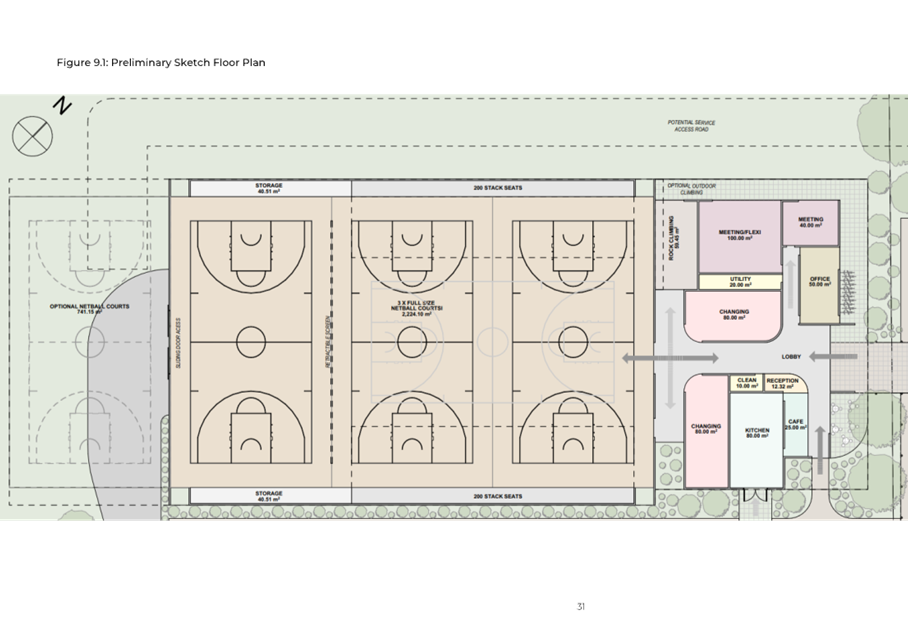
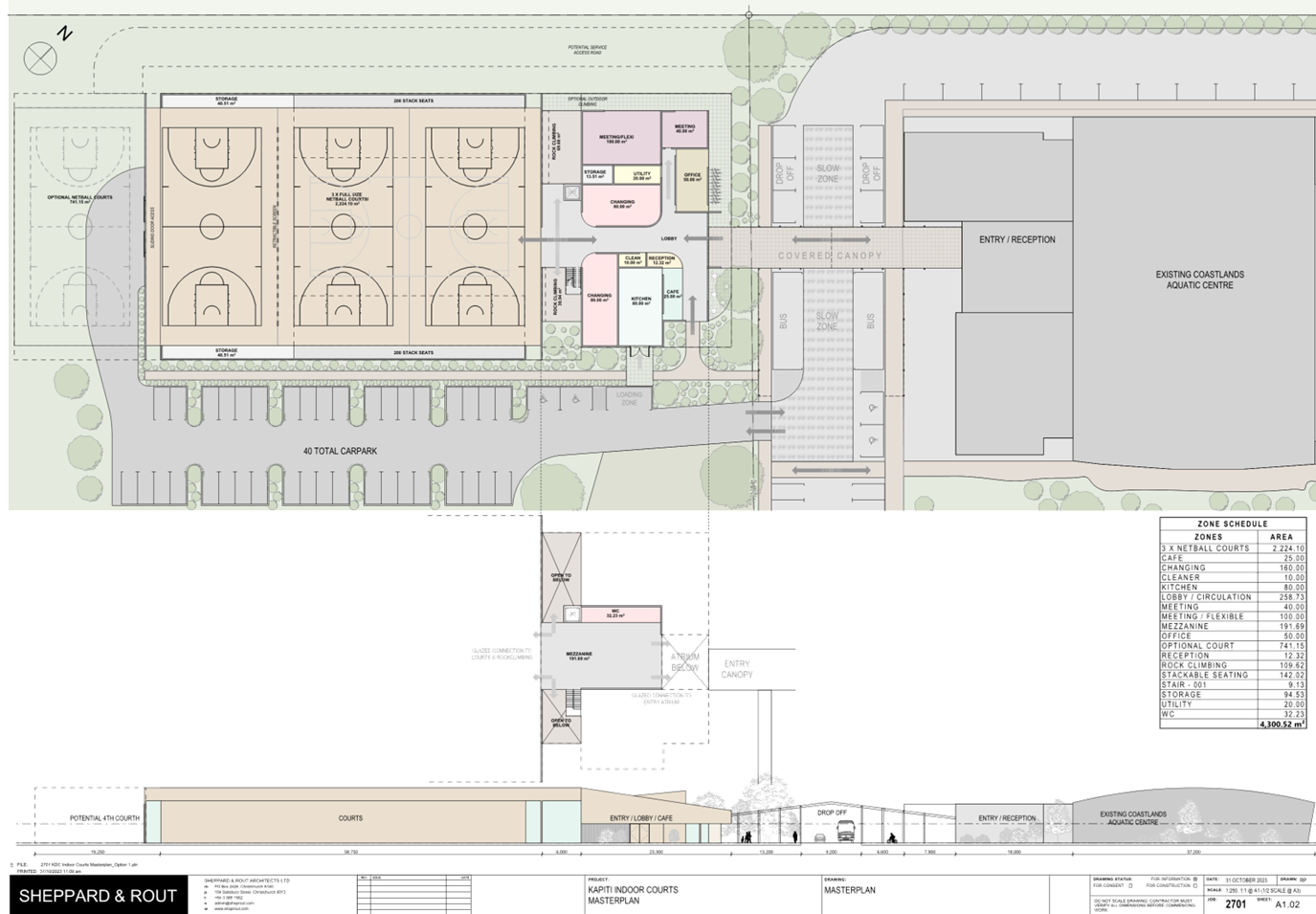
Taunakitanga | RECOMMENDATIONS
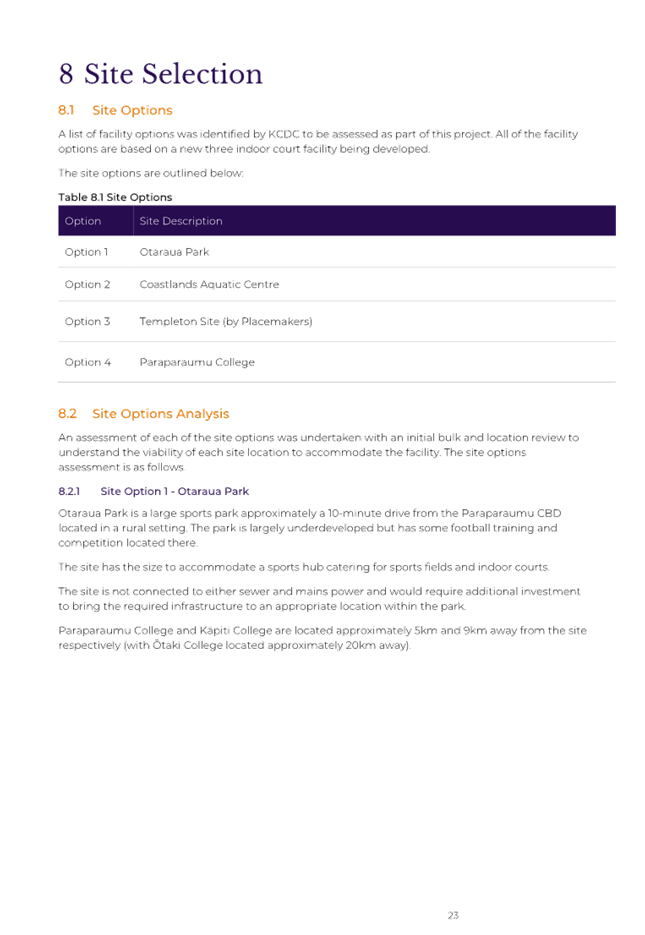
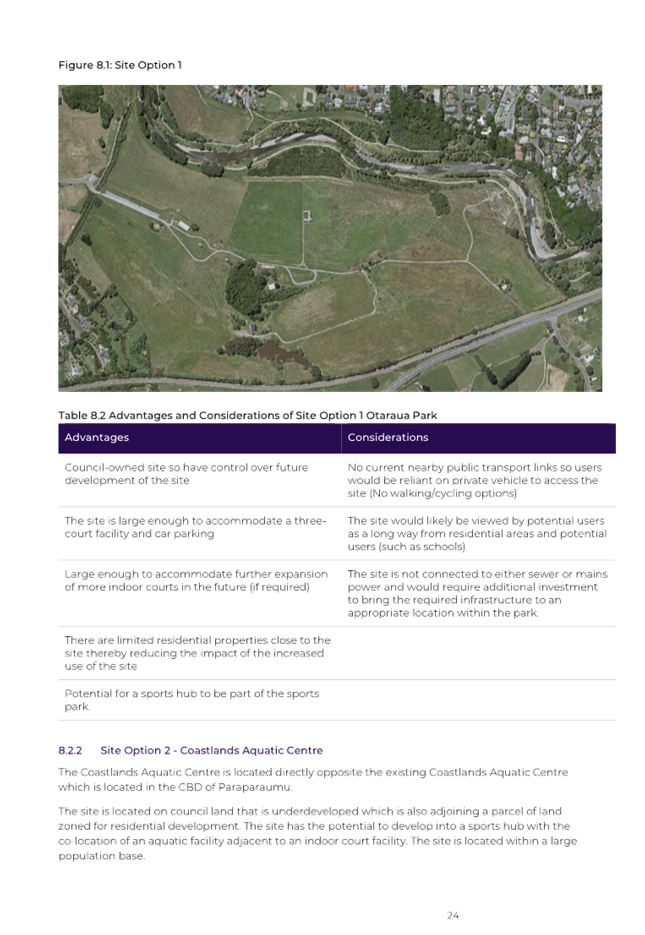
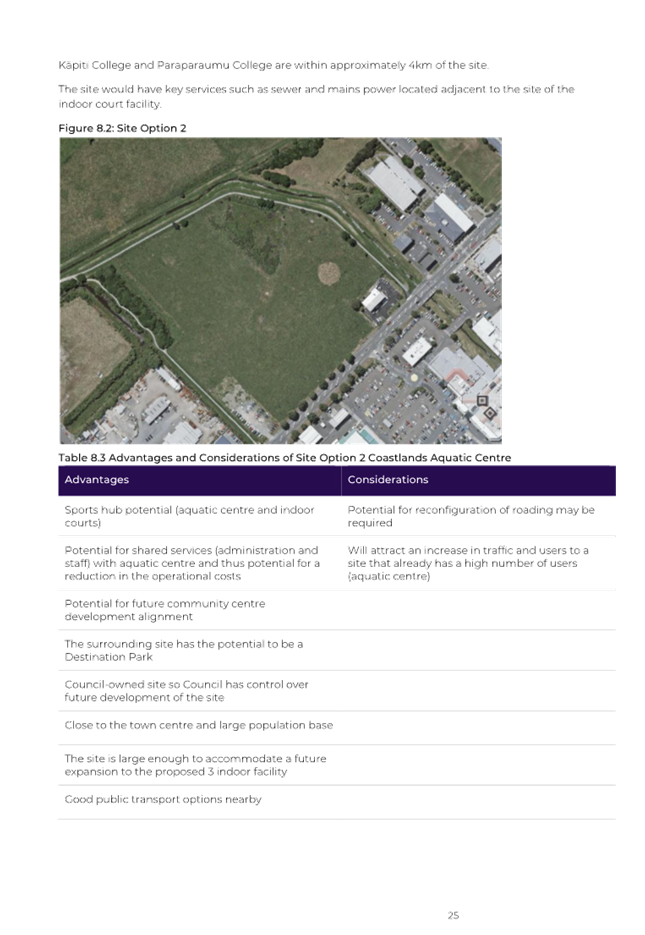
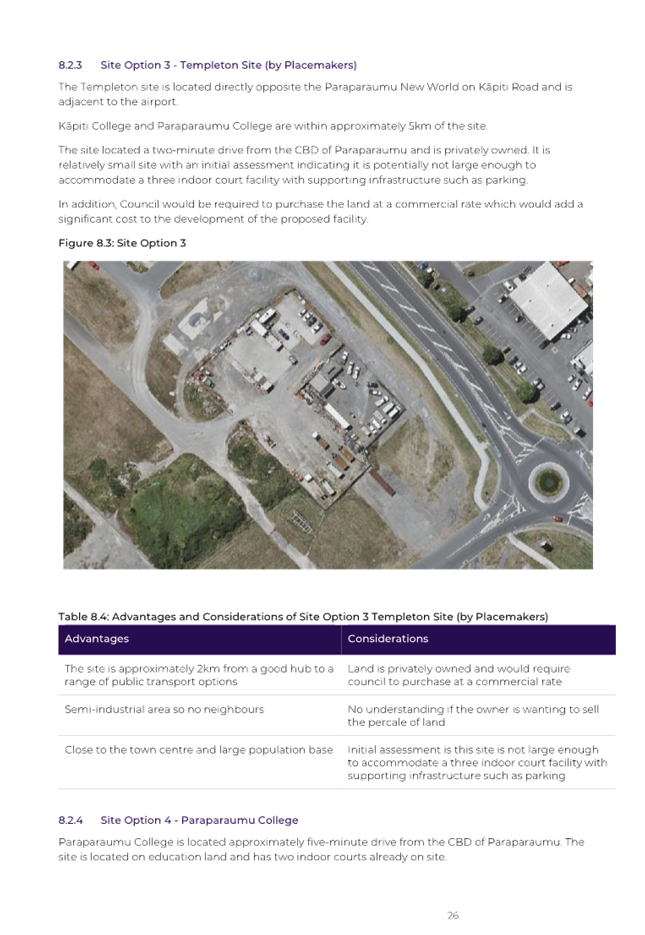
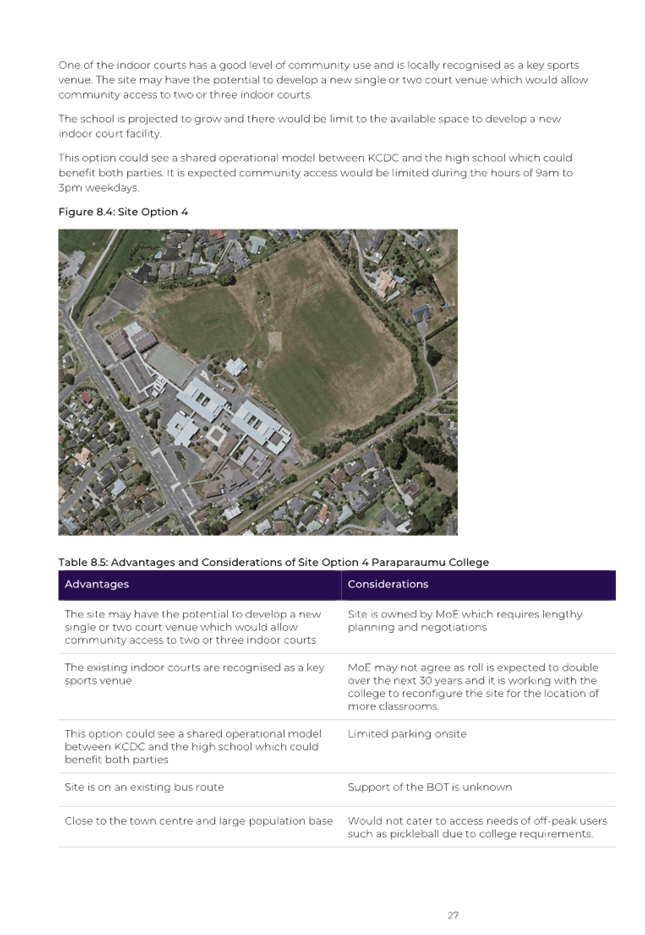
That the Social
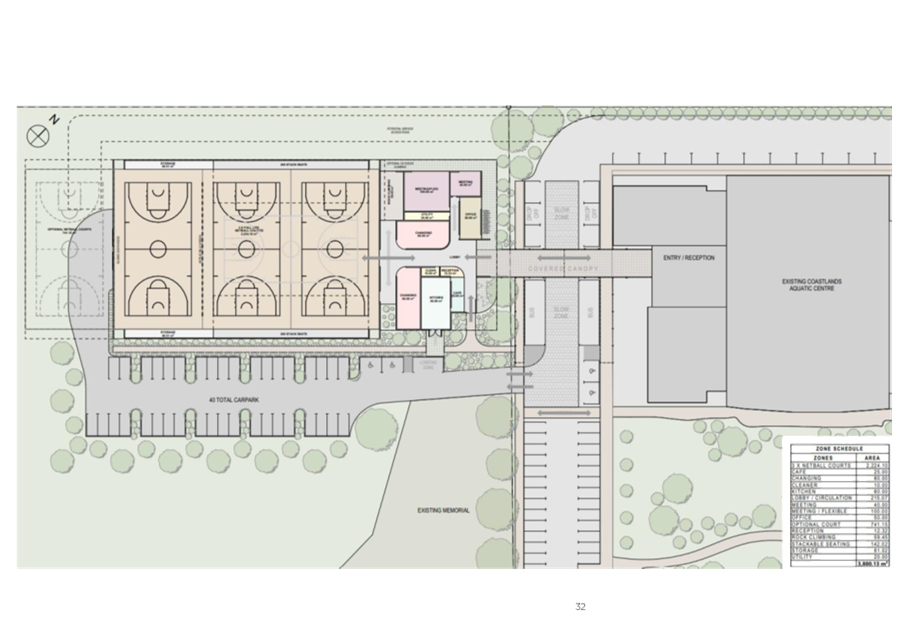
Sustainability Committee:
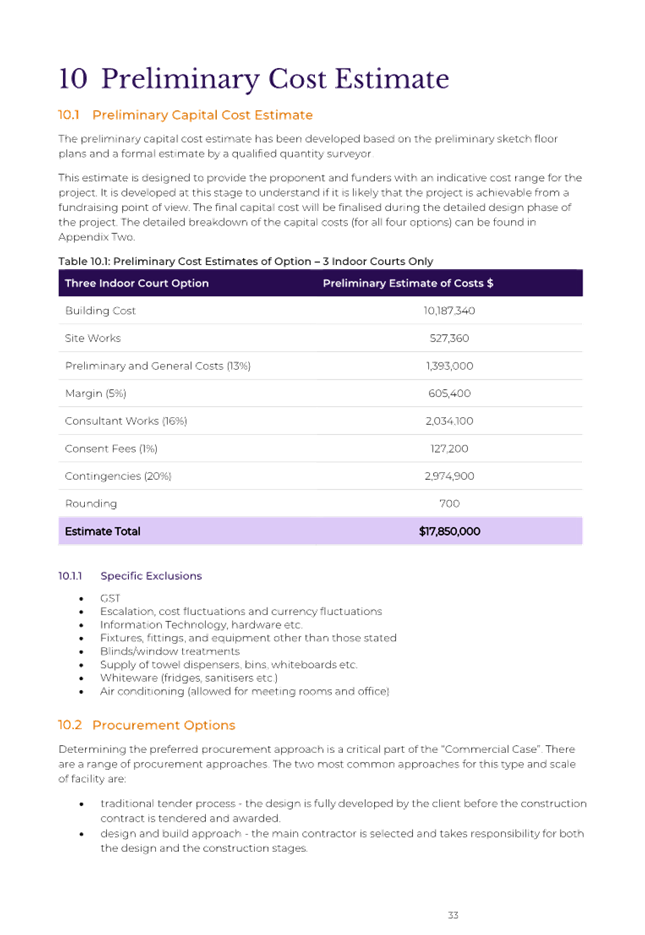
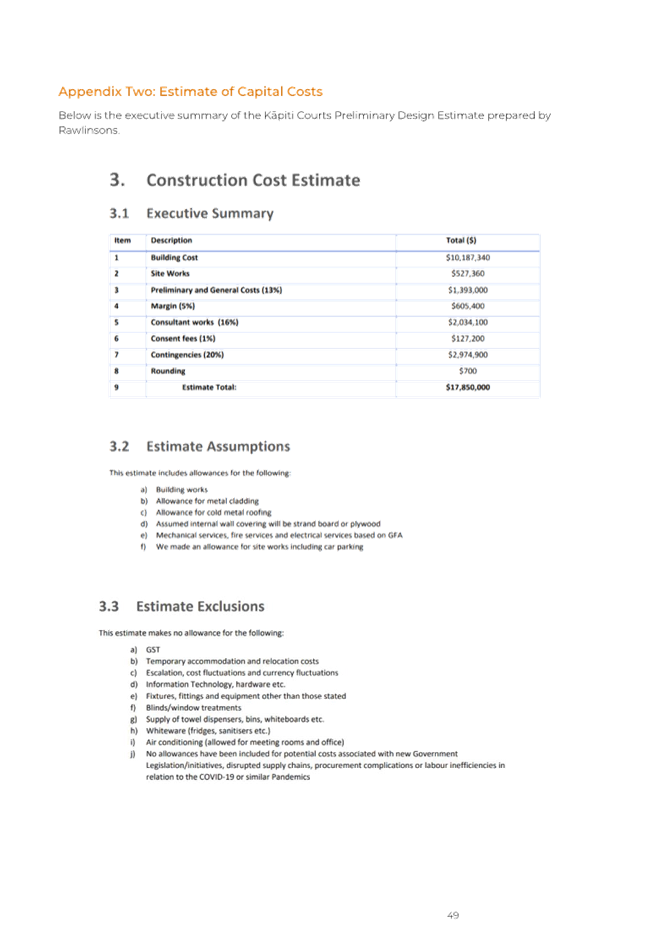
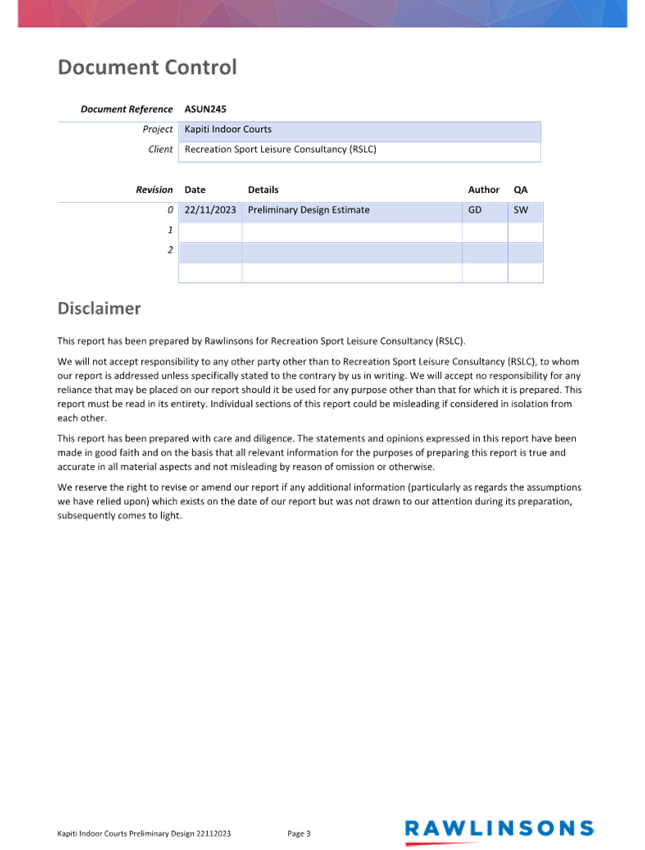
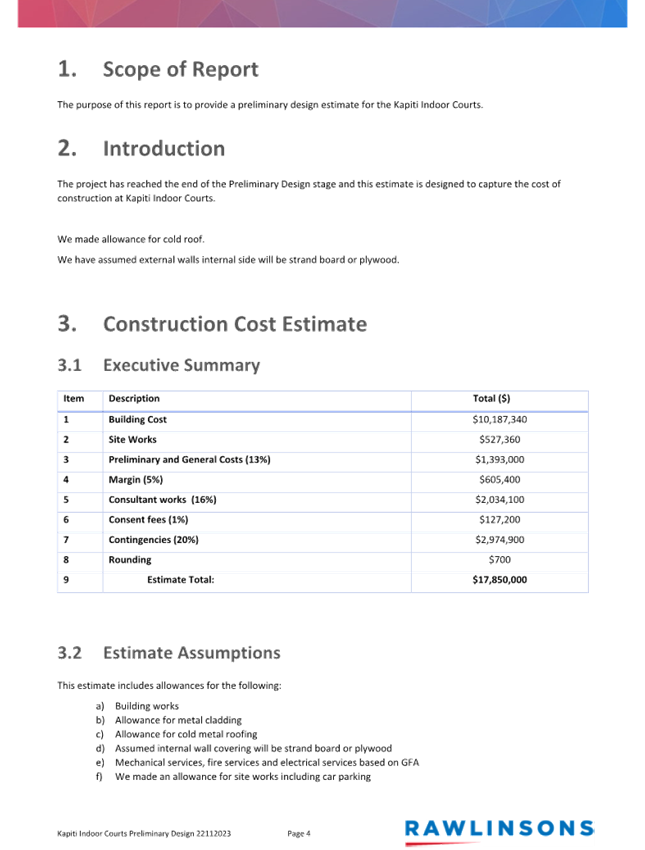
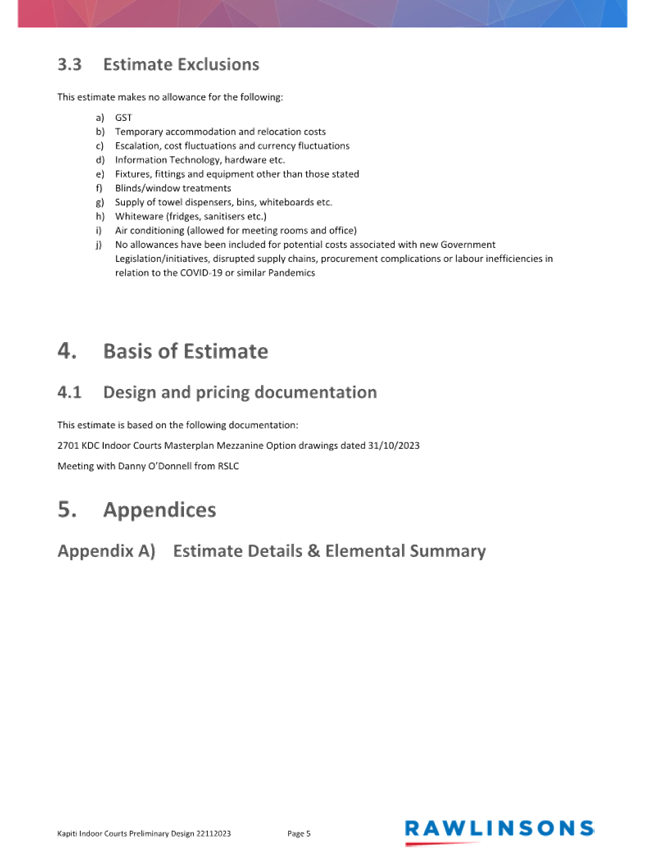
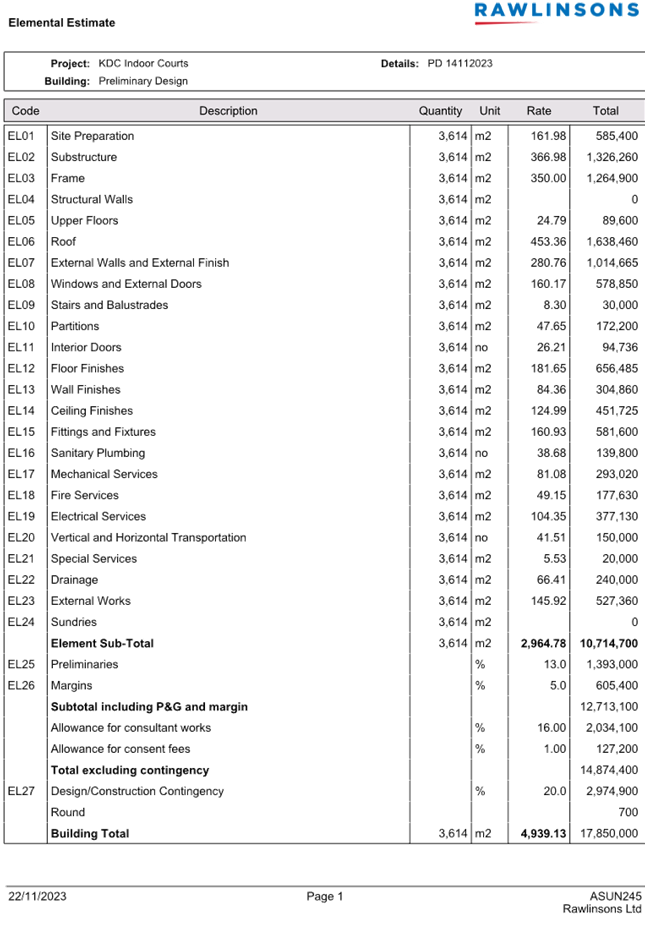
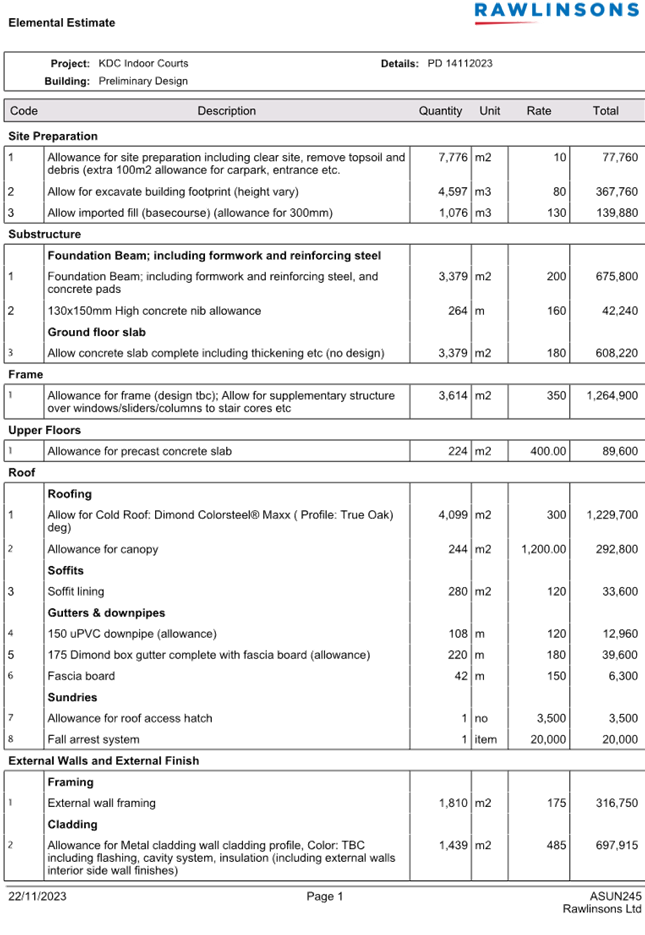
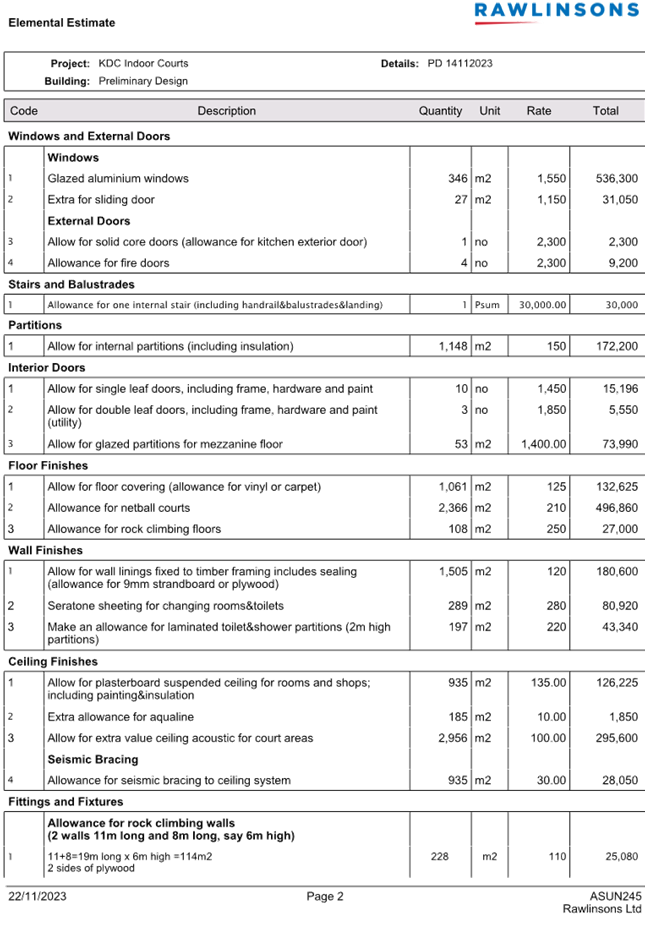
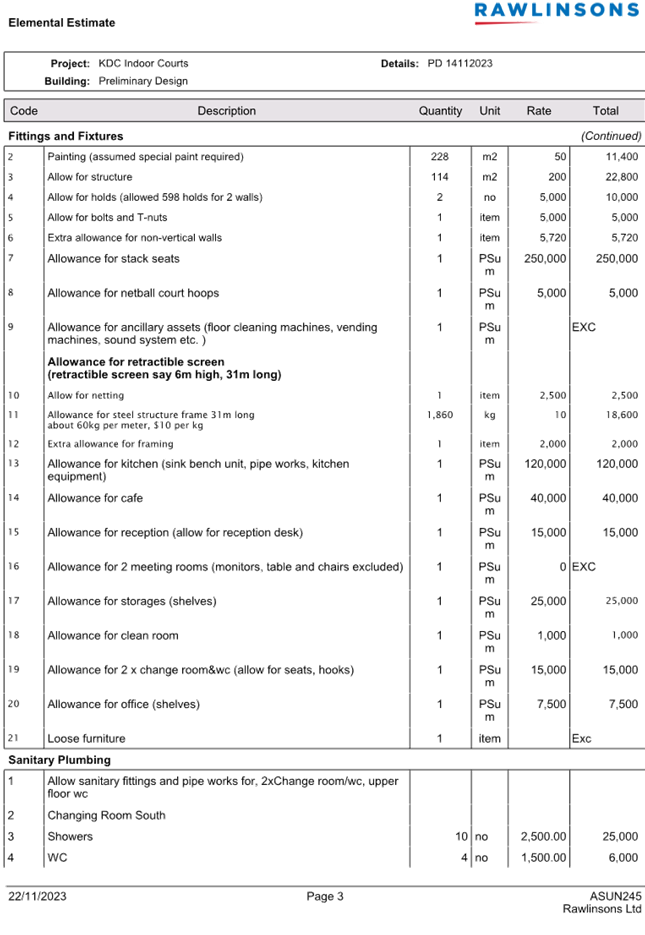
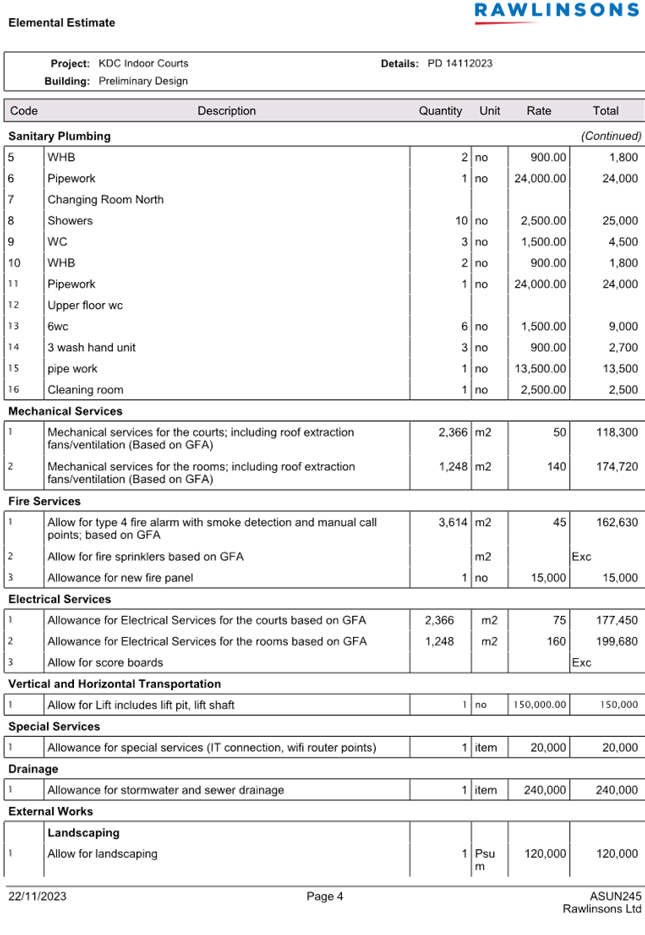
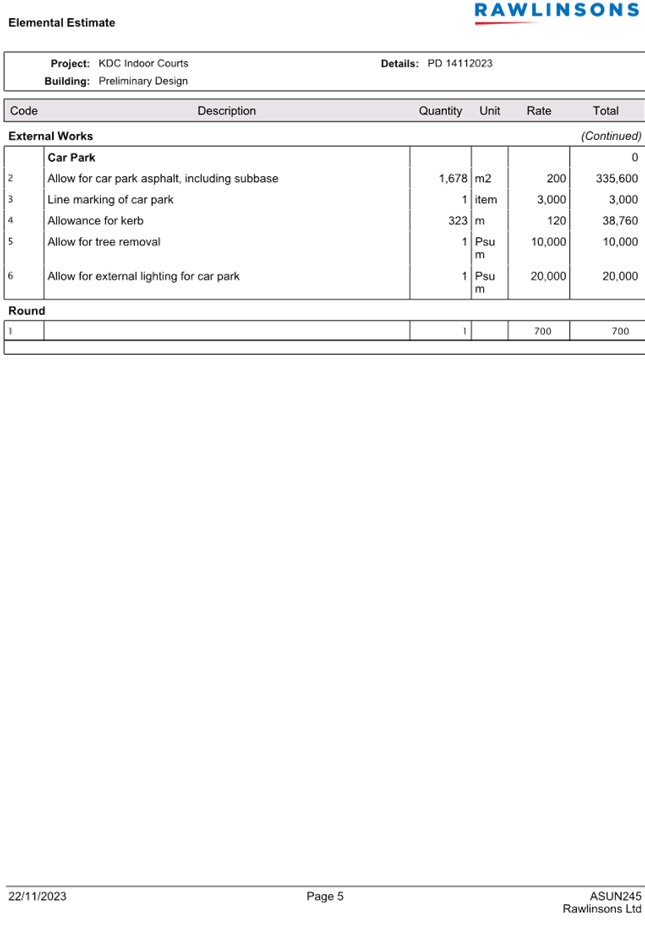
A. Notes
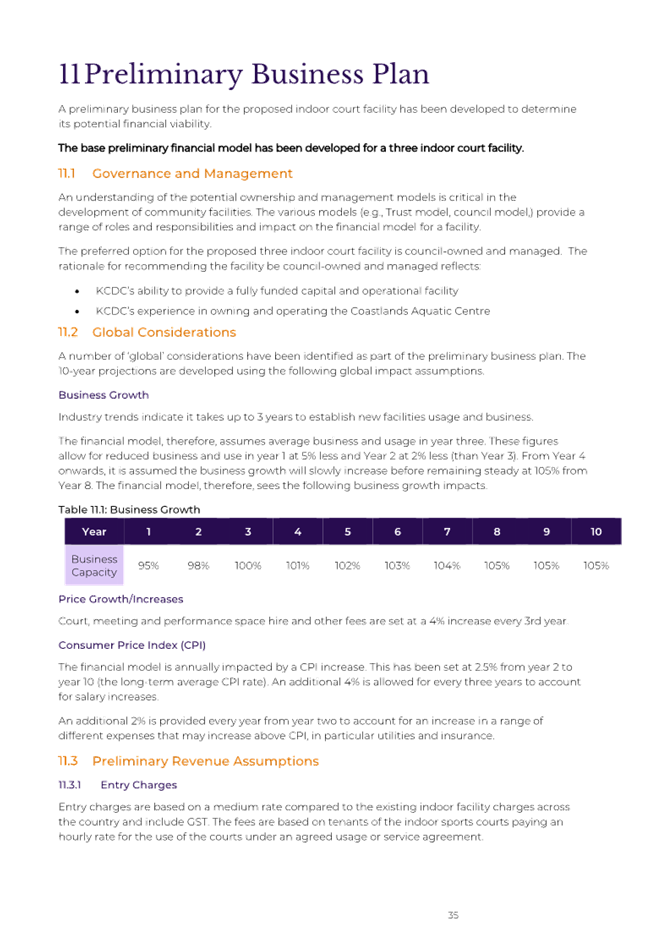
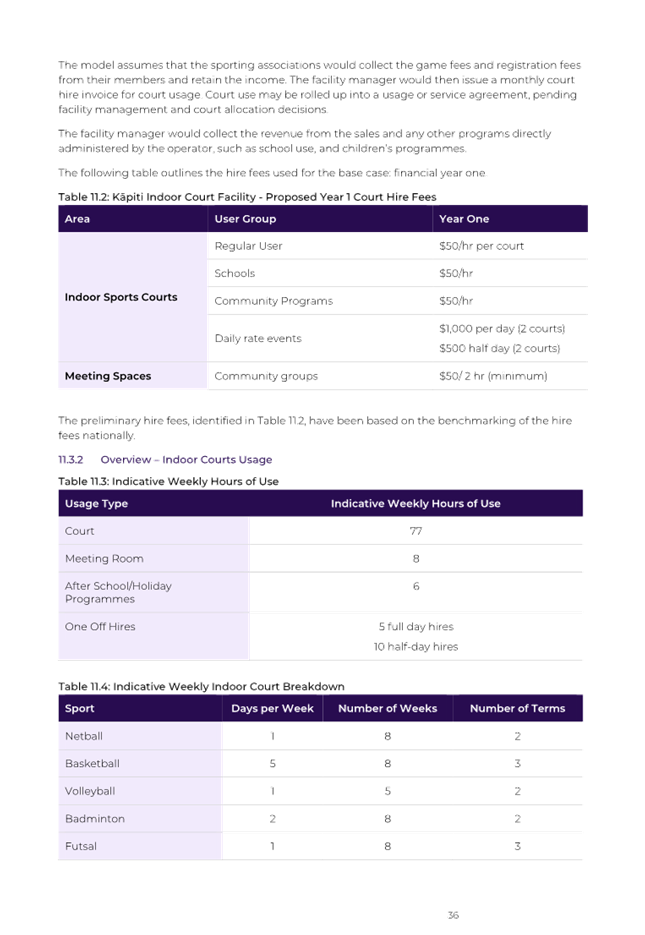
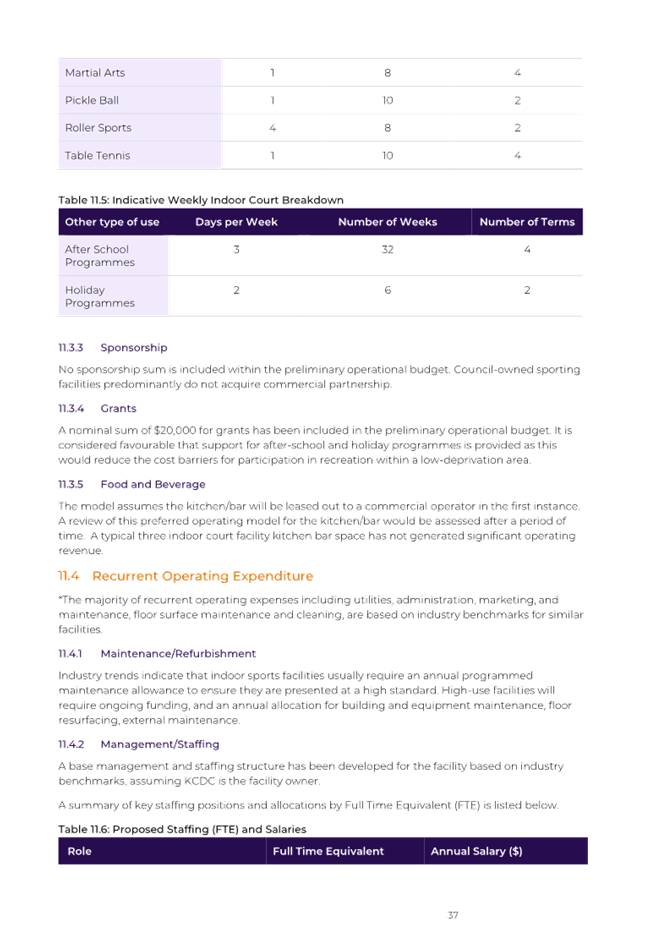
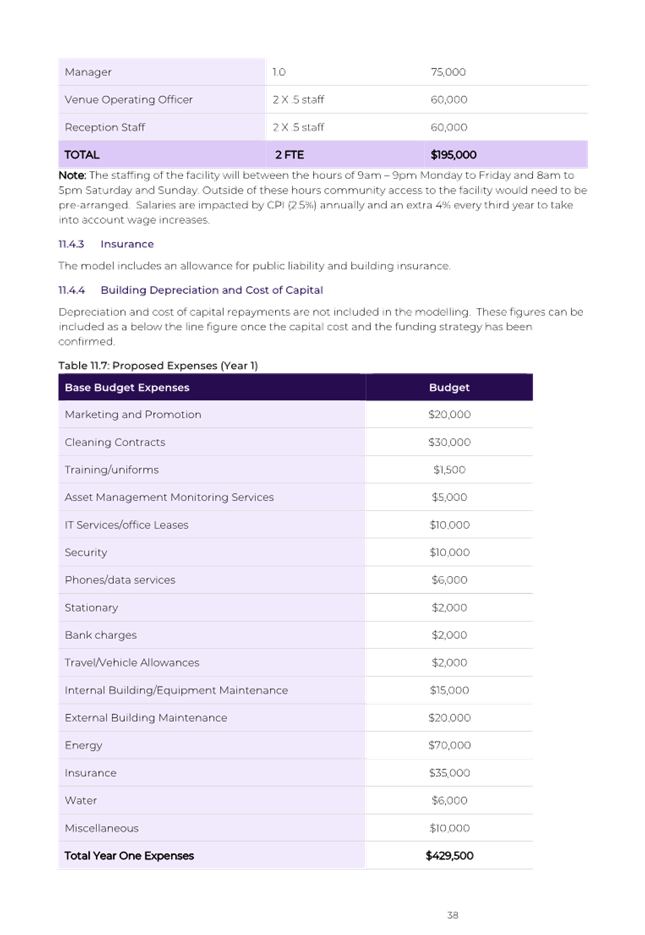
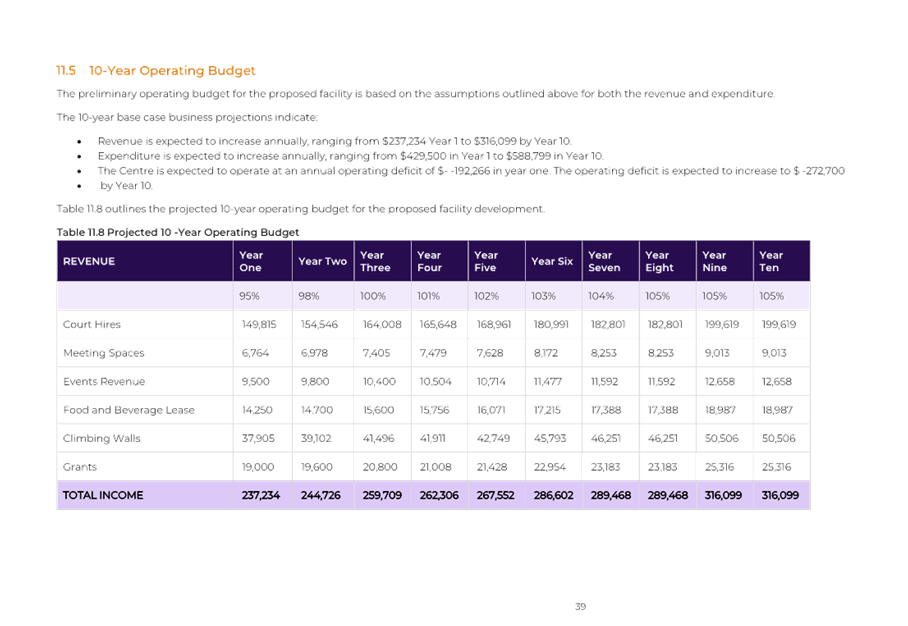
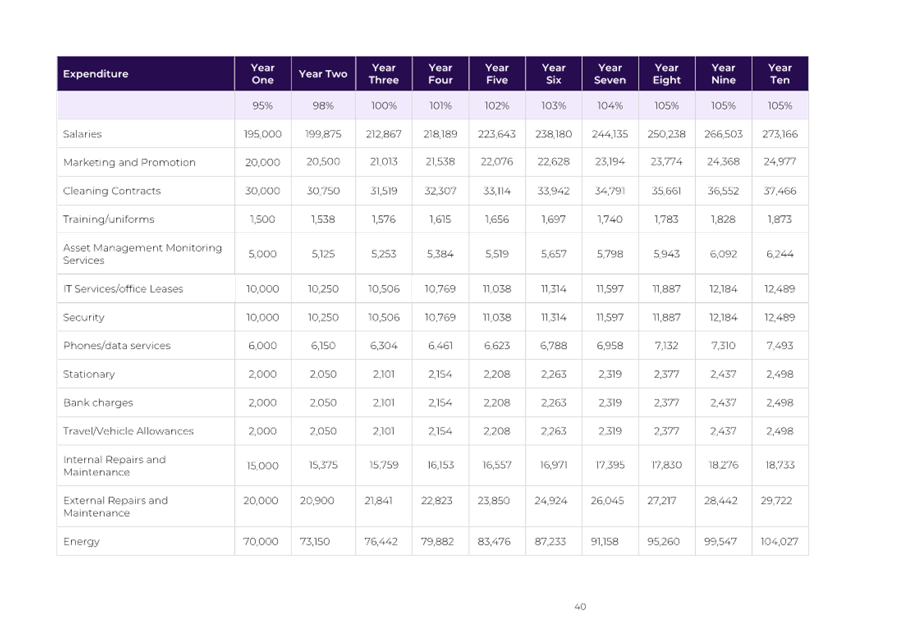
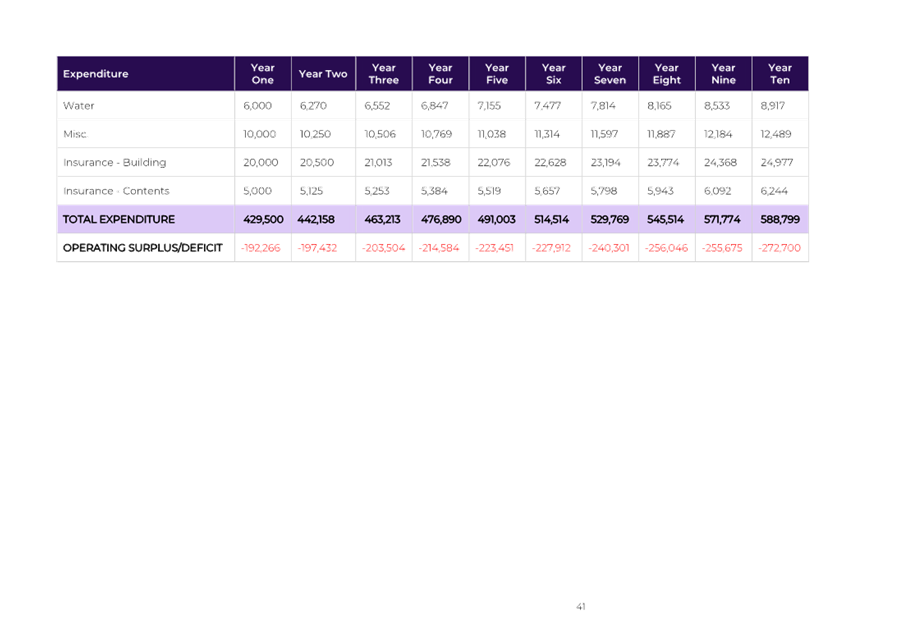
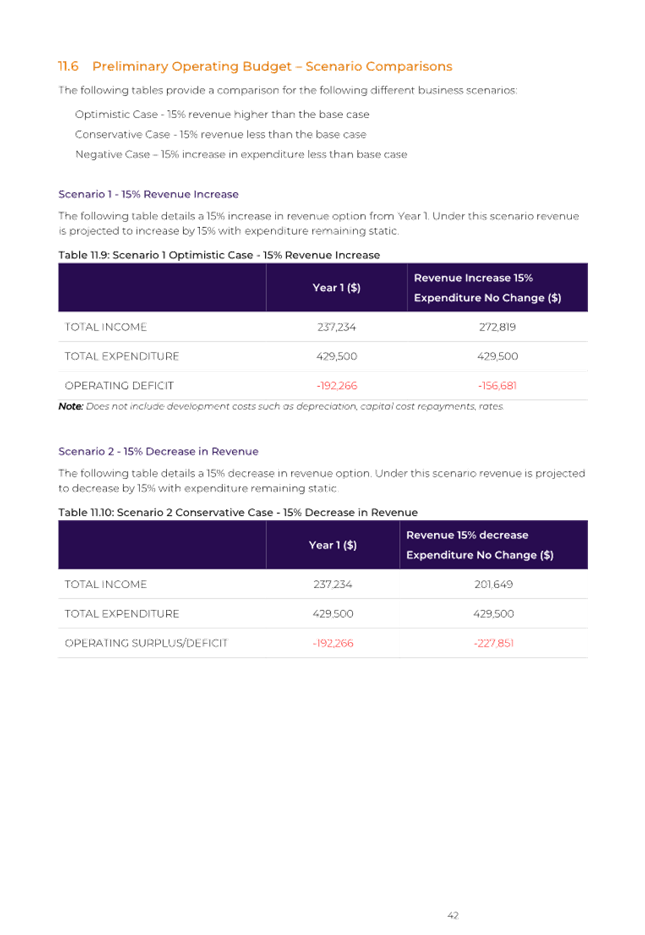
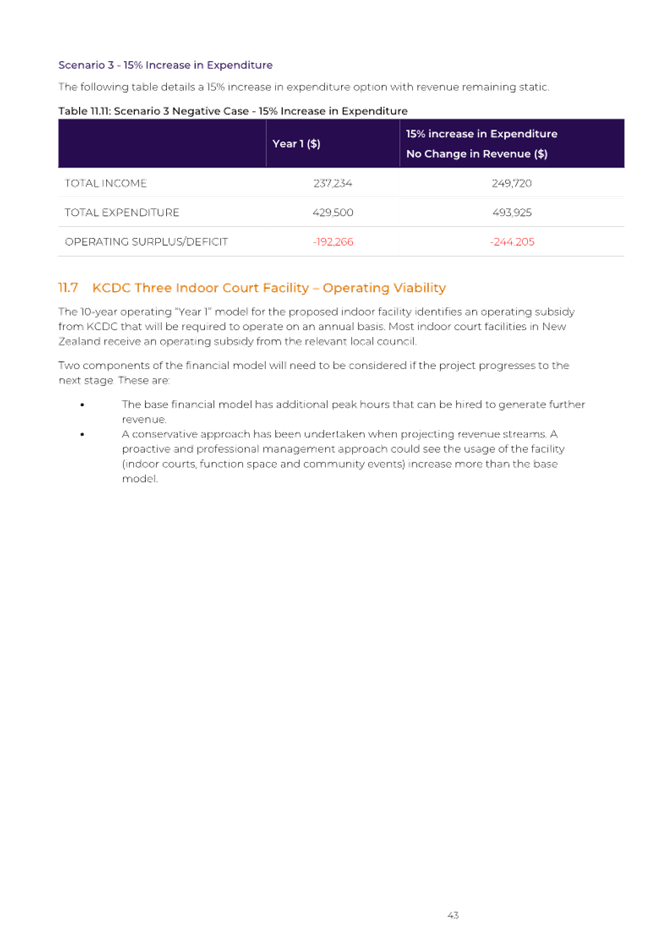
the Indoor Courts Needs Analysis and Feasibility Report attached as Appendix
One.
B. Notes
the Indoor Courts Needs Analysis and Feasibility Report conclusion that
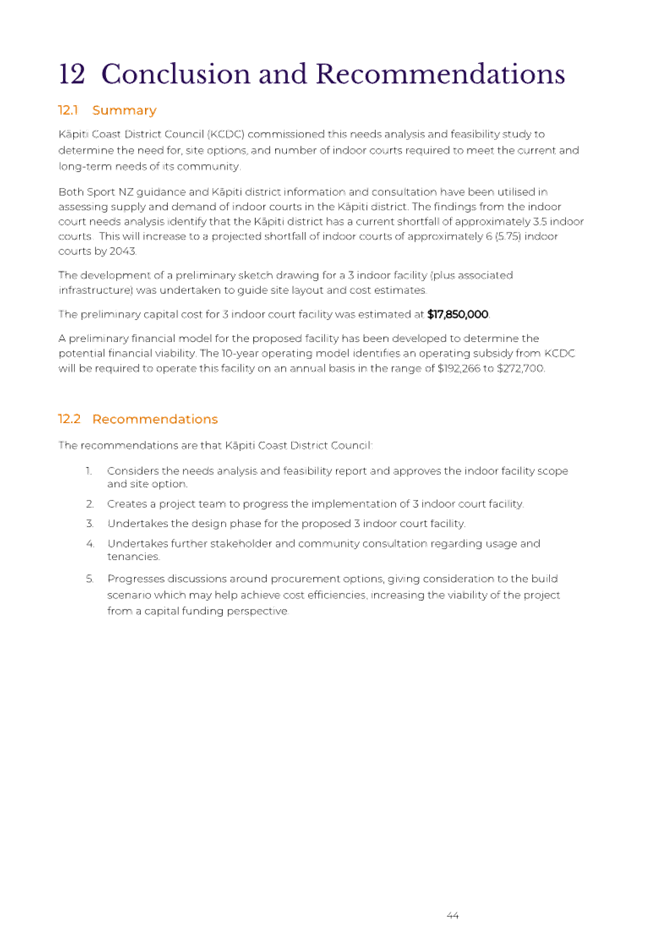
Kāpiti has a current shortfall of approximately 3.5 indoor courts,
increasing to a projected shortfall of approximately 6 (5.75) indoor courts by
2043.
C. Considers
the options for meeting Kāpiti’s current and future indoor sports
and recreation needs as highlighted in the Indoor Courts Needs Analysis and
Feasibility Report.
D. Notes
the preferred options within the Indoor Courts Needs Analysis and Feasibility
Report for a three indoor court facility with community meeting / events
spaces, and a rock-climbing wall, on a site adjacent to Coastlands Aquatic
Centre.
E. Notes
the preliminary capital cost estimates and financial model for a three-court
facility, including estimated operating subsidy, as detailed in the Indoor
Courts Needs Analysis and Feasibility Report.
F. Notes
that Officers would need to undertake further investigation into potential
timelines and pathways to identify funding for the development of a community
indoor court facility.
G. Agree
that Officers should undertake a detailed investigation into the provision of a
community indoor court facility, including understanding any benefits of
including a ‘Community Centre’ within this facility.
H. Recommend
to Council that the Social Sustainability Committee supports Officers
undertaking a detailed investigation into the provision of a community indoor
court facility, including understanding any benefits of including a
‘Community Centre’ within this facility.
Tūāpapa | Background
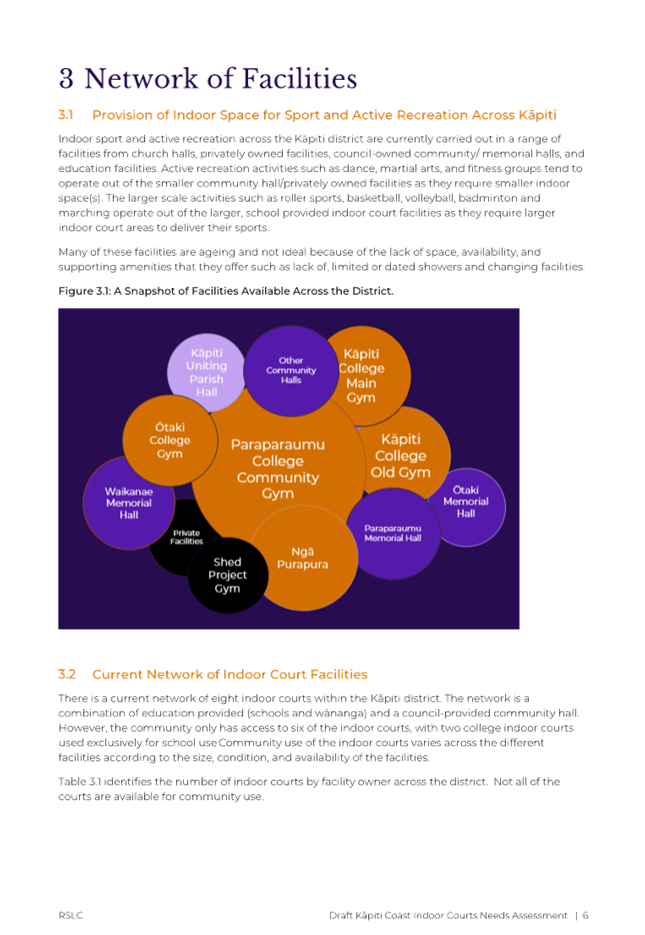
2 Across
Kāpiti there is a small network of indoor courts made up of school
(education owned) facilities as well as council-owned, and community-run halls.
3 Sporting
codes have identified a lack of access to and availability of indoor court
space as a barrier to increasing participation. Some sporting organisations are
even limiting the number of teams they can accept and are regularly turning
teams away.
4 For
nearly all court-based sporting codes (except Basketball) current participation
in the Kāpiti district is lower than the national participation numbers.
This may be anecdotal but could be an indicator of the consequences of a
shortage of indoor court space.
5 Additionally,
current facilities are aging and are increasingly found to be no longer
fit-for-purpose. Many lack sufficiently usable space to cater for modern day
needs, and often have a lack of supporting amenities like changing rooms and
shower facilities.
6 Recreation
Sport Leisure Consultancy (RSL) were commissioned by council to undertake a
needs analysis, feasibility study and business case to determine the need,
scope, and indicative financial cost for the development of a dedicated
community indoor sports facility. This report was completed in December
2023.
He take |
issues
Shortfall
of Indoor Courts
7 The
shortfall of indoor courts is an issue that is being felt across the wider
Wellington Region.
8 The
Sport New Zealand’s 2023 National Indoor Sport and Active Recreation
Facilities Strategy and Nuku Ora’s 2023 Regional Indoor Court report both
highlighted under-supply of indoor courts as an issue, noting increasing
pressure to provide accessible and affordable indoor court space for community
use throughout the region.
9 The
National Indoor Sport & Active Recreation Facilities Strategy 2023 provides
a ratio for the number of indoor courts per unit population that a community
should aim to have. The ratio is one indoor court per 7,800 persons in the
community.
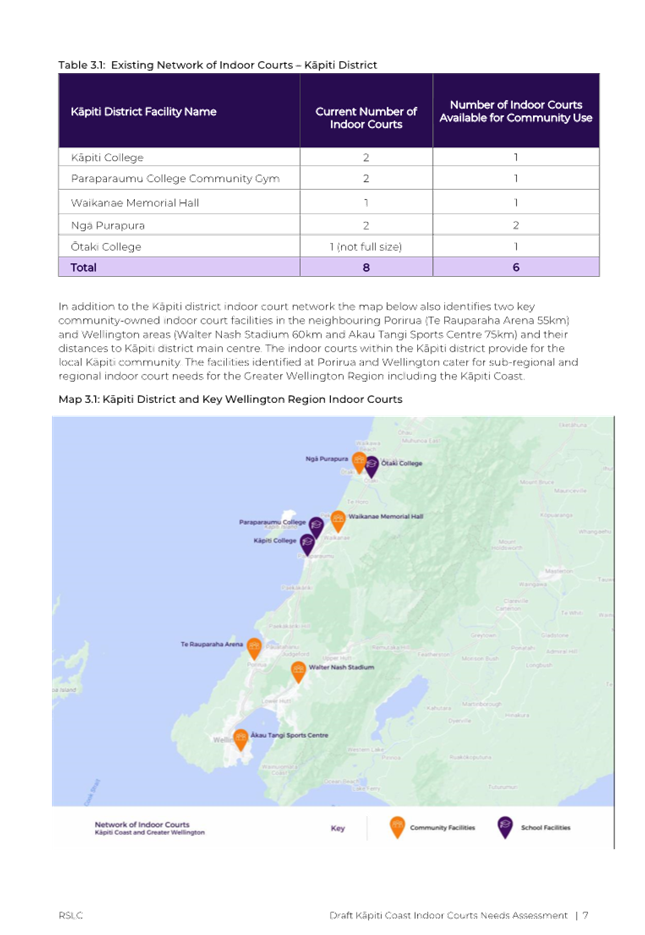
10 Currently
in Kāpiti we have 4.25 courts available for community use which are mostly
reliant on access to the college sports halls. Working on the ratio noted
above, the number of courts required is 7.5 based on today’s population
meaning we are currently operating in Kāpiti with a deficit of indoor
court space of 3.25.
11 With
the population growth over the next 25 years adding an additional 20,000 people
to the region, based on the ratio the deficit will increase to six courts by
2048.
RSL
Findings
12 A
key element of the completion of the RSL Report was engagement with the wider
sport and active recreation partners and stakeholders and included a
combination of a stakeholder survey one-on-one interviews to understand current
demands and needs.
13 The
RSL Report found that the current network demand on limited number of
facilities means usage is at capacity and the need exceeds availability. This
will only increase as we experience sustained population growth. These findings
are supported by the Nuku Ora’s 2023 Regional Indoor Court report, which
also found that Kāpiti has a shortfall of indoor courts.
14 As
a result of the shortfall, many community groups are relying on accessing a
small network of school/college facilities as well as council owned community
halls to meet growing recreational and sporting needs ‘under
cover’.
15 There
is competition between the sporting codes for access to and use of what little
indoor space there is currently. With the traditional court sports already
competing for space, emerging codes like futsal and pickleball (and outdoor
codes looking for winter training space) are being left out in the
rain…literally.
16 Furthermore,
community groups are increasingly being displaced by commercial events meaning
codes are either being forced to extend their playing seasons or make use
inferior alternative facilities.
Ngā
kōwhiringa | Options
Facility
Options
17 The
RSL Report identified four options to be considered when deciding how best to
meet Kāpiti’s indoor court needs.
18 These
options range from maintaining status quo, through to the development of a
purpose built one, two or three court facility with meeting spaces available
for use by wider community groups.
19 All
options were assessed against the following criteria to determine which should
be further investigated:
· Identify need
· Capital cost
· Site constraints
· Future proofing
the venue
· Fit for purpose
20 The
assessment of the options identified that the preferred option to progress to a
detailed plan was a three indoor court facility with community meeting / events
spaces, and a rock-climbing wall.
Site
Option Analysis
21 Following
the identification of the preferred facility option, RSL considered four
potential site options for the facility, to understand the viability of these
sites.
22 The
analysis identified that the preferred site for a three indoor court facility
would be on the council-owned land adjacent to the Coastlands Aquatic Centre.
This was due to the following reasons:
· Sports hub
potential (aquatic centre and indoor courts)
· Potential to
future proof the facility for expansion
· Potential for
future community centre development alignment
· Potential for
Destination Park development
· Close to the town
centre and proximity to schools
Preliminary
Business Case
23 A
preliminary high-level design and costing for a potential three court facility
has been developed by RSL to help understand the viability of any potential
project of this nature (attached as Appendix Two and Three).
24 A
10-year operating model was included within this design and shows that an
ongoing annual operating subsidy will be required from Council in order for it
to be sustainable.
25 The
report suggests that a facility such as this will have immediate and ongoing
benefits for the local and regional sporting organisations, as well as help
meet the wider Kāpiti community and community groups needs for covered
indoor community space.
Opportunities
26 The
RSL Report and the subsequent review by council officers has identified a
number of opportunities that could be realised through progressing with the
development of a three-court indoor sports facility including:
26.1 Covered
facility could easily incorporate a combined Indoor sports facility and
community shared space. Effectively a single building delivering two community
needs.
26.2 Facility
would provide a Hub for both sport, recreation, and meeting spaces. As well as
low energy activities for all age groups such as yoga etc.
26.3 Potential
to add climbing walls (both indoor and outdoor) and being able to accommodate
similar non-conventional recreation activities and play opportunities
throughout all seasons.
26.4 Commercial
activities, for example Home and Garden shows. A commercial kitchen could be
included to support functions and events.
26.5 Allows
for cultural, social and community events in a large indoor space.
26.6 Ability
to host elite sporting events, like Wellington Saints and Pulse games.
26.7 Attaching
to existing council buildings and or operational centres (like the Coastlands
Aquatic Centre) could enhance operational efficiencies.
ngā Mahi
panuku |
next steps
27 The
RSL Report has provided Council with a clear understanding of the current and
future requirements for a dedicated community indoor court facility in
Kāpiti, and the preferred facility and site options for such a facility.
28 There
is no current or identified future funding in the Long-Term Plan for a project
of this nature, therefore council officers would need to undertake further
investigation into potential timelines and pathways to identify funding for the
development of a community indoor court facility.
29 An
appropriate next step would be for council officers to undertake a detailed
investigation into the provision of a community indoor court facility,
including understanding any benefits of including a ‘Community
Centre’ within this facility.
Ngā āpitihanga | Attachments
1. Draft
Indoor Courts Needs Analysis and Feasibility Report ⇩ 
2. Kapiti
Indoor Courts Preliminary High-Level Design ⇩ 
3. Kapiti
Indoor Courts Preliminary Design Estimate ⇩