7 Reports
7.1 Heritage
Fund Allocations 2020-21
Author: Rob
Cross, Programme Manager Biodiversity
Authoriser: Janice
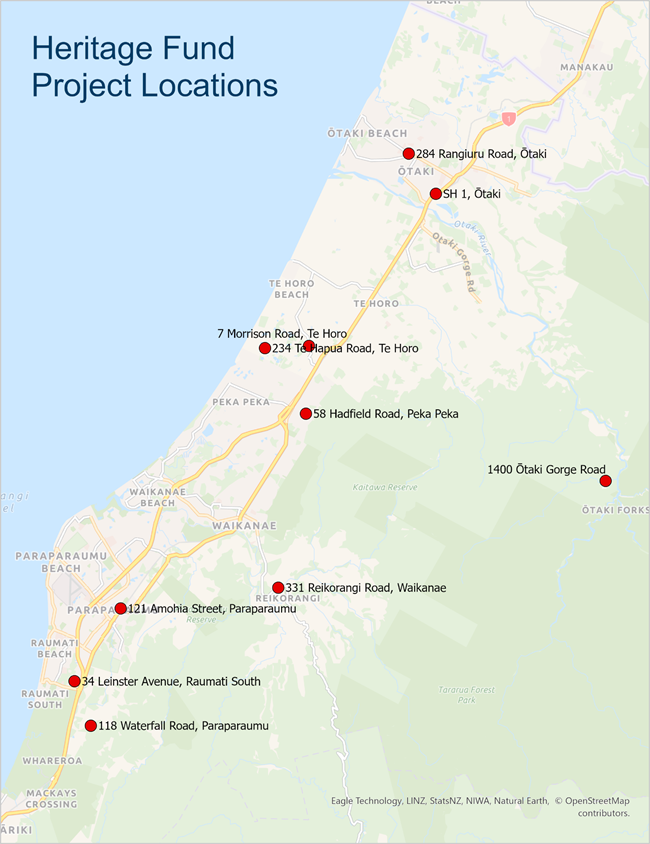
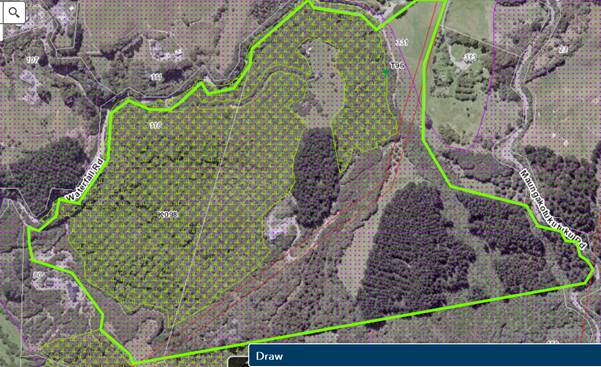
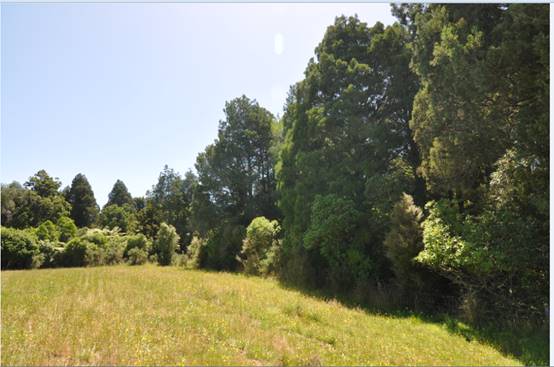
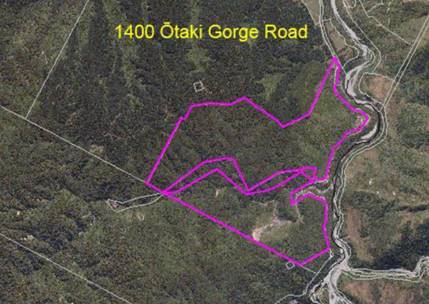
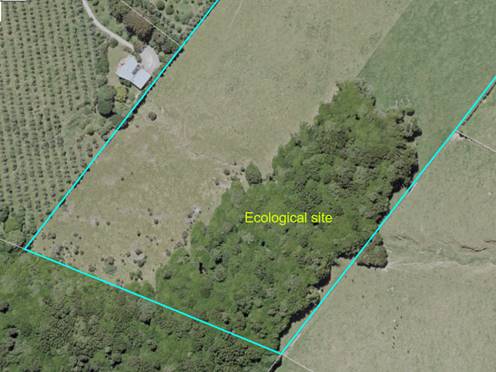
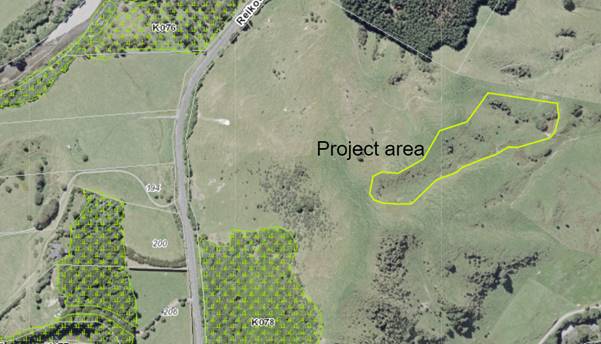
McDougall, Group Manager People and Partnerships
Purpose of Report
1 This
report summarises applications for grants from the Heritage Fund and makes
recommendations on funding allocations.
Delegation
2 This
Committee may make a decision under the following delegation in Sections B.6 of
the Governance structure:
“This Committee will
consider and allocate grant moneys in accordance with the meeting cycles and
criteria of five granting programmes…Heritage Fund.”
Background
3 The
Heritage Fund was established in 2001 with the intention of assisting and
actively encouraging landowners and members of the Kāpiti Coast community
to manage, protect and enhance natural features throughout the district,
including ecological, geological, historical and cultural sites.
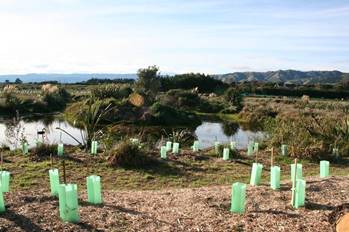
4 To
be eligible for funding, projects must meet the criteria set out in the
Heritage Fund Application Criteria and Guidelines, attached as Appendix 1, or
be a contribution to the establishment of a QEII Trust covenant.
5 A
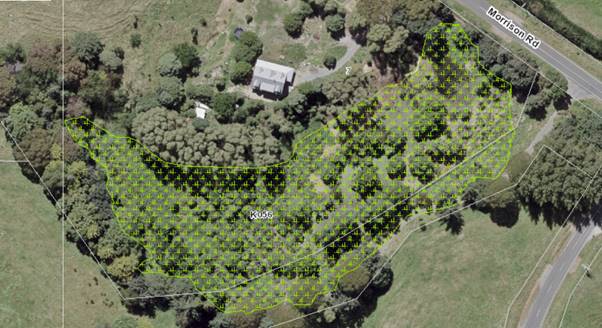
total of 11 applications for funding in 2020-21 have been received requesting a
total of $36,154 slightly less than the $37,069 available for allocation this
year. All the projects meet the funding criteria and merit support.
6 One
application is for a project in the research and education category and the
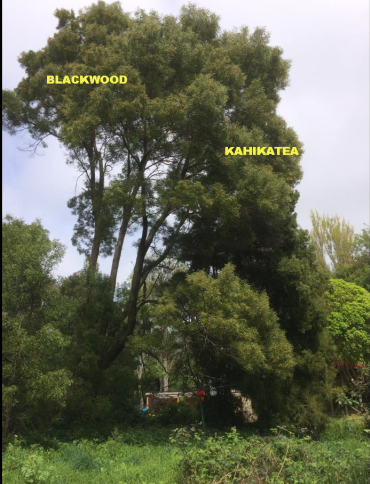
others are for projects in the heritage feature management and preservation
categories. The following section will cover the details of each project and
provide reasoning for the recommendations made. The location of projects is
shown on a map (Appendix 2), and there are photographs of project sites
(Appendix 3).
CONSIDERATIONS
118
Waterfall Road, Paraparaumu
7 For
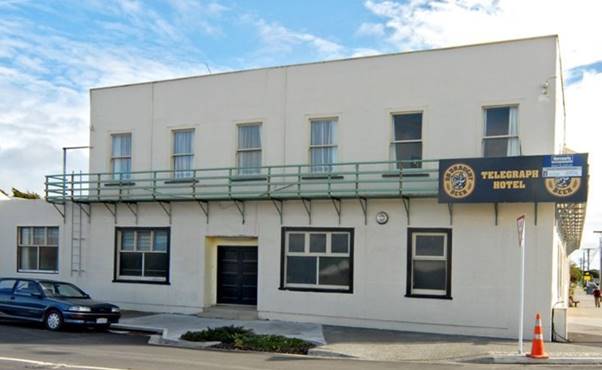
the last 13 years the owners of a 17.3ha bush remnant listed in the District
Plan Heritage Register as K098 have devoted countless hours to its restoration.
Known as ‘Waterfall Road Bush’ the remnant’s flora is
unusually diverse, containing a wide range of species including northern rata,
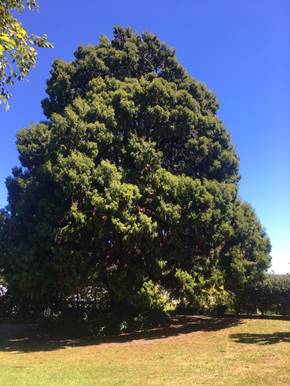
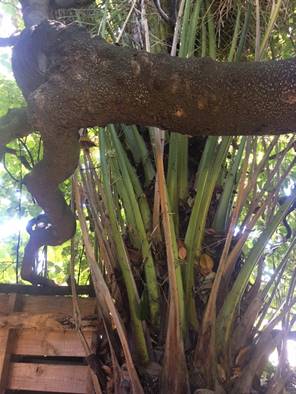
miro and maire taiki, a rare semi-parasitic tree with a conservation threat
status of ‘at risk, declining’.
8 Five
years ago the Department of Conservation funded the installation of an
extensive pest animal control network targeting possums, stoats and rats. A 50m
X 25m grid of more than 300 traps and bait stations, similar to grids used to
create ‘mainland islands’ on the conservation estate, covers much
of the site. Having undertaken baseline biodiversity surveys prior to
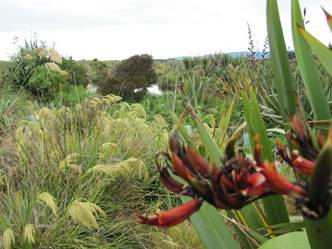
installing the grid, the owners are monitoring changes to the forest ecosystem
by collecting data on plant, insect, lizard and bird populations. Information
is being shared with the Kāpiti Biodiversity Project, a confederation of
three community restoration groups working in the south of the district.
9 In
2019 a successful workshop for Kāpiti landowners participating in the Key
Native Ecosystem Programme, a Greater Wellington Regional Council biodiversity
protection and restoration scheme supported by Kāpiti Coast District
Council, was held at the property, covering all aspects of native forest
restoration.
10 The
application is for $1,339 out of a project cost of $2,681 to fund
maintenance of the trap network.
11 As
the application meets Heritage Fund criteria in the management and research
categories it is recommended that funding is granted as requested.
State Highway 1, Ōtaki
12 This
is a heritage management project to restore Haruatai Forest, a regionally
significant swamp forest remnant listed as Ecological Site K015 in the District
Plan Heritage Register
13 Haruatai
forest covers 7ha, making it the second biggest swamp forest remnant in the
district after Nga Manu-Jacks Bush. The remnant is a taonga of local iwi, and
is included in Greater Wellington Regional Council’s Key Native Ecosystem
programme, which funds protective management of the region’s top 64
biodiversity sites.
14 Though
a corner of the forest extends into Haruatai Park most of the forest and
surrounding farmland is in joint Maori ownership, administered by a trust. The
farmland is leased to a farmer who has grazed cattle in unprotected parts of
the remnant.
15 Since
2008 Council’s Biodiversity Programme Manager has collaborated with
Greater Wellington Regional Council biodiversity staff to help the trust manage
the forest by controlling pest plants and animals.
16 The
forest is now used as an outdoor classroom by Te Wananga O Raukawa students.
During the last three years 1,800 native trees were planted by students, trust
representatives and Council staff as part of a biodiversity restoration
programme.
17 The
application is for $3,000 out of a project cost of $8,500 to
continue the programme by planting more trees and controlling pest plants and
animals. Greater Wellington Regional Council will contribute $5,000 from its
Key Native Ecosystem programme.
18 Under
Heritage Fund criteria the restoration of Haruatai Forest is a priority for
funding because of its biodiversity and heritage values. Therefore it is
recommended that funds are granted as requested.
1400 ŌTAKI GORGE ROAD,
ŌTAKI
19 This
is a Natural Heritage Management Project to assist the control of pest animals
and weeds on a 125ha bush block on the edge of Tararua Forest Park. The block
is part of Ecological Site K017 and is almost entirely covered by native bush,
including primary forest on steep faces that escaped logging.
20 As
such it is a valuable part of an evolving ‘mountains to the sea’
ecological corridor that has the potential to link the wilderness of the
Tararua Ranges to Kāpiti Island via the Ōtaki River. The block
provides habitat for keystone species such as kereru, and has resident
populations of many native forest bird species including tomtit, whitehead,
rifleman and bellbird.
21 Pest
animal control on this block complements intensive control on adjacent
Department of Conservation land conducted as part of ‘Project
Kākā’, an innovative ecological management initiative designed
to improve biodiversity in selected areas of the Tararua Forest Park.
22 The
applicants are dedicated conservationists who have already spent large sums
protecting and restoring biodiversity on their land. They are seeking a
contribution of $5,000 toward the $10,120 cost of extending and
maintaining an existing 3km network of bait stations and traps to control
possums, stoats and rats.
23 This
project meets the Heritage Fund criteria for natural heritage management. Therefore
it is recommended that funds are granted as requested.
234 Te Hapua Road, Te Horo
24 The
previous owners of 234 Te Hapua Road spent more than a decade restoring the
4.1ha wetland on their property. When they decided to sell because of advancing
age their priority was to find a buyer who would continue their restorative
work.
25 The
new owners are not only continuing restoration but also increasing the
wetland’s size by retiring adjacent land from grazing and planting native
wetland species. They are also planting dry dunes beside the wetland to provide
complementary habitat for birds, lizards and insects.
26 Protected
by a QE II Trust covenant, the wetland is part of the regionally significant Te
Hapua complex, which is highly representative of a formerly extensive swamp and
is considered one of the best and largest remaining examples on the Kāpiti
Coast. The area provides habitat for endangered species such as spotless crake,
Australasian bittern, dabchick, Ranunculus macropus, Carex dipsacea,
Potentilla anserinioides and other plant species becoming uncommon in the
Wellington Region including Gratiola sexdenta, kapungawha and Baumea
articulata.
27 Listed
in the District Plan Heritage Register as Ecological Site KO57, the Te Hapua
wetlands are part of Greater Wellington Regional Council’s Key Native
Ecosystem programme. For the last 15 years biodiversity staff from both
councils have collaborated in providing advice and support to Te Hapua
landowners, resulting in steady progress in protective wetland management.
28 The
application is for $5,000 out of a project cost of $29,000 to
subsidise restoration planting to buffer the wetland. Wetlands are a priority
for protection and restoration, as Kāpiti has lost more than 97% of its
wetlands since 1840, and wetlands are second only to estuaries as biodiversity
hotspots. The application meets the Heritage Fund criteria, therefore it is
recommended that funds are granted as requested.
7 Morrison Road, Te Horo
29 The
regionally significant Te Hapua wetland complex described in paragraph 54 above
extends beyond Te Hapua Road to the north, where arms of the main wetland
extend between high dune ridges.
30 Following
contact with Council biodiversity staff, the owner of 7 Morrison Road has
decided to restore native vegetation to the margins of one of these outlying
wetlands, and to the adjacent high dune, formerly grazed by livestock. This
will enhance the .5ha wetland and provide 1ha of complementary dune forest
habitat for native fauna.
31 Invasive
willow trees need to be removed from the wetland margins to make room for local
native tree species such as kahikatea and tī kōuka (cabbage tree).
32 The
landowner has applied for $4,800 out of a project cost of $9,200
to subsidise the cost of tree removal and native plants to be planted this
winter. As the application meets the Heritage Fund criteria, and wetlands are a
restoration priority, it is recommended funds are granted as requested
34 Leinster Avenue, Raumati
South
33 Key
indigenous trees in urban areas are identified for protection in section 3.2A
of the District Plan. To be protected trees must belong to a key indigenous
species and meet specified size criteria.
34 A
kahikatea (Dacrycarpus dacrydioides) tree at 34 Leinster Avenue, Raumati
South, easily meets the criteria through being 16m tall and having a trunk more
than 30cm in diameter at chest height.
35 Though
in good health, the kahikatea tree is being threatened by a faster growing and
larger Australian blackwood (Acacia Melanoxylon), which is growing into
the kahikatea, potentially smothering it.
36 To
protect the kahikatea the blackwood needs to be felled. The property owners
have obtained a quote from an arborist, and have applied for $350 out of
a project cost of $700 to get the job done.
37 As
the application meets the Heritage Fund criteria for a management project, it
is recommended that funds are granted as requested.
58 Hadfield Road, Peka Peka
38 District
Plan ecological site KO61 (7.49ha) adjoins the main trunk railway line north of
Waikanae and comprises Waikanae Scenic Reserve and a contiguous area of native
bush extending north on privately owned land toward Hadfield Road, Peka Peka.
39 The
site is classified as regionally significant because relatively large remnants
of the dominant forest types (kohekohe-tawa forest, titoki-mahoe treeland) are
rare between 20m and 90m above sea level.
40 The
privately-owned part of the site is protected by a QE II Trust covenant, and
was recently acquired by owners keen to improve the forest’s ecological
health. They are repositioning stock fences to enable protective buffer
planting around the forest’s edges, and following advice on how best to
control weeds and pest animals such as rabbits, possums, stoats and rats. Their
efforts are complementing management of the Waikanae Scenic Reserve by the
Department of Conservation.
41 To
fund further work the owners have applied for $4,435 out of a project
cost of $8,870, to be spent on fencing and native plants.
42 Their
proposal meets the Heritage Fund criteria, therefore it is recommended funds
are granted as requested.
284 Rangiuru Road, Ōtaki
43 Since
opening in 1872, the Telegraph Hotel in Ōtaki has been an important social
hub and business in the town for more than 125 years. The current building on
the site, dating from the early 1900s, is listed in the District Plan Historic
Heritage Register (B58).
44 After
buying the hotel at a mortgagee sale in 2011 the current owners embarked on
major refurbishment, including earthquake strengthening, re-plumbing, rewiring
and interior re-decoration.
45 The
final stage of the project entails renewing the roof. The owner’s aim is
to complete the project in time for the hotel’s 150th
anniversary next year.
46 The
application is for $5,000 out of a project cost of $30,000. As
the application meets the Heritage Fund criteria it is recommended funds are
granted as requested.
121 Amohia Street,
Paraparaumu
47 Two
trees at 121 Amohia Street, Paraparaumu, are listed as notable trees in the
District Plan Heritage Register. One is a rimu ( T 6 Dacrydium cupressinum),
the other, a magnolia ( T 7 Magnolia grandifolia).
48 The
property owner has consulted an arborist to assess the trees’ condition.
The arborist has recommended removing a Phoenix palm that is growing into the
magnolia, and removing dead wood from the rimu. He has also recommended
removing a prominent lateral limb from the rimu, citing ‘too much weight and
a bad inclusion’ (an ‘inclusion’ is where bark is sandwiched
between two limbs or trunks growing together, causing weakness).
49 Resource
consent is required to remove the prominent limb from the rimu, but no consent
is needed to remove the deadwood from the rimu or to remove the Phoenix palm.
There is provision in the Heritage Fund criteria for reimbursement of up to
$500 of resource consent fees, should the applicant apply for consent in
relation to the rimu.
50 The
application is for $1334.00 out of a project cost of $2,168. As
maintaining trees on the District Plan Historical Heritage Register meets
Heritage Fund criteria, it is recommended funds are granted as requested.
313 Reikorangi Road, Waikanae
51 The
owners of the farm at 313 Reikorangi Road, Waikanae, are conservationists who
have a 13ha area of bush on their property protected by QE II Trust covenant,
listed as ecological site K078 in the District Plan Heritage Register. For the
last 14 years they have worked with Council Biodiversity staff to protect and
restore biodiversity by controlling pest plants and animals and by fencing,
retiring and planting the riparian margins of streams on their property.
52 Their
latest project entails fencing, retiring and planting a wetland in a steep
gully terminating in a farm pond. The gully contains remnant native vegetation.
Restoring this gully will provide complementary habitat to the nearby
ecological site, and improve the water quality in the pond, which discharges
into a stream catchment that in turn discharges into the Waikanae River.
53 The
restored area will improve ecological connectivity between bush remnants and
restored areas on their property, and complement an evolving network of
restoration and ecological sites in the Waikanae River catchment.
54 The
application is for $5,000 out of a project cost of $20,000 to
subsidise stage one of the project, which entails fencing the area to be
retired. As the application meets the Heritage Fund criteria, it is recommended
funds are granted as requested.
74 Nga Manu Reserve Road,
Waikanae
55 Dactylanthus
taylorii / Pua ō te Reinga is a little-known native parasitic
flowering plant which is in serious decline and classified as ‘Threatened
– Nationally Vulnerable’. Prior to European colonisation it would
have been common and an important source of nectar on the forest floor, particularly
for bats and lizards. It is rare and threatened because possums and pigs
destroy it while eating the nectar.
56 In
March 2020 Ngā Manu Nature Reserve staff confirmed the successful
establishment of Pua ō te Reinga at a restoration site in the reserve,
marking the culmination of a long history of involvement with the species
stretching back to 1994, when Ngā Manu offered a John Salmon research
fellowship to Avi Holzapfel to support his PhD on the “Biology of Dactylanthus”.
57 The
Ngā Manu Trust has applied to the Heritage Fund for support in producing
and installing large information signs that will detail the biology and ecology
of the plant, and the story behind Ngā Manu becoming the first managed
site where Pua ō te Reinga has been successfully reintroduced and
established.
58 The
application is for $896 out of a project cost of $1,791. As the
application meets the Heritage Fund criteria for a research and education
project, it is recommended funds are granted as requested.
Financial
considerations
59 If
funding is approved as recommended, the 2020-21 Heritage Fund budget will be
substantially spent.
Tāngata
whenua considerations
60 There
are no tāngata whenua considerations.
Strategic
considerations
61 Enhancing
the natural environment is one of four key challenges contained in
Council’s Long Term Plan 2018-38. Grants from the Heritage fund
contribute directly to meeting this challenge by improving biodiversity. They
also align with the plan’s 3-year focus by incentivising the protection
and enhancement of local native flora and fauna as expressions of our distinct
district identity, and by supporting the protection and restoration of native
vegetation as a positive response to climate change.
Significance and Engagement
Significance
policy
62 This
matter is not deemed significant under Council’s Significance and
Engagement Policy.
Publicity
63 The
opportunity exists for positive publicity associated with these projects. A
media release will be prepared about the funding allocations.
|
Recommendations
64 That
the Grants Allocation Committee approves funding to applicants from the
Heritage Fund as set out in the following table:
|
Project
|
Total
Project Cost
|
Requested
Assistance
|
Recommended
Assistance
|
|
118 Waterfall Road,
Paraparaumu
|
$2,681
|
$1,339
|
$1,339
|
|
SH 1, Ōtaki
|
$8,000
|
$3,000
|
$3,000
|
|
1400 Ōtaki Gorge Road
|
$10,120
|
$5,000
|
$5,000
|
|
234 Te Hapua Road, Te Horo
|
$29,000
|
$5,000
|
$5,000
|
|
7 Morrison Road, Te Horo
|
$9,200
|
$4,800
|
$4,800
|
|
34 Leinster Avenue, Raumati
South
|
$700
|
$350
|
$350
|
|
58 Hadfield Road, Peka Peka
|
$8,870
|
$4,435
|
$8,870
|
|
284 Rangiuru Road, Ōtaki
|
$30,000
|
$5,000
|
$5,000
|
|
121 Amohia Street, Paraparaumu
|
$2,168
|
$1,334
|
$1,334
|
|
331 Reikorangi Road, Waikanae
|
$20,000
|
$5,000
|
$5,000
|
|
74 Nga Manu Reserve Road,
Waikanae
|
$1,791
|
$896
|
$896
|
|
Total
|
$122,530
|
$36,154
|
$36,154
|
|
Appendices
1. Heritage
Fund Criteria ⇩ 
2. Project
locations ⇩ 
3. Project
pictures ⇩
|
Grants
Allocation Subcommittee (Heritage Fund) Meeting Agenda
|
11 March 2021
|

Heritage Fund
Fund Criteria and
Application Guidelines
Heritage Fund Criteria and
Application Guidelines
Please read the fund
criteria and guidelines BEFORE filling in your
application form.
Reading these will save
you time!
Please note: These guidelines specify procedures and
conditions
that are legally binding for
successful applicants.
Aim of the Heritage Fund
“The Kāpiti Coast District
Council’s Heritage Fund aims to assist and actively encourage landowners
and members of the Kāpiti Coast community to manage, protect and enhance
heritage features throughout the district including ecological, geological,
historical and cultural sites.”
Funding Categories
Applications must fall into one of the following
categories to be eligible for funding:
1. PRESERVATION
Heritage
feature preservation – includes fencing and permanently protecting by
covenant areas of native vegetation, heritage trees, wetlands or other heritage
features.
2. RIPARIAN MANAGEMENT
i.e.
retiring stream banks from farming; fencing and planting; pest animal and weed
management.
3. MANAGEMENT
Heritage
feature management – includes activities such as plant and pest
management in protected native bush, heritage feature maintenance activities
e.g. painting, restoration, pruning, planting, and reimbursement of resource
consent fees for management projects.
4. RESEARCH/EDUCATION
For
example historical research/ information gathering, education/promotion
campaigns, signage, production of educational material like flyers, brochures
or the running of presentations, seminars or workshops.
NB:
I. The Heritage Fund is contestable and each application
will be assessed on its merits.
II. Funding is only available for projects taking place
on land within the boundaries of the Kāpiti Coast District Council.
III. Registered sites/features (e.g. identified in the
District Plan Heritage Register, Historic Places Trust Register, or similar)
will have priority over non-registered sites/features.
1.
Preservation Projects
For a project to be eligible in this category it must
meet all of the following criteria:
a) It is for an area of native vegetation, specific
tree, a wetland or other natural area;
b) It shall not be planted with any exotic vegetation
once protected;
c) Domestic stock must be excluded from the area to be
protected;
d) It must have a protective covenant registered on the
title of the land (or be entered into as part of the funding application);
e) It must meet the General Criteria listed in this
document; and
f) It must have a heritage management plan.
Preservation is limited to those areas which require
permanent retirement from forestry, farming or general land use.
A high priority for funds will be given to preservation
of heritage features under this category.
2. Riparian Management Projects
(Stream Bank Retirement)
For a project to be eligible in this category it must
meet the following criteria:
a) The area must be permanently retired from grazing;
b) Domestic stock must be excluded from the area;
c) It must be for a length of stream no less than 100m;
d) It must have a protective covenant registered on the title
of the land (or be entered into as part of the funding application);
e) It must meet the General Criteria listed in this
document; and
f) It must have a heritage management plan.
A high priority for funds will be given to projects
under this category, especially in water catchment areas such as upstream of
the water intake on the Waikanae River.
3.
Management Projects
For a project to be eligible in this category it must
meet the following criteria:
a) Be a registered heritage feature (registered in the
Kāpiti Coast District Plan Heritage Register, the New Zealand
Archaeological Association Site Recording Scheme, or the Historic Places Trust
Register); OR
Be
any other heritage feature (including trees, buildings, wāhi tapu or
wāhi taonga, heritage objects, or archaeological, historic or geological
sites) BUT it must meet the General Criteria listed in this document; and
b) It must have a heritage management plan.
With respect to (a) above, the site does not have to be
listed in the District Plan Heritage Register at the time the funding is
applied for. It is sufficient to agree to registration in the District
Plan’s Heritage Register.
Management under this category includes heritage
features that cannot be easily modified through land use activities. For
example, an eligible heritage feature could be an old steam boiler located in a
paddock or it could be a historic building. There is no requirement to fence
off or covenant heritage features under this category.
The funding for heritage features in this category may
go towards maintenance of the feature. Any heritage feature recorded in the
District Plan’s register will require a resource consent if they are to
be modified, altered or destroyed in any way unless it is a minor work as
defined in the District Plan or it is pruning in accordance with approved
arborcultural practices.
4. Research/Education Projects
For a project to be eligible in this category it must
meet the following criteria:
a) Involves a heritage feature listed in the District
Plan Heritage Register; or
b) Involves any other heritage feature that meets the
General Criteria listed in this document;
c) Will result in the protection and better management
of a heritage feature that meets the criteria under (a) or (b) above; and
d) Will
provide new information about the heritage feature and will assist in public
interpretation and understanding of the feature.
General Criteria
NOTE: Funding is only available for projects taking
place on land within the boundaries of the Kāpiti Coast District Council.
a) Ecological Sites
Representativeness*
- contains an ecosystem that is rare or
under-represented in Kāpiti ecological districts*
Rarity
- contains threatened ecosystems *
- contains threatened species *
- contains species that are endemic to the
ecological district*
-
Diversity
- diversity of
ecosystems, species, vegetation *
Distinctiveness
- contains large/dense population of viable
species *
- largely in its natural state or restorable
*
- uninterrupted ecological sequence *
- contains
significant land forms *
Continuity & Linkage within Landscape
- provides, or has
potential to provide, corridor/buffer zone to an existing area *
Cultural Values
- traditionally important for Maori
- recreational values
- significant landscape value
- protection of soil values
- water catchment protection
- recreation or tourism importance
- aesthetic coherence
Ecological Restoration
- ability to be
restored *
Landscape Integrity
- significance to the original character of
the landscape
- isolated feature, does it stand out or
blend in
- does it have a role in landscape
protection
Sustainability
- size and shape of area
- activities occurring on the boundaries
which may affect its sustainability
- adjoins another protected area
- links
- easily managed
b) Historical and Cultural Sites
General Values
- The extent to which the place/feature
reflects important or representative aspects of New Zealand history
- The association of the place/feature with events, persons or ideas
of importance in New Zealand history
- the potential of the place/feature to
provide knowledge of Kāpiti Coast District and New Zealand history
- the community association with, or public
esteem for, the place/feature
- The potential of the place/feature for
public education
- The potential for recreation and access
Tangata Whenua Values
- traditionally important to iwi
- urupa or marae
- wahi taonga or wahi tapu
- archaeological site
c) Individual Trees
- Trees which, in the opinion of Council,
are significant and worthy of protection; or
- Trees which have been assessed using the
RNZIH Standard Tree Evaluation Method (STEM) for New Zealand (or equivalent) as
having a score of 140 or greater.
NB: Copies of the RNZIH
Evaluation Method are available for perusal at the Council Civic Building, 175
Rimu Road, Paraparaumu.
d) Geological and Soil Sites
- Listed in the New Zealand Inventory of
Soil Sites of International, National and Regional Importance
- The extent to which the place reflects
important or representative aspects of New Zealand geology
- The representative quality and/or a quality or type or rarity that
is important to the district
Heritage
Management Plans
Heritage Management Plans are
generally required for Heritage Fund applications under the categories of
Preservation, Management or Riparian Management Projects. Exceptions may be
made for applications relating to heritage features managed under the
conditions of a QE II Trust covenant deed, or in accordance with a Greater
Wellington Regional Council Key Native Ecosystem restoration plan. In these
cases, applicants should reference the covenant deed or the Key Native
Ecosystem plan in their applications, and include an assurance that the
protective management practices specified in those documents are being
undertaken and will be ongoing.
The landowner must comply with the
heritage management plan once an
application has been approved for
funding.
A Heritage Management Plan:
a. Is a document which sets out the
approach to works and/or maintenance of the feature/site for future years;
b. May have conditions (as is
appropriate) that the landowner will be required to meet such as fencing, weed
and pest control, keeping stock/domestic animals out of the area and
restoration;
c. Will help ensure that the site is
managed in a manner that protects and enhances the heritage feature;
d. Does not have to be complex and
typically involves the following:
· A line drawing of the property/farm on a A4
aerial photograph (photo can be obtained free of charge from the District
Planning Department) showing the area of concern and the proposed management
measures;
· A description of the current problem/threats to
the area (e.g. cattle grazing undergrowth of remnant forest, plant pests or
animal pests like possums, goats, stoats etc which need
controlling/eradicating);
· The proposed annual work/maintenance programme
to be carried out over the next 3 – 5 years.
The Council can provide free
advice on preparing heritage management plans.
Timing of Applications
In each financial year, there will be one round of
funding under the Heritage Fund. Advertisements will be placed in local
newspapers advertising the annual funding round.
Applications will be considered by Council’s
Grants Allocation Committee.
Financial Details
In the application form sufficient details are
required to enable the proposed project to be fully costed.
· If you are registered for GST please do not include GST in
your costs
· Please attach quotes and any other supporting documentation
to your application.
The following costs are not eligible:
· Project costs incurred prior to the lodging of the application;
· Any costs involved in preparing the application; and
· Debt servicing.
The purchase of equipment is generally NOT eligible for
funding unless it can be demonstrated that it is essential for the project
(i.e. it cannot be leased, rented/hired etc) and is a reasonable cost. Each
item of equipment will be evaluated on its individual merit to the project.
It is recognised that labour contributions (and
associated tools and machinery) are an important component of many projects.
However, this scheme is not a subsidised employment scheme. Labour
contributions are eligible as a project cost but should ideally not form more
than a third of the total project cost.
What Level of Grant
Assistance Can I Get?
The maximum total grant allocated under the scheme is $5,000
(excluding GST). There is no minimum grant amount.
A maximum grant of $500 (excluding GST) applies
to administration costs (includes photocopying, mailouts/postage etc) and the
reimbursement of resource consent fees.
All grants are allocated on the basis of a cost
sharing arrangement.
The maximum grant rate for all projects is a cost
sharing of 50:50, i.e. the Council will only fund up to half of the project
cost. The applicant must make a contribution to the costs.
Example: Project cost
$2,000 at 50% (excl. GST):
Heritage Fund Grant $1,000
Individual share $1,000
The applicant’s share of the cost can be by way of
in-kind contributions (e.g. labour), or cash.
GST will be paid in
addition to the grant where:
· the applicant is GST registered;
· the project is part of the applicant’s taxable activity; and
· the GST number is supplied on the application form.
How Can the Council Staff
Assist Me?
Applicants are encouraged to complete the application
form themselves.
Anyone experiencing difficulty in filling in the form should
contact the Council’s Programme Manager Biodiversity. The Programme
Manager Biodiversity or delegated Council officer can help prepare your
Heritage Management Plan. (NB: Staff assistance does not imply success or
preferential treatment in the approval process).
Inspections of projects allocated funding will be
undertaken by Council staff.
How Will the
Council Select Successful Applications?
As the number of projects and their
total value may exceed the amount of grant money made available by Council each
year, funding will be prioritised.
Heritage Funding will be
prioritised in the following order:
1. Preservation projects, where areas to be
protected will be fully fenced off with no stock permitted and a covenant
entered into;
2. Riparian management projects, where the stream
banks will be fully fenced off with no stock permitted and a covenant entered
into;
3. Management projects for heritage features, areas
or items such as restoration work, identification and on-going
works/maintenance;
4. Research projects, including education campaigns
or historic investigations into heritage features.
NB:
1. Funding will only be allocated for projects
taking place on land within the boundaries of the Kāpiti Coast District
Council.
2. Registered sites/features (e.g. identified in
the District Plan, Historic Places Trust Register, or similar) will have
priority over non-registered sites/features.
3. Features may be protected by a section 221
consent notice (issued under the Resource Management Act)
4. Discussion and consultation will be undertaken
with other agencies such as the Department of Conservation, Greater Wellington
Regional Council and the QE II National Trust, as appropriate.
How Will Applications be
Processed?
Applications should be addressed to Council’s
Programme Manager Biodiversity. All
applications will be acknowledged within 10 working days
of receipt.
Applications will be checked to ensure they have been
completed correctly and sufficient detail has been provided. Where applications
are considered incomplete or deficient, they will be returned to the applicant
for further information or clarification.
Where an application is referred back to the applicant
for further clarification or information, the applicant will be given a set
period to respond.
At the close of the application period, applications
will be sorted into two categories:
1. Applications that will be reported to the Grants Allocation
Committee for full consideration; and
2. Applications
that are considered to fall outside the criteria and/or contain insufficient
information.
Meetings of the Grants Allocation Committee are
advertised and any member of the public is welcome to attend.
The applicant will be notified in writing within 10
working days of the Grants Allocation Committee making a decision on their
application. Where an application is approved, the applicant will be sent a
letter of approval specifying the grant.
.
The following conditions apply to any grants made:
1. Any expenditure on a project prior to the application being lodged
will not be accepted for funding.
2. All costs associated with the project are first paid by the
applicant unless another arrangement is approved in writing by Council.
Receipts should be forwarded to the Programme Manager Biodiversity for
processing. The grant will only be paid for approved costs.
3. The applicant must notify the Programme Manager Biodiversity once
the project has been completed.
4. Any grant approval is personal to the applicant and cannot be
reassigned without written approval from Council.
5. Grants must be uplifted within the time specified in the approval.
6. Grants are made subject to the Grants and Allocation Committee being
satisfied that the information given is true and correct and that there has been
no omission of any relevant fact or any misrepresentation given. Council
retains the right to refuse payments to approved applicants in cases where it
determines that it has been misled by the applicant or if the applicant has
been placed in receivership or declared bankrupt.
7. In all cases, the decision of the Grants Allocation Committee shall
be final and there will be no rights of appeal or review.
8. The Kāpiti Coast District Council reserves the right to visit
any project or use it for promotional purposes where grant assistance has been
given. In all cases the applicant will be notified of a visit.
9. The
Kāpiti Coast District Council reserves the right to suspend and to refuse
further grant payments if in the opinion of the Grants Allocation Committee the
grantee wilfully or through neglect causes the project to fail. The decision of
the Council shall be final and there shall be no rights of appeal or review and
no right to compensation or damages of any nature.
Once I have an approved
grant, how do I claim it?
All accounts are first paid by
the applicant, unless another arrangement is approved in writing by Council.
Receipts are sent to the Council
officer administering the grant.
A maximum claim value of
$5,000 applies (excluding administration/resource consent fee costs where a
$500 maximum claim value applies)
Completed projects are inspected by
a Council Officer.
Can I Change the
Contract?
Once the cost of a project and the
grant rate has been approved by the Grants Allocation Committee that amount may
not be increased or any new categories of expenditure introduced.
Progress
Reporting and Notification of Project Completion
All successful applicants will be
required to report regularly on progress in completing the project,
particularly the completion of significant milestones.
Successful applicants must notify
the Council officer administering the grant once their project has been
completed.
Council Staff
Who Can Help
Community
Services Group
Programme Manager Biodiversity
– Rob Cross
Phone: (04) 9045 653
Email: rob.cross@kapiticoast.govt.nz