|

|
|
AGENDA
Strategy and Operations Committee Meeting
|
|
I hereby give notice that a Meeting of the Strategy and Operations Committee will be held on:
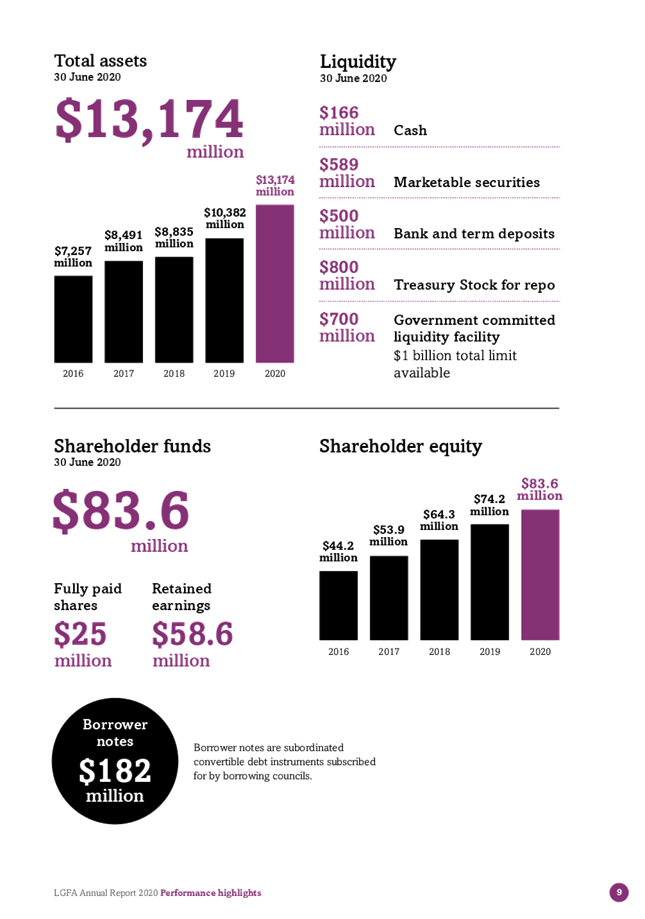
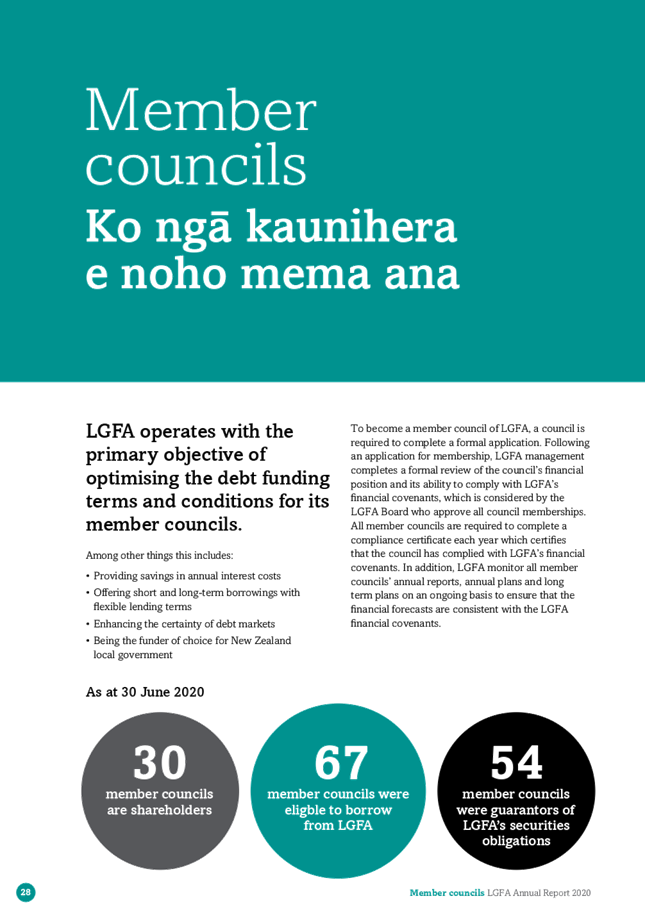
|
|
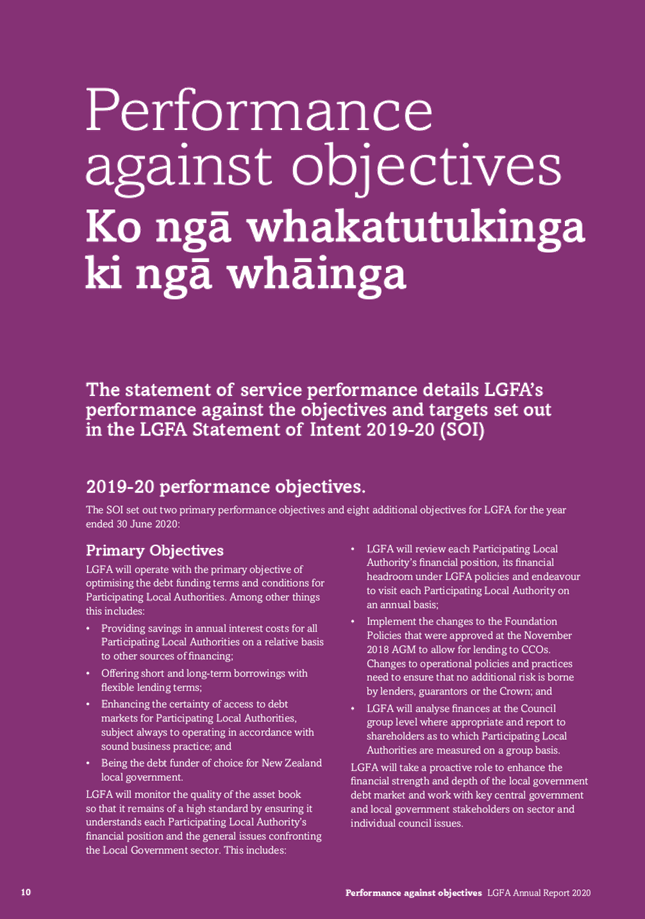
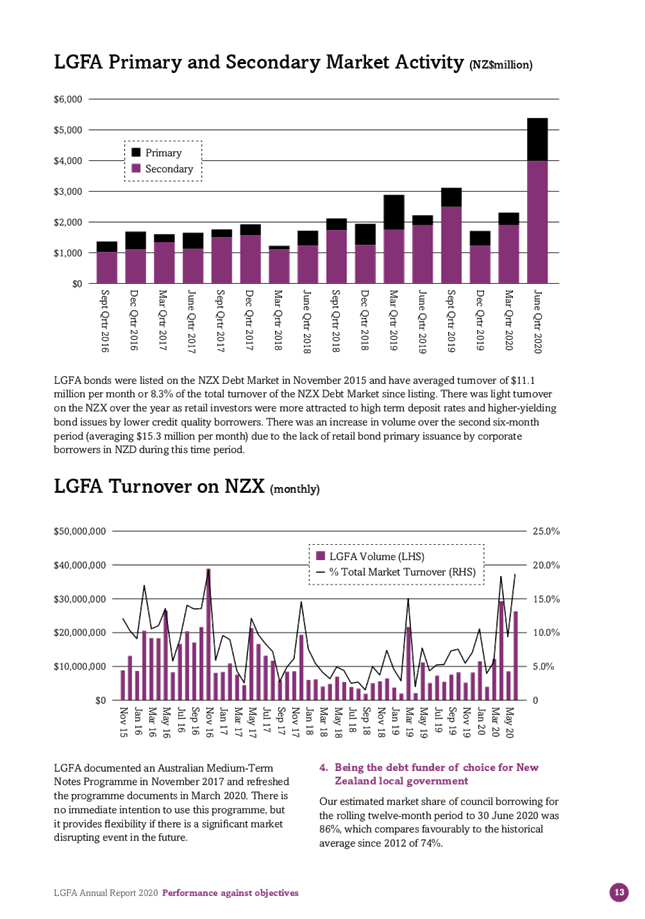
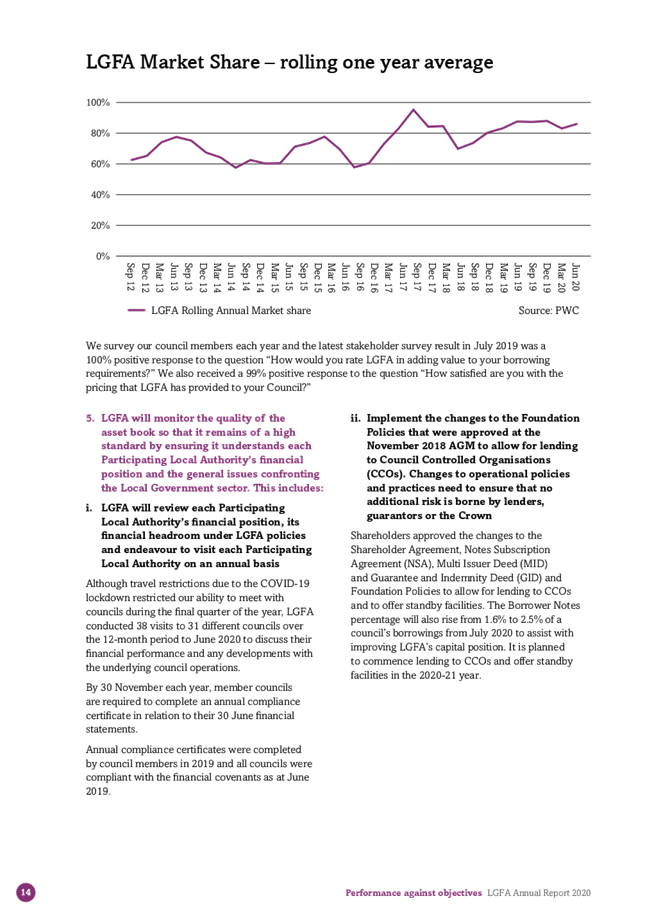
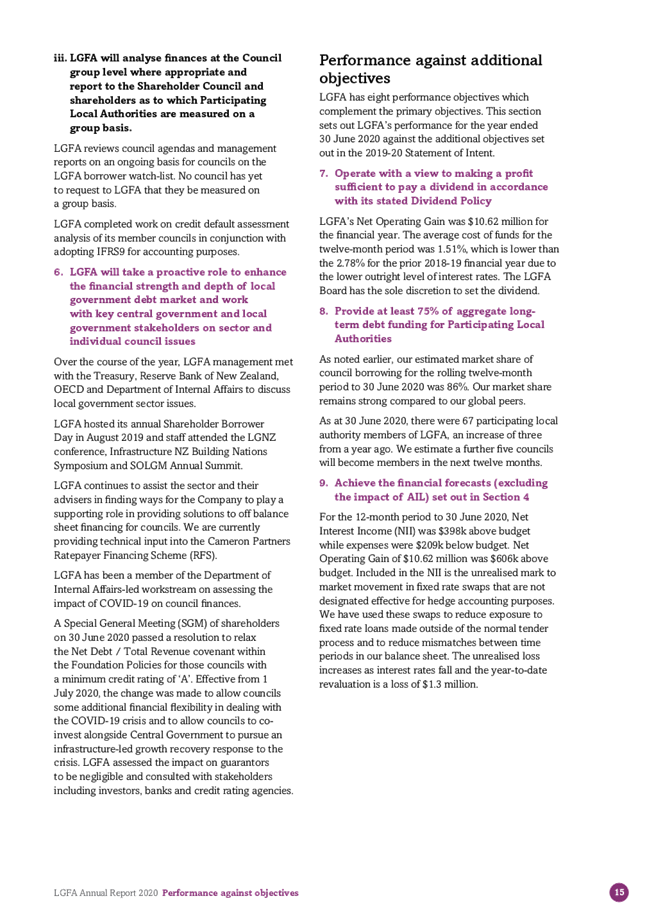
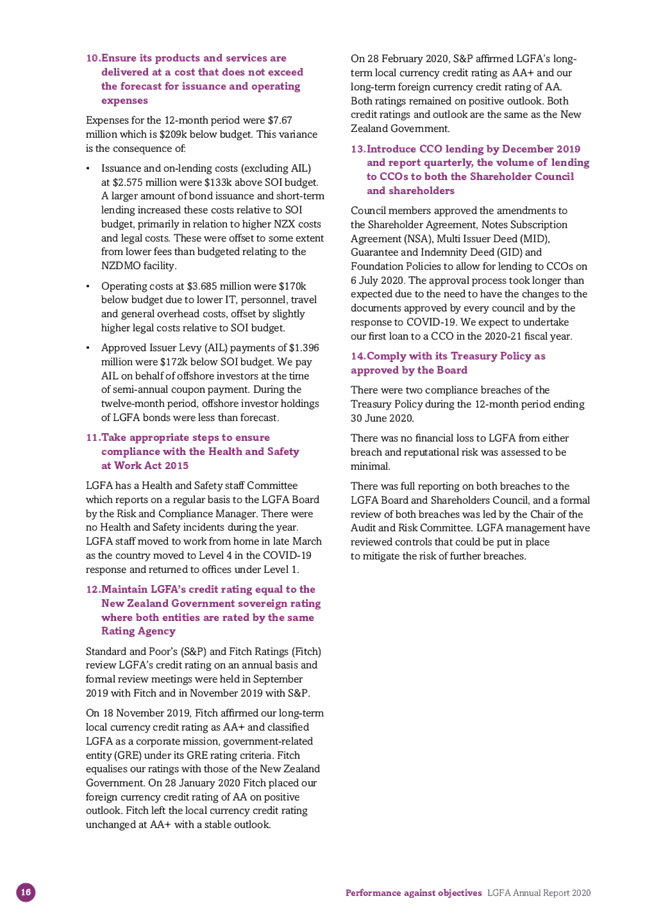
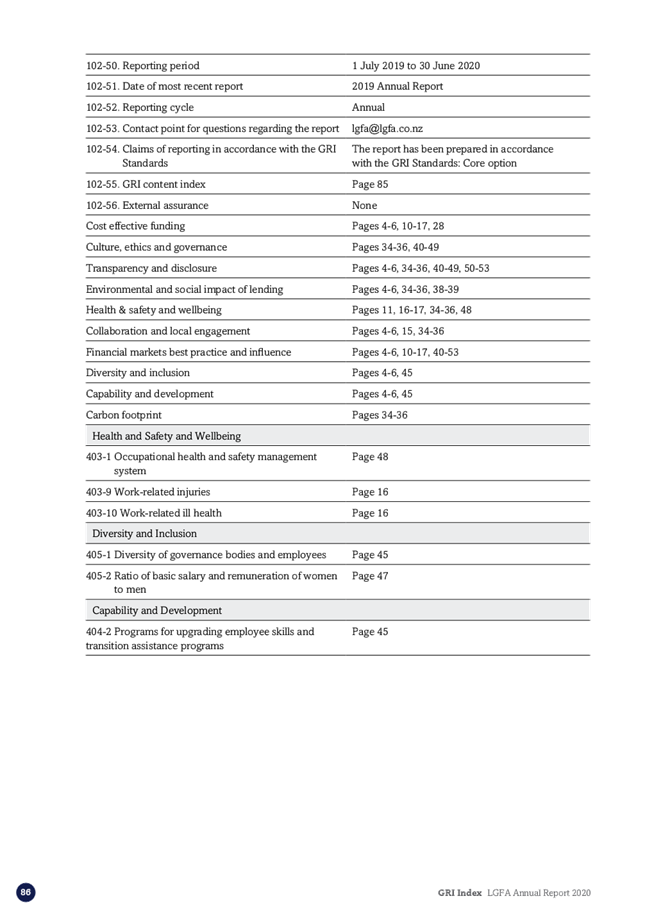
Date:
|
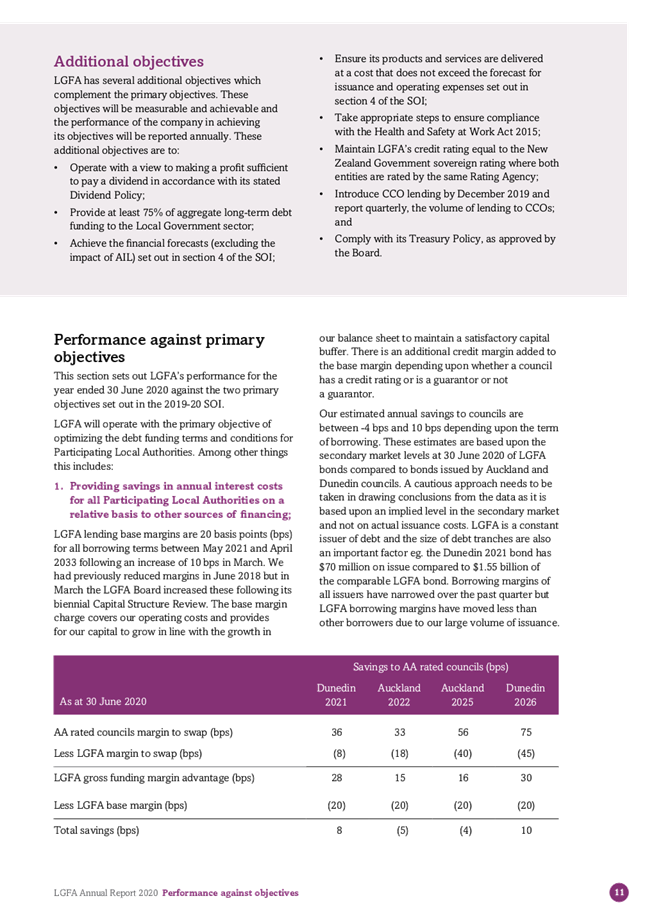
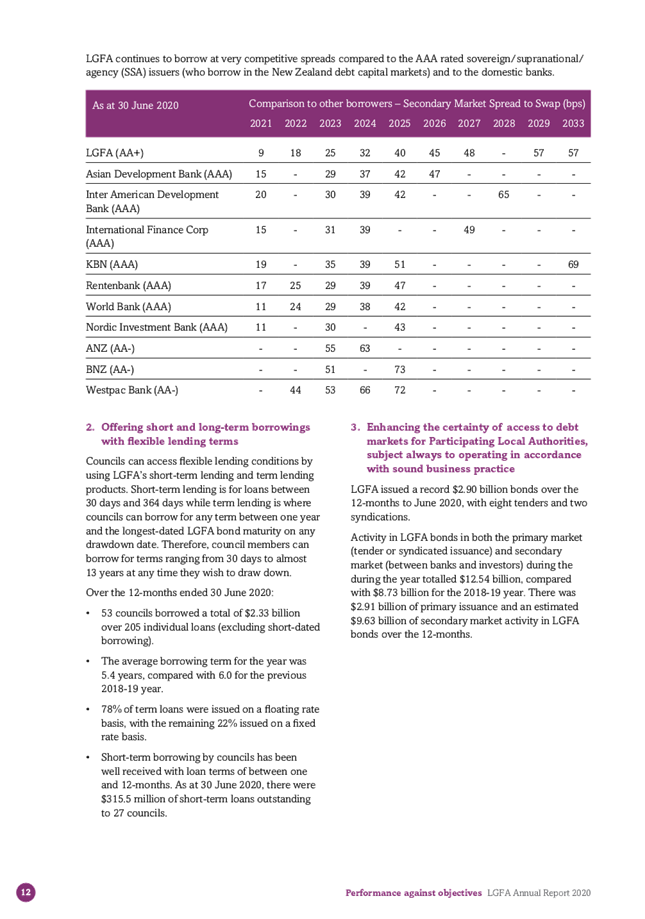
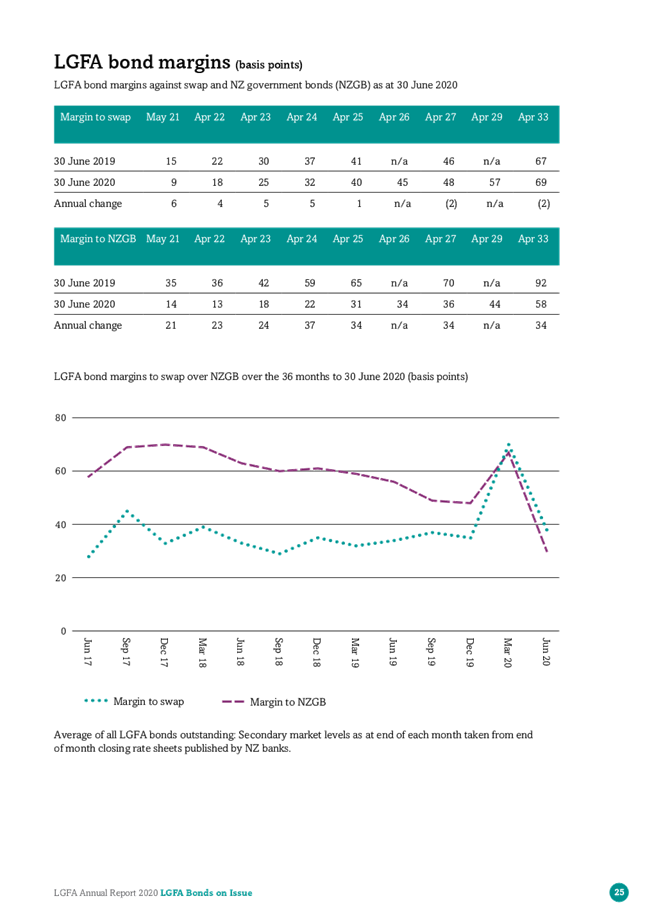
Thursday, 5 November
2020
|
|
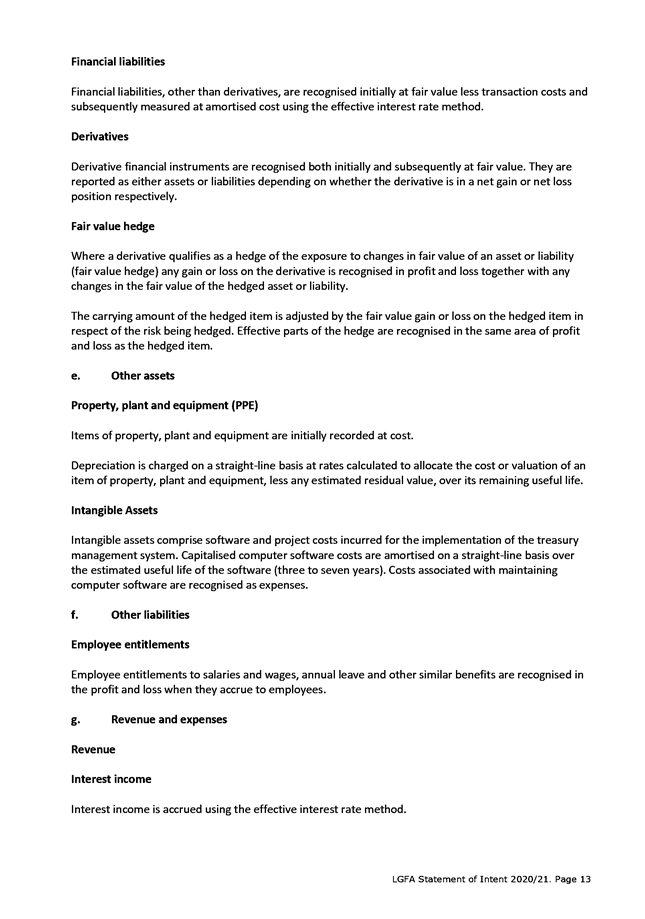
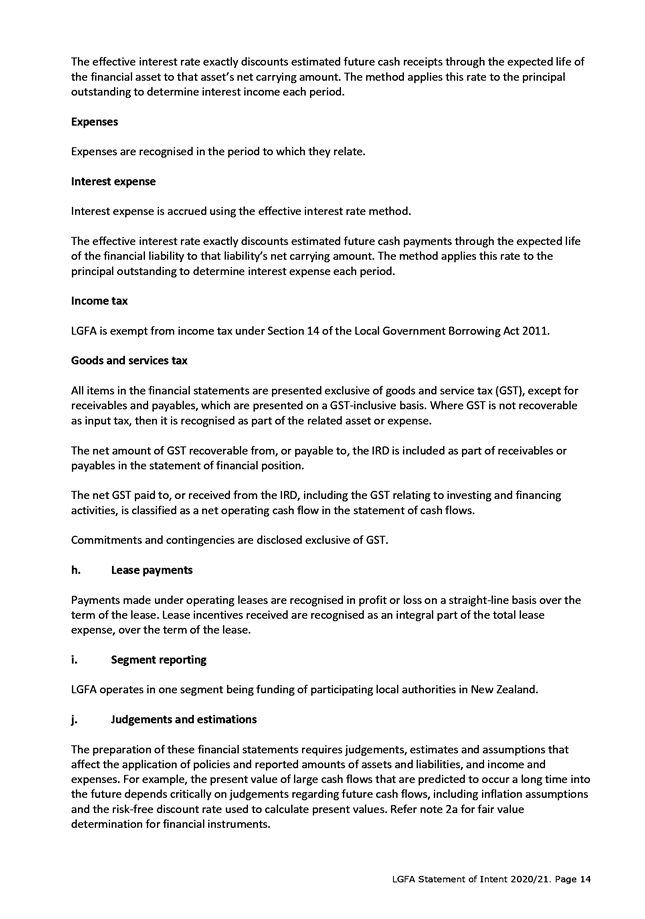
Time:
|
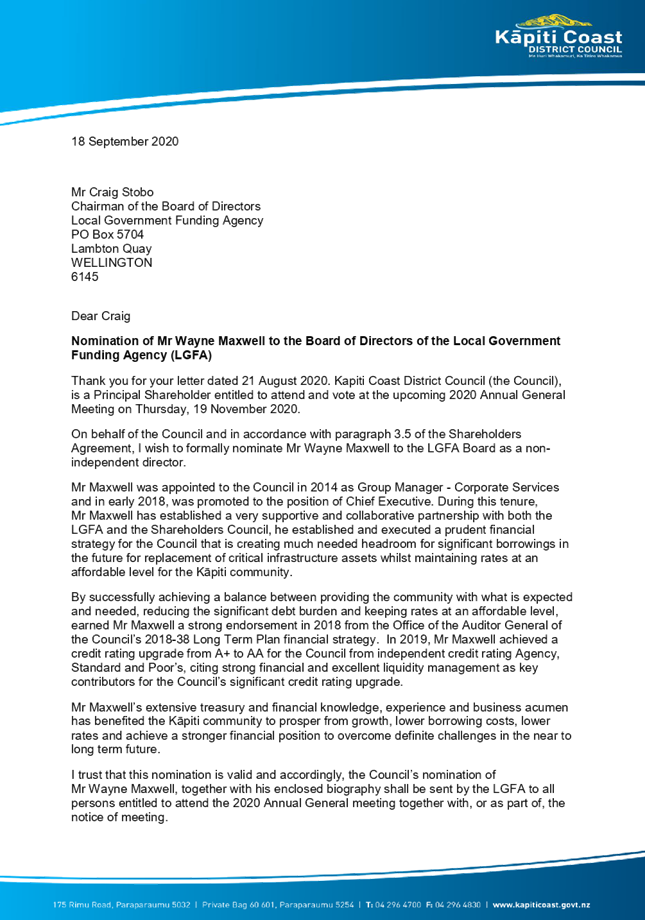
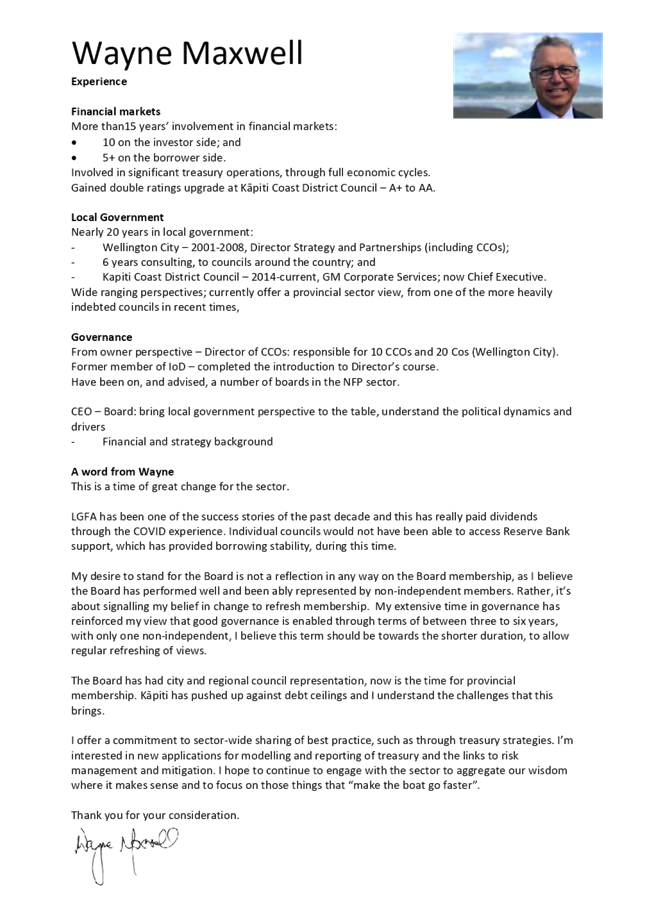
9.30am
|
|
Location:
|
Council Chamber
Ground Floor, 175 Rimu Road
Paraparaumu
|
|
James Jefferson
Group Manager Place and
Space
|
|
Strategy
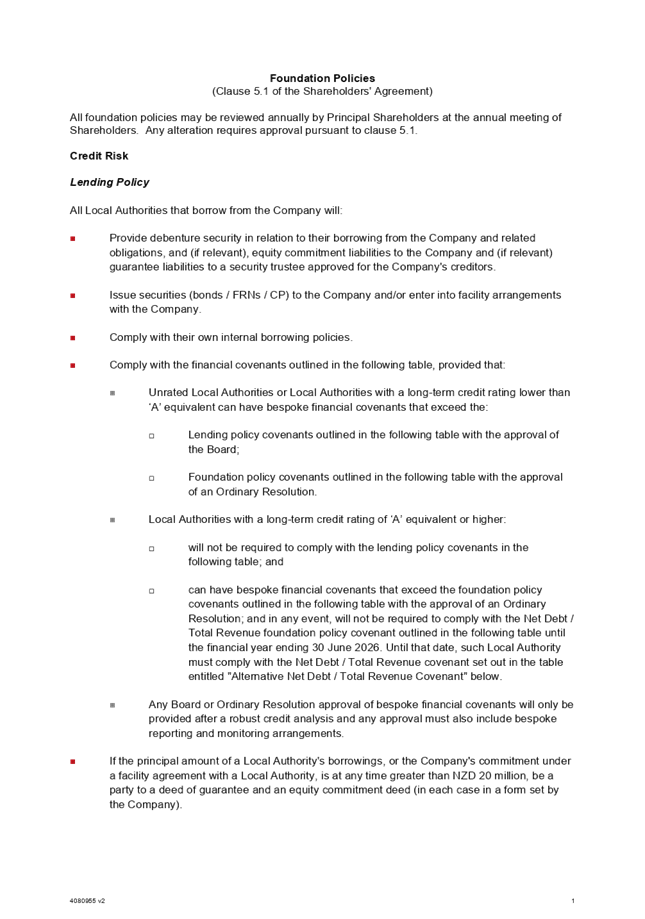
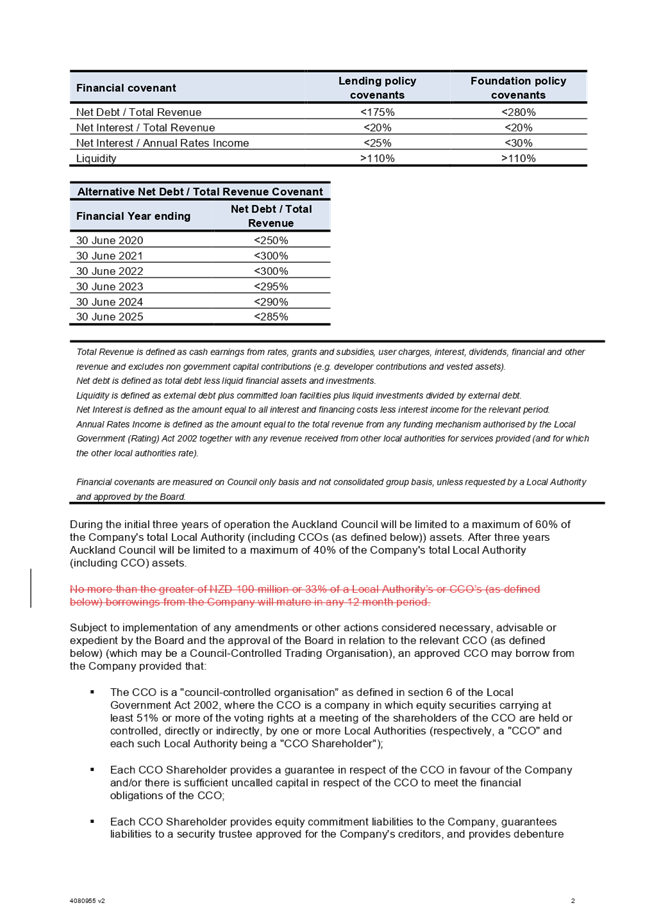
and Operations Committee Meeting Agenda
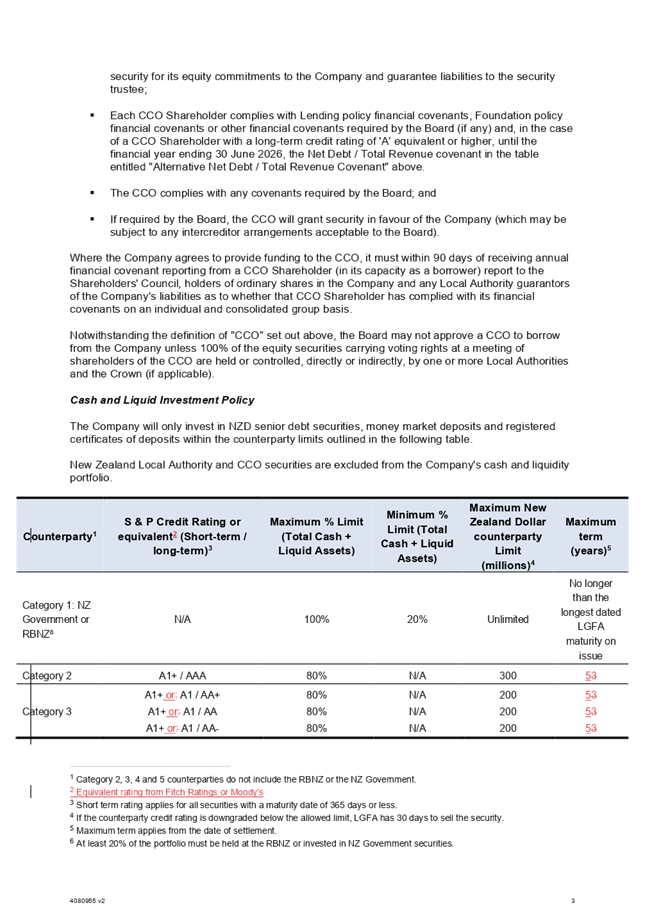
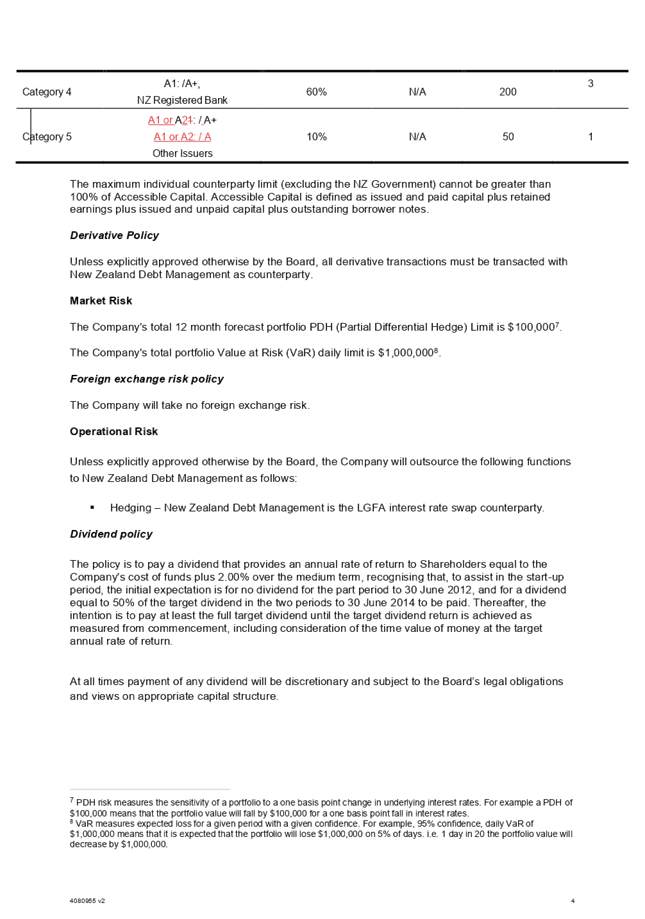
|
5 November 2020
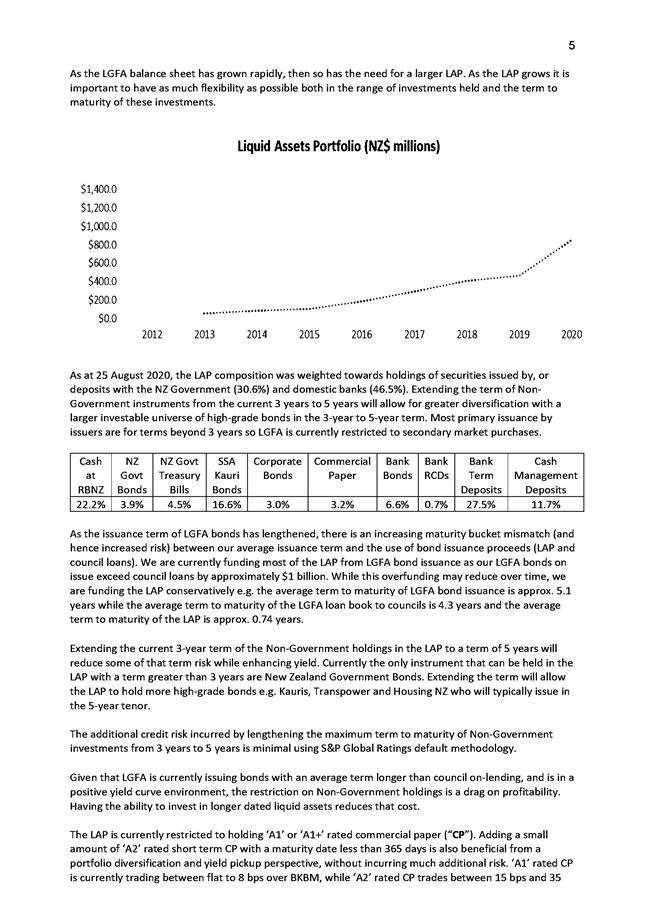
|
Kapiti Coast District Council
Notice
is hereby given that a meeting of the Strategy and Operations Committee will be held in the Council
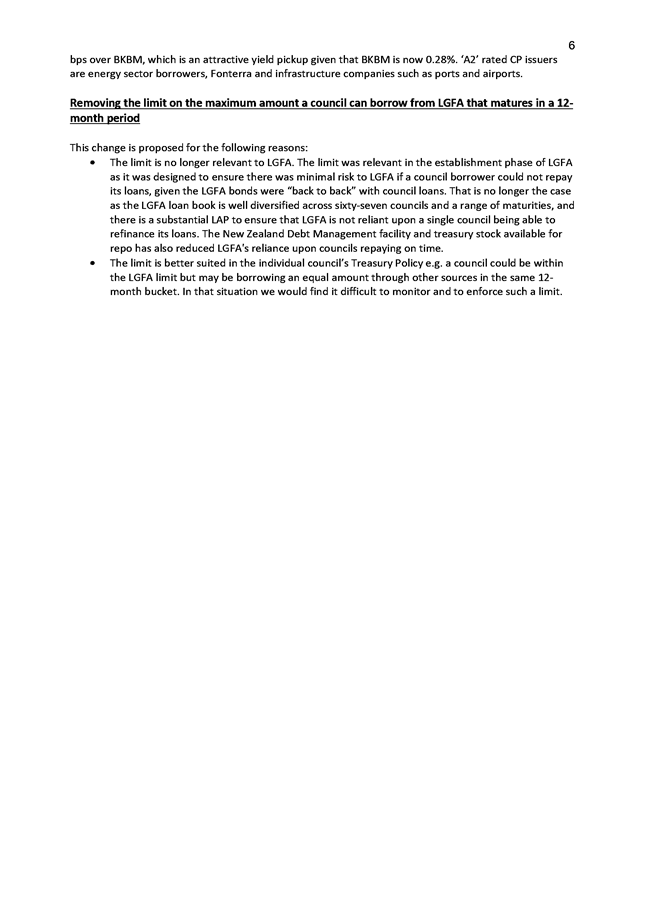
Chamber, Ground Floor, 175 Rimu Road, Paraparaumu, on Thursday 5 November 2020,
9.30am.
Strategy and Operations
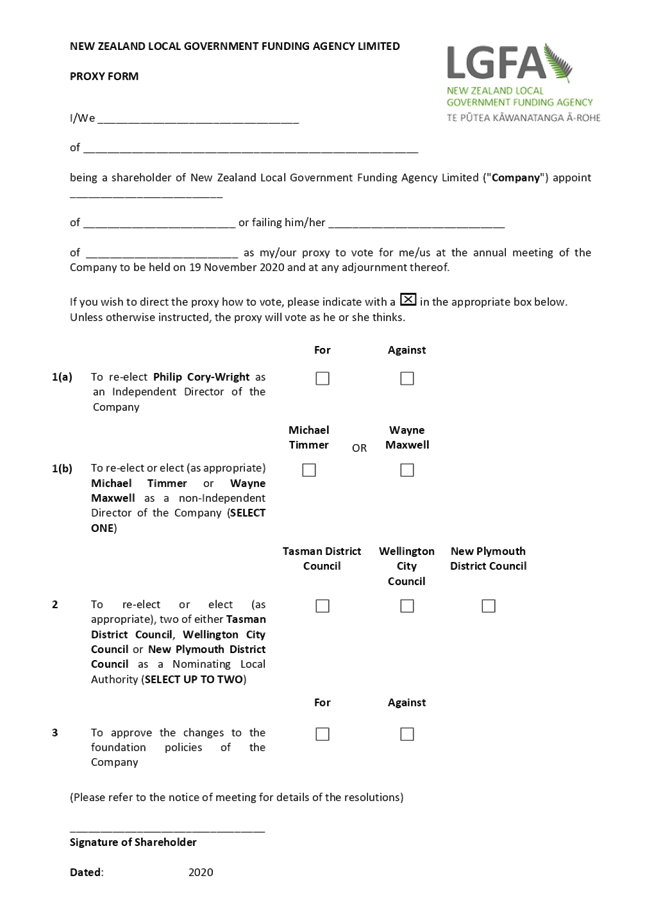
Committee Members
|
Cr James Cootes
|
Chair
|
|
Cr Gwynn Compton
|
Deputy
|
|
Mayor K Gurunathan
|
Member
|
|
Deputy Mayor Janet Holborow
|
Member
|
|
Cr Angela Buswell
|
Member
|
|
Cr Jackie Elliott
|
Member
|
|
Cr Martin Halliday
|
Member
|
|
Cr Sophie Handford
|
Member
|
|
Cr Jocelyn Prvanov
|
Member
|
|
Cr Bernie Randall
|
Member
|
|
Cr Robert McCann
|
Member
|
2 Council
Blessing
“As we deliberate on the
issues before us, we trust that we will reflect positively on the
communities we serve. Let us all seek to be effective and just, so that with
courage, vision and energy, we provide positive leadership in a spirit of
harmony and compassion.”
I a mātou e whiriwhiri ana
i ngā take kei mua i ō mātou aroaro, e pono ana mātou ka
kaha tonu ki te whakapau mahara huapai mō ngā hapori e mahi nei
mātou. Me kaha hoki mātou katoa kia whaihua, kia tōtika
tā mātou mahi, ā, mā te māia, te tiro whakamua me te
hihiri ka taea te arahi i roto i te kotahitanga me te aroha.
3 Apologies
4 Declarations
of Interest Relating to Items on the Agenda
Notification from Elected
Members of:
4.1 – any interests that
may create a conflict with their role as an elected member relating to the
items of business for this meeting, and
4.2 – any interests in
items in which they have a direct or indirect pecuniary interest as provided
for in the Local Authorities (Members’ Interests) Act 1968
5 Public
Speaking Time for Items Relating to the Agenda
6 Members’
Business
(a)
Public Speaking Time Responses
(b)
Leave of Absence
(c)
Matters of an Urgent Nature (advice to be provided to the Chair prior to
the commencement of the meeting)
7 Updates
Nil
8 Reports
8.1 Local
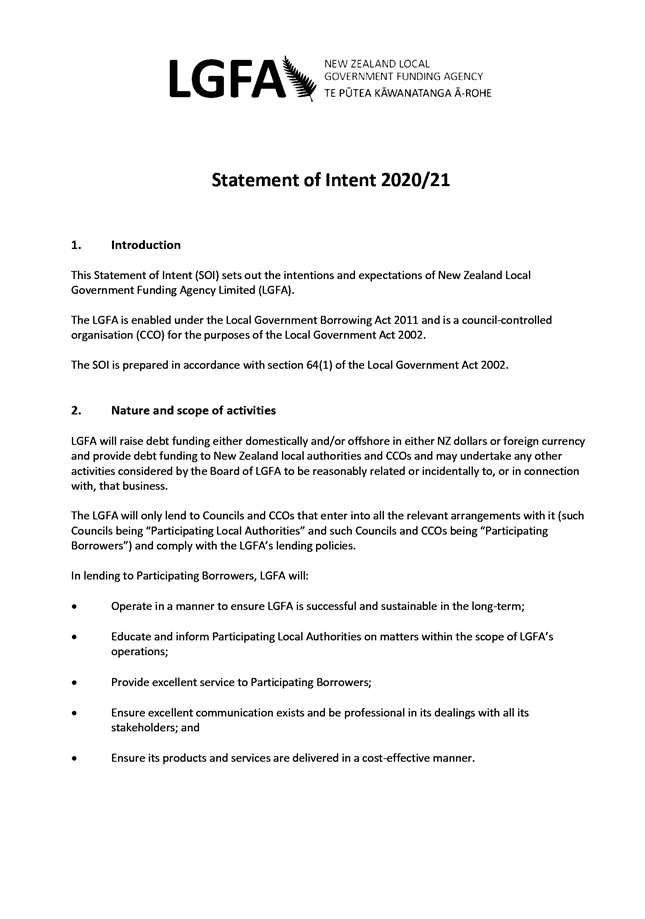
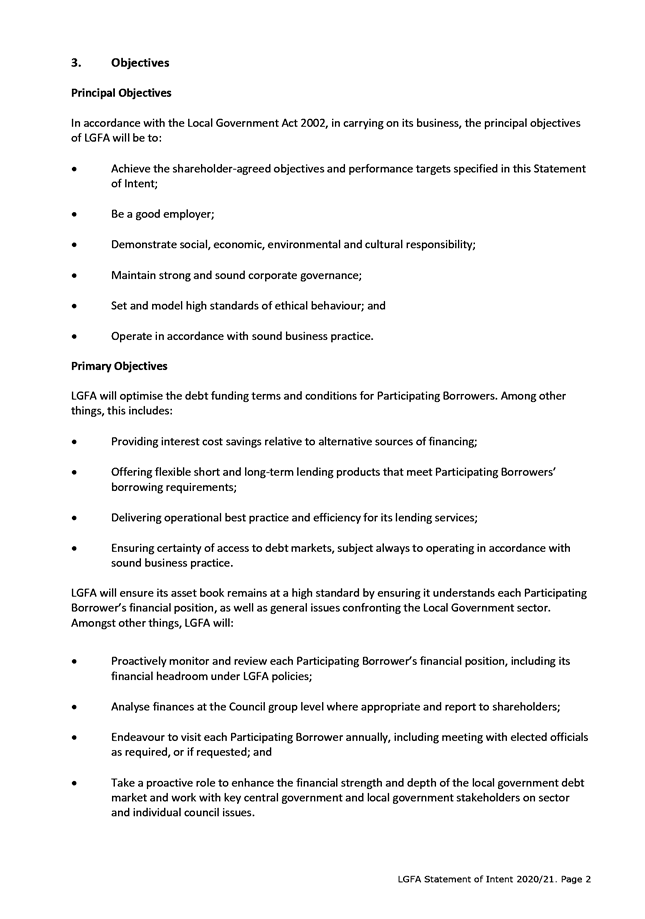
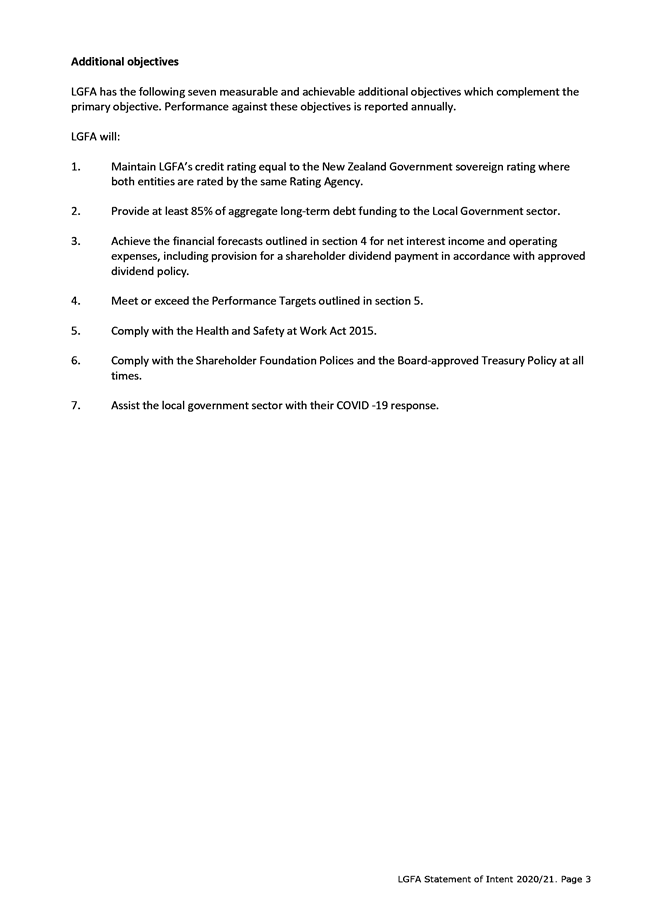
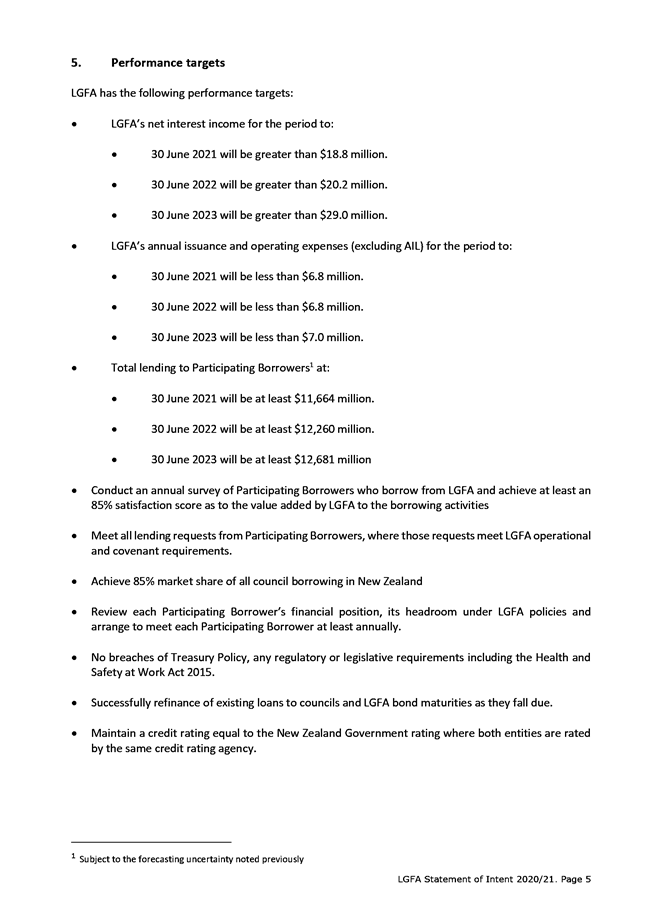
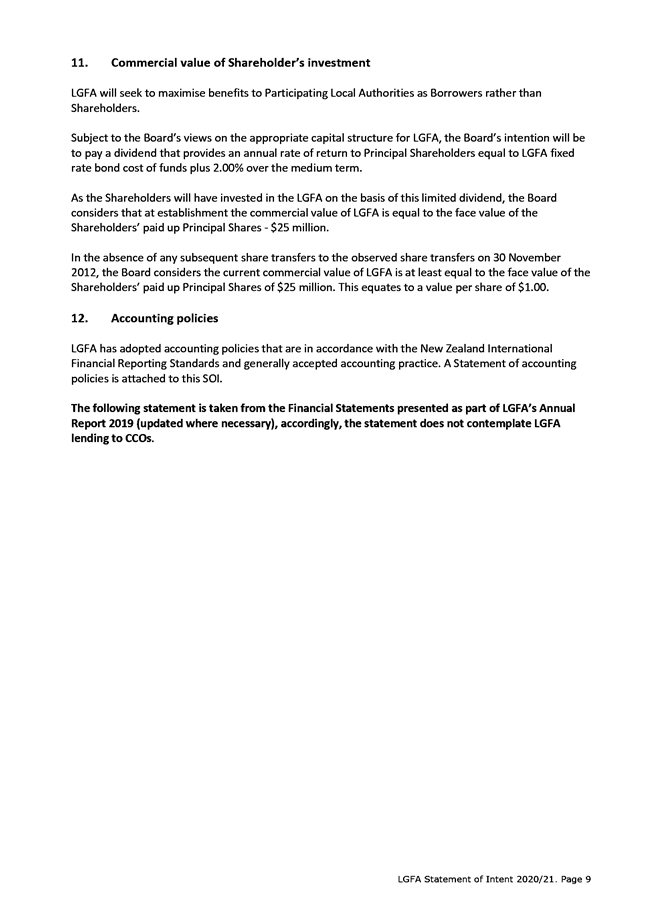
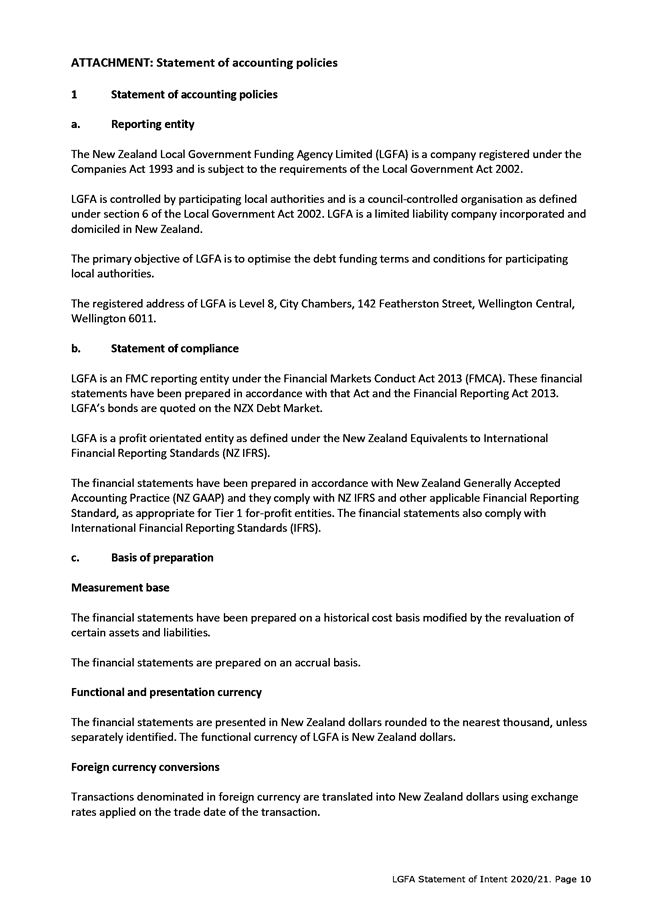
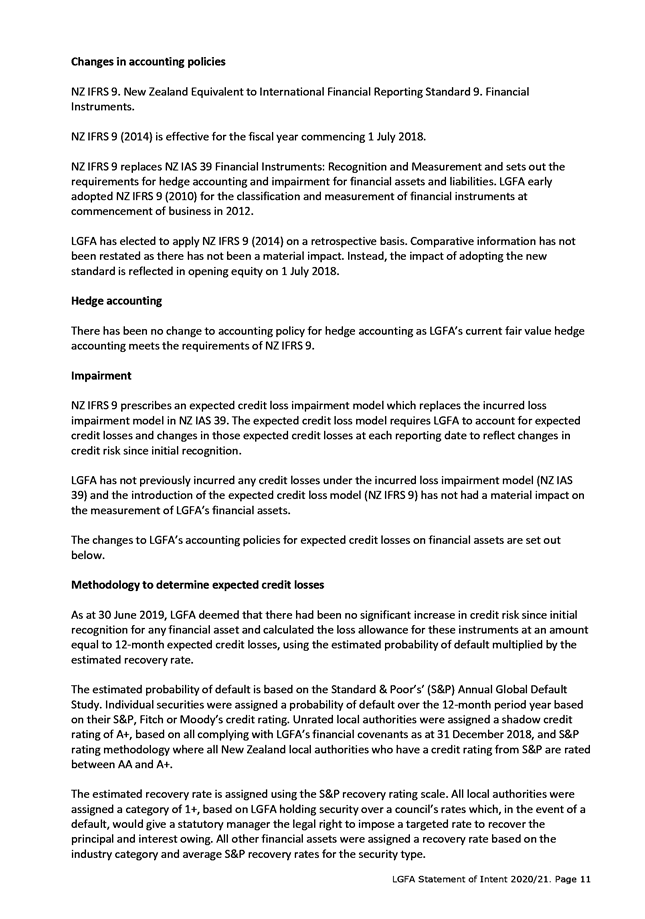
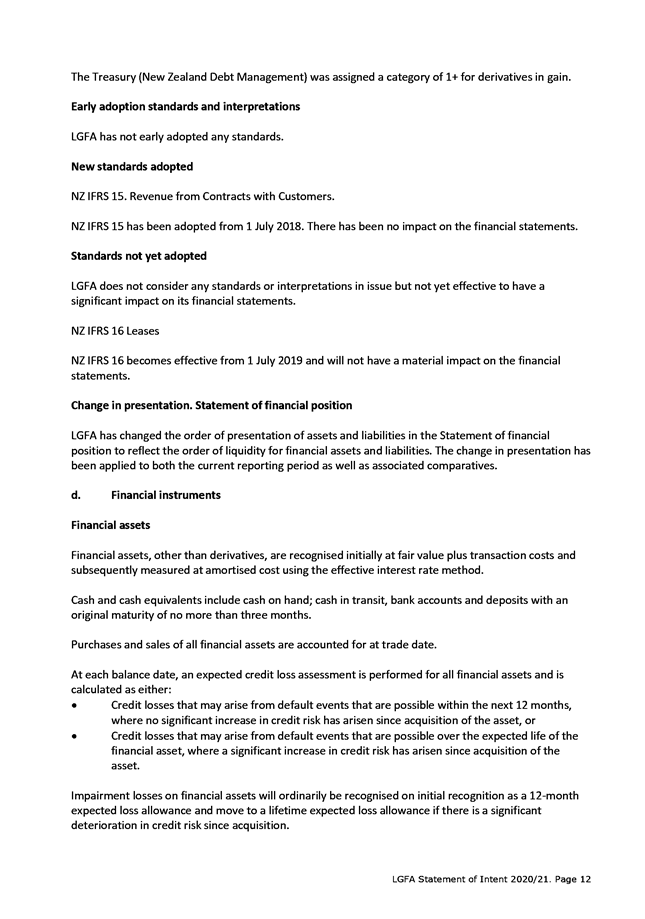
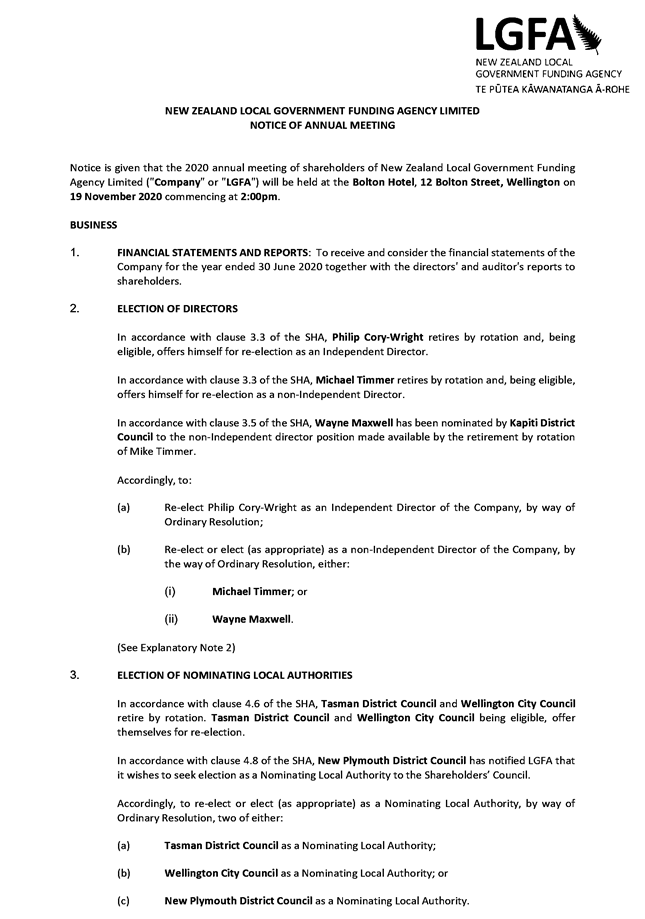
Government Funding Agency's 2020/21 Statement Of Intent
Author: Ian
Clements, Strategy Advisor
Authoriser: Mark
de Haast, Group Manager Corporate Services
Purpose of Report
1 The
purpose of this report is to provide the Strategy and Operations Committee with
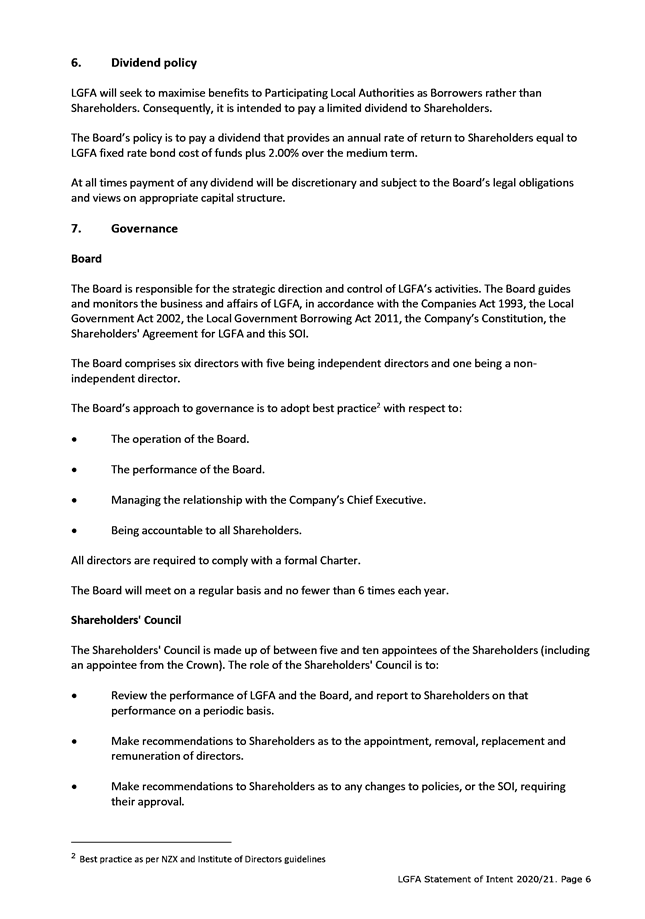
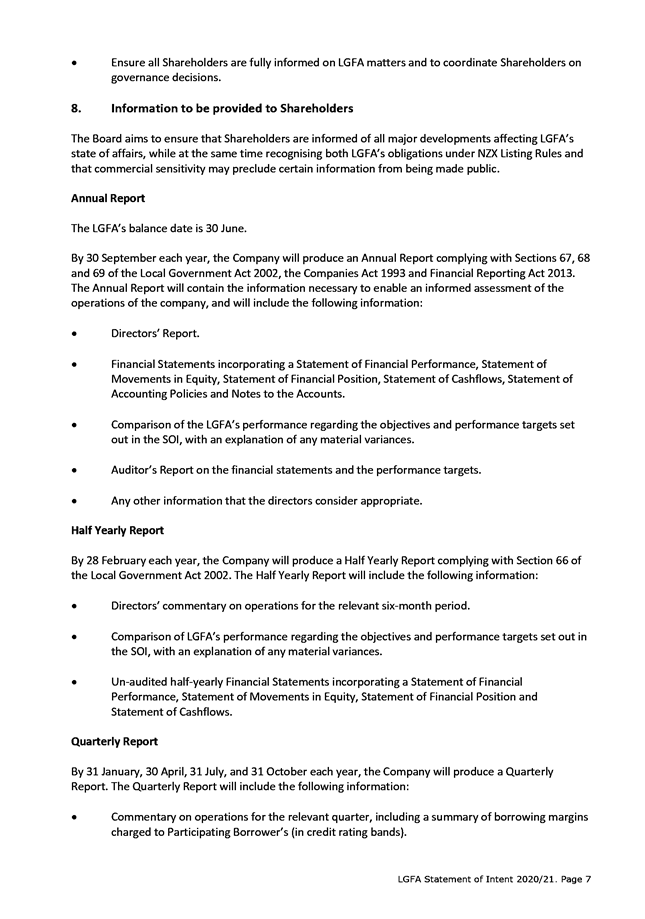
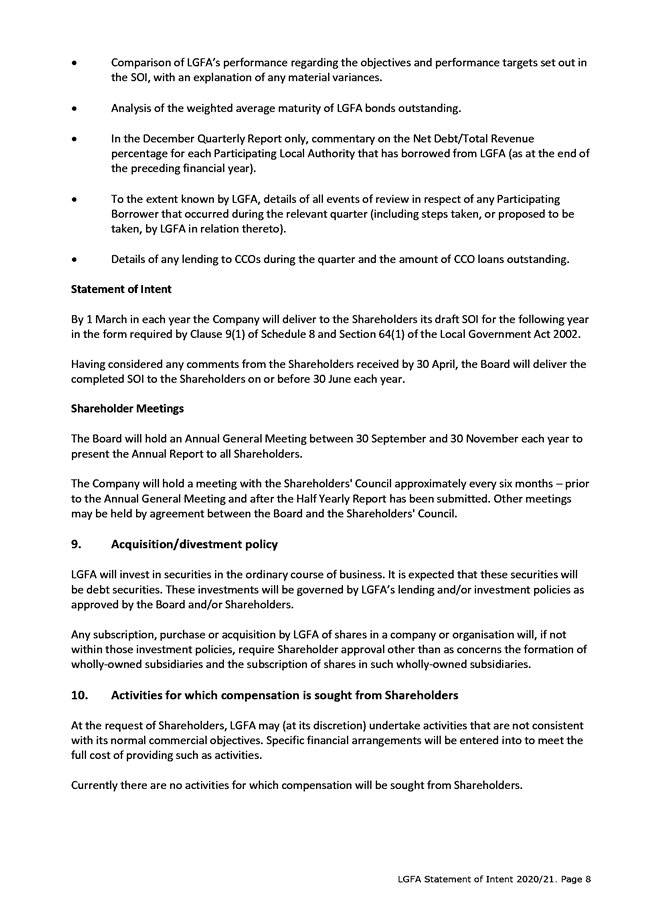
the Local Government Funding Agency (LGFA) 2020/21 Statement of Intent (SOI).
Delegation
2 The
Council’s Strategy and Operations Committee has authority to consider
this report.
Background
3 The
LGFA was incorporated on 1 December 2011 with the primary objective of
optimising the debt funding terms and conditions for participating local
authorities. This includes providing savings in annual interest costs, making
longer-term borrowings available and enhancing the certainty of access to debt
markets.
4 The
LGFA issues bonds to wholesale and retail investors and on-lends the funds raised
to participating local authorities with borrowing needs. The quality of the
LGFA’s credit rating and the liquidity created by issuing homogenous
local authority paper, ensures that participating councils can raise funds on
better terms than if they were issuing in their own name.
5 On
30 November 2012, Kāpiti Coast District Council (the Council) became a
principal shareholding local authority[1]
in the LGFA. The LGFA meets the Local Government Act (LGA) 2002 definition of a
Council Controlled Organisation (CCO) and as a shareholder in a CCO, the
Council must regularly undertake performance monitoring of that organisation to
evaluate its contribution to the achievement of the Council’s desired
outcomes.
6 As
a CCO, the LGFA must deliver to its shareholders a draft SOI on or before
1 March each year. The LGFA board must consider any comments from its
shareholders in relation to the draft SOI and deliver a final SOI on or before
30 June.
7 The
Council’s monitoring obligations are assisted by the Shareholders’
Council whose role is to represent all the shareholders and ensure that all
individual shareholder views are heard. The Shareholders’ Council
comprises five to ten appointees from the council shareholders, and one from
the Crown.
8 Prior
to drafting the SOI, the LGFA received a Letter of Expectations (LoE) from the
Shareholders Council, apprising them of the areas of focus that they would like
to see addressed in the SOI, over and above the usual performance and
accountability requirements. The main issues noted were for the LGFA to:
· demonstrate its
relevance in relation to the re-introduction of the four well-beings into local
government, and to show that it has considered the well-beings and identified
opportunities to reflect them where appropriate;
· ensure that
shareholders receive full and early disclosure from the LGFA of company policy
breaches by Participating Local Authorities (PLAs), given the PLAs potential
liability; and
· confirm that the
LGFA is constantly monitoring at both parent and group level and also that any
direct lending to Council Controlled Organisations be included in quarterly and
annual reports to ensure transparency for all stakeholders.
9 The
Committee did not receive the LGFA’s draft 2020/21 SOI which was received
by Officers in February 2020 as, due to Covid-19 as well as the significant
work required to understand the changes to the LGFA borrowing programme and
borrowing covenants, Officers did not have capacity to consider the draft SOI.
Issues and Options
Issues
10 The
LGFA has finalised the 2020/21 SOI, which includes addressing the Shareholders
Council’s specific concerns, as outlined above. The Shareholders Council
has engaged with the LGFA over the development of the SOI, the draft and final
SOIs have been reviewed by the Shareholders’ Council who support the
adoption by Shareholders.
11 The
key intentions and expectations of the LGFA remain the same – to optimise
debt funding terms and conditions, including the provision of savings in annual
interest costs on a relative basis to other sources of financing.
12 The
following points regarding the 2020/21 SOI are of note:
· The
SOI performance targets are similar to the previous year’s targets except
the LGFA has increased the target for both market share and council satisfaction
scores to 85% from the previous 80% and 75% targets.
· There
remains some uncertainty within the SOI forecasts relating to the amount of
both council loans and LGFA bonds outstanding as this depends upon the
magnitude and timing of council borrowing. The likely impact of COVID-19 on the
financial position of councils and their borrowing requirements is still
evolving but the LGFA has increased its estimates of council borrowing (and
bonds issued) by $250 million in each of the next three years compared to the
draft SOI that was received in February 2020. This reflects the uncertainty
that prevails - councils’ reduced revenue might restrict their capital
expenditure, and the associated borrowing to finance it while at the same time,
infrastructure investment may be accelerated in the interests of creating
economic growth.
· The
timing and amount of refinancing of council loans maturing in May 2021 and the
associated repayment of the LGFA May 2021 bonds might also have an impact on
the SOI forecasts.
13 The
changes made to the Final SOI compared to the Draft SOI distributed in February
2020 have been to:
· Broaden
the objectives to include contributing to the four well-beings and to assist
the sector with its response to COVID-19.
· Net
interest income has reduced by $200,000 in the 2020/21 year reflecting lower
interest rates (approximately 0.75% lower) but has increased by $300,000 and
$6.7 million in the subsequent years because of the higher level of assets and
increases in the base on-lending margin compared to the starting position.
· Expenses
have reduced by $200,000 in the first two years due to a lower expected amount
of offshore bondholders reducing our Approved Issuer Levy payments.
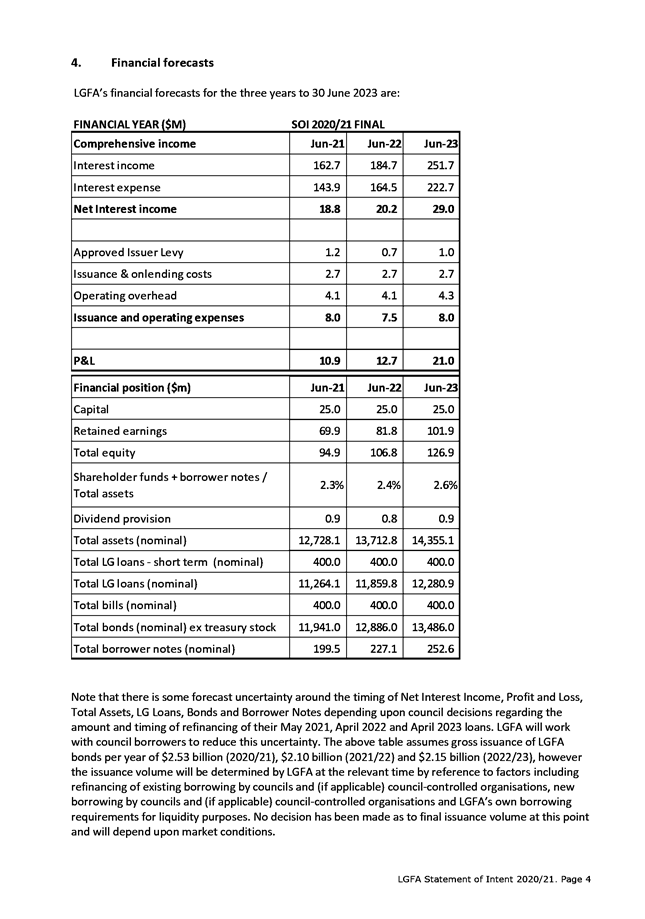
14 The
LGFA’s financial forecasts compared with those projected in its draft SOI
and in last year’s SOI are shown in the tables below:
|
Net profit before
tax
|
2020/21
$000
|
2021/22
$000
|
2022/23
$000
|
|
2019/20 SOI
|
12,600
|
12,400
|
-
|
|
2020/21 Draft SOI
|
10,800
|
12,100
|
14,400
|
|
2020/21 Final SOI
|
10,900
|
12,700
|
21,000
|
15 Although
profitability has increased materially in 2022/23 due to the interest earned on
the higher level of assets held, the profit is forecast to be retained by LGFA
on its balance sheet to ensure it can maintain its credit rating at the same
level as the government.
16 The
LGFA final 2020/21 Statement of Intent is attached as Appendix 1 to this
report.
Considerations
Policy
considerations
17 In
accordance with the LGA 2002, the Council has provided information on all of
its CCOs in its draft 2018/38 Long Term Plan.
Legal
considerations
18 There
are no legal considerations arising from the matters in this report.
Financial
considerations
19 There
are no financial considerations arising from this report.
Tāngata
whenua considerations
20 There
are no tāngata whenua considerations arising from this report.
Strategic
considerations
21 The
prudent use of the LGFA for all the Council’s borrowing requirements
contributes to the key 10-year outcome of improved financial position against
financial constraints by allowing the Council to achieve lower interest rate
costs.
Significance and Engagement
Significance
policy
22 This
matter has a low level of significance under the Council’s Significant
and Engagement Policy.
Consultation
already undertaken
23 There
is no need to consult on the matters discussed in this report.
Engagement
planning
24 An
engagement plan is not needed for this report to be considered.
Publicity
25 There
are no publicity considerations.
|
Recommendations
26 That
the Strategy and Operations Committee notes the contents of the LGFA final
2020/21 Statement of Intent.
|
Appendices
1. LGFA
final 2020/21 Statement of Intent ⇩ 
|
Strategy
and Operations Committee Meeting Agenda
|
5 November 2020
|

8.2 CONFIRMATION
OF THE COUNCIL'S VOTE AT THE LOCAL GOVERNMENT FUNDING AGENCY'S 2020 ANNUAL
GENERAL MEETING
Author: Ian
Clements, Strategy Advisor
Authoriser: Mark
de Haast, Group Manager Corporate Services
Purpose of Report
1 The
purpose of this report is to inform the Strategy and Operations Committee of
the Agenda items at the coming Annual General Meeting (AGM) of the Local
Government Funding Agency (LGFA), as well as to update the Committee on the
Council’s voting intentions for each Agenda item.
Delegation
2 While
noting that this report is for information, the Strategy and Operations
Committee, with its broad role of financial management, including risk
mitigation, has the delegation to consider this report.
Background
3 On
30 November 2012, the Council became a Principal Shareholding Local Authority
in the LGFA. The LGFA was incorporated on 1 December 2011 with the primary
objective of optimising the debt funding terms and conditions for Participating
Local Authorities. This includes providing savings in annual interest costs,
making longer-term borrowings available and enhancing the certainty of access
to debt markets.
4 The
LGFA issues bonds to wholesale and retail investors and on-lends the funds
raised to participating local authorities with borrowing needs. The quality of
the LFGA’s credit rating, and the liquidity created by issuing homogenous
local authority paper, ensures that participating councils can raise funds on
better terms than if they were issuing in their own name.
5 Since
the LGFA was established in 2011, the local authority membership of the
Shareholders’ Council has come almost entirely from the ‘tight
nine‘ group of Councils’ that promoted and steered the
establishment of the LGFA, plus the Bay of Plenty Regional Council, which was
also a foundation member. These members also have the largest shareholdings in
the LGFA.
6 The
LGFA meets the Local Government Act 2002 (the Act) definition of a Council
Controlled Organisation (CCO) as one or more local authorities have the right,
directly or indirectly, to appoint 50% or more of the directors. As a
shareholder in a CCO, the Council must regularly undertake performance
monitoring of that organisation to evaluate its contribution to the achievement
of the Council’s desired outcomes.
7 The
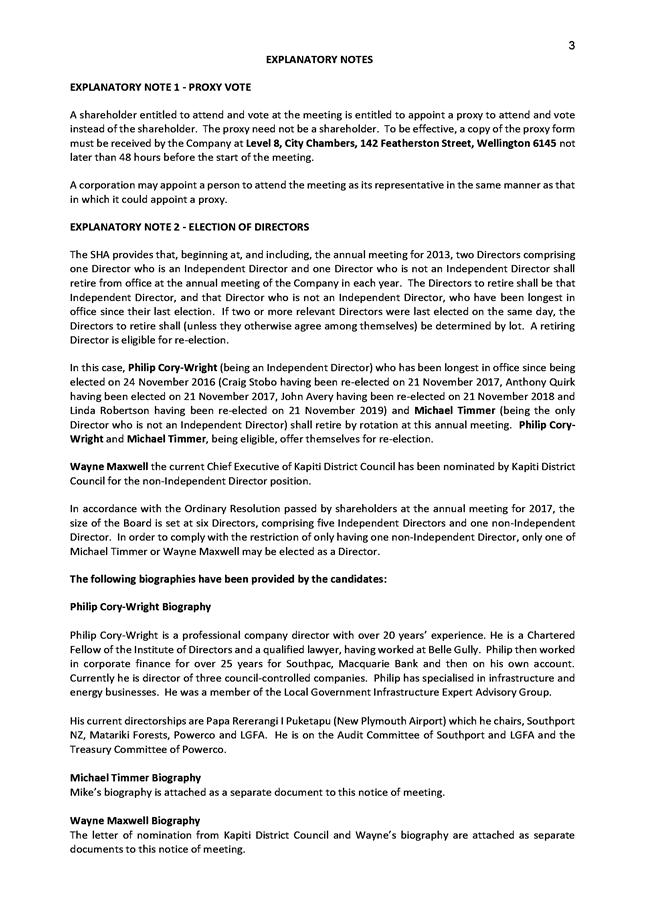
LGFA is holding its AGM on 19 November 2020 in Wellington and the Agenda items
include:
· election of directors to the LGFA Board;
· election of Nominating Local Authorities (NLA) to the
Shareholders’ Council; and
· approval of minor changes to the LGFA Foundation Policies.
Issues and Options
Voting rights
8 At
an AGM, where voting is by show of hands or by voice, every Shareholder of
ordinary Shares who is present in person (or represented by proxy), has one
vote.
9 However,
on a poll, every Shareholder present in person (or represented by proxy), has
one vote in respect of each fully paid ordinary Share held by that Shareholder.
10 A
poll can be called at an AGM in a number of ways, including by the Chair, by at
least five shareholders, or a group of shareholders with a shareholding greater
than 10%. The original ‘tight nine’ members each have an 8.3%
shareholding which means that only two current members of the Shareholders
Council are needed to call for a poll.
11 In
the event of a poll, with the greater power exercised by the ‘tight
nine’ as a result of their vastly superior shareholdings, a majority vote
can be effected by just six of them.
12 In
practice, this means that the twenty or so councils’ that aren’t in
the Shareholders Council are effectively powerless in bringing about change to
either the Board or the Shareholders Council if they are not supported by at
least half of the Shareholders Council. To date, neither the Board nor the
Shareholders Council have shown much appetite for changing their memberships.
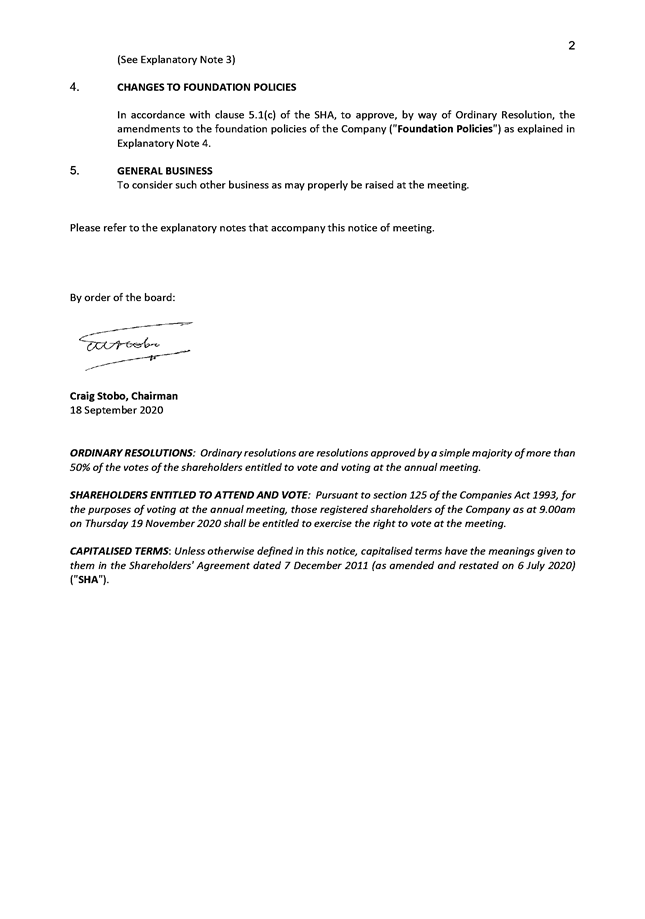
13 Appendix
1 shows the tenure of the LGFA directors and the NLAs since the LGFA was
established. While there is a rotation of both directors and NLAs at each AGM,
they have resulted in little or no change as, almost without exception, the
retiring members are re-elected.
Election of directors
14 The
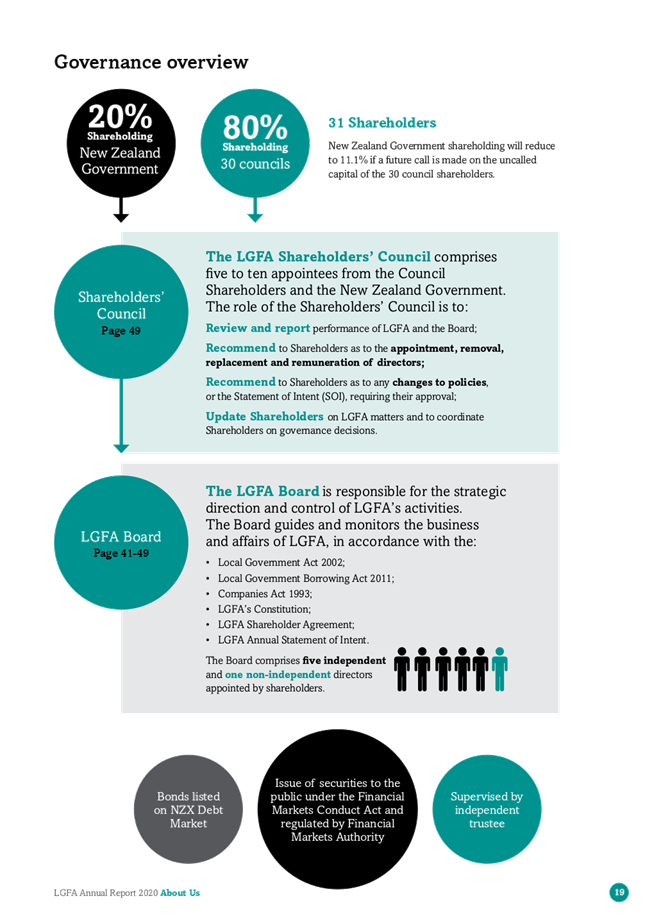
LGFA Shareholders Agreement requires the Board to comprise five independent
directors and one non-independent director. Currently, the five independent
directors are John Avery, Philip Cory-Wright, Anthony Quirk, Linda Robertson
and Craig Stobo and the non-independent director is Mike Timmer.
15 Independent
directors are defined in the Shareholders’ Agreement as a director
“who is not an employee of any shareholder, employee of a CCO owned (in
whole or in part) by any shareholder or a councillor of any Local Authority
which is a shareholder and was not such an employee or councillor at any time
in the five years prior to the time that person’s appointment as a
director. For the avoidance of doubt, a director (or former director) of a CCO
shall not by virtue of this reason alone be precluded from being an independent
director.”
16 The
Shareholders’ Agreement sets out that one of the independent directors
and the non-independent director must retire by rotation each year. If they
wish, they can offer themselves for re-election. Accordingly, this year Philip
Cory-Wright retires by rotation and offers himself for re-election as an
independent director.
17 The
LGFA has one non-independent director, who by definition is an employee of a
shareholder council or council-controlled organisation. The current
non-independent director, Mike Timmer, retires by rotation and offers himself
for re-election as a non-independent director.
18 On
behalf of the Kāpiti Coast District Council and in accordance with
paragraph 3.5 of the Shareholders Agreement, the Mayor has formally nominated
the Council’s Chief Executive to the LGFA Board as a non-independent
director. The Council’s Nomination Letter to the LGFA is attached as
Appendix 2 and a brief biography of the Chief Executive is attached as Appendix
3.
19 Both
Philip Cory-Wright and Mike Timmer have the support of the Shareholders’
Council and the LGFA Board to continue as directors of LGFA. Officers find no
reason to vote against either of the candidates standing for re-election as
directors on the LGFA Board because of the effective performance to date of the
LGFA and the skills and experience of the nominated directors.
20 However,
notwithstanding the above, the Council has on several occasions in the past
voiced concern over the lack of ‘refreshment’ of both the LGFA
Board and the NLAs.
21 The
data on directors’ terms clearly shows lengthy tenures for many of the
incumbents, which can support continuity however three of the Board will be
entering their tenth consecutive year at the coming AGM. Board refreshment is
generally understood to generate creative thinking and promote good governance.
22 New
directors can bring a freshness of insight, and changes in the operating
climate may require new skill sets. A systematic rotation on and off the board
lessens the likelihood that a board becomes tired and loses vitality.
23 As
tenures increase, concerns around longevity can be considered in light of the
recurring statistic in PwC’s Annual Corporate Directors Survey, which
states that 45% of board members feel that someone on their board should be
replaced.
Officers’
Recommendation
24 The
Council’s Chief Executive has the necessary skills and experience to add
value to the LGFA Board. This is no disrespect to any of the incumbents, rather
a recognition that there has long been a lack of refreshment on the LGFA Board
which could easily be addressed by bringing in new and capable members.
Accordingly, the Council will vote for its own Chief Executive.
25 In
the absence of independent director alternatives, the Council supports the
nomination of Philip Cory-Wright, noting that this will be his tenth year on
the Board.
Election of Nominating Local Authorities to the Shareholders’
Council
26 Each
NLA may appoint one member of the Shareholders Council, and remove or replace
any member that it appoints. Each member appointed by a NLA must be an employee
or councillor of that NLA.
27 A
Principal Shareholder may be appointed or removed as a NLA (a nominator of
membership to the Shareholders' Council) by ordinary resolution, provided that
no more than nine NLAs are appointed.
28 In
addition, the New Zealand Government (for so long as it is a Shareholder) may
appoint or remove one other member of the Shareholders' Council.
29 The
Shareholders’ Council comprises between five and 10 members with the
current members being the Crown and nine Council members. The current NLAs are:
· Auckland
Council;
· Bay
of Plenty Regional Council;
· Christchurch
City Council;
· Hamilton
City Council;
· Tasman
District Council;
· Tauranga
City Council;
· Wellington
City Council;
· Western
Bay of Plenty District Council, and
· Whangarei
District Council.
30 The
Shareholders Agreement requires two NLA members to retire by rotation each
year. If they wish, they can offer themselves for re-election. This year Tasman
District Council and Wellington City Council will retire and seek re-election
and New Plymouth District Council is seeking to be elected to the Shareholders
Council for the first time.
31 At
the last few year’s AGMs, Council officers have recommended voting for
the candidates standing for re-election as there have been no alternatives.
However officers have also recommended that the matter of
‘refreshing’ the composition of the Shareholders’ Council
also be raised with the LGFA and the Shareholders’ Council.
32 The
reasons for seeking to refresh the Shareholders Council composition are:
· because
all LGFA shareholders regularly transact with the LGFA and having a greater
shareholding (as a result of being a foundation member) does not mean that a
council is any better placed to assess the governance or operations of an
organisation than other councils with smaller shareholdings;
· other
councils, for example, those undertaking more business with the LGFA are as
well if not better placed to be considered as NLA appointments. Using the value
of loans held at 30 June 2020 as a proxy for the amount of business done with
the LGFA, officer’s analysis suggests that the Hutt City Council,
Kāpiti Coast District Council and Rotorua District Council are worthy of
consideration to become NLAs;
· to
facilitate greater representation from the regions given that the majority of
the current members of the Shareholders’ Council are large metropolitan
councils, whose views may not reflect those of their more provincial
counterparts; and
· the
uninterrupted membership of the Shareholders Council cannot be considered best
practice and has resulted in a two-tier governance system, wherein the top tier
exists principally by virtue of its superior shareholding.
Officers’
Recommendation
33 Officers
recommend the election of the New Plymouth District Council, as a good way to
start refreshing the Shareholders Council. Of the retiring NLAs - Tasman
District Council and Wellington City Council - officers recommend the
re-election of Tasman District Council to provide regional representation of
the South Island.
Changes to Foundation Policies
34 All
shareholder councils must comply with the ‘Foundation Policies’
outlined in the Shareholders Agreement. Any changes to the Foundation Policies
and the Shareholders Agreement are effected by way of an Ordinary Resolution of
the shareholders.
35 There
are two proposed changes to the Foundation Policies requiring shareholder
approval by Ordinary Resolution:
i. an
increase in the size of the liquid assets held on the LGFA balance sheet,
requiring greater Treasury Policy limits; and
ii. removing
a limit on a council’s loans maturing in a rolling 12-month period.
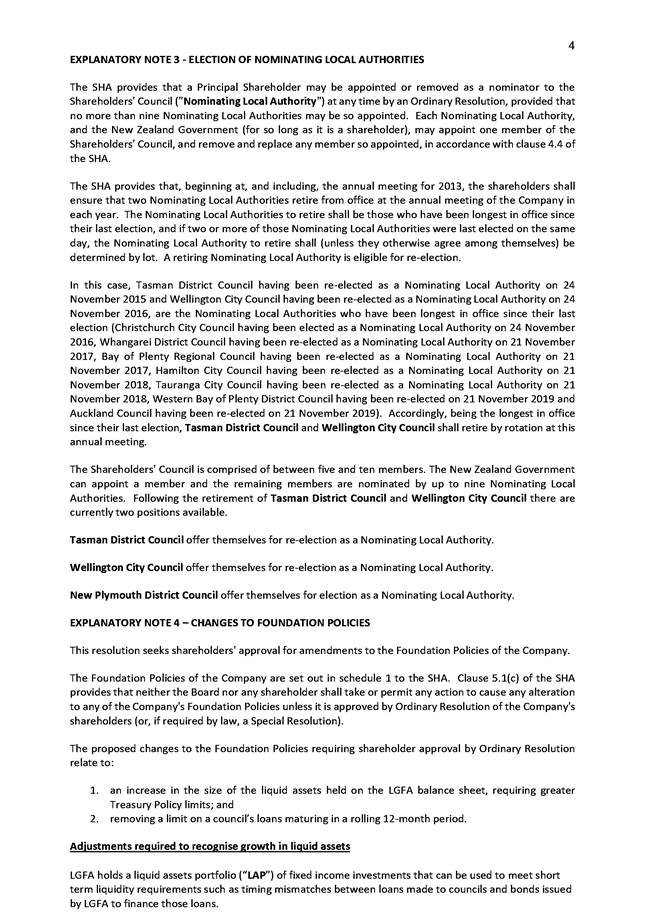
36 These
changes are relatively minor and are set out in Appendix 4 to this report, with
additional supporting information in Appendix 5 to this report. The key impacts
of the changes are summarised below.
Increase in the Treasury Policy limits
37 The
LGFA holds a liquid asset portfolio (LAP) to meet short term liquidity
requirements, such as timing mismatches between loans made to councils and
bonds issued by the LGFA to fund these loans. The LAP, which had grown to
around $1.2 billion as at 30 June 2020, is primarily funded by the excess funds
received from the issue of LGFA bonds over the amount needed to source council
loans. The LAP comprises mainly securities issued by, or deposits with NZ Government
and domestic banks.
38 The
LGFA’s business has both grown and changed over the last few years and
the size of the LGFA balance sheet has increased significantly, thus requiring
a larger LAP. In order to cater for the increasing terms and amounts of council
borrowing, the LAP also needs to have as much flexibility as possible, in terms
of the range and maturity terms of its investments.
39 These
changes are effected by increasing the term of Non-Government holdings in the
LAP from three to five years, which will also enhance yield. In addition,
allowing the LGFA to hold a small amount of A2 commercial paper, in addition to
the A1 and A1+ already permitted, will increase both diversification and yield.
Officers’ Recommendation
40 Officers
recommend that both the above Treasury Policy limits be approved to enable the
LGFA to meet its short term liquidity requirements.
Removing the limit on borrowings that can
mature in a 12-month period
41 This
change removes a borrowings limit that previously allowed councils / CCOs to
have no more than the greater of $100 million / 33% of total borrowings to
mature in a 12-month period. This limit was relevant during the establishment
phase but is no longer applicable given the size of the LAP and the diversity
and range of maturities of the LGFA loan book.
Officers’ Recommendation
42 Officers
support this proposed change because there is little risk of the LGFA not being
able to cover short term maturities.
Considerations
Policy
considerations
43 There
are no policy considerations.
Legal
considerations
44 The
Council’s voting intentions are to be clearly set out on the Proxy Form
which must be delivered to the LGFA not less than 48 hours prior to the AGM,
and is attached as Appendix 6 to this report.
Financial
considerations
45 There
are no financial considerations in addition to those already discussed within
this report.
Tāngata
whenua considerations
46 There
are no issues requiring specific consideration by Tāngata whenua.
Strategic
considerations
47 The
prudent use of the LGFA for all the Council’s borrowing requirements
contributes to the key 10-year outcome of improved financial position against
financial constraints by allowing the Council to achieve lower interest rate
costs.
Significance and Engagement
Significance
policy
48 This
matter has a low level of significance under the Council’s Significance
and Engagement Policy.
Consultation
already undertaken
49 No
consultation has been undertaken in the development of this report.
Engagement
planning
50 An
engagement plan is not needed for this report to be considered.
Publicity
51 There
are no publicity considerations.
|
Recommendations
50 That
the Strategy and Operations Committee:
i. receives
and notes this report, including Appendices 1 to 6 of this report; and
ii. recommends
that the Strategy and Operations Committee:
a) notes that the
Chief Executive authorises Mark de Haast (Group Manager Corporate Services)
to vote on behalf of the Council, at the LGFA’s 2020 AGM on
19 November 2020, in accordance with the Council’s votes on
recommendations (aa) to (ee) inclusive, noting Council recommendations in
bold;
or, if Council officers were unable to attend the Annual General
Meeting:
b) notes that the
Chief Executive authorises Mark Butcher (Chief Executive Officer, LGFA) as
the Council’s proxy to vote on behalf of the Council, at the
LGFA’s 2020 AGM to be held on 19 November 2020, in accordance with the
Council’s votes on recommendations (aa) to (ee) inclusive, noting
Council recommendations in bold:
(aa) elect Wayne Maxwell as
non-independent director of the LGFA - (For/Against); and
(bb) re-elect Philip Cory-Wright as an
independent director of the LGFA - (For/Against); and
(cc) elect New Plymouth District
Council as a NLA - (For/Against); and
(dd) re-elect Tasman District Council
as a NLA - (For/Against);
(ee) approve the amendments to
the LGFA Foundation Policies - (For/Against).
|
Appendices
1. LGFA
Board and Shareholders' Council Tenure ⇩ 
2. Letter
to LGFA - Nomination for Board of Directors - Wayne Maxwell ⇩
3. Wayne
Maxwell - Biography ⇩ 
4. Notice
of LGFA AGM November 2020 ⇩
5. LGFA
Foundation Policies Proposed Tracked Changes - November AGM 2020 ⇩ 
6. Proxy
Form LGFA AGM 2020 ⇩
|
Strategy
and Operations Committee Meeting Agenda
|
5 November 2020
|

|
Strategy
and Operations Committee Meeting Agenda
|
5 November 2020
|

|
Strategy and Operations Committee Meeting
Agenda
|
5 November 2020
|
|
Strategy
and Operations Committee Meeting Agenda
|
5 November 2020
|
|
Strategy and Operations Committee Meeting
Agenda
|
5 November 2020
|
|
Strategy and Operations Committee Meeting
Agenda
|
5 November 2020
|
8.3 THE
LOCAL GOVERNMENT FUNDING AGENCY 2019/20 ANNUAL REPORT
Author: Ian
Clements, Strategy Advisor
Authoriser: Mark
de Haast, Group Manager Corporate Services
Purpose of Report
1 The
purpose of this report is to update the Strategy and Operations Committee on
the Local Government Funding Agency (LGFA) 2019/20 Annual Report.
Delegation
2 While
noting that this report is for information, the Strategy and Operations
Committee, with its broad role of financial management, including risk
mitigation, has the delegation to consider this report.
Background
3 The
LGFA was established in December 2011 to provide long-dated borrowing,
certainty of access to markets and to reduce the borrowing costs for the local
government sector. On 30 November 2012, the Council became a Principal
Shareholding Local Authority in the LGFA.
4 The
LGFA issues bonds to wholesale and retail investors and on-lends the funds
raised to participating local authorities with borrowing needs. The quality of
the LGFA’s credit rating, and the liquidity created by issuing homogenous
local authority paper, ensures that participating councils can raise funds on
better terms than if they were issuing in their own name.
5 The
LGFA meets the Local Government Act (LGA) 2002 definition of a Council
Controlled Organisation (CCO) as one or more local authorities have the right,
directly or indirectly, to appoint 50% or more of the directors.
6 As
a shareholder in a CCO, the Council must regularly undertake performance
monitoring of that organisation to evaluate its contribution to the achievement
of the Council’s desired outcomes.
Issues and Options
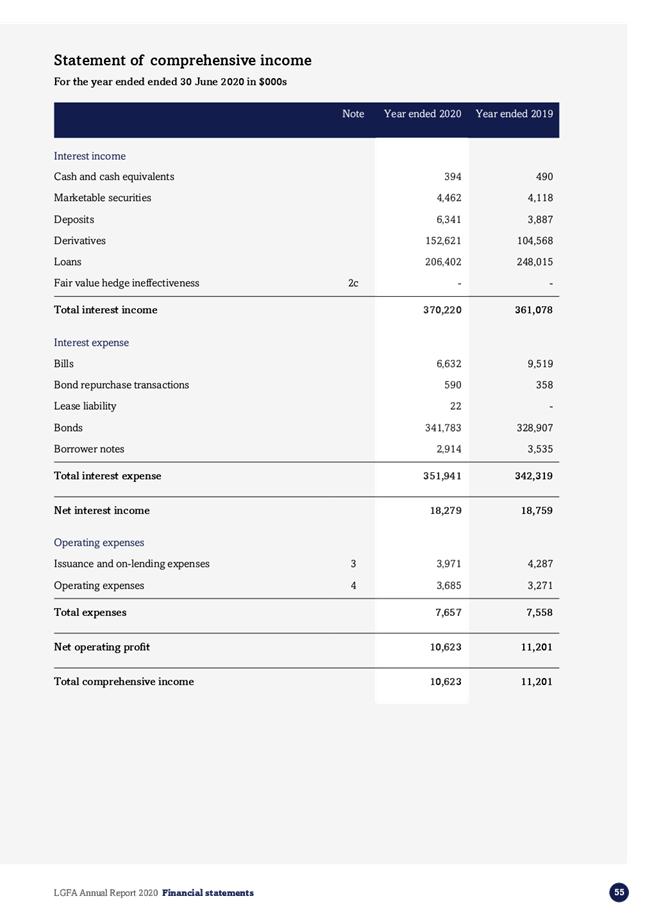
LGFA performance for the 2019/20 year
7 LGFA
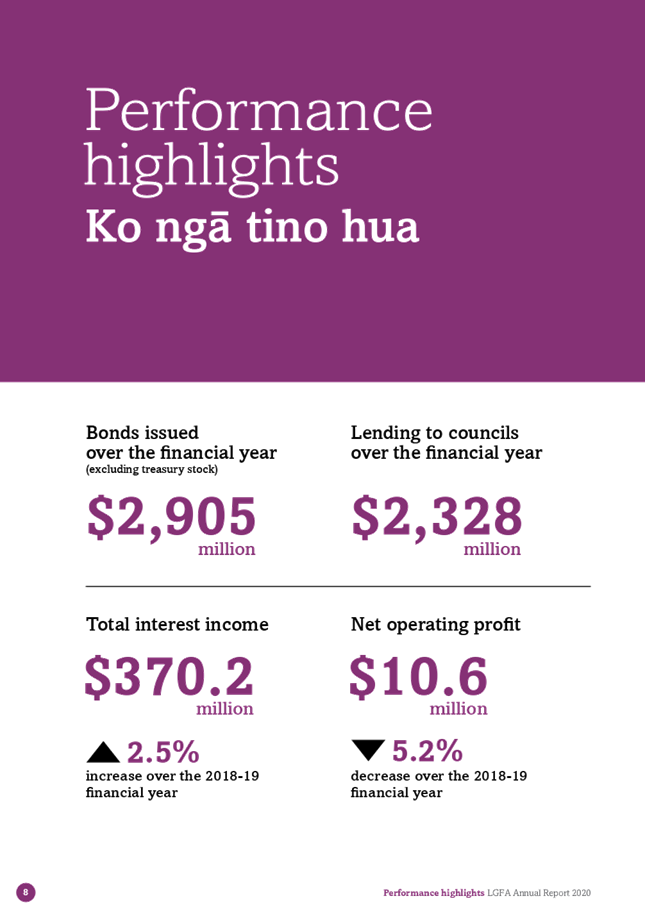
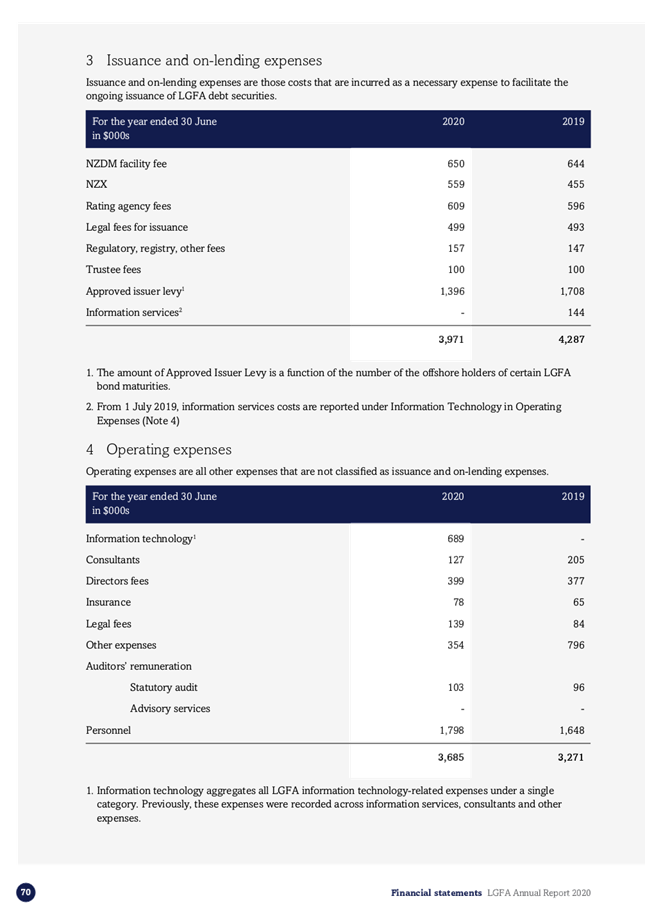
recorded a profit of $10.6 million for the year. While this is ahead of the
budgeted $10 million profit it is less than the $11.8 million profit recorded
in 2017/18, and the $11.2 million in 2018/19 which were both from lower
revenue. Lower profitability compared to previous years is due to the lower
level of interest rates resulting in less income from the Liquid Assets
Portfolio (LAP) as well as many councils refinancing maturing loans with lower
margin loans.
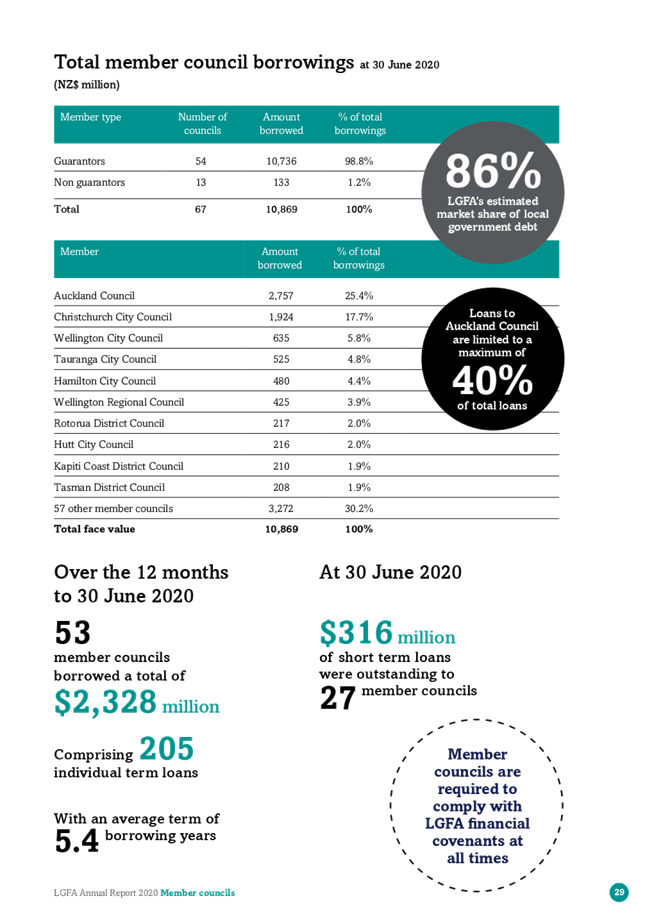
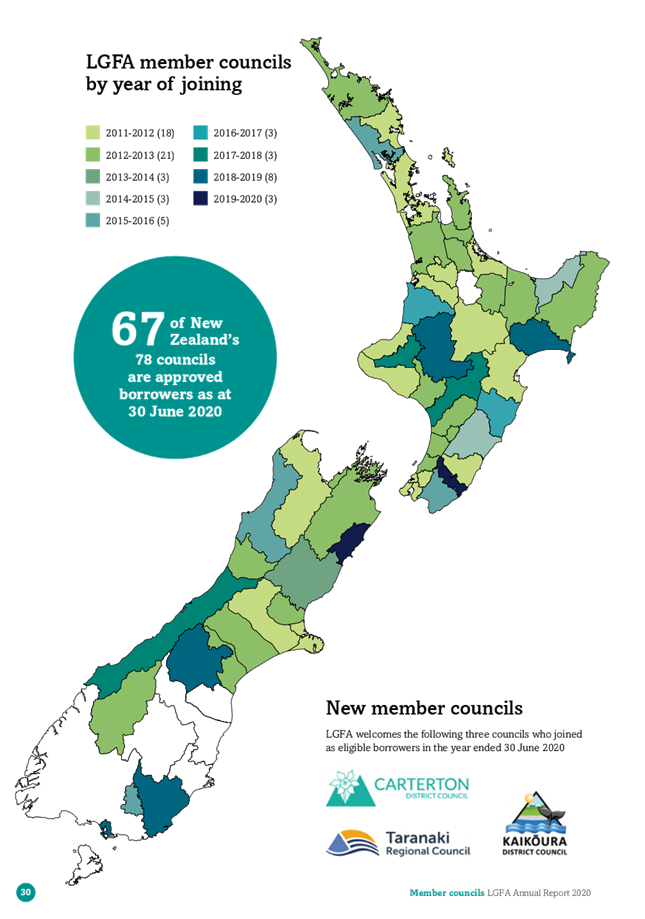
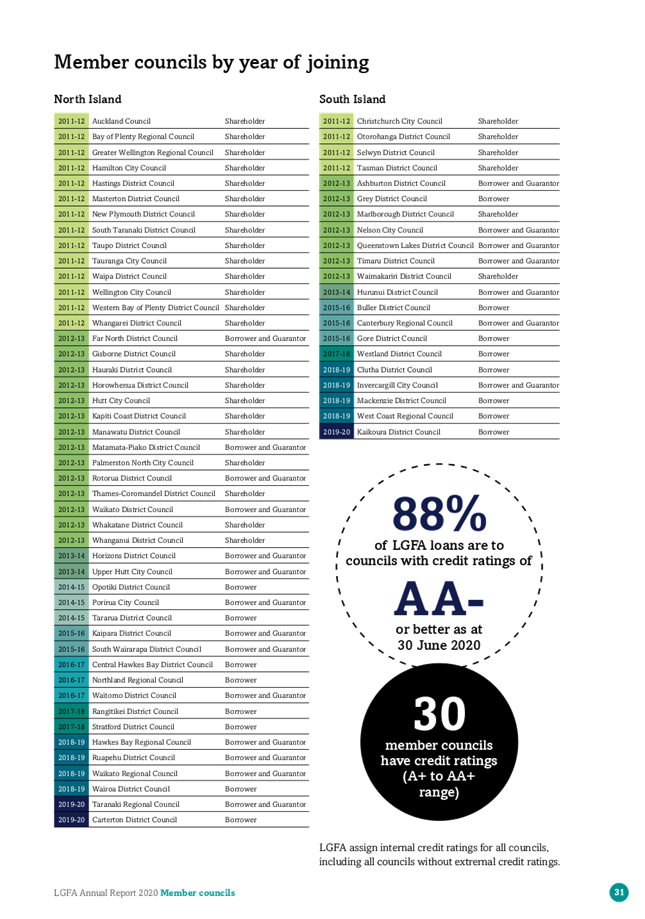
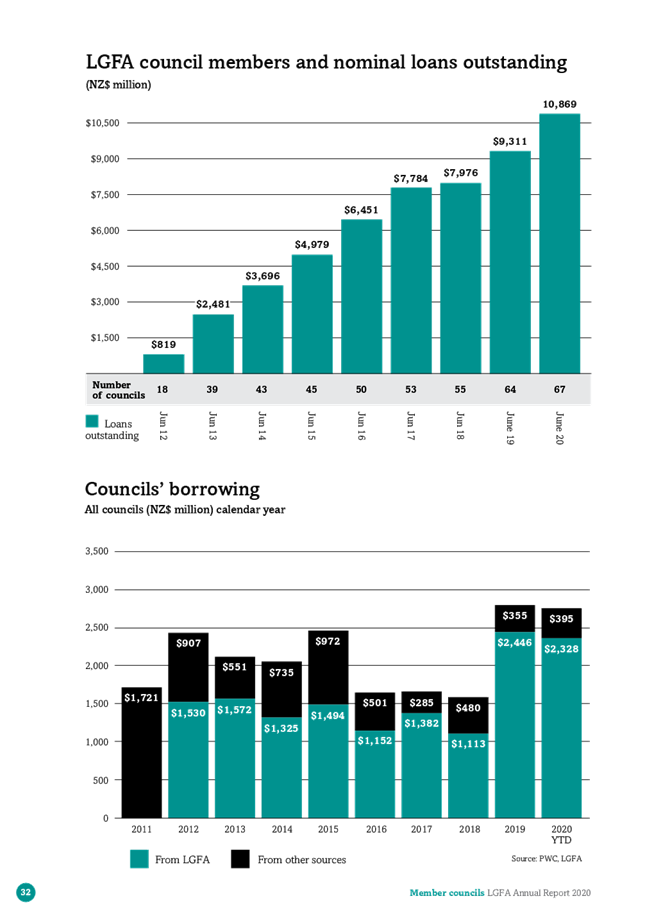
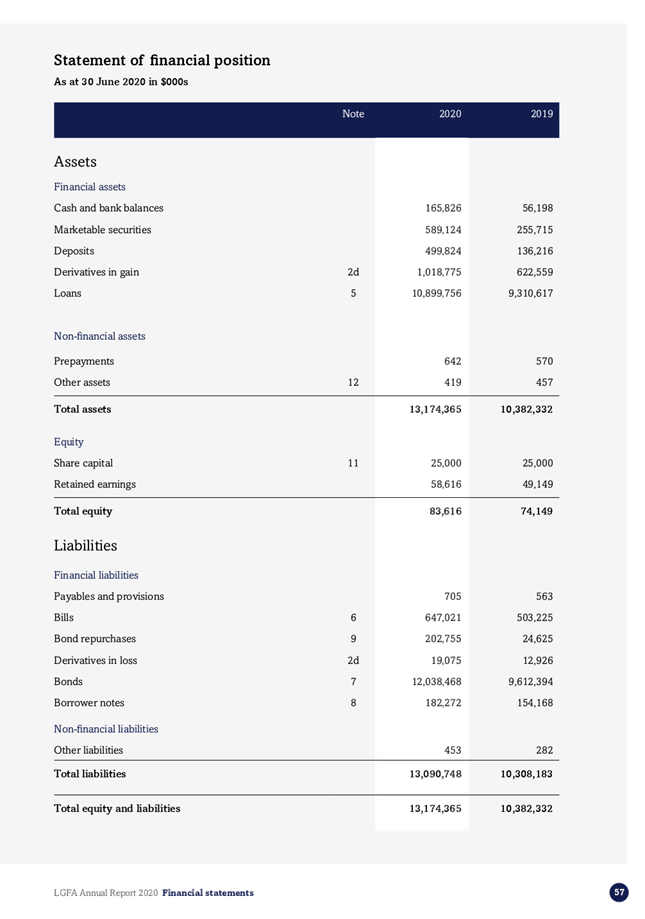
8 The
LGFA continues to grow, both in terms of its balance sheet with total loans to
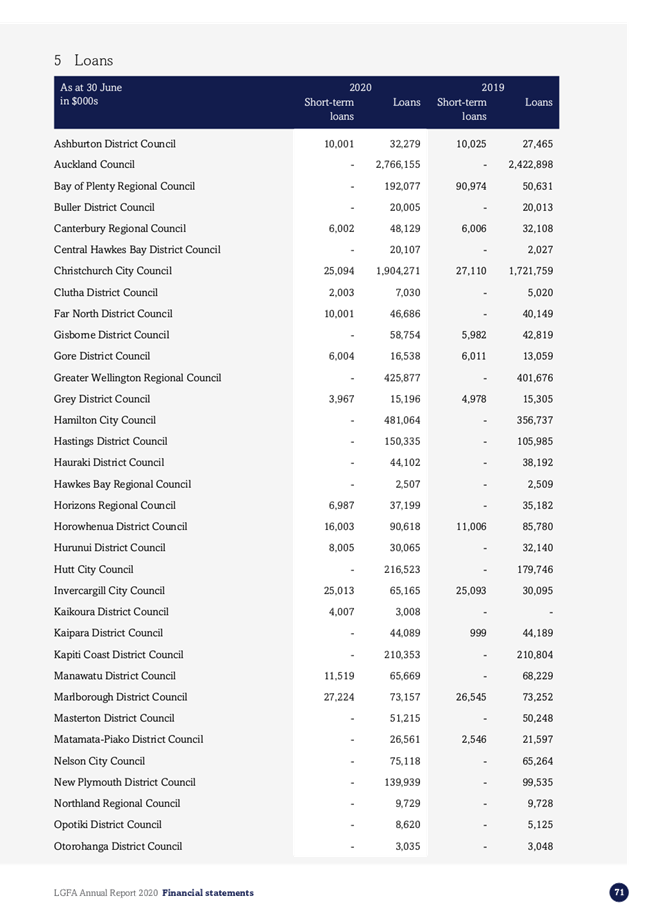
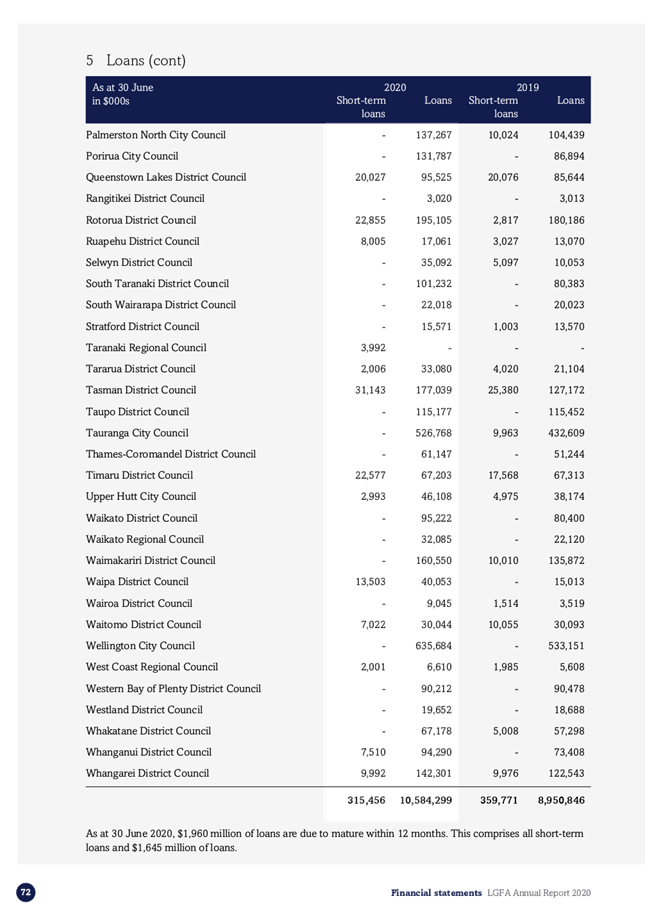
councils reaching $10.9 billion at 30 June 2020 (2019: $9.31 billion) and
participating councils growing from 64 to 67 during the year.
9 Auckland
Council is the LGFA’s largest borrower ($2.8 billion), followed by
Christchurch City Council ($1.9 billion). As at 30 June 2020, Kāpiti Coast
District Council ranked as the 8th largest borrower with $210.4
million in gross borrowings (including accrued interest). Net borrowings,
taking account of cash and term deposits to prefund borrowings, and borrower
notes was $155.7 million as at 30 June 2020.
10 The
LGFA has a number of primary objectives including making longer-term borrowings
available, offering flexible lending and enhancing the certainty of access to
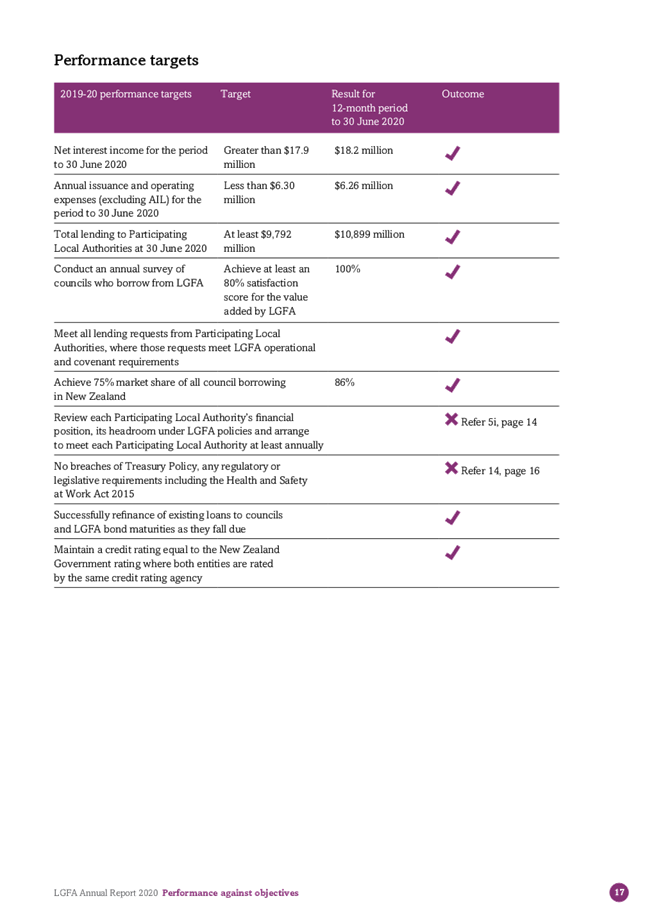
debt markets. The table below shows the LGFA’s results against its key
performance measures:
|
2019-20 performance targets
|
Target
|
Result for 12 month
period to 30 June 2020
|
Outcome
|
|
Net interest income for the period to 30 June 2020
|
> $17.9 million
|
$18.2 million
|
a
|
|
LGFA’s annual issuance and operating expenses
(excluding AIL) for the period
|
< $6.30 million
|
$6.26 million
|
a
|
|
Total lending to Participating Local Authorities
|
> $9.792 billion
|
$10.899 billion
|
a
|
|
Conduct an annual survey of councils who borrow from
the LGFA
|
Achieve > 80% satisfaction score for value added by
the LGFA
|
100%
|
a
|
|
Meet all lending requests from Participating Local
Authorities, where those requests meet LGFA operational and covenant
requirements
|
a
|
|
Achieve 75% market share of all council borrowing in
New Zealand
|
86%
|
a
|
|
Review each Participating Local Authority’s
financial position, its headroom under LGFA policies and arrange to meet each
Participating Local Authority at least annually
|
r
|
|
No breaches of Treasury Policy, any regulatory or
legislative requirements including the Health and Safety at Work Act 2015
|
r
|
|
Successfully refinance existing loans to councils and
LGFA bond maturities as they fall due
|
a
|
|
Maintain a credit rating equal to the New Zealand
Government rating where both entities are rated by the same credit rating agency.
|
a
|
11 As
can be seen, the LGFA achieved eight of its 10 performance targets. It’s
likely that the most important performance measure for all the LGFA’s
borrowers is providing annual interest costs to Participating Local Authorities
(PLAs) on a competitive basis compared to other sources of finance. This is no
longer included as a performance measure by the LGFA due to the difficulty in
accurately assessing the savings.
12 Nevertheless,
the LGFA estimates that as at 30 June 2020, it was saving AA-rated councils
between -4 and 10 basis points (bps) depending upon the term of the maturity.
The Council’s upgraded AA rating means that, based on the LGFA loans of
210.4 million as at June 2020, a 7bps (estimated using the midpoint of -4 and
10bps) saving equates to around $147,000 savings to the Council in 2019/20.
13 Regarding
the performance measures not achieved – there were two compliance
breaches of the Treasury Policy during the period. There was no financial loss
as a consequence, the breaches were fully reported by the LGFA and their
controls have been reviewed to mitigate against further breaches. The other
performance measure not achieved relates to reviewing and visiting all PLAs at
least annually – the LGFA visited 31 of the 67 PLAs. It is reasonable to
acknowledge that this measure was impacted to some extent by Covid-19, and the
associated travel restrictions.
14 The
LGFA undoubtedly provides savings to councils and seeks to incorporate
comprehensive risk and financial management systems into its operations. The
compliance breach and the lower than perhaps expected profit are not
significant concerns but they do highlight the importance of the
Council’s ongoing monitoring of the organisation.
15 From
the perspective of the Kāpiti Coast District Council, the LGFA has
provided borrowing with interest rates and lending terms that have enabled the
Council to meet its financial objectives and to stay within its financial
targets.
16 The
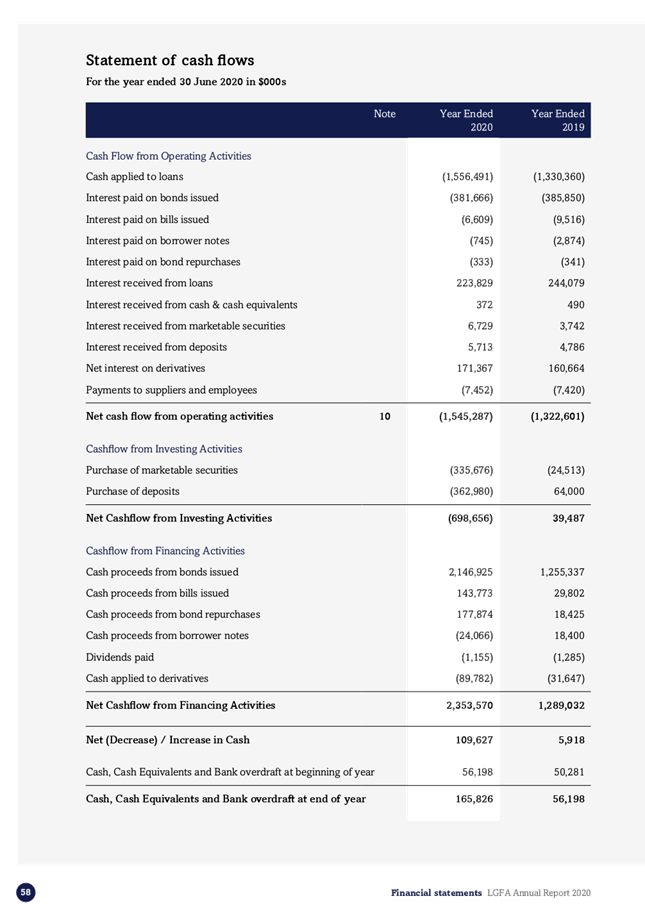
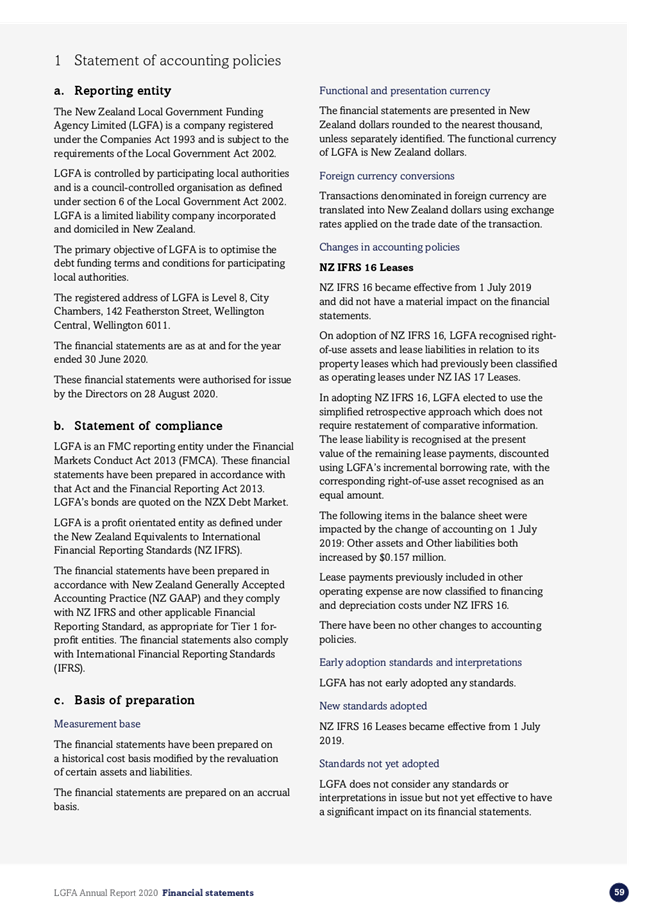
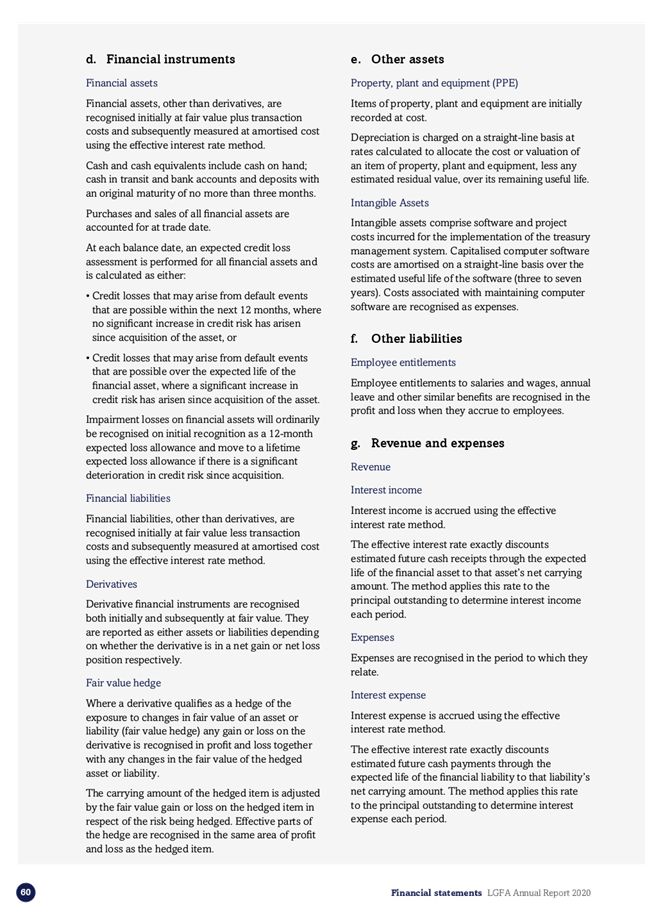
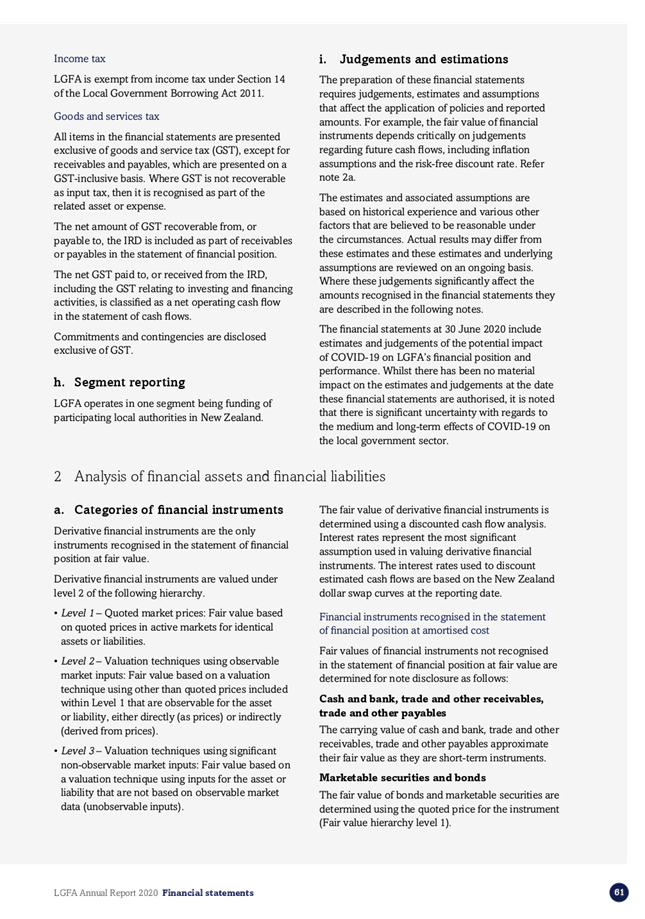
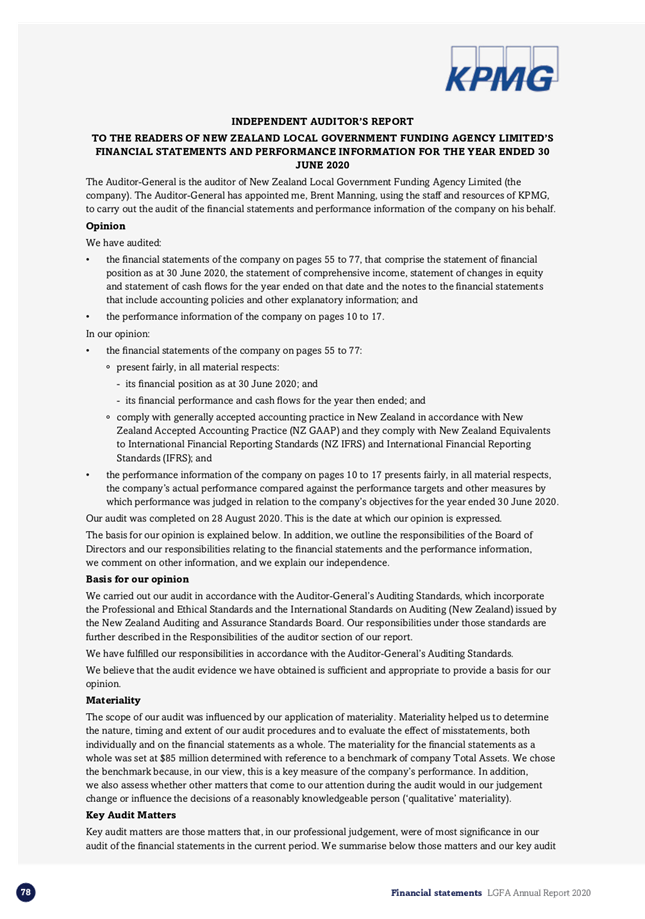
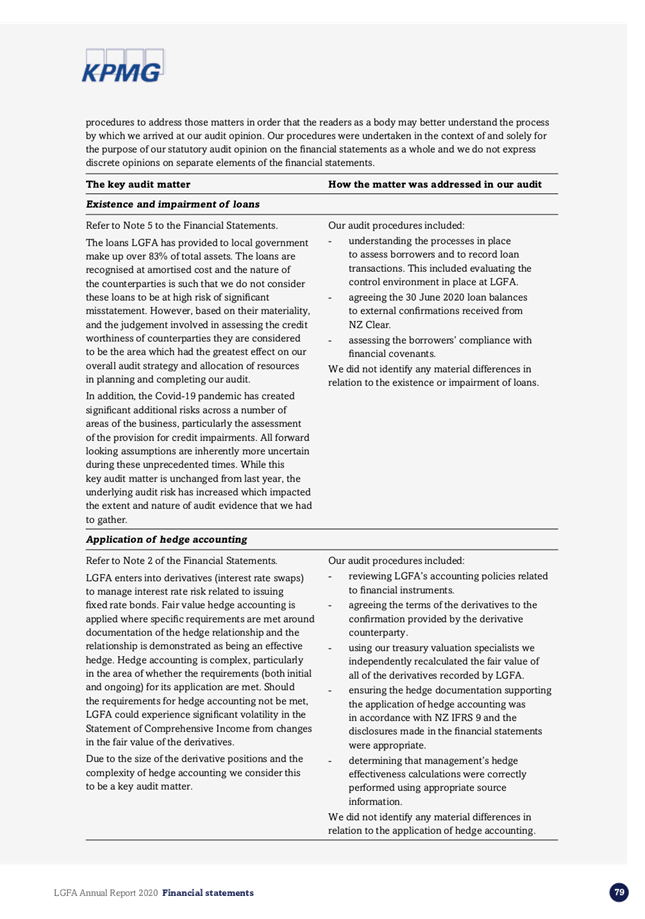
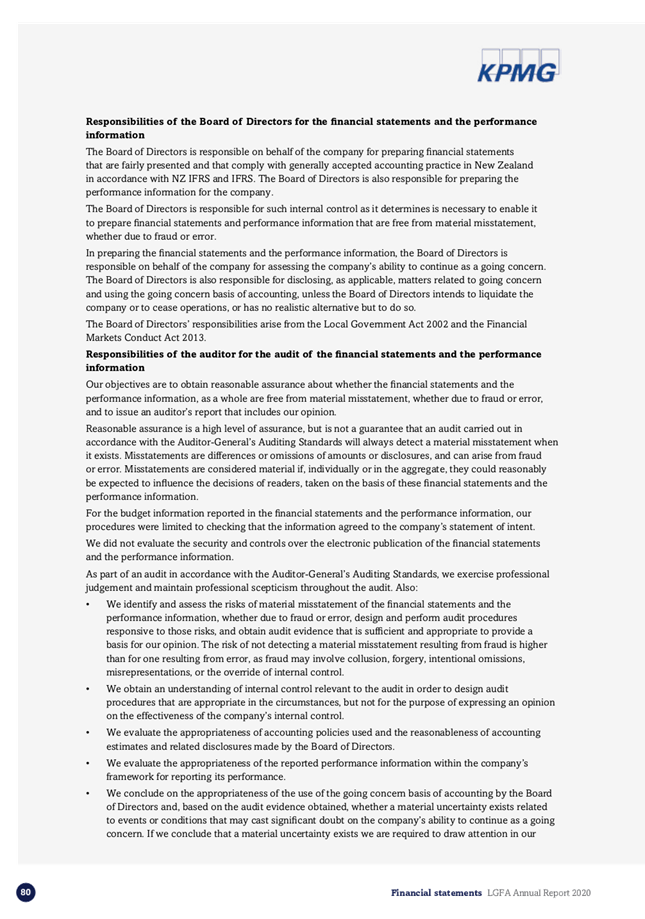
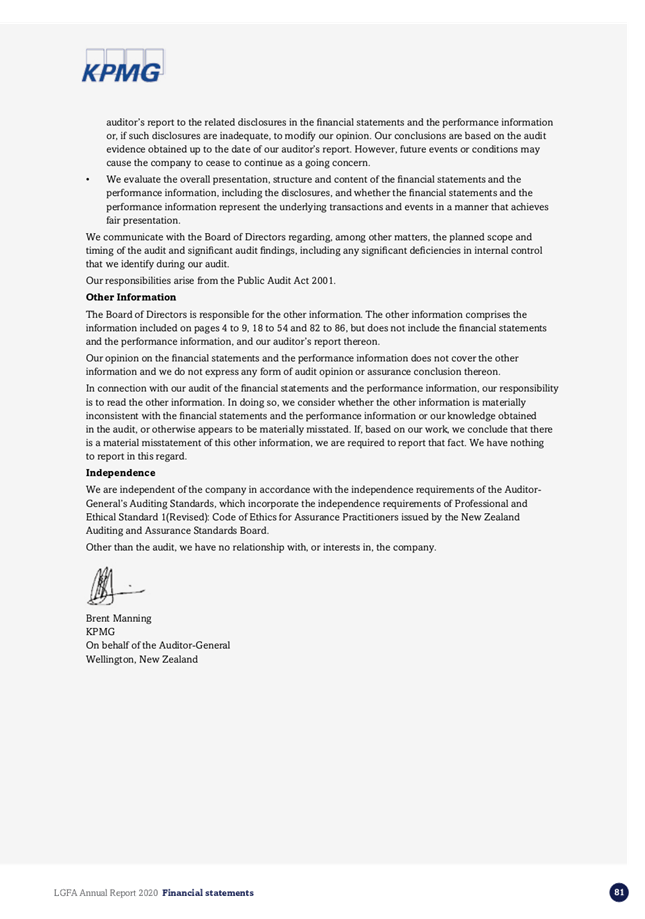
full LGFA 2019/20 Annual Report is attached as Appendix 1 to this report.
Considerations
Policy
considerations
17 In
accordance with the LGA 2002, the Council must provide information on all of
its CCOs
in
its
Long Term Plan (LTP). Accordingly, the Council’s 2018-38 LTP contains
information on the LGFA, including key performance targets and other
performance metrics
Legal
considerations
18 There
are no legal considerations arising from the matters in this report.
Financial
considerations
19 On
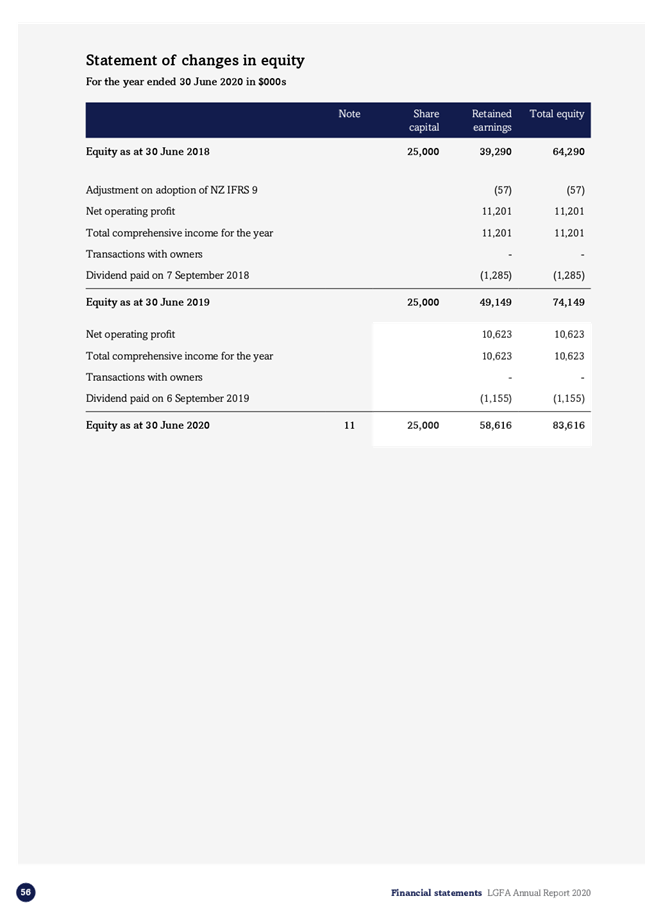
28 August 2020, the LGFA Directors declared a dividend of $878,500 ($0.03514
per paid up share). This equates to a dividend payment of $3,514 for the
Council.
20 Council
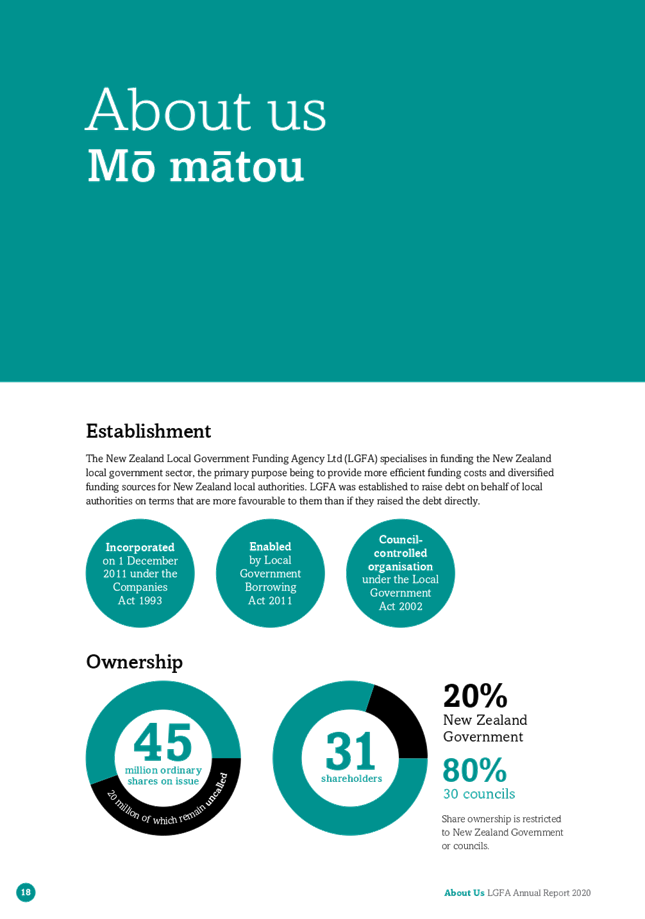
is one of 31 local authority shareholders of the LGFA and has an obligation in
respect of uncalled capital of $100,000.
21 At
30 June 2020, the LGFA had borrowings totalling $12.038 billion (2019: $9.612
billion).
22 Council
considers the risk of the LGFA defaulting on repayment of interest or capital
to be very low on the basis that:
(a) The
only circumstance where LGFA would default on its debt is the event where a council
defaulted on a loan obligation that exceeded LGFA’s available liquidity
assets. As at 30 June 2020, this would need to be a single council default
event that exceeded the sum of:
· cash
and deposits of $665.7 million,
· LGFA
borrower notes of $182.2 million,
· LGFA
credit facility of $700 million, and
· uncalled
share capital of $20 million from LGFA shareholders.
(b) In
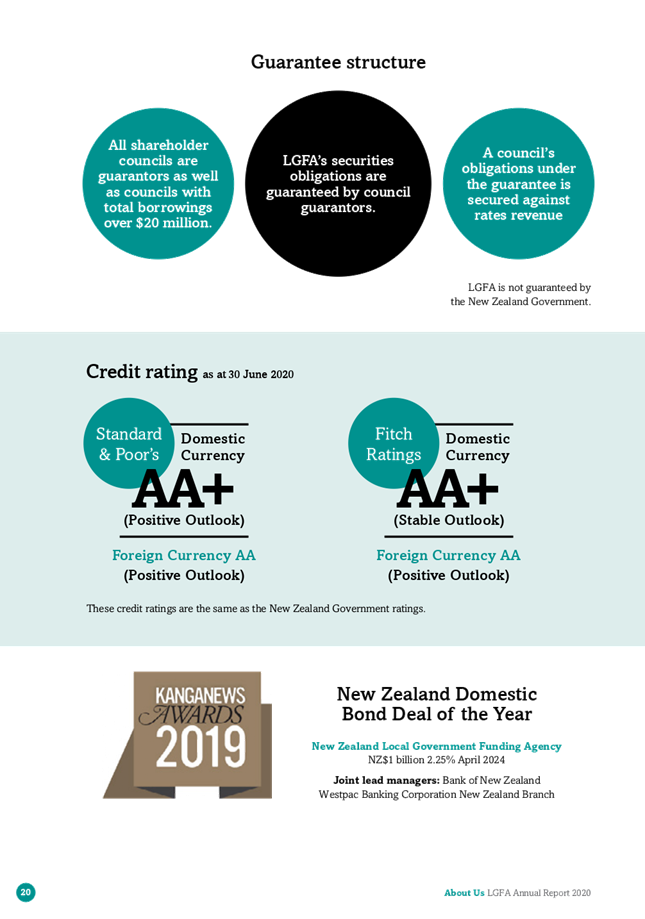
the event of an LGFA default, the call on the guarantee is made on the
Council’s proportion of their share of the underlying rate base.
23 In
the event of a default exceeding the LGFA’s available liquid assets, the
council would be called for 1.1% of the overall call (less than the
council’s 2.2% of LGFA’s loan assets).
Tāngata
whenua considerations
24 There
are no Tāngata whenua considerations.
Strategic
considerations
25 The
prudent use of the LGFA for all the Council’s borrowing requirements
contributes to the key 10-year outcome of improved financial position against
financial constraints by allowing the Council to achieve lower interest rate
costs.
Significance and Engagement
Significance
policy
26 This
matter has a low level of significance under the Council’s Significance
and Engagement Policy.
Consultation
already undertaken
27 There
is no need to consult on the matters discussed in this report.
Engagement
planning
28 An
engagement plan is not needed for this report to be considered.
Publicity
29 There
are no publicity considerations.
|
Recommendations
30 That
the Strategy and Operations Committee notes the performance of the Local
Government Funding Agency as set out in its 2019/20 Annual Report, attached
as Appendix 1 to this report.
|
Appendices
1. LGFA
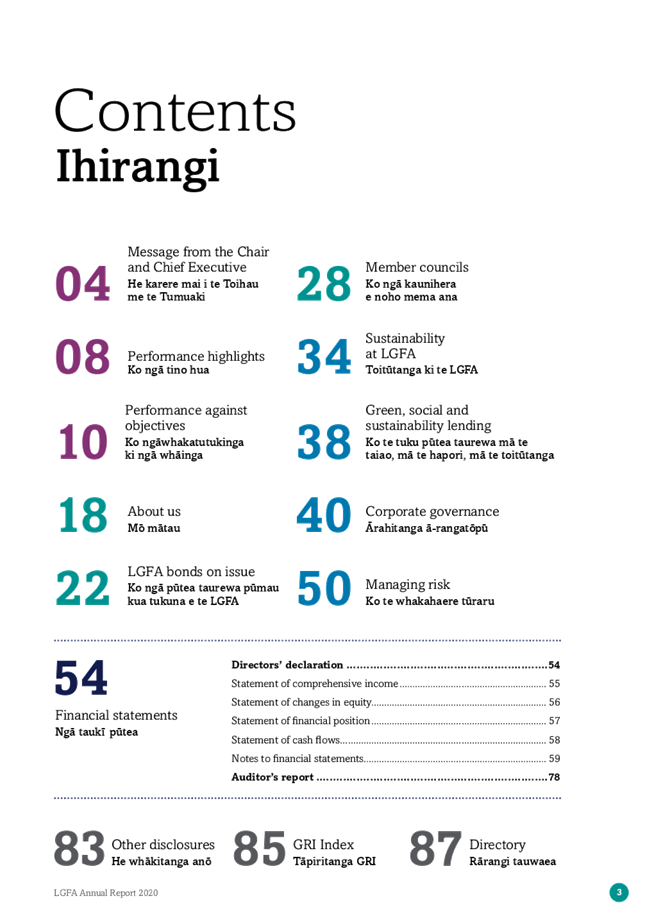
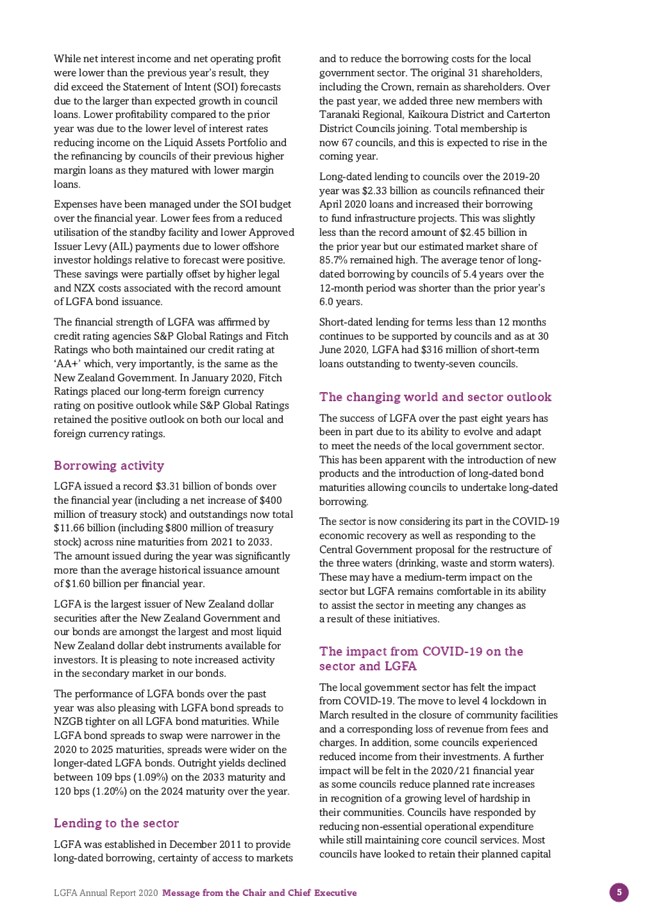
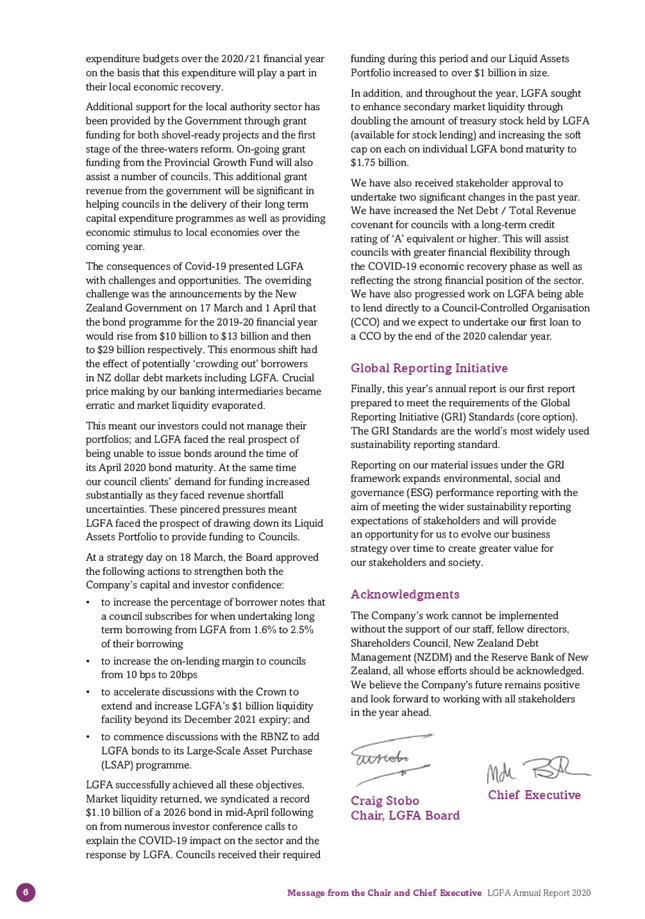
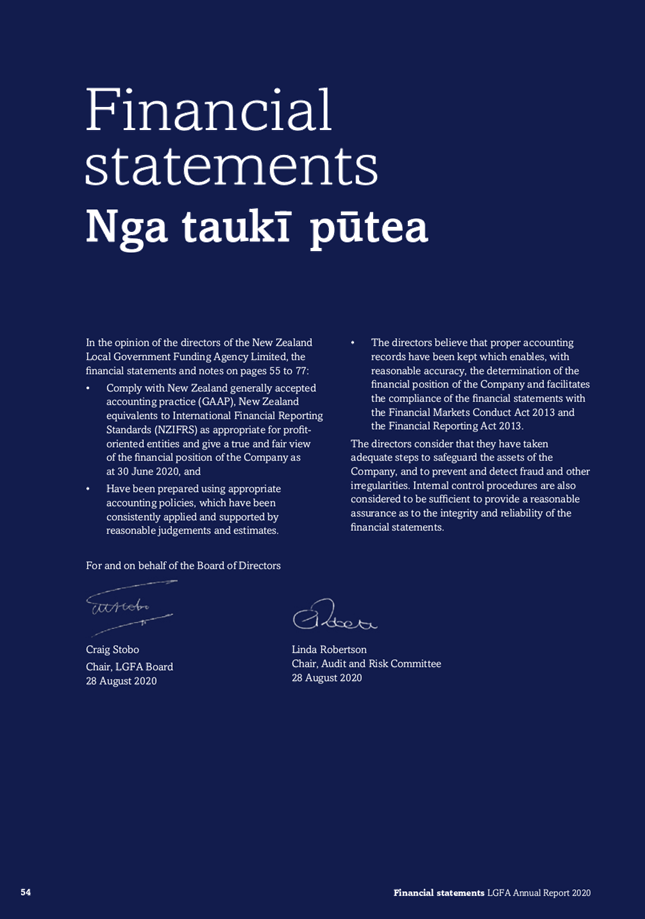
2019/2020 Annual Report ⇩ 
|
Strategy
and Operations Committee Meeting Agenda
|
5 November 2020
|




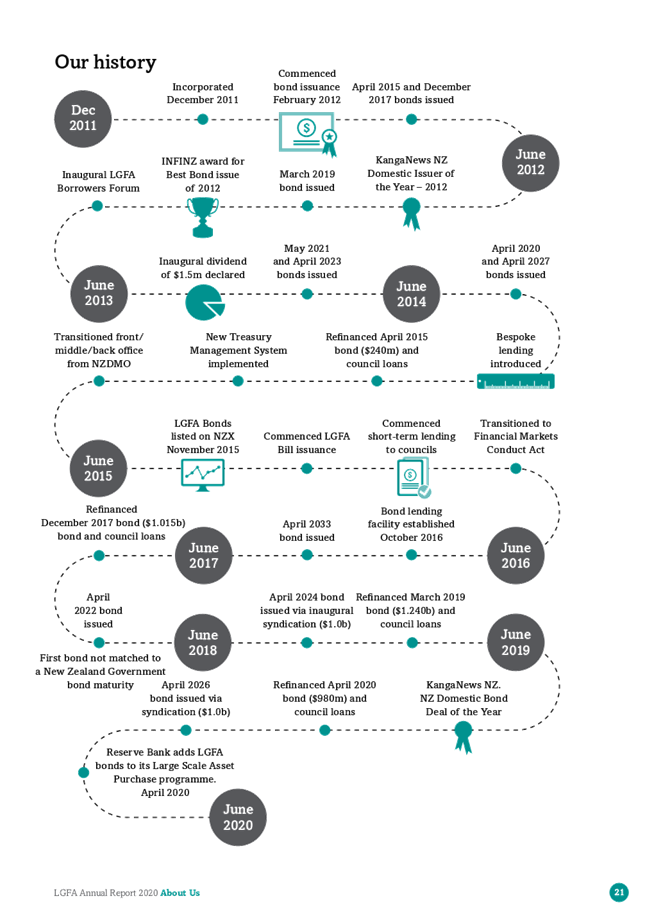
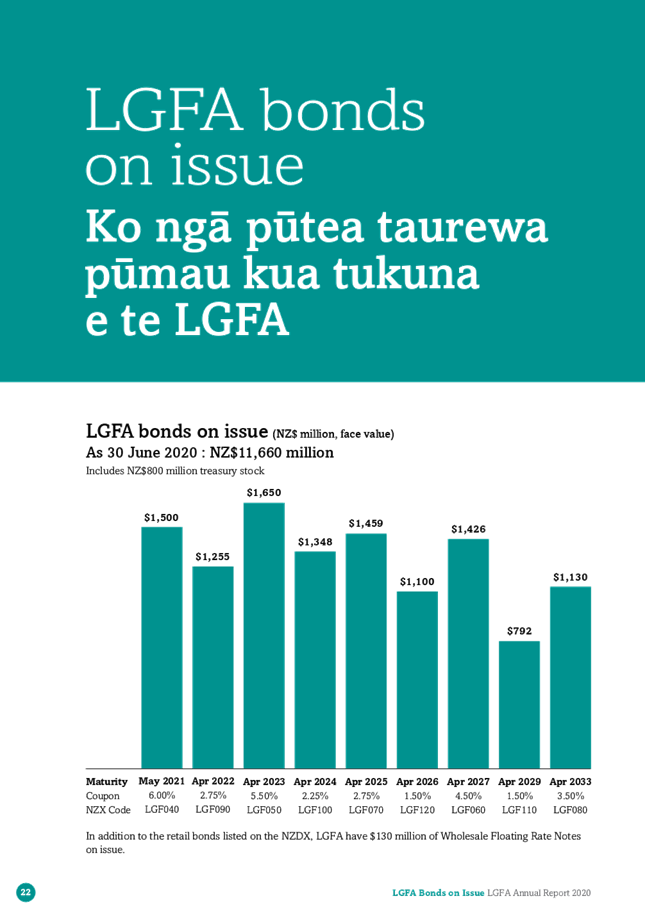
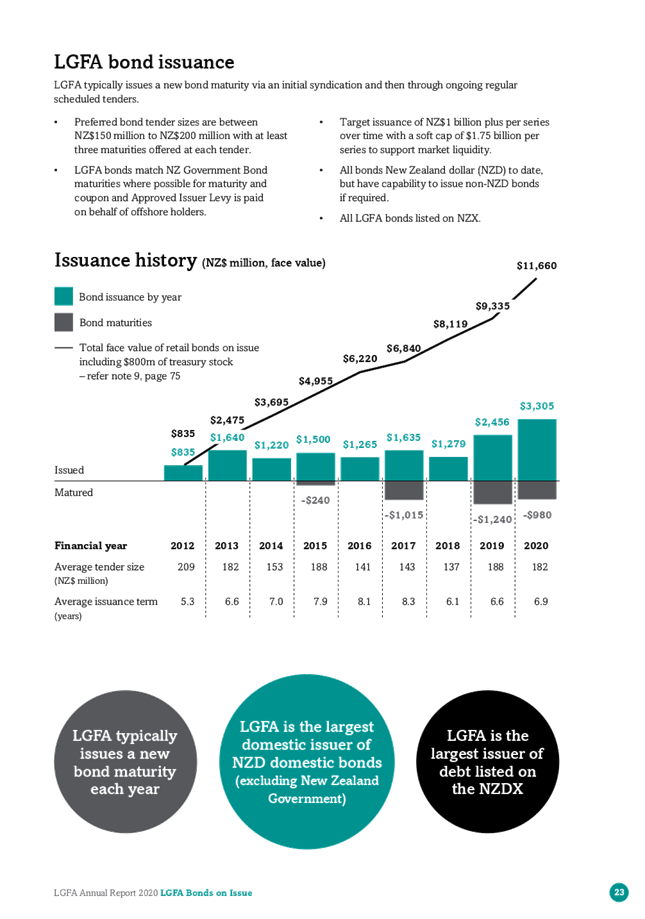
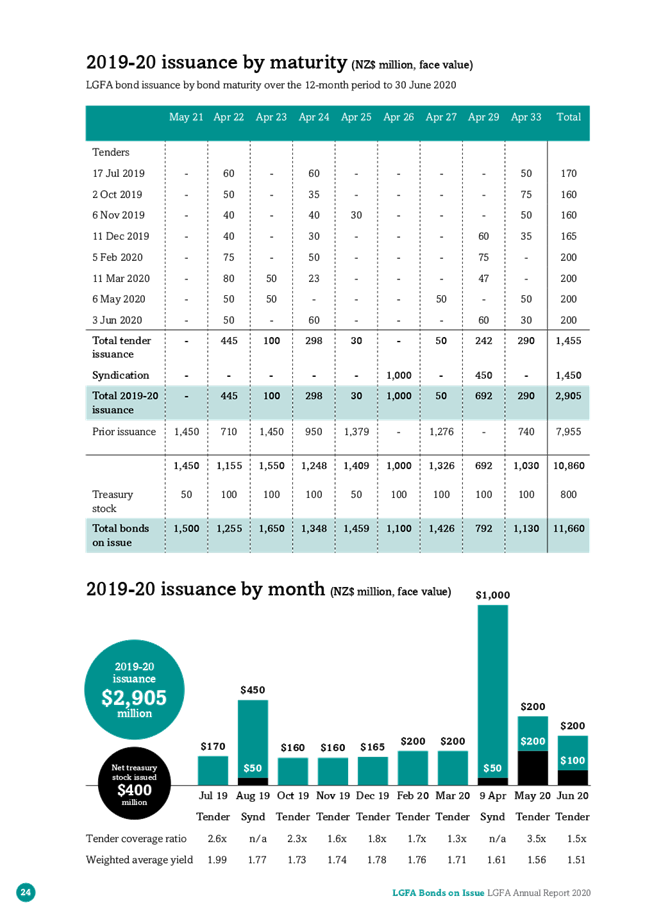




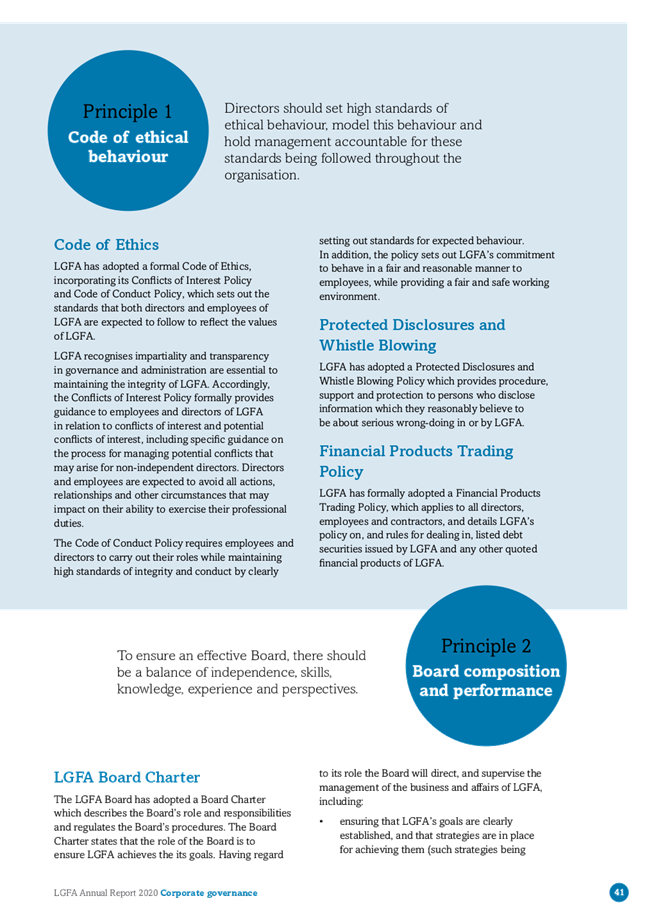
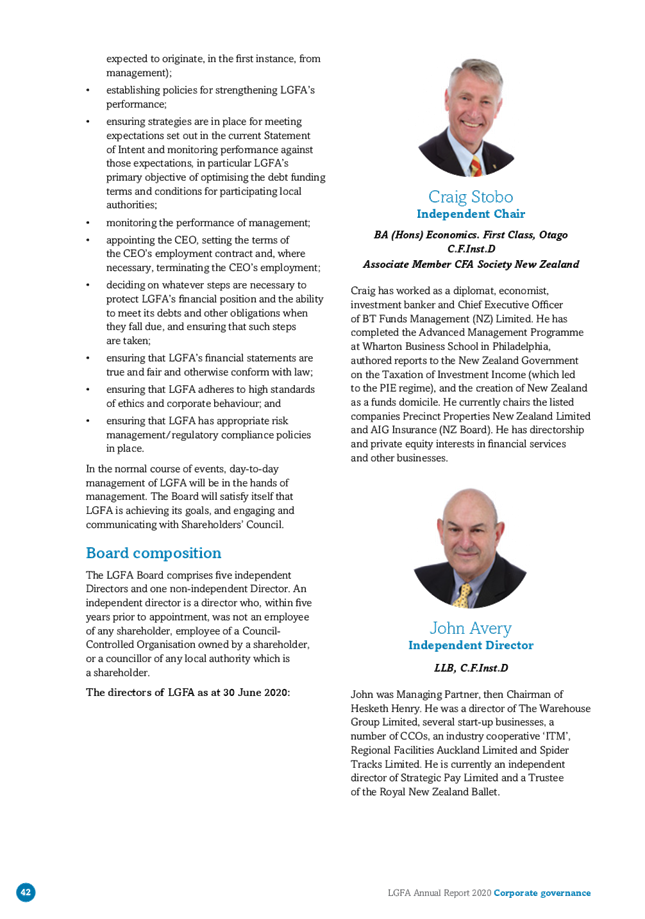

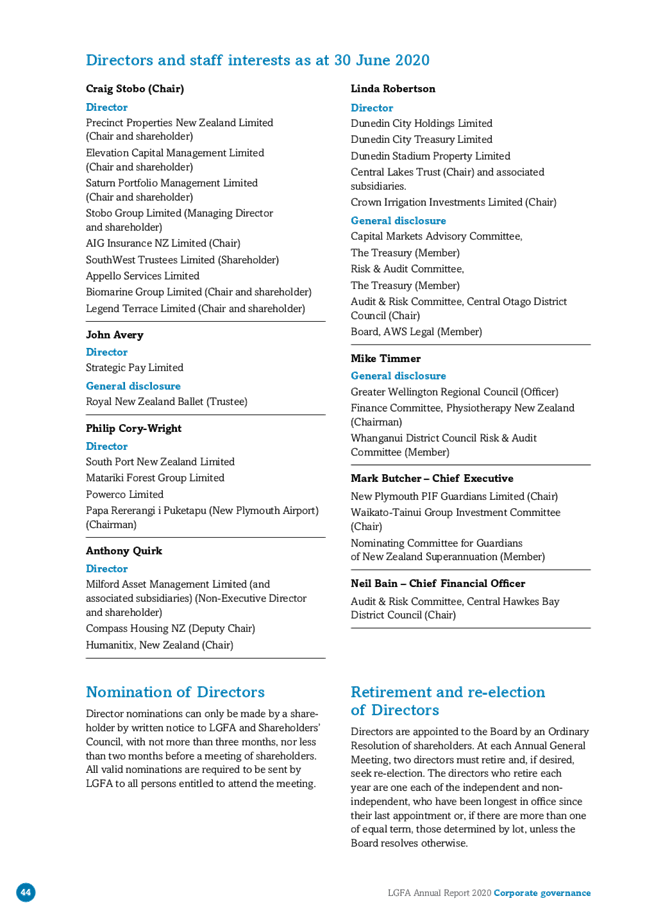
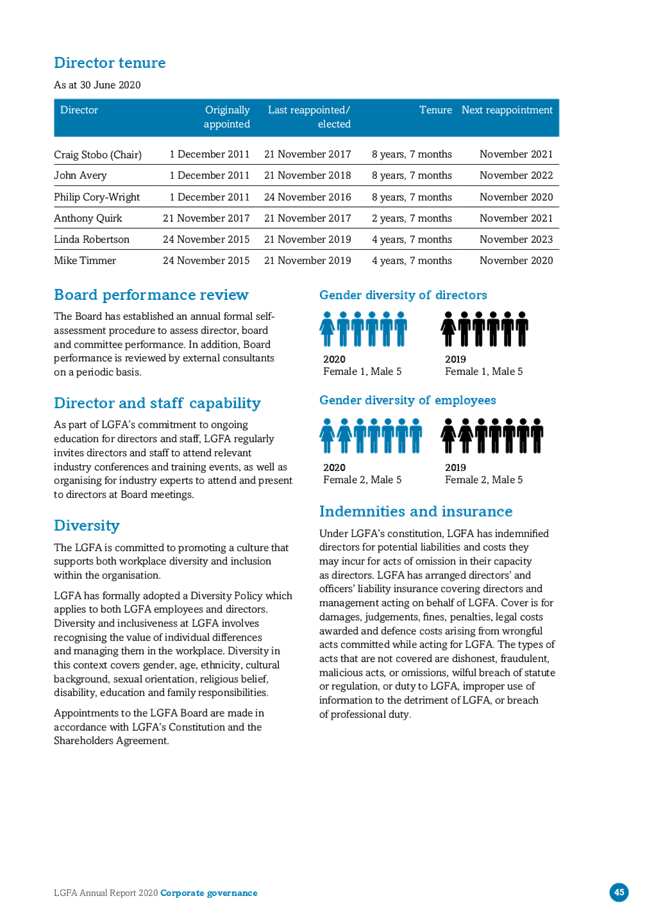
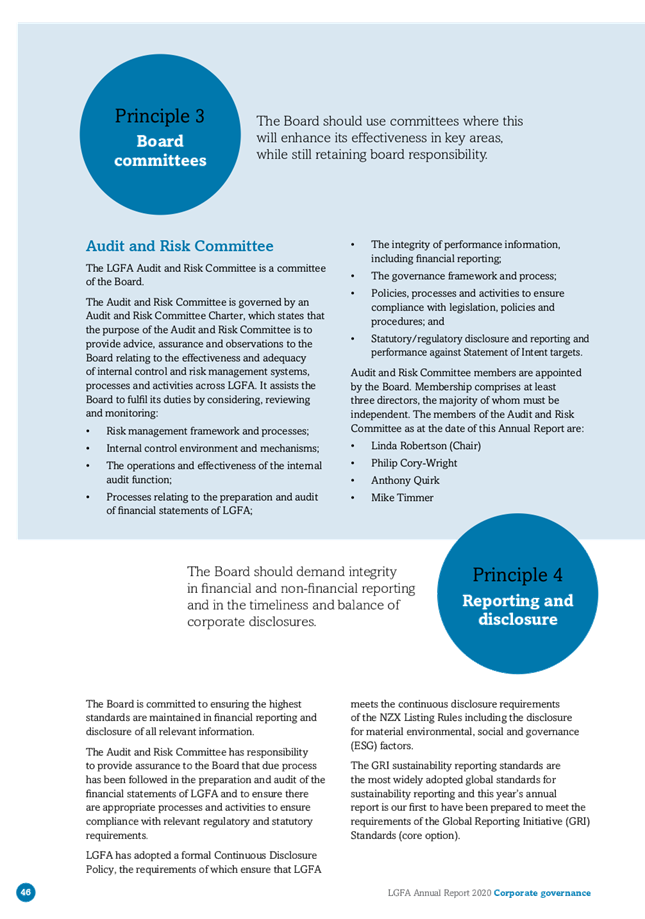
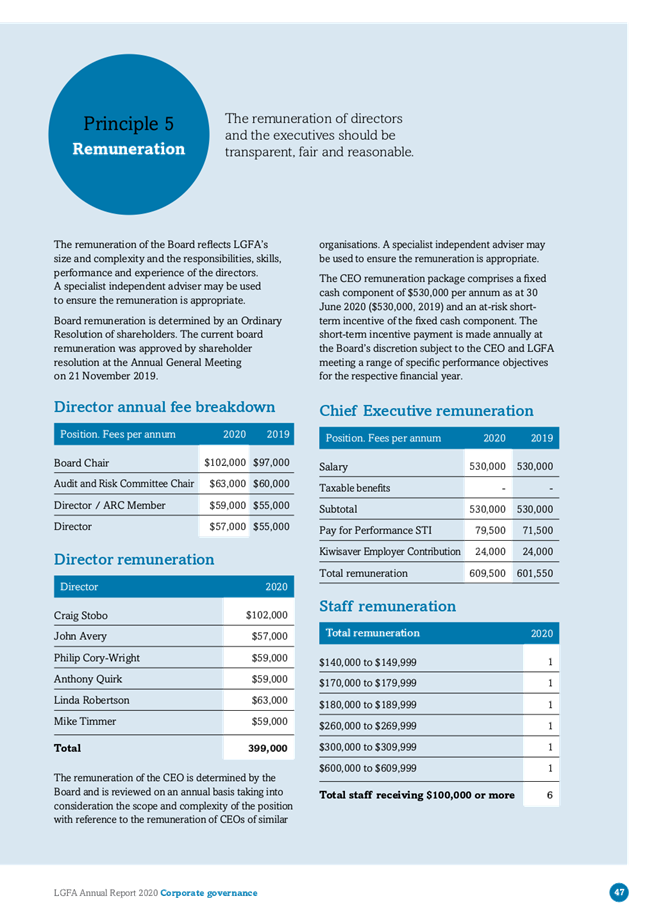
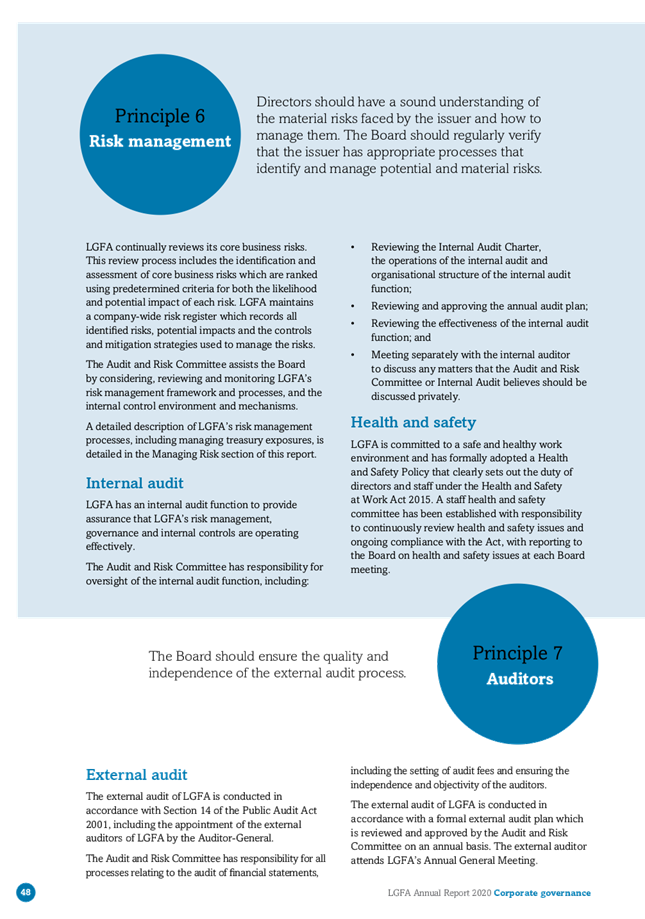
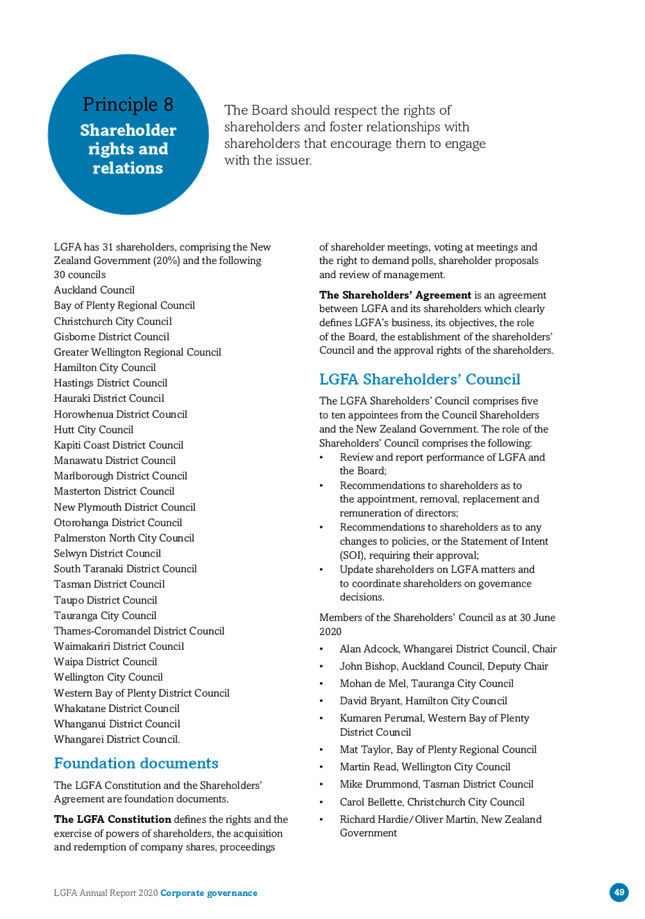
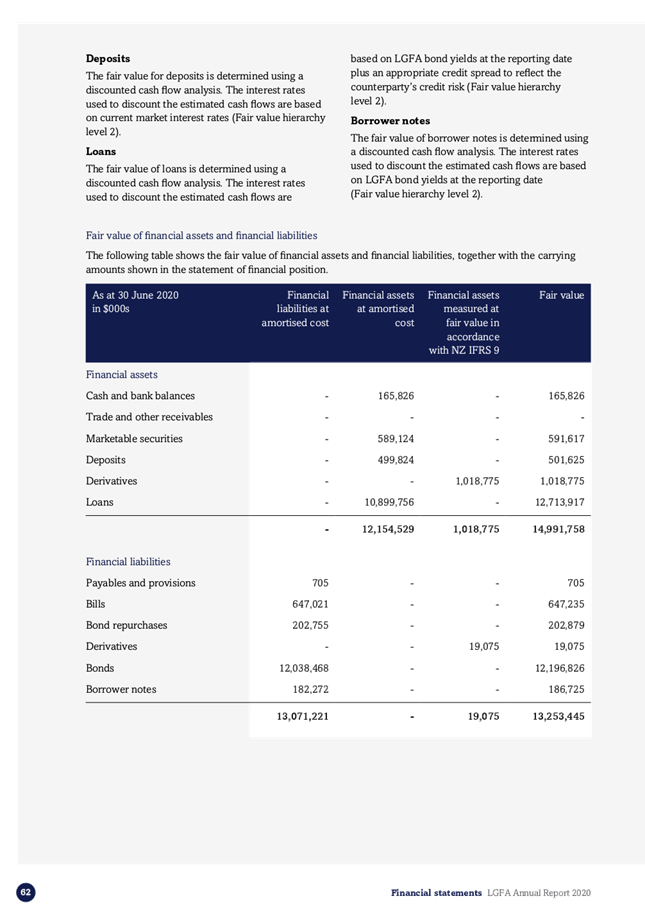
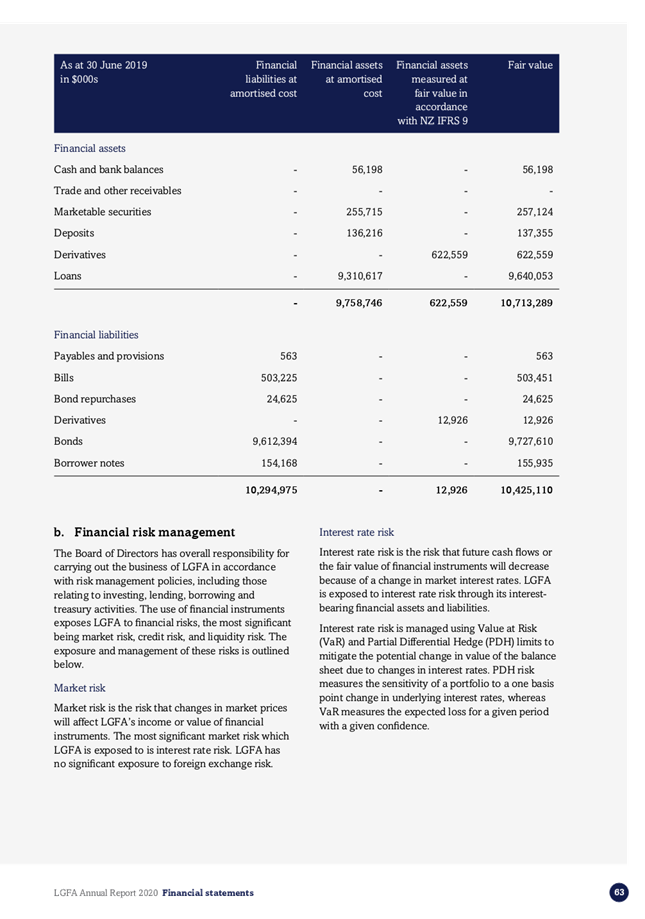
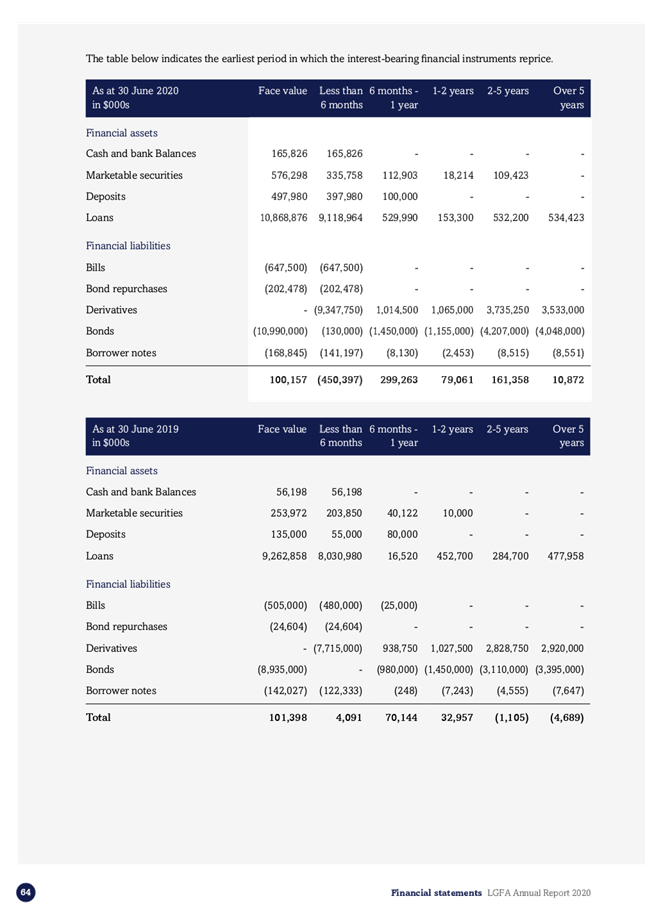
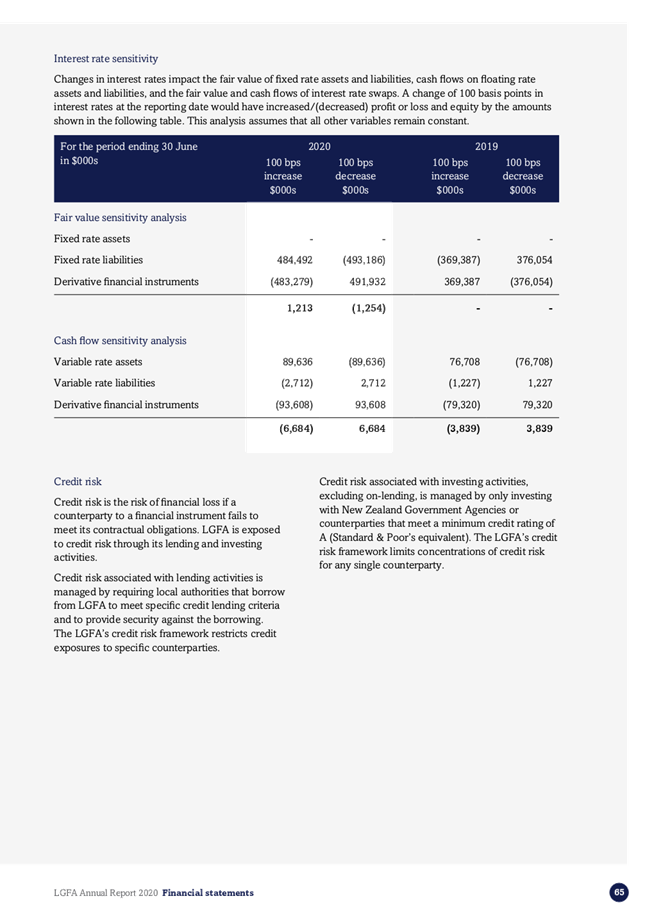
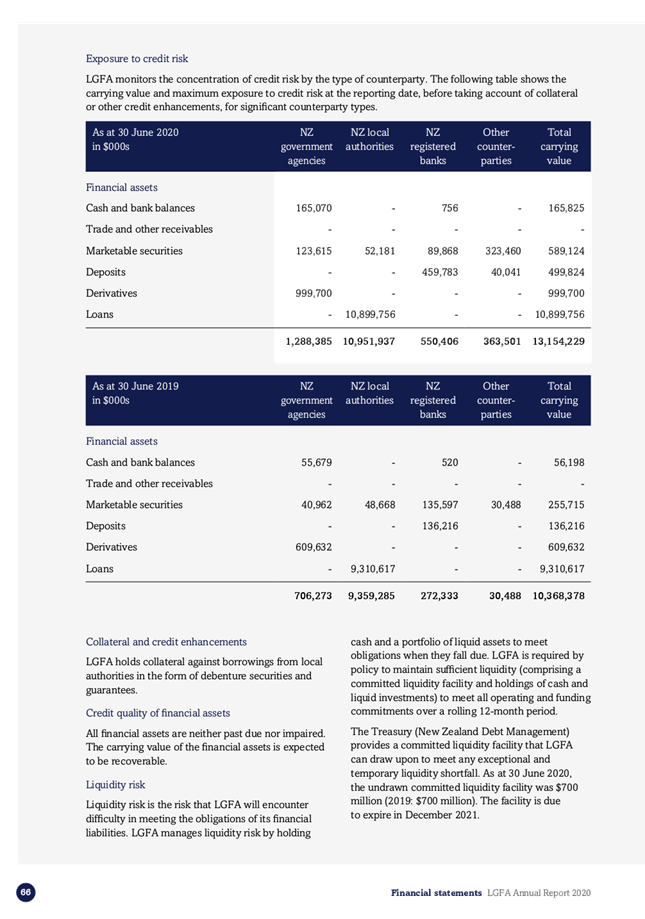
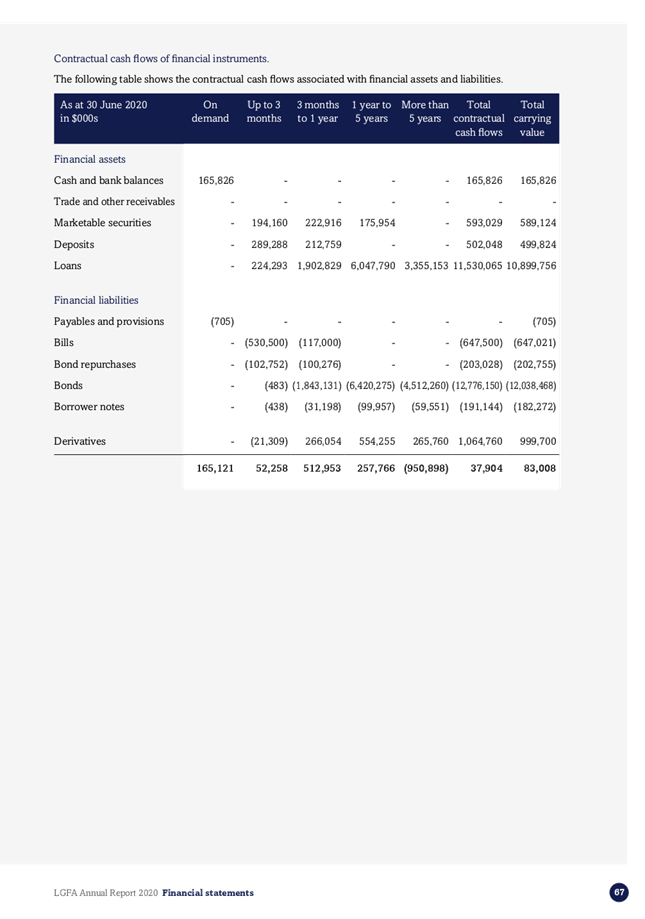
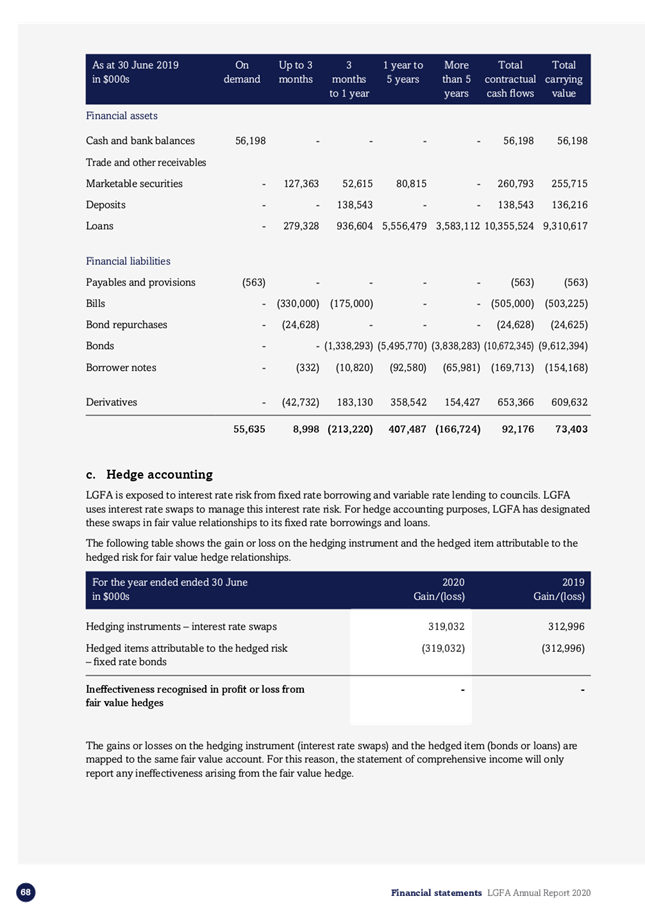
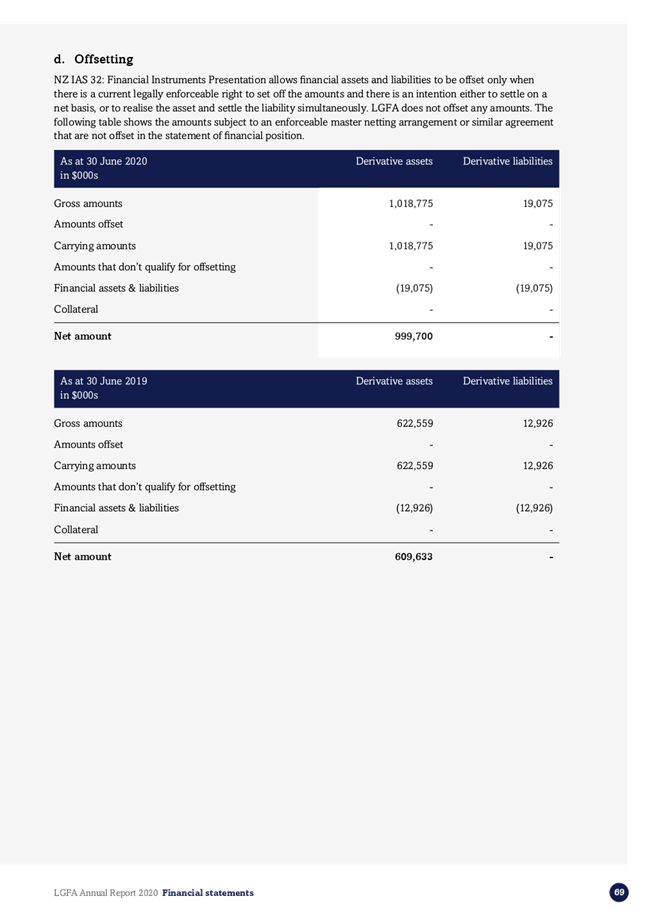
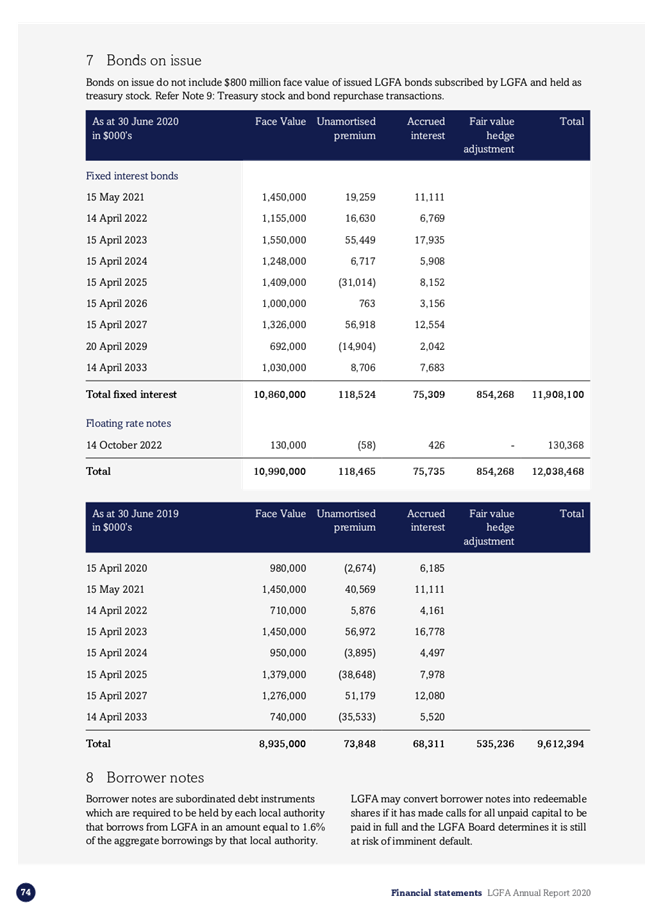
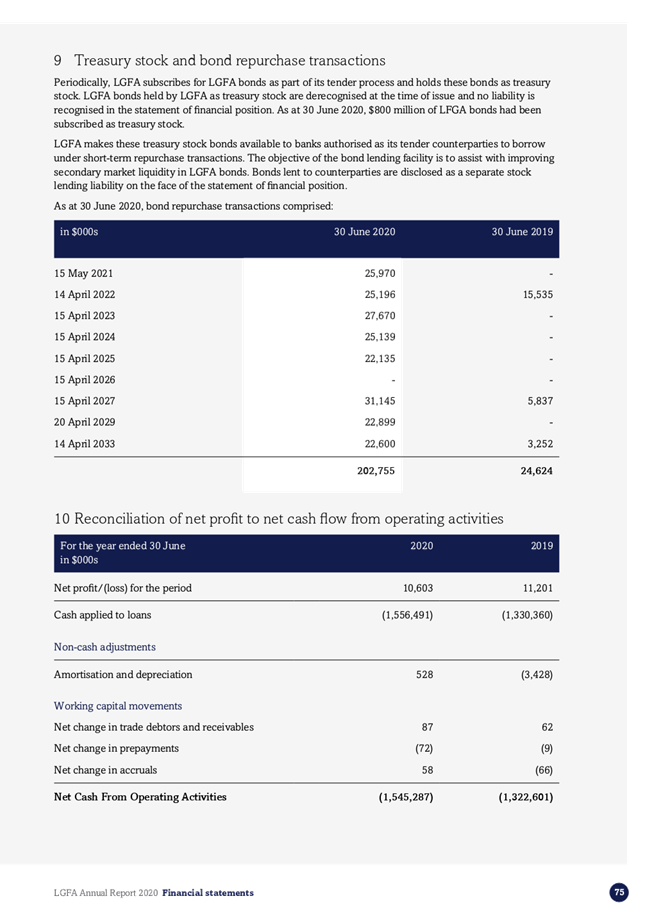
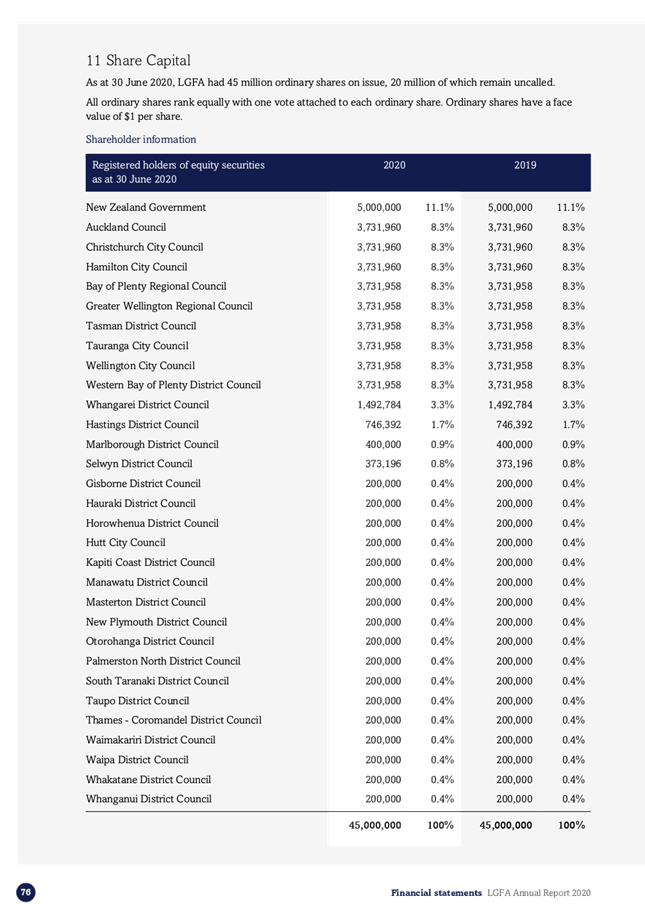
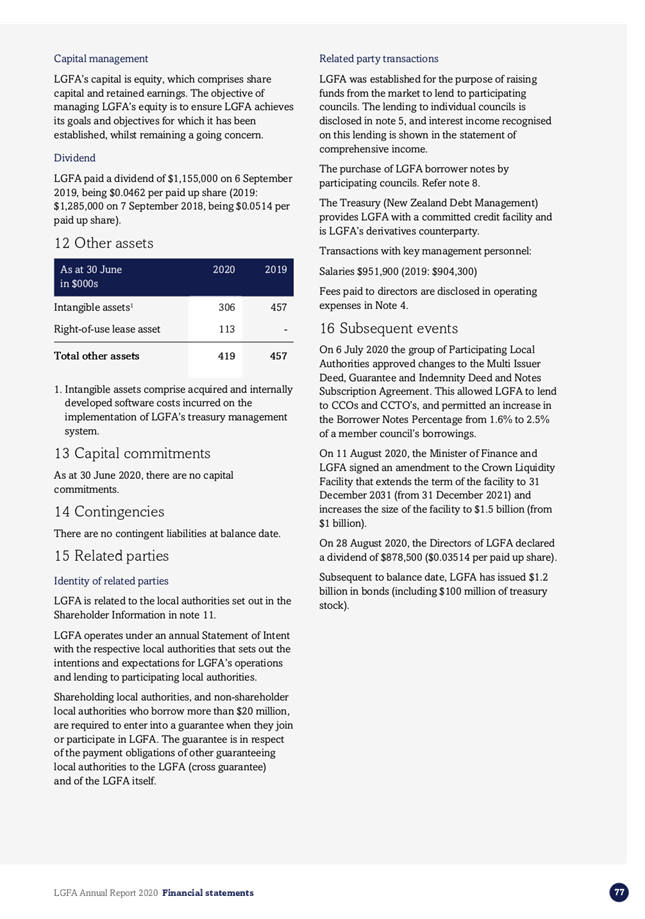

8.4 Decision
on Proposed District Plan Variation 2 - Waikanae Beach Rezoning and Amendments
to the Beach Character Setback Margin Provisions
Author: Jason
Holland, District Planning Manager
Authoriser: Angela
Bell, Acting Group Manager Regulatory Services
Purpose of Report
1 This
report seeks a decision to adopt the hearing panel’s recommendations on
Variation 2 to the Kapiti Coast Proposed District Plan (PDP) as contained in Attachments
1, 2 and 3.
2 The
variation has two parts comprising:
a) rezoning
of part of Waikanae Beach (known as the ‘Olde Beach’ area) from
Residential Zone to Beach Residential Zone, and introduction of amended Beach
Residential Zone provisions for subdivision and development within the rezoned
area; and
b) deletion
of the beach character setback margin front yard provisions which apply
to all properties in the existing Beach Residential Zones, replacing these with
a minimum 4.5 metre front yard setback standard for all buildings (the same as
the operative district plan).
Delegation
3 The
Strategy and Operations Committee has delegated authority to make this decision
as set out in Section B.1 of the Governance Structure and Delegations for the
2019-2022 triennium. The relevant parts of this delegation are:
This Committee will
deal with all strategy and policy decision-making that is not the
responsibility of the Council. Key responsibilities will include:
· …
· Development
and/or review of strategies, plans, policies and bylaws
· Preparation of
District Plan and Plan Changes…
POWERS
(i)
All powers necessary to perform the committee’s responsibilities except
powers that the Council cannot delegate or has retained to itself.
Background
4 The
variation has an extensive history which is described in Section 2.0 of the
Section 42A report (Attachment 4). The background to each of the two
parts of the variation is summarised below:
Rezoning
5 The proposed change of zoning of the ‘Olde Beach’ area
from Residential Zone to Beach Residential Zone is consistent with the
community vision for Waikanae Beach expressed in the document “Our Future
Waikanae Beach – Community vision and action plan for Waikanae Beach
2017”. The concept of a Beach Residential Zone is not new with three
existing Beach Residential Zones at Paekākāriki, Raumati and
Ōtaki Beach.
6 The “Our Future” document expresses a community desire
to protect the relaxed beach character of the settlement and maintain a low
density, low rise built form. It was developed by the Waikanae Beach community
between 2015 and 2017 with the involvement of Council staff, the Waikanae
Community Board and Iwi. It was endorsed by the Waikanae Community Board in
March 2017, and noted and acknowledged by the Strategy and Policy Committee on
17 May 2017.
7 To
further inform the development of district plan provisions to achieve the
community’s stated desires, in late 2017 Urban Perspectives were commissioned to conduct a character
assessment of Waikanae Beach. The assessment provided the evidential basis for
the spatial extent of the area to be rezoned, and for specific plan change
amendments necessary to retain the area’s special character.
Beach Character Setback Margin
Provisions
8 The
beach character setback margin provisions (shown as struck-through text
in Attachment 2) set the front yard setback from the legal road for the primary
residential building[2]
on a property within the Beach Residential Zone. The formula for determining
the specific setback on a property-by-property basis is complex and does not
provide for all circumstances. All other building on properties within the
Beach Residential Zone must be set back at least 4.5 metres from the road
boundary. These provisions have been in the PDP since its notification in
November 2012 but only gained legal effect once decisions on the PDP were
released in November 2017.
9 Experience
in implementing the beach character setback margin provisions identified
significant technical difficulties with the provisions. These can be
summarised as:
a) The
permitted activity provisions did not anticipate all scenarios, meaning in some
cases it was not possible to achieve the beach character setback margin
as directed by the definition. This triggered the requirement for resource
consent. For example:
(i) Additions
to existing dwellings which are not within the beach character setback
margin e.g. a dwelling positioned toward the rear of a property, where the
neighbouring dwellings are positioned closer to the front boundary (and vice
versa);
(ii) Proposed new
dwellings which are proposed to be positioned toward the rear of a property,
where the neighbouring dwellings are positioned closer to the front boundary
(and vice versa);
(iii) Properties which
have frontage to two roads will have two beach character setback margins
to comply with, however the definition does not anticipate such situations (no
alternative yard setback is provided);
In these situations, resource consents
were required even though the proposed building or building additions would
achieve a generous setback from the front boundary, in keeping with the
established character of the area.
b) Calculating
the beach character setback margin, in many instances, may require
access to neighbouring properties to take measurements. There are practical and
legal challenges associated with such an approach. If permission is not
obtained from the neighbouring properties it may not be possible to demonstrate
compliance with the setback standard.
10 To
eliminate these difficulties, Variation 2 deletes the beach character
setback margin provisions in their entirety and replaces them with a simple
4.5 metre front yard setback for all buildings. For properties within the Beach
Residential Zone this will reinstate the front yard setback from the Operative
District Plan 1999.
11 To
eliminate these difficulties as soon as practicable the District Planning team
sought and obtained approval from the Environment Court to give these
amendments immediate legal affect from notification. The Environment Court
agreed that the practical difficulties with the provisions were significant and
approval was granted in August 2019.
Notification,
submissions and hearing
12 Approval
to notify the variation was granted by the Strategy and Policy Committee at its
meeting on 21 March 2019.
13 The
variation was notified in August 2019. Nineteen submissions and four further
submissions were received. One submission and one further submission opposed
the variation, two submissions and one further submission sought amendments,
while all other submissions and further submissions supported the variation and
requested it be adopted as notified.
14 No
submissions in opposition were received on the beach character setback margin
amendments. Consequently, as required by section 86F(1)(a) of the RMA, these
amendments have been treated as operative since the closing of submissions on 9
October 2019.
15 In July
2020 a hearings panel was appointed to hear submissions and make
recommendations to the Council on the variation and submissions. The hearing
panel members were:
a) Robert
Schofield – Independent Chair (Boffa Miskell);
b) Councillor
Holborow – Hearings Commissioner; and
c) Miria
Pomare – Independent Hearings Commissioner with expertise in tikanga Māori.
16 A hearing
was held on 3 August 2020 at the Sports Turf Pavilion at Scaife Drive. The
hearings panel heard from seven submitters over the one-day hearing.
17 The
Council’s Principal Policy Planner then prepared a right of reply to
assist the hearings panel in their deliberations.
18 Following
receipt of the right of reply the hearings panel retired to deliberate and
prepare a recommendation report for the Council’s consideration. The
recommendation report makes recommendations on all submissions and the final
variation provisions (Attachments 1, 2 and 3).
Issues and Options
Issues
19 The
following submitters attended the hearing to present to the hearings panel:
· Penelope Eames
· William & Kay
Wiggs
· John Valentine
· Karen Tate
· Andrew Hazelton,
with Sarah Poff providing expert landscape and urban design evidence
· Quentin Poole
· Gerald Rys.
20 In
their recommendation report, the Hearings panel address the following key
matters raised by submitters:
a) Issue
1: Should the Variation proceed or be discarded
b) Issue
2: Name of area to be rezoned
c) Issue
3: Extent of area to be rezoned
d) Issue
4: Proposed Policy 5.5A
e) Issue
5: Fences
f) Issue
6: Site coverage and floor area ratio
g) Issue
7: Maximum access width.
21 A
summary of the panel’s findings is provided below. Reference must be made
to the hearing panel’s recommendation report for the full details of
these issues and the reasoning for the hearing panel’s recommendations.
Issue 1:
Should the Variation proceed or be discarded
22 The
hearings panel heard from Mr Valentine who opposes the rezoning variation and
requests it be withdrawn so the status quo remains. The submitter considered
there is no evidence proving a need for the rezoning and rule changes. The submitter
also considered that:
a) the
eclectic character of the ‘Olde Beach Waikanae’ has evolved over
time under the present zoning rules;
b) the
proposed zoning changes would place an unnecessary restriction on the property
rights of residents; and
c) the proposed
changes, rather than preserve the character of ‘Olde Beach
Waikanae’, would force negative change.
23 The
Council’s Principal Policy Planner (the Policy Planner) outlined the
evidential basis underpinning the proposed changes and addressed the other
matters raised by the submitter. The Policy Planner noted existing use rights
would protect the rights of property owners who have lawfully-established
buildings and fences that do not meet the requirements of the variation. The
Policy Planner also highlighted the community support for the variation
demonstrated by the other submissions.
24 The
hearings panel agreed that the variation should proceed.
Issue 2:
Name of area to be rezoned
25 The
hearings panel heard a range of submitter views on the proposed naming of area
to be rezoned. The hearings panel heard from Mr Poole who requested the name be
amended to refer to the ‘old’ beach area rather than the proposed
‘olde’ beach area.
26 The
Council’s Policy Planner noted the term ‘olde beach area’
only appears in the character study which identifies the area and its special
characteristics. In the PDP itself, the intended name of the area to be rezoned
was the “Beach Residential Area at Waikanae Beach”. This ensures
consistency of terminology with the other existing beach residential zones in
the District.
27 The
hearings panel agreed that the PDP refer to the area as the “Beach
Residential Area at Waikanae Beach”.
Issue 3:
Extent of area to be rezoned
28 The
hearings panel heard from Mr Poole who considered the variation should include
another area which was not included in the proposed area to be rezoned.
29 The
Council’s Policy Planner noted the area requested by Mr Poole to be
rezoned had been previously checked by the Council’s independent urban
design expert in response to consultation with affected property owners on the
draft variation. The urban design expert did not recommend the inclusion of the
area Mr Poole requested be included.
30 The hearings
panel agreed that the extent of area initially proposed to be rezoned was
appropriate.
Issue 4:
Proposed Policy 5.5A
31 The
variation proposes to add a new policy to be considered during the resource
consent process. The proposed policy, which was developed in partnership with
iwi, is as follows:
|
Policy 5.5A
– Waikanae Beach
|
|
Subdivision, use and development in the Beach residential zone at
Waikanae Beach will be undertaken in a manner that respects and recognises
the cultural context and history of the area, including through:
a) limiting
subdivision, use and development that affects the dune system in
the area;
b) limiting
the density of subdivision in the area; and
c) maintaining
the natural character of vegetation in the area.
|
|
|
32 The hearings panel heard from Mr Poole who requested additional
text be added to proposed Policy 5.5A to include the following additional
matters:
a) Specified
roads will not have constructed kerbs, channelling and footpaths;
b) Specified
roads will only have one constructed footpath;
c) Angle
parking will be retained on Tūtere Street; and
d) Institutional
knowledge is retained and is obvious to both KCDC staff and resident/clients.
33 The
Council’s Policy Planner considered the requested amendments are not
appropriate for a district plan. Matters relating to kerbs,
channelling, footpaths, and parking are best addressed through other local
government instruments, while the retention of institutional knowledge within
the Kapiti Coast District Council is not a Resource Management Act (RMA)
matter.
34 The hearings panel agreed that those additional matters not be added
to the policy.
Issue 5:
Fences
35 The variation proposes to require at least 50% visual permeability
of front boundary fences if over 1.2 metres in height. The character study of
the area[3]
notes:
Many frontages have no or low height
fences. Where they are built to the 1.8m height, they present a barrier to the
street. A lower height limit is recommended to avoid properties ‘fencing
themselves’ off from the community and promote informal surveillance.
Privacy can be attained through planting.
36 The hearings panel heard from Mr Poole and Mr Valentine who both
seek to retain the status quo for fences along a front boundary. The status quo
for front boundary fence is 1.8 metres high, which may be solid.
37 The Policy Planner pointed to the reasons given in the character
study for the recommended fence provisions and also noted a 1.2 metre high
fence complies with the minimum requirements of the Fencing of Swimming Pools
Act 1987[4].
On this basis the Policy Planner recommended the submissions be rejected.
38 The
hearings panel considered the proposed fence provisions strike an appropriate
balance between achieving safety and the rights of property owners, and
recognising the social and physical character of the Waikanae Beach area. They
also noted that:
a) Privacy
screening can be achieved by planting as noted in the character study; and
b) Existing
fences that do not meet the recommended new front fence standard benefit from
existing use rights under section 10 of the RMA.
39 Accordingly,
the hearings panel agreed that the proposed fencing requirements were
appropriate.
Issue 6:
Site coverage and floor area ratio
40 All three
of the current Beach Residential zones in the district have a reduced site
coverage standard compared to other residential areas. They are also subject to
a floor area ratio standard, which is the relationship derived from dividing
the total gross floor area of all buildings on a property by the total property
area, expressed as a ratio.
41 The
intent of the floor area ratio is to limit the bulk of a building, particularly
if a second storey is proposed. This is a tool to help maintain the special character
of the Beach Residential zones. Together, the floor area ratio
works in conjunction with the site coverage standard as a means of reducing the
bulky appearance of buildings. This is intended to help maintain the low
density and low-rise character of settlements at the beach.
42 The
notified variation proposed a site coverage of 35% and a floor area ratio of
0.6:1.0 for the Waikanae Beach area. These standards are the same as those that
apply to the existing Beach Residential zones.
43 The
hearings panel heard from Sarah Poff, and expert landscape architect who
presented evidence on behalf of the submission of Mr Hazleton. Ms Poff
considered the 35% site coverage to be the most beneficial for maintaining the
special character of the area, but this must be in conjunction with a floor
area ratio as low as possible, preferably 0.4:1.0.
44 Having
carefully considered all these factors the hearings panel recommended a site
coverage of 35% and a floor area ratio of 0.5:1.0 (being the lowest possible
within the scope provided by submissions).
Issue 7: Maximum access width
45 The
variation proposes to reduce the maximum access width for vehicles to a
property within the area from 9 metres to 6 metres. This is intended to help
maintain the special character of the area.
46 The
hearings panel heard from Mr Poole who requested the maximum access width be
retained as 9 metres, citing practical difficulties such as parking boats and
vehicles.
47 The
Policy Planner informed the hearings panel that a 6-metre-wide access is
considered the minimum width necessary for two-way heavy vehicle access such as
service stations. This suggests a 6-metre-wide limit in a residential setting
would not present any practical difficulties in parking boats and vehicles.
48 The
hearings panel heard from two other submitters supporting the 6-metre-wide
access standard, who considered it would help protect the character of the
area.
49 The
hearings panel agreed the proposed 6-metre-wide access would not present any
practical difficulties, and accordingly recommended it be retained.
Option 1 – Adopt Hearing Panel’s
Recommendations (Recommended)
50 It is
recommended that the Strategy and Operations Committee adopt the
recommendations of the hearings panel that the variation be finalised as set
out in Attachment 2, and all submissions be accepted, accepted in part
or rejected for the reasons set out in Attachment 3.
51 The
Hearing Panel’s recommendation report will then become the Council
decision and Council must give notice of its decision under Clause 10 of the
First Schedule of the RMA.
52 Following
notification of the Council’s decision, those persons who made a
submission on the variation may lodge an appeal to the Environment Court within
30 working days.
Option 2 – Council Rejects the Hearing
Panel’s Recommendations (Not Recommended)
53 Should
the Strategy and Operations Committee reject one or more of the proposed
changes and recommendations made by the hearings panel, the hearing process
would need to be re-commenced.
Option 3 – Council Withdraws the
Variation (Not Recommended)
54 The
Strategy and Operations Committee has the ability to withdraw the variation
under Clause 8D of Schedule 1 of the Resource Management Act 1991.
55 A
considerable amount of resources has been put into the preparation and
processing of the variation to get it to this stage. Taking into account the
support for the variation from the community, and the benefits to property
owners resulting from the replacement of Beach Residential Zone front yard
provisions, this option is not recommended.
56 It is
noted the Council is able to withdraw the variation at any time before an
Environment Court appeal hearing commences (if any appeals are made). If no
appeals are made the Council may still withdraw the appeal at any time before
the variation is made operative (making a variation operative requires a
resolution of Council).
Considerations
Policy
considerations
Policy considerations
57 The
Hearing Panel’s report summarises its recommendations following the
hearing, which confirmed that the variation will implement the relevant
objectives and policies of the PDP for the affected areas. The report notes
that the variation involves the establishment of one new policy and a new
management method, through the amendment of the existing rule framework for
residential development in the subject area. This will assist the Council to
carry out its functions by enabling better management of development upon the
unique and specially identified character of the Waikanae Beach area proposed
to be rezoned.
58 The
variation has been assessed on its merits under the legislative requirements of
the RMA, and has been determined to have no further policy implications beyond
the geographic areas affected.
Legal considerations
59 The
variation process must strictly follow the procedural steps set out by Schedule
1 of the RMA. The Hearing Panel’s recommendations have been undertaken in
accordance with these legal processes and statutory tests.
60 The
variation is the final legal matter that must be completed before the PDP can
be made operative by resolution of Council.
Financial considerations
61 A
decision to adopt the hearing panel’s recommendations will initially
incur minor costs associated with public notification of that decision.
Additional costs would be incurred should any appeals be lodged with the
Environment Court. These costs will be met from existing budgets.
62 A
decision to reject the hearing panel’s recommendations would incur
substantial additional costs, including (but not restricted to) the costs of a
re-hearing. These additional costs would also need to be met from existing
budgets, and may have implications for Council’s ability to progress
other district plan-related work (for example, in response to national
direction on urban development).
Tāngata whenua considerations
63 The beach
character setback margin provisions in the variation affects areas from
Paekakariki to Otaki Beach, therefore consultation was undertaken with all
three local Iwi.
64 Te āti Awa ki Whakarongotai provided
specific policy wording which they would like to see included for the Waikanae
Beach rezoning and which is included in the proposed variation:
Policy 5.5A – Waikanae
Beach
Subdivision, use and development in
the Beach Residential Zone at Waikanae Beach will be undertaken in a manner
that respects and recognises the cultural context and history of the area,
including through:
a) limiting
subdivision, use and development that affects the dune system in the area;
b) limiting
the density of subdivision in the area; and
c) maintaining
the natural character of vegetation in the area.
65 No
amendments are recommended to this proposed policy following the hearing.
Strategic
considerations
Strategic considerations
66 The
variation contributes to the following 10-year outcome of the Long Term Plan:
i. 10-year
outcome: A community better supported to lead initiatives in response to agreed
community priorities.
67 The
variation delivers on part of the Our Future Waikanae Beach document
which records agreed community priorities.
Significance and Engagement
Significance policy
68 Consultation,
submissions or other engagement processes required under the RMA have their own
special rules and are excluded from the Significance and Engagement Policy.
69 Officers
will notify Council’s decision in accordance with Clauses 10 and 11 of
Schedule 1 of the RMA (officers have delegations to do this). Appeals to the
Environment Court are provided for through Clause 14 of Schedule 1 of the RMA.
Consultation already undertaken
70 The
consultation requirements for variations are prescribed by the RMA (Schedule
1). These requirements have been met.
71 The
variation has been subject to a considerable amount of consultation with
affected property owners during the draft process which is set out in detail in
section 2.0 of the section 42A report (Attachment 4).
72 As
previously noted, specific consultation with all three iwi in District also
occurred during the draft variation development process resulting in the
development of proposed Policy 5.5A.
|
Recommendations
(a) That the provisions
of Variation 2 be accepted as recommended by the hearing panel (set out
in Attachment [2]) and that all submissions on the variation be
accepted, accepted in part or rejected to the extent set out in the hearing
panel’s recommendations [Attachment 3]; and
(b) Council give
notice of its decision on submissions to Variation 2 under Clause 10 of the
First Schedule of the Resource Management Act 1991.
|
Appendices
1. Attachment
1 - Heaning Panel's recommendation report (under separate cover) 
2. Attachment
2 - Hearing Panel's recommended provisions (under separate cover) 
3. Attachment
3 - Hearing Panel's recommendations on submissions (under separate cover)
4. Attachment
4 - Section 42A report (under separate cover) 
5. Attachment
4 - Addendum to S.42A report - NPS-UD (under separate cover)
6. Attachment
4 - Right of Reply (under separate cover)
7. Attachment
5 - Section 32 evaluation (under separate cover)
8. Attachment
6 - Waikanae Beach Character Study Oct. 2017 (under separate cover)
9. Attachment
7 - Our Future Waikanae Beach (under separate cover)
10. Attachment
8 - Submissions 1-14 (under separate cover)
11. Attachment
8 - Submissions 15-19 (under separate cover)
12. Attachment
9 - Further Submissions (under separate cover)
13. Attachment
10 - National Policy Statement on Urban Development 2020 (under separate cover)
9 Confirmation
of Minutes
9.1 Confirmation
of minutes
Author: Grayson
Rowse, Democracy Services Advisor
Authoriser: Leyanne
Belcher, Democracy Services Manager
|
Recommendations
That the minutes of the
Strategy and Operations meeting on 24 September 2020 be accepted as a true
and accurate record of the meeting.
|
Appendices
1. Minutes,
Strategy and Operations Committee, 24 September 2020 ⇩
|
Strategy
and Operations Committee Meeting Agenda
|
5 November 2020
|
MINUTES OF Kapiti Coast District Council
Strategy and
Operations Committee Meeting
HELD AT THE Council
Chamber, Ground Floor, 175 Rimu Road, Paraparaumu
ON Thursday, 24
September 2020 AT 9.30am
PRESENT: Cr
James Cootes, Cr Gwynn Compton, Mayor K Gurunathan, Deputy Mayor Janet
Holborow, Cr Angela Buswell, Cr Jackie Elliott, Cr Martin Halliday, Cr Sophie
Handford, Cr Jocelyn Prvanov, Cr Bernie Randall, Cr Robert McCann
IN
ATTENDANCE: Community Board Member Guy Burns
Community
Board Member Chris Papps
Community
Board Member James Westbury
Wayne
Maxwell, Sean Mallon, Mark de Haast, Janice McDougall, Natasha Tod, Darryn Grant,
Hamish McGillvray, Leeza Boyd, Jacquie Muir, Nicola Tutt,
APOLOGIES: Nil
LEAVE OF Nil
ABSENCE:
1 Welcome
2 Council
Blessing
Cr Cootes welcomed everyone to the meeting and read the
Council blessing.
3 Apologies
There were none.
4 Declarations
of Interest Relating to Items on the Agenda
5 Public
Speaking Time for Items Relating to the Agenda
Martin Bayton spoke to item 8.2. Martin represents the Te
Horo Beach and Peka Peka communities and was concerned about vehicle usage of
the beach and the safety of beach users.
Jan McPherson spoke to item 8.2 representing the
Waitohu Dune Care Group. Jan expressed concern about the impact of vehicles on
the beach, both social and environmental.
Jake Roos spoke to item 8.2 on behalf of Low Carbon
Kapiti. He is in full support of Jan and the Waitohu Dune Care Group.
Jim Simons spoke to item 8.2. Jim is the Chairman of
the Waikanae Estuary White Baiters Network. He is concerned with access to the
beaches for older people with infirmities and disabilities.
Ian Redward spoke to item 8.2, in particular the beach
access at Manly street north. Ian understands that the bylaw proposes to close
the access to vehicles. He would like to see beach patrols instated and a
system to keep the access open for boat launch and retrieval.
Trevor Garrett spoke to item 8.2 regarding the Manly north
beach access ramp. Closing the ramp would be detrimental, but creating some
control around access would be a more positive move from an ecological
standpoint.
Dennis Grant spoke to item 8.2. Dennis is a resident of the
north end of Manly Street and does not want that access closed.
Grahame Trask spoke to item 8.2. Grahame resides in the
north beach area. Supports the status quo. Suggested having groins on the
beach.
Guy Burns spoke to item 8.2, specifically on the Statement
of Proposal of the beach bylaw.
6 Members’
Business
(a) Public
Speaking Time Responses
(b) Leave
of Absence
|
Leave of absence
|
|
Committee Resolution 2020/33
Moved: Mayor
K Gurunathan
Seconder: Cr Gwynn Compton
That a request from Deputy Mayor Janet Holoborow for a
leave of absence from 22 October to 4 November 2020 be accepted and the leave
of absence be granted
Carried
|
(c) Matters
of an Urgent Nature (advice to be provided to the Chair prior to the
commencement of the meeting)
7 Updates
Nil
8 Reports
|
8.1 Zeal
Kāpiti Report Back
|
|
Tania Parata, Manager Connected Communities introduced the
Zeal team.
Hamish Campbell, Zeal Manager introduced his team further
and gave some background to the early development of Zeal.
Hamish spoke to his presentation.
|
|
Committee Resolution 2020/34
Moved: Cr
James Cootes
Seconder: Cr Jackie Elliott
That the Strategy and
Operations Committee notes the outcomes and results achieved for year Four
and Five of the Youth Development Centre contract with Zeal Education Trust.
That the Strategy and
Operations Committee notes the partially achieved responses particularly in
regards to Ōtaki and requests that staff works with Zeal ongoing to
ensure outcomes are achieved.
Carried
|
Cr Bernie Randall left the meeting at 10:41 am.
Cr Bernie Randall returned to the meeting at 10:43 am.
Meeting adjourned at 11.42am and reconveined at 11.49am
|
8.2 Draft
Beach Bylaw 2021 - Approval for public consultation
|
|
Mark de Haast, Group Manager Corporate Services briefly
introduced the report and the purpose of the Statement of Proposal. He
acknowledged the attendance of Nicola Tutt, legal counsel. Leeza Boyd took
members through the presentation and answered questions
|
|
Committee Resolution 2020/35
Moved: Cr
Jackie Elliott
Seconder: Cr Angela Buswell
That the Committee receives and notes this report,
including Appendices 1 and 2 to this report.
Carried
|
|
Committee Resolution 2020/36
Moved: Deputy
Mayor Janet Holborow
Seconder: Mayor K Gurunathan
That the Committee approves the Statement of Proposal and
the Draft Kāpiti Coast District Council Beach Bylaw 2021 for public
consultation in accordance with the Special Consultative Procedure as set out
by the Local Government Act 2020
For: Crs
James Cootes, Gwynn Compton, K Gurunathan, Janet Holborow, Angela Buswell,
Jackie Elliott, Martin Halliday, Sophie Handford and Robert McCann
Against: Crs
Jocelyn Prvanov and Bernie Randall
carried 9/2
Carried
|
|
Committee Resolution 2020/37
Moved: Cr
Jackie Elliott
Seconder: Cr Gwynn Compton
That the Committee delegates authority to the Chair of the
Strategy and Operations Committee and the Chief Executive to approve minor
and technical changes required (if any) to the consultation documents before
they are publicly released on 13 October 2020.
Carried
|
|
8.3 Economic
Development Kotahitanga Board
|
|
Darryn Grant, Economic Development Manager spoke to the
paper. Neil McKay, Darryn and Leanna answered members questions.
|
|
Committee Resolution 2020/38
Moved: Mayor
K Gurunathan
Seconder: Cr Gwynn Compton
That the Strategy and Operations Committee approves the
Terms of Reference and the Position Description for the Economic Development
Kotahitanga Board.
That the Strategy and Operations Committee delegates
authority to the Chief Executive to make minor amendments to the Terms of
Reference and the Position Description based on any further feedback received
from Iwi
That the Strategy and Operations Committee approves
Councillor Angela Buswell as the ex officio representative of Council on the
Economic Development Kotahitanga Board.
That the Strategy and Operations Committee approves the
commencement of the recruitment process for the independent members of the
Economic Development Kotahitanga Board.
Carried
|
9 Confirmation
of Minutes
|
9.1 Confirmation
of minutes
|
|
Committee Resolution 2020/39
Moved: Cr
Bernie Randall
Seconder: Cr Gwynn Compton
That the minutes of the Strategy and Operations Committee
meeting on 3 September 2020 be accepted as a true and accurate record of the
meeting.
Carried
|
10 Public
Speaking Time
· For
items not on the agenda
11 Confirmation
of Public Excluded Minutes
That the Strategy and Operations Committee went into a
public excluded session at 1.40pm
|
Committee Resolution 2020/40
Moved: Mayor
K Gurunathan
Seconder: Deputy Mayor Janet Holborow
That the Strategy and Operations Committee moves into a
public excluded meeting.
Carried
|
The Strategy and Operations Committee came out of a public
excluded meeting at 1.44pm
The Strategy and Operations
Committee meeting closed at 1.45pm.
...................................................
CHAIRPERSON