|
|
|
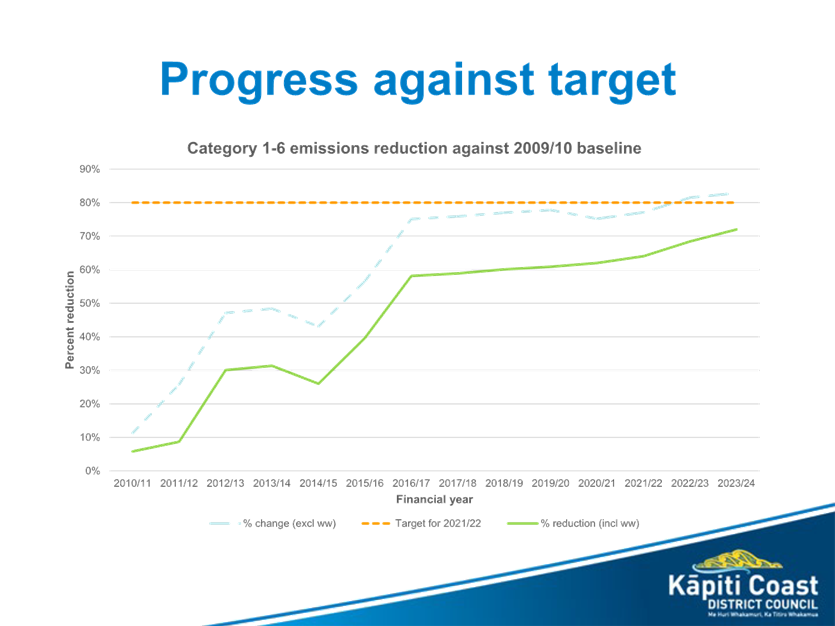
RĀRANGI TAKE
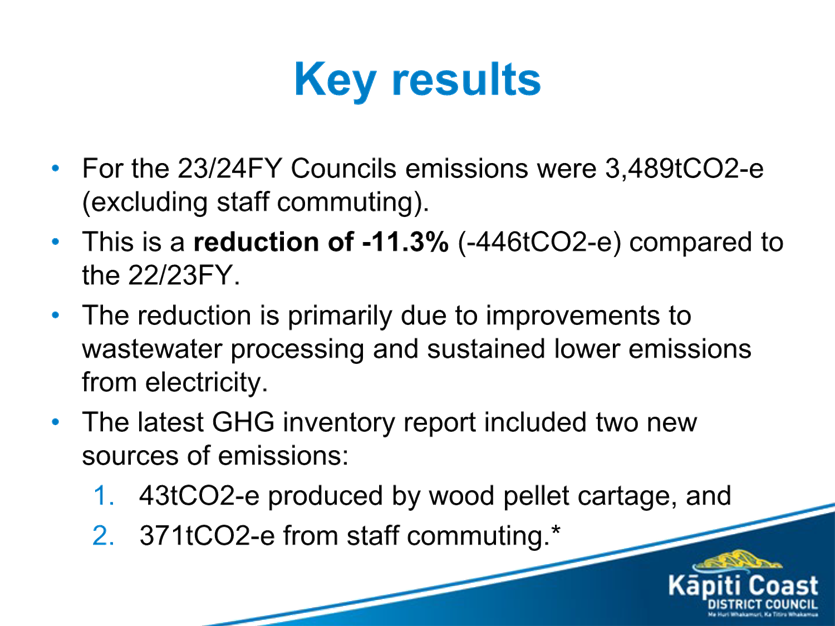
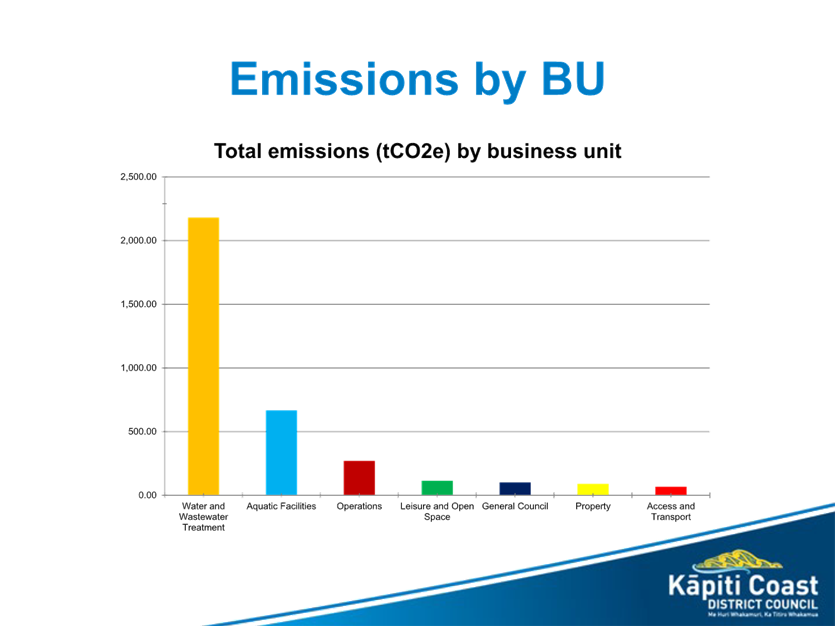
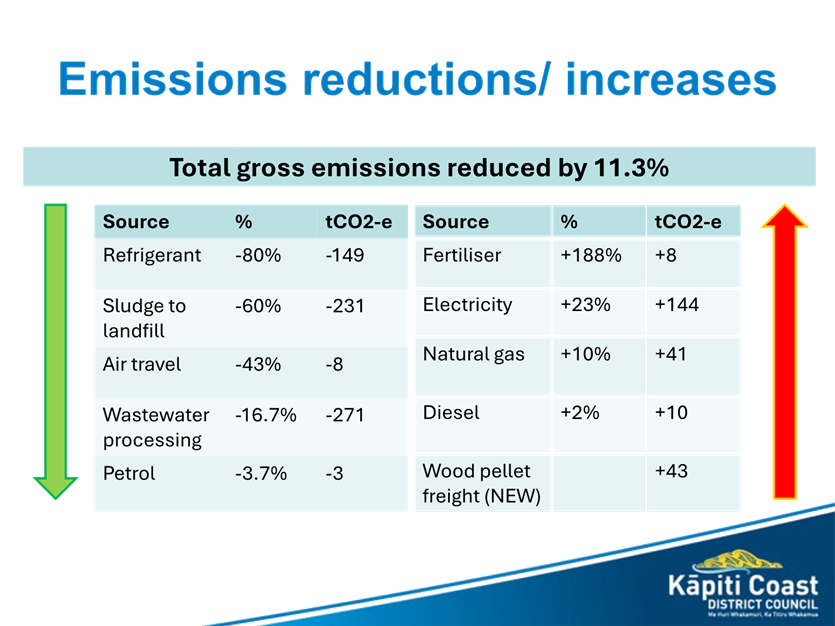
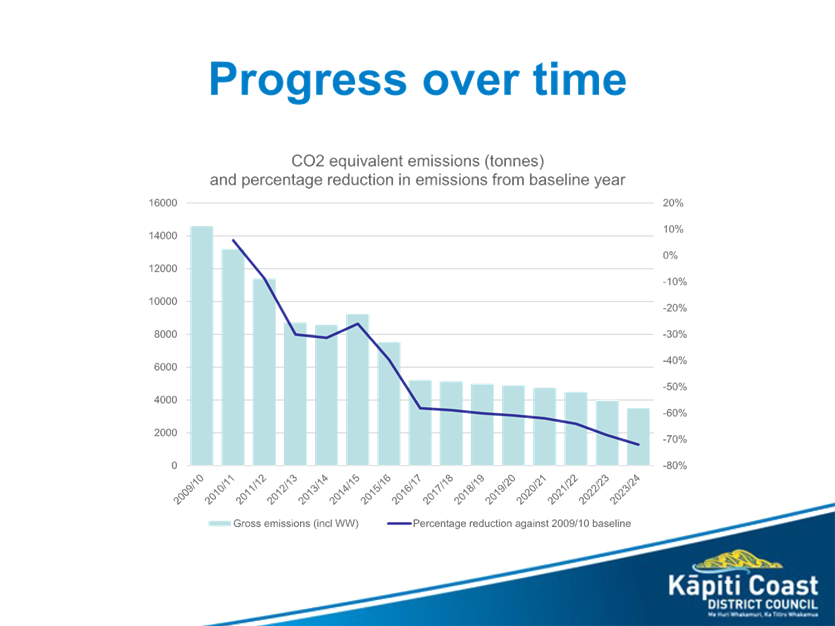
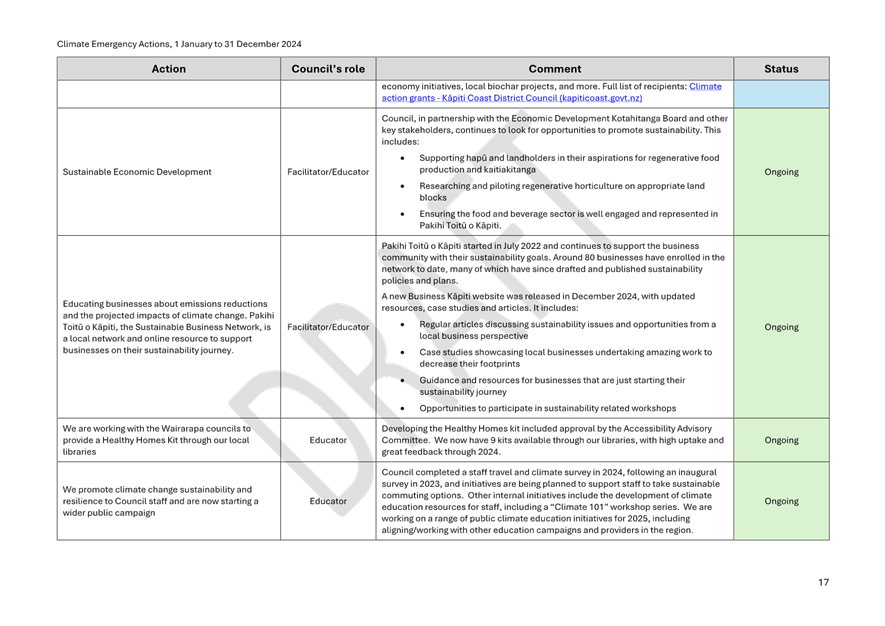
AGENDA
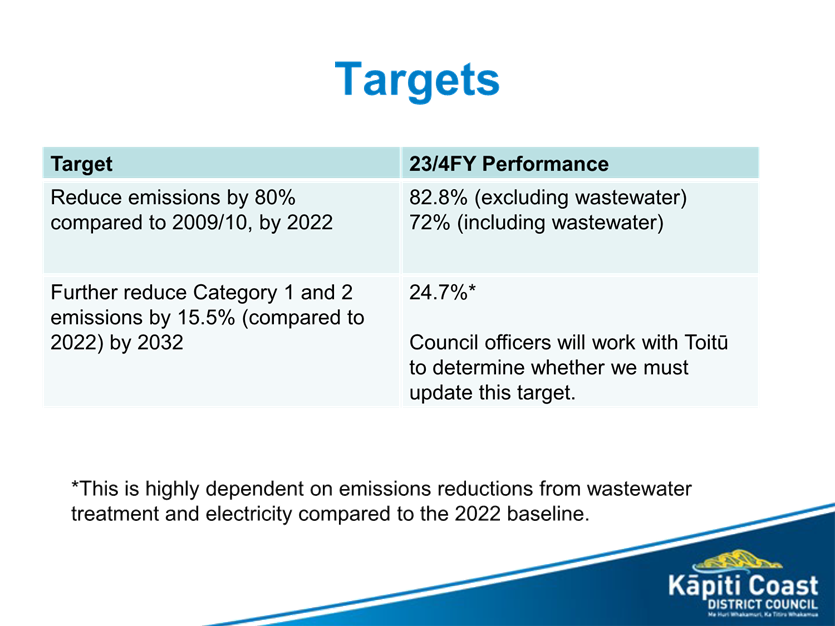
Te Komiti Āhuarangi me te Taiao | Climate and
Environment Committee Meeting
|
|
I hereby give notice that a Meeting of the Te Komiti Āhuarangi me te Taiao | Climate and
Environment Committee will be
held on:
|
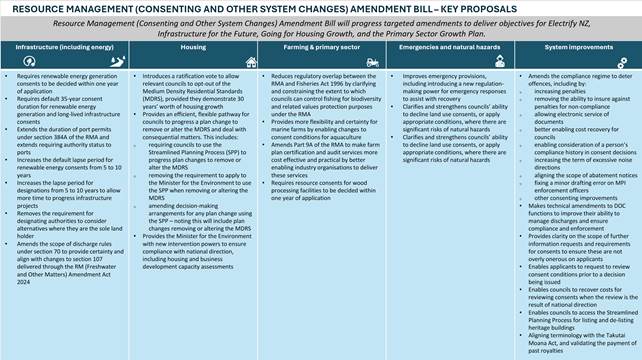
|
Te Rā | Date:
|
Thursday, 20 February
2025
|
|
Te Wā | Time:
|
9.30am
|
|
Te Wāhi | Location:
|
Council
Chamber
Ground
Floor, 175 Rimu Road
Paraparaumu
|
|
Rach Wells
Group Manager People and Capability
|
|
Climate and Environment Committee Meeting Agenda
|
20 February 2025
|
Kāpiti Coast District Council
Notice is hereby given
that a meeting of the Te Komiti
Āhuarangi me te Taiao | Climate and Environment Committee will be held in the Council Chamber, Ground Floor, 175 Rimu Road,
Paraparaumu, on Thursday 20 February 2025, 9.30am.
Te Komiti
Āhuarangi me te Taiao | Climate and Environment Committee Members
|
Cr
Jocelyn Prvanov
|
Chair
|
|
Cr
Sophie Handford
|
Deputy
|
|
Mayor
Janet Holborow
|
Member
|
|
Cr
Glen Cooper
|
Member
|
|
Cr
Liz Koh
|
Member
|
|
Cr
Shelly Warwick
|
Member
|
|
Ms
Kim Tahiwi
|
Member
|
|
Mr
Huriwai Paki
|
Member
|
|
Ātiawa
ki Whakarongotai Representative
|
Member
|
|
Mr
Christian Judge
|
Member
|
|
Mr
Michael Moore
|
Member
|
|
Mr
Glen Olsen
|
Member
|
|
Mr
Tim Sutton
|
Member
|
|
Mr
Simon Black
|
Member
|
|
Climate and Environment Committee Meeting Agenda
|
20 February 2025
|
8 He
Kōrero Hou | Updates
8.1 Potential
Implications of RMA Amendments for Special Character Areas in the District Plan
Kaituhi |
Author: Dr
Fazilat Tooranian, Senior Policy Planner
Kaiwhakamana
| Authoriser: Kris Pervan, Group Manager Strategy & Growth
Te pūtake |
Purpose
1 This paper
seeks to raise awareness of second RMA Amendment Bill, the Resource
Management (Consenting and Other System Changes) Amendment Bill, which once
passed into law will require Council to ratify its use of the Medium Density
Residential Standards (MDRS) in the Operative Kāpiti Coast District Plan
2021 (District Plan), including in special character areas.
Taunakitanga | RECOMMENDATIONS
A. That
the Climate and Environment Committee:
A.1 Notes
that the second RMA Amendment Bill, the Resource Management (Consenting and
Other System Changes) Amendment Bill (“the Bill”), aims to make it
quicker and simpler to consent renewable energy, boost housing supply, and
reduce red tape for the primary sector.
A.2 Notes
that the Bill will require councils (within a year of the relevant clause of
the Bill coming into law) to make a ratification decision whether to retain,
alter or remove the Medium Density Residential Standards from the District
Plan.
A.3 Notes
that Council lodged a submission on the Bill, in February 2025, supporting the
requirement for councils to make the ratification decision referred to in
Recommendation B of this paper.
A.4 Endorse,
particularly in recognition of community interest in protection of special
character areas, that staff develop advice to inform Council’s future
decision whether to retain, alter or remove the Medium Density Residential
Standards from the District Plan.
A.5 Note
that further approvals will be sought from Council after the Bill comes into
force in the second half of 2025.
Tūāpapa | Background
Special
character areas
2 The
inclusion of special character areas in the District Plan reflects an intention
by previous councils to preserve the environmental, cultural, and built-form
characteristics of specific urban areas across the district.
3 Special
character areas in the District Plan collectively cover approximately 390
hectares of residential zoned land, which is about 13% of residential zoned
land in the district. The following table describes the key characteristics of
each of the special character areas (precincts) recognised in the District
Plan.
|
Special character area
|
Summary of primary character attributes
|
|
Beach Residential Precinct – Paekākāriki
Beach Residential Precinct – Raumati
Beach Residential Precinct – Ōtaki
|
Steep dune landforms and intact topography
Mature vegetation creating continuous green canopies
Low-density built form
|
|
Beach Residential Precinct – Waikanae Beach
|
Existing topography incorporates prominent elevated dune
landforms
Distinctive and largely intact subdivision pattern
associated with the historic development of the settlement
Low-density built form
|
|
Waikanae Garden Precinct
|
Extensive and contiguous vegetation cover, especially that
related to tall native and exotic trees.
|
4 Prior
to Plan Change 2 (PC2 – Intensification), the special character areas
were subject to a range of additional District Plan provisions that were more
restrictive on development in order to maintain the existing character within
these areas. These provisions varied depending on the character area, but
included:
4.1 A
more restrictive height standard;
4.2 More
restrictive yard setbacks;
4.3 Reduced
building coverage;
4.4 Higher
minimum allotment sizes.
5 Additionally,
development within the Beach Residential Precincts was assessed against a
Design Guide.
6 These
additional provisions were on top of protective district-wide requirements in
the District Plan relating to notable trees, key indigenous trees, and
ecological sites.
Plan Change 2’s impact on District Plan protections
for special character areas
7 A
primary purpose of PC2 was to incorporate Government’s mandatory Medium
Density Residential Standards (‘MDRS’) into the District Plan and
give effect to the intensification policies (Policies 3 and 4) of the National
Policy Statement on Urban Development 2020 (NPS-UD).
8 The
implications of Government’s directives for special character areas were
carefully considered by Council in the process of preparing PC2.[1] Council initially considered
designating these areas as “other qualifying matters” to exempt
them from intensification under the MDRS.[2]
Ultimately Council concluded special character areas did not meet the stringent
criteria that needed to be satisfied,[3]
and as a result, special character areas generally became subject to the MDRS.[4]
9 While
the special character areas themselves were not removed by PC2 and
consideration must still be given to the special characteristics of those areas
in certain circumstances,[5]
the plan change has significantly reduced the protective nature of the District
Plan towards those areas. Most notably, the application of the MDRS removed the
restrictive development provisions relating to height, setback, building
coverage and allotment size in those areas.
10 Some
parts of special character areas are also affected by Government requirements
to give effect to Policy 3 of the NPS-UD. Most notably this policy, which
requires greater building heights to be enabled around centres and rapid
transit stops, led to a High-Density Residential Zone encroaching into part of
the Waikanae Garden Precinct whose provisions are enabling of higher buildings
than the MDRS.
11 PC2
was initially publicly notified for submissions on 18 August 2022 and the
application of the MDRS had immediate legal effect from that date. The plan
change became operative on 1 September 2023.[6]
The Resource Management (Consenting and Other System
Changes) Amendment Bill
12 Since
late 2023 the Coalition Government introduced a phased approach reform to the
Resource Management system in a three-stage process:
12.1 Phase
One repealed the Natural and Built Environment Act and the Spatial Planning
Act.
12.2 Phase
Two introduced a fast-track consenting regime, proposing targeted legislative
changes to the RMA and seeks to implement the Going for Housing Growth package.
12.3 Phase
Three involves replacing the RMA with new resource management legislation based
on the enjoyment of property rights.
13 The
Resource Management (Consenting and Other System Changes) Amendment Bill is
part of Phase Two reforms[7].
The Bill has a wide scope which includes:
14 The
Bill was introduced to Parliament on 9 December 2024 for its first reading, and
will progress through usual Select Committee process over the next few months.
In relation to MDRS, it:
14.1 Enables
councils to opt out of the MDRS if they demonstrate “30 years of housing
growth capacity” (the meaning of this phrase will be defined in a revised
NPS-UD which has yet to be released for submissions).
14.2 Requires
councils to make a “ratification decision” no later than a year
after commencement of this section[8]
whether to retain the MDRS, alter it, or remove it.
14.3 Requires
councils to use the Streamlined Planning Process (SPP) for removing or altering
the MDRS.
15 Council
has lodged a submission on the Bill:[9]
15.1 Supporting
the greater flexibility being offered to councils regarding the application of
the MDRS; and
15.2 Seeking
to ensure that the plan change has sufficient scope to consider any other
matters of concern it may wish to address regarding Plan Change 2 (such as how
Policy 3 of the NPS-UD was applied around town and other centres).
He take |
issues
16 Staff
are aware that:
16.1 Some
developments have occurred (or have been proposed to occur) in special
character areas that have caused concern amongst local residents, including in
the Waikanae Garden Precinct.
16.2 It
follows there is likely to be considerable community interest in the new sense
of flexibility this Bill provides for Council in relation to where, how and if
the MDRS is applied in the district.
Ngā
kōwhiringa | Options
17 The
Amendment Bill is not anticipated come into force, assuming it makes it through
the usual Select Committee process, until the second half of 2025. On this
basis, staff recommend that:
17.1 The
Committee does not pass any resolutions relating to the future use of the MDRS
in the District Plan at this time, for the reasons that:
17.1.1 Council
will need to consider what the “revised NPS-UD” which has yet to be
released for submissions means by “30 years housing growth” before
it considers its position.
17.1.2 Council
will need to understand the final form of the RMA amendments before it considers
its position.
17.1.3 Analysis
to inform Council decisions about its options has yet to be commenced and there
are limits to how far this analysis can proceed ahead of the Bill coming into
law, and the revised NPS-UD process being completed.
17.1.4 Given
central government timeframes, it will not be possible to progress a
ratification decision prior to the upcoming election in October 2025.
17.2 That
in recognition of community interest on this matter, the Committee endorse
that staff initiate work to develop advice for Council’s future decision
whether to retain, alter or remove the MDRS from the District Plan, so that a
ratification decision can be considered by Council in 2026 in line with
timeframes expected to be set by the Bill.
ngā Mahi
panuku |
next steps
18 Council
will continue to engage with the Bill process, and will seek further decisions,
as appropriate, with Strategy Operations and Finance Committee or Council in
coming months.
Ngā āpitihanga | Attachments
Nil
|
Climate and Environment Committee Meeting Agenda
|
20 February 2025
|
8.2 Update on
the Omnibus Reserve Management Plan
Kaituhi |
Author: Yolanda
Morgan, Team Leader Open Space Planning
Kaiwhakamana
| Authoriser: Brendan Owens, Group Manager Customer and
Community
Te pūtake |
Purpose
1 This
report provides an update on the preparation of the Omnibus Reserve Management
Plan (RMP), including the reserve classification process.
Taunakitanga | RECOMMENDATIONS
A.
That the Climate and Environment Committee notes the update and the next
steps for the development of the omnibus Reserve Management Plan.
Tūāpapa | Background
2 Council manages 125 parks
and reserves, totalling 438 ha of open space. This includes our destination
parks, sports fields, esplanade reserves, neighbourhood parks and playgrounds,
heritage, scenic and local purpose reserves.
3 The Open Space Planning
team has been preparing to develop an omnibus RMP, covering all 125 parks and
reserves that are managed by the Council.
4 Hui with our iwi partners
have been held to co-design our approach to the development of the RMP and we
continue to work together to understand and document the special values of the
whenua which make up our parks and reserves. The next hui is scheduled to take
place on the 21st February.
5 Following that hui, a
recommendation will be put to Council to publicly notify our intention to
prepare the RMP. This will start the process (stipulated in the Reserves Act)
that must be followed to prepare an RMP.
He take |
issues
6 Council is required by
legislation to prepare, and keep under continuous review, a management plan for
the reserves that it manages. Council currently has management plans for only
19 reserves (out of 125), and many of these plans are more than 30 years old.
7 Reserve management plans
provide for the use, enjoyment, maintenance, protection and preservation of
reserves. Management plans provide guidance around what uses and activities are
acceptable (or not acceptable) on individual or group of reserves and ensures
transparent and consistent decision making.
8 The legal status of an RMP
varies according to the legal status of the land it covers:
9.1 For land that is held subject to the
Reserves Act, and classified according to its primary purpose, it will be a
statutory Reserve Management Plan under the Act.
9.2 For Council land that is managed for open
space purposes, that has not yet been classified, it will be a non-statutory
guiding document.
9 As part of the RMP process,
Council is also undertaking a staged process to classify the unclassified parks
and reserves, where that is appropriate. The RMP will then become a statutory
management plan under the Act for these sites.
10 Many of our unclassified reserves can
be classified without public notification. These are reserves that are
currently used and managed for the purpose for which they were acquired by
Council and are zoned Open Space in the District Plan.
11 At our February hui we will continue
to discuss and confirm those sites to be classified, along with the proposed
classifications. A recommendation to classify those reserves will be taken to
Council, along with the recommendation to notify Council’s intention to
prepare an RMP.
12 Any unclassified reserves that need
further research or additional consultation with stakeholders, and those that
need to be publicly notified due to their current use or legal status, will
continue to be discussed and will be included in a future recommendation.
Ngā
kōwhiringa | Options
13 Do
nothing - Council could continue to operate without a management plan
for its parks and reserves, or with outdated plans for those reserves where
they do exist. However, this is a breach of Council’s requirements under
the Act. Without up to date, fit for purpose management plans, decision making
around the management, use and development of Council managed parks and
reserves risks being inconsistent, not transparent and not in line with the
views and aspirations of the community.
14 Prepare an RMP for each Reserve
– Council could prepare individual management plans for each reserve, or
groups of reserves. As we currently have very few management plans in place and
125 reserves, it is efficient to prepare one management plan providing a
consistent set of policies. Individual reserves, or groups of reserves
(e.g. neighbourhood playgrounds), will still be able to have specific policies
on their management where relevant.
15 Prepare an Omnibus RMP –
An omnibus RMP is the most efficient option to meet the Council’s
legislative requirements and enable both general provisions, as well as reserve
specific provisions, to be provided in one document. The omnibus RMP will be
made up of two sections:
A. General Policy Section
B. Reserve Specific Management Plans
While the
document will be larger than an individual RMP, we aim to publish the plan
using the E-plan platform to enable easy navigation. For example, users will be
able to search by reserve name or address and be provided with links to all the
relevant policies for that reserve.
Mana Whenua
16 The development of the RMP to date has
followed a co-design approach with the involvement of representatives from our
three iwi partners.
17 The RMP will acknowledge the cultural
values of the whenua which make up our parks and reserves and will recognise
the intrinsic relationship of iwi with the land through enabling appropriate
practices, management provisions and storytelling.
18 We will continue to work with our iwi
partners to refine the scope of the RMP and in drafting the provisions of the
RMP.
ngā Mahi
panuku |
next steps
19 The
preparation of an RMP must follow the process set out in the Reserves Act 1977.
The includes two phases of public notification and engagement.
20 Following
the February hui, a recommendation will be taken to Council to pass the
following resolutions:
o To notify the intention to
prepare an omnibus RMP for all Council managed reserves and invite feedback
from stakeholders and the wider community.
o To classify a number of
reserves (the final list of reserves to be classified will be confirmed
following the February hui).
21 If
the Council passes the resolution to notify the intent to prepare an RMP, the
next steps will be:
a. Publication
of the notice of intent
b. Stakeholder
and community engagement phase including:
i. Have your
say platform
ii. Social
media
iii. Staff
“pop-ups” at community markets, coastlands and play events
iv. Community
board meetings
v. Targeted
stakeholder engagement
c. Feedback
period closes
d. Analysis
of public feedback and drafting of the RMP
e. Draft
RMP document publicly notified and call for submissions
f. Submission
period
g. Hearings
h. Recommendation
and decision following hearings
i. Final
RMP published
22 If
the Council passes the resolution to classify any reserves, then a notice will
be placed in the gazette formalising those classifications.
Ngā āpitihanga | Attachments
Nil
|
Climate and Environment Committee Meeting Agenda
|
20 February 2025
|
8.3 Interim
Results from 23/24FY Carbon Inventory Audit
Kaituhi |
Author: Matthew
Nabney, Advisor Sustainability
Kaiwhakamana
| Authoriser: Brendan Owens, Group Manager Customer and
Community
Te pūtake |
Purpose
1 The
purpose of this report is to provide you with the interim results from
Council’s annual greenhouse gas (GHG) inventory audit, for the 23/24FY.
Taunakitanga | RECOMMENDATIONS
That the
Climate and Environment Committee:
A.
Note this report.
B. Note
that these are interim results, and final verification is expected by the end
of February/ early March.
Tūāpapa | Background
2 Council
officers submitted Council’s annual GHG inventory audit report (audit
report) to Toitū for verification in December 2024. The audit report has
not received verification yet but has been through the initial audit process.
3 In 2023, Council set two new emission reduction targets:
3.1 An
aspirational target to be net zero emissions by 2040, and
3.2 A target to reduce our category 1 and 2 emissions a
‘further’ 15.5% by 2032, measured against a baseline year of 2022.
He take |
issues
4 Council’s
corporate carbon emissions for the 23/24FY were 3,489tCO2-e which is
a reduction of 11.3% compared to the 22/23FY primarily due to:
4.1 improvements
to the Ōtaki and Paraparaumu Wastewater Treatment Plants,
4.2 an improvement to the way Council calculates emissions from sludge,
4.3 a reduction in sludge production, and
4.4 a reduction in calculated emissions from wastewater
processing.
5 Interim
results indicate that Council’s category 1 and 2 emissions have reduced
24.7% compared to the 2022 baseline. This means that Council
has met the 15.5% ‘further’ emissions reduction target,
demonstrating that Council’s renewal and maintenance programme can
achieve multiple co-benefits.
6 Although we have met our 2032 target ahead of schedule it is
important to note that:
6.1 emissions from electricity consumption vary between years due to the
level of renewables in the main grid. These fluctuations could impact
Council’s ability to meet future emissions reductions targets. For
example, emissions from electricity in the 22/23FY halved compared to the
21/22FY, then increased by 23% in the 23/24FY
6.2 future significant emissions reductions from wastewater processing
are unlikely given the improvements and maintenance of these facilties.
7 The five key projects Council agreed to progress in June 2023 to
meet the medium-term emissions reduction target, will support Council to
‘lock-in’ future emissions reductions.
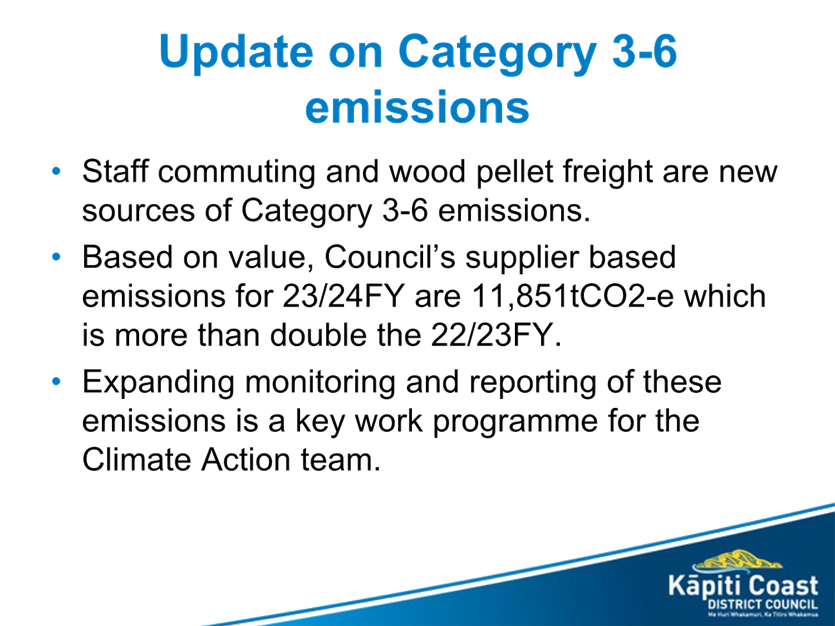
8 Several sources of emissions increased Council’s GHG
footprint. Emissions from electricity, natural gas, diesel and fertiliser
increased Council’s footprint by 246tCO2-e.
Ngā
kōwhiringa | Options
9 There
are no options for you to consider in this report.
ngā Mahi
panuku |
next steps
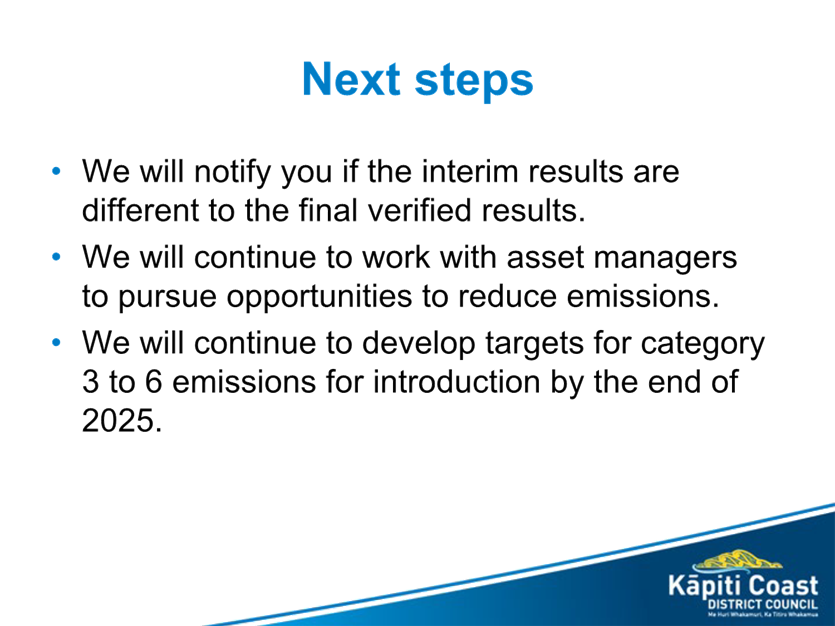
10 Council
officers will notify you if the verified results differ to the interim
emissions results.
11 Council
officers will work with Toitū to determine whether Council is required to
reset its medium-term emissions reduction target. If a new target is required,
officers will provide you with an update in due course.
12 Any
targets considered would be developed to align with Council’s climate
strategy to ensure a cohesive approach to emissions reductions, with approval
from Council before implementation.
Ngā āpitihanga | Attachments
1. Interim
Results from 23/24FY Greenhouse Gas (GHG) Inventory Audit ⇩ 
|
Climate and Environment Committee Meeting Agenda
|
20 February 2025
|
|
Climate and Environment Committee Meeting Agenda
|
20 February 2025
|
8.4 Climate
Emergency Action Framework Progress Update 2024
Kaituhi |
Author: Jamie
Young-Drew, Principal Policy Advisor Climate Change
Kaiwhakamana
| Authoriser: Brendan Owens, Group Manager Customer and
Community
Te pūtake |
Purpose
1 To
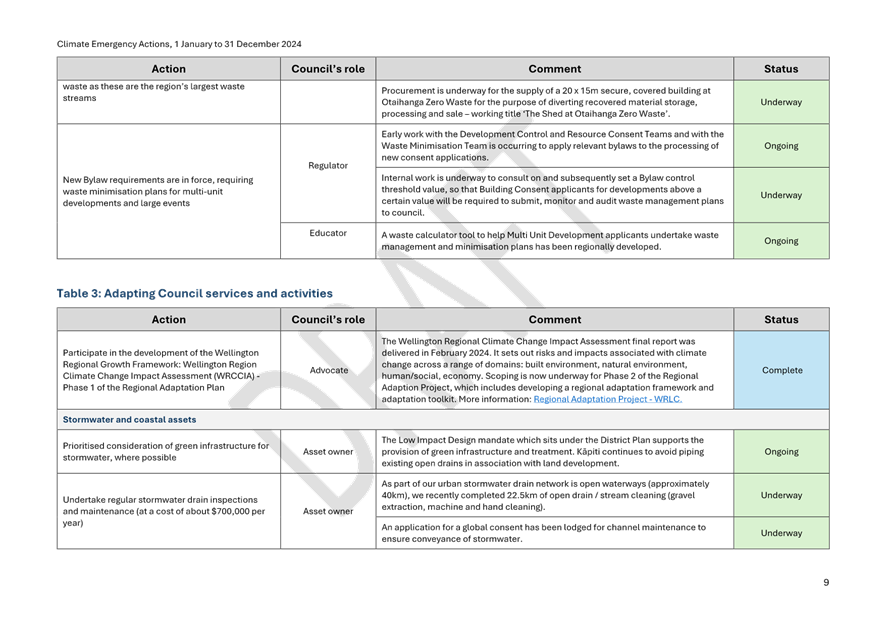
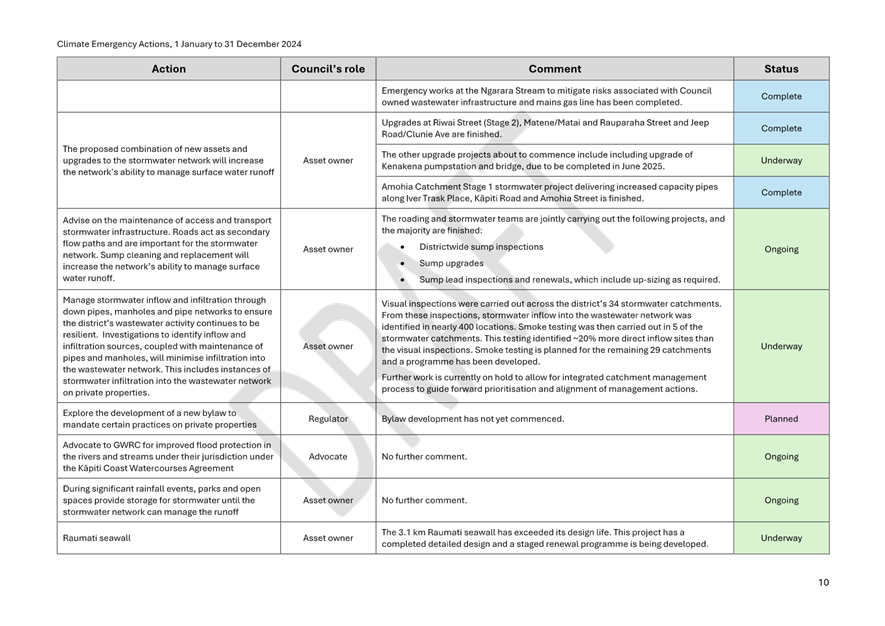
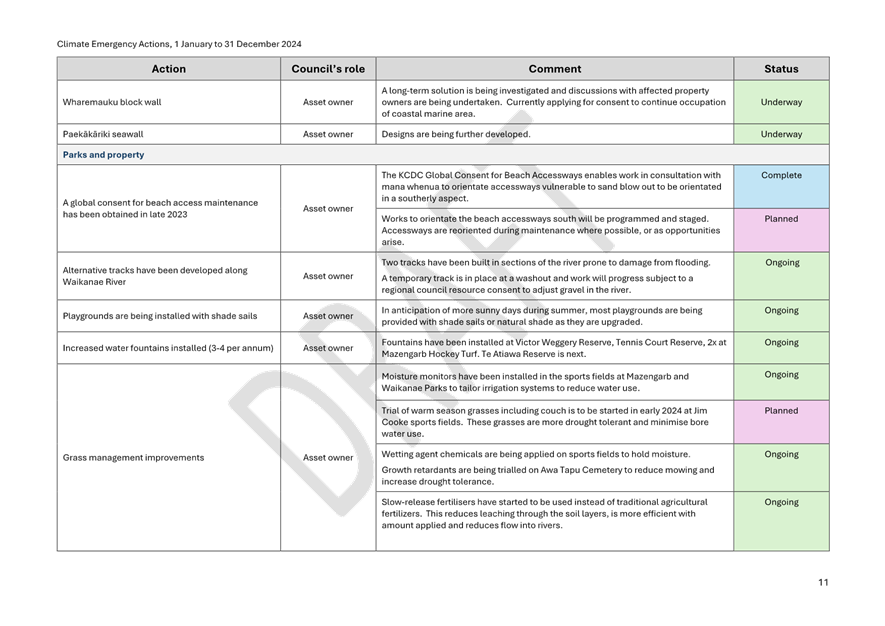
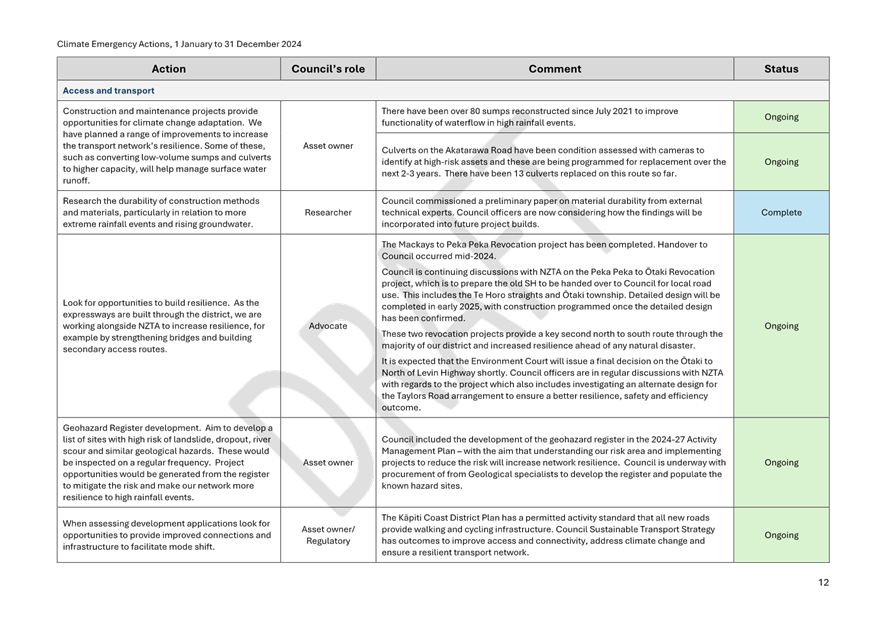
provide you with the draft Climate Emergency Action progress update for the
period January – December 2024.
Taunakitanga | RECOMMENDATIONS
A. That
the Climate and Environment Committee note that the Climate Emergency Action
progress update 2024 will be finalised and published alongside the verified
results from Council’s greenhouse gas inventory audit for 23/24FY, which
are expected by early-March.
Tūāpapa | Background
2 Council
adopted a Climate Emergency Action Framework in 2021 and is committed to
providing regular progress updates on its work to reduce emissions and prepare
Kāpiti for climate change.
He take |
issues
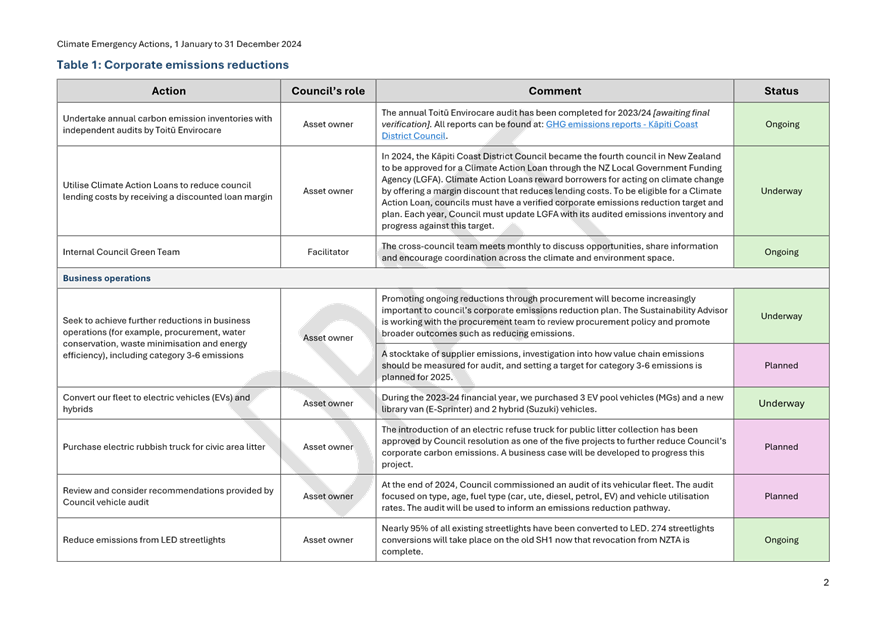
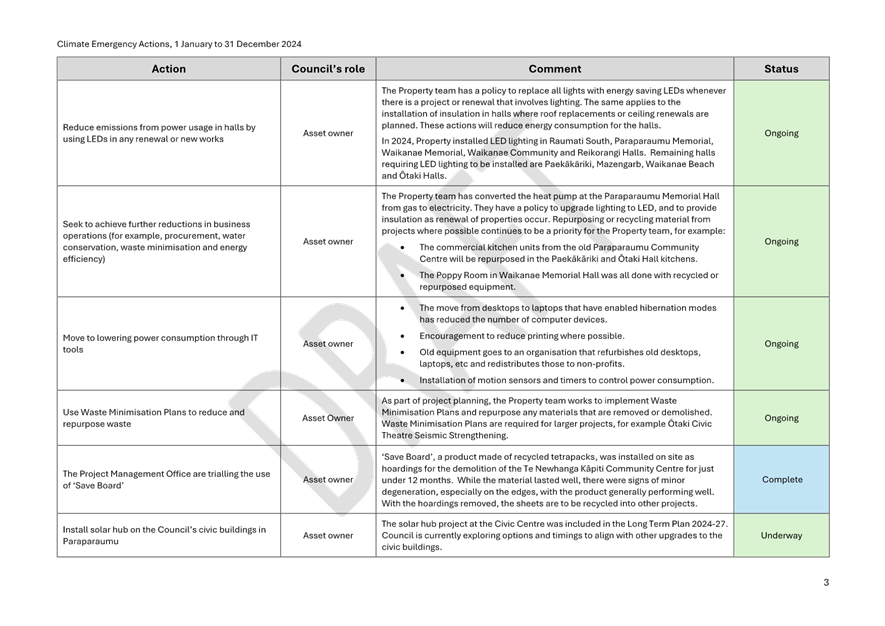
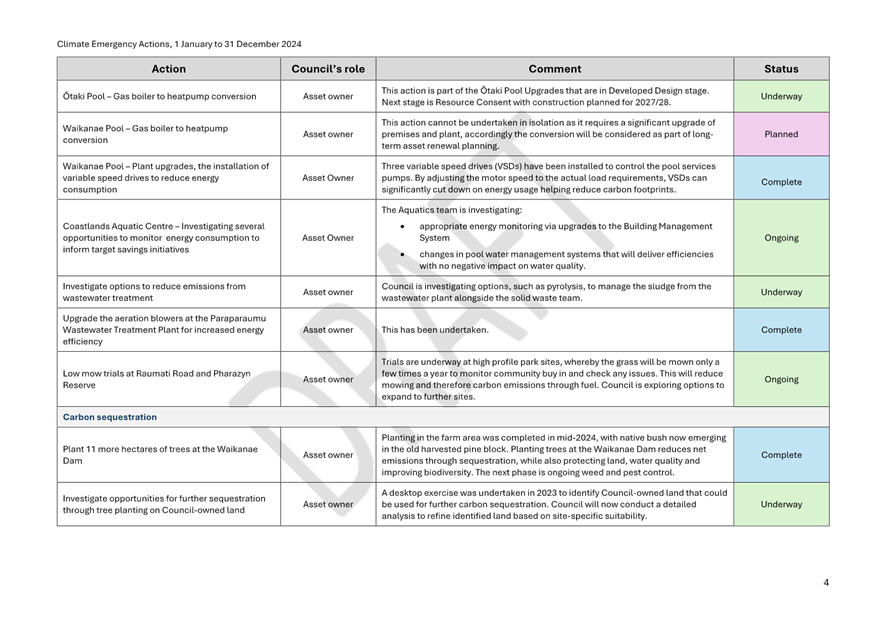
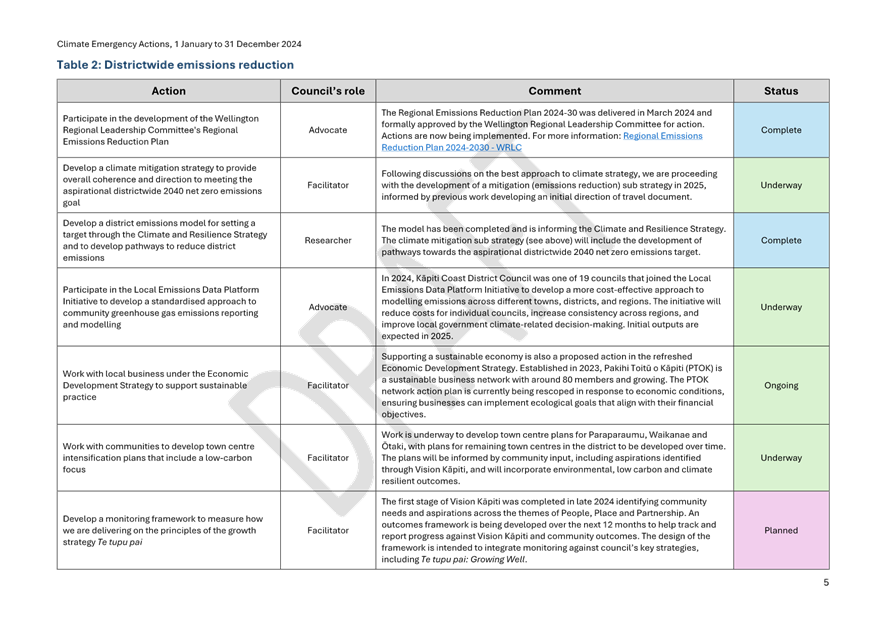
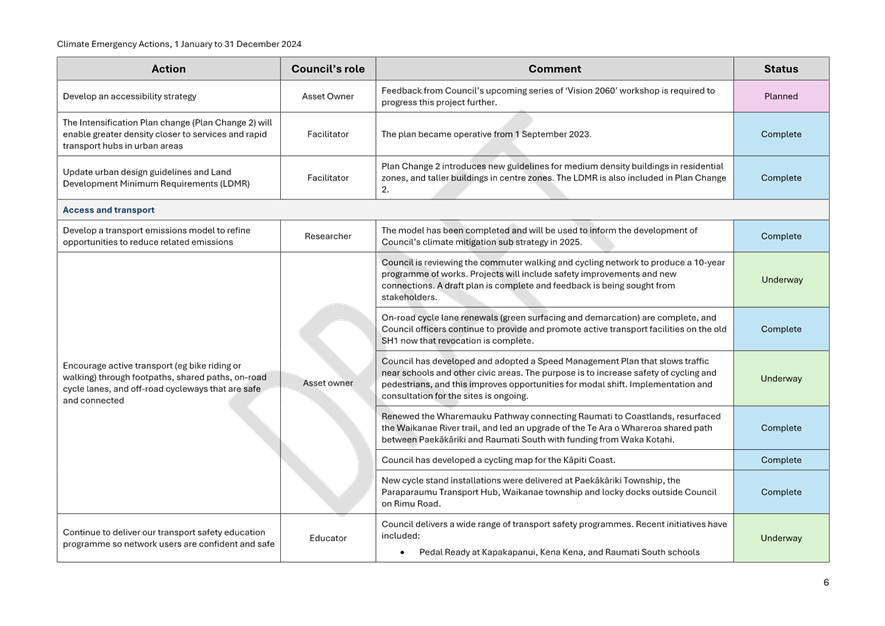
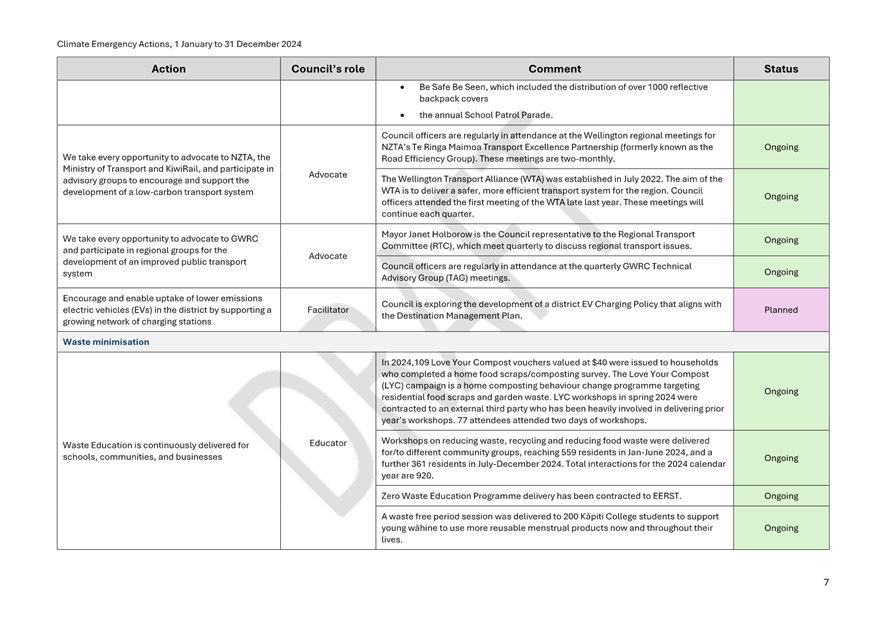
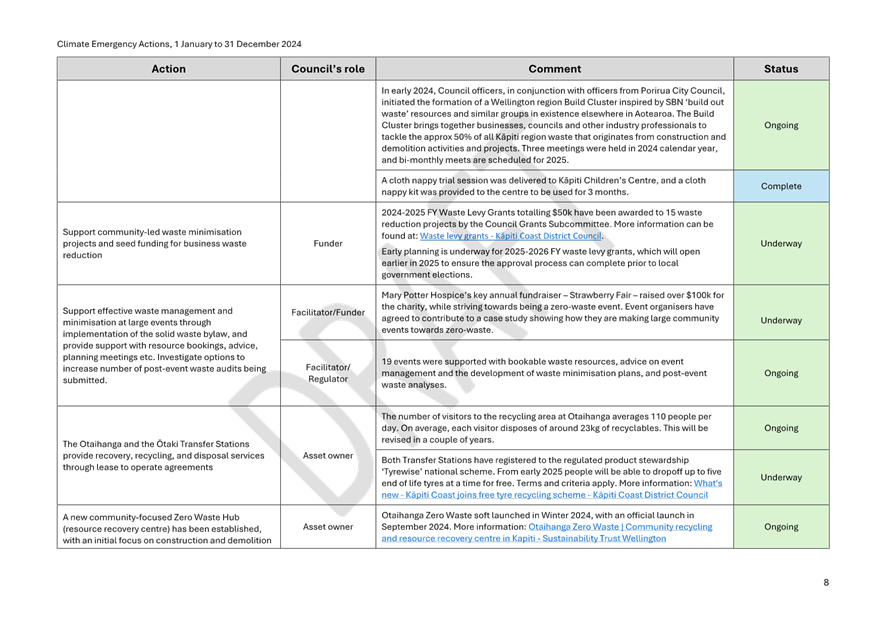
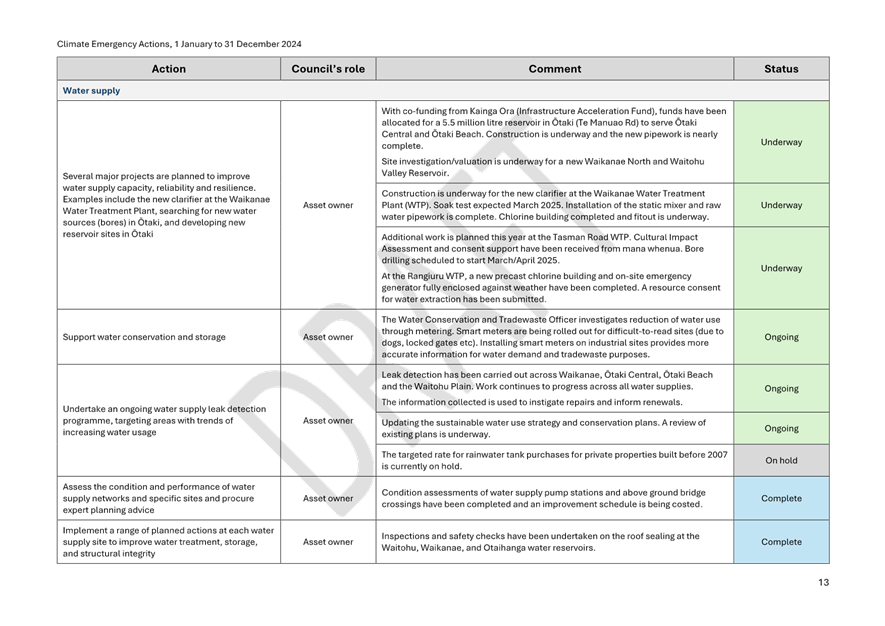
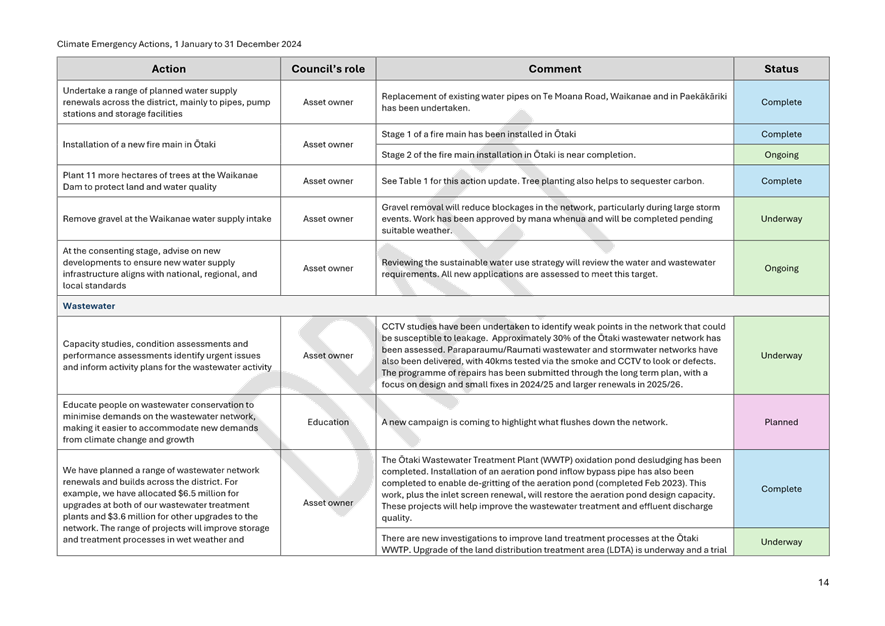
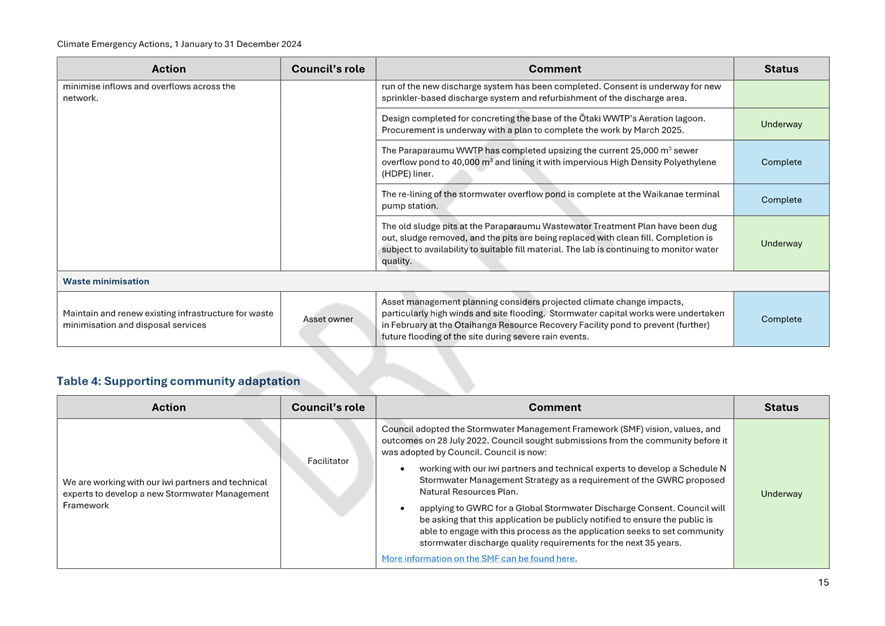
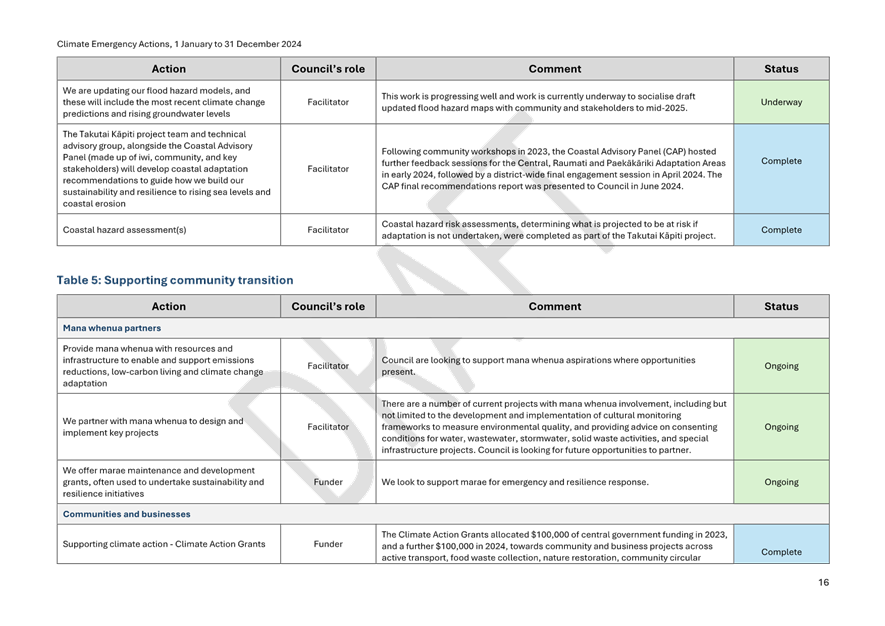
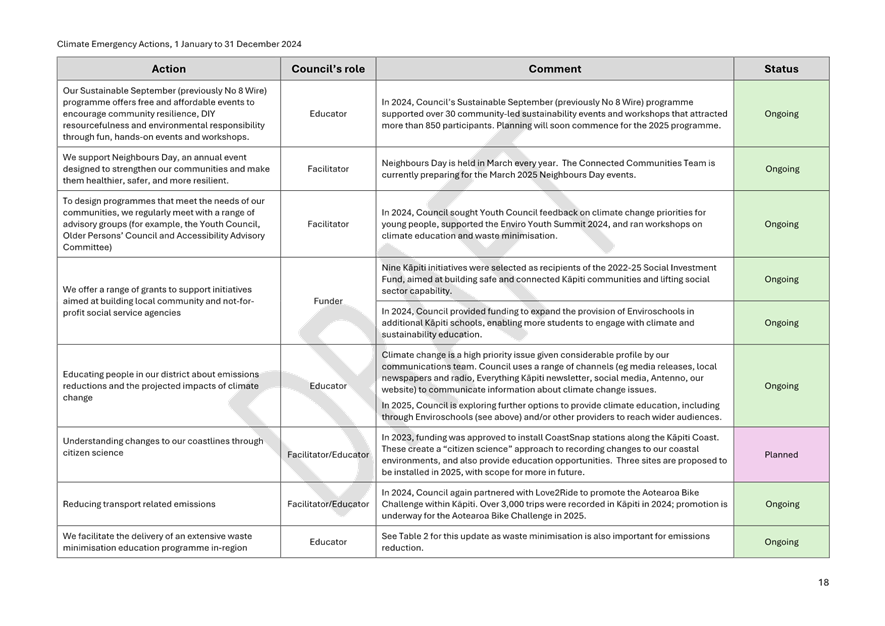
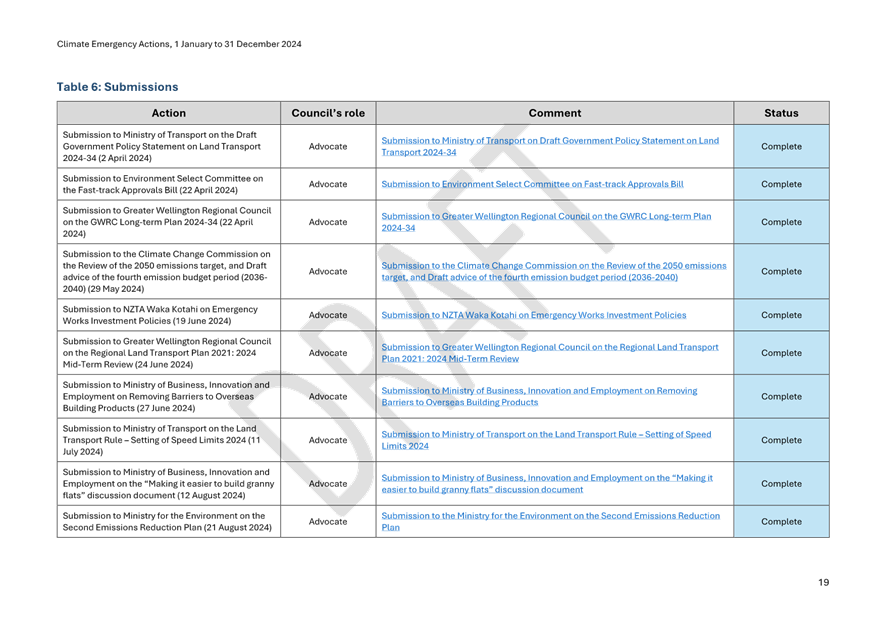
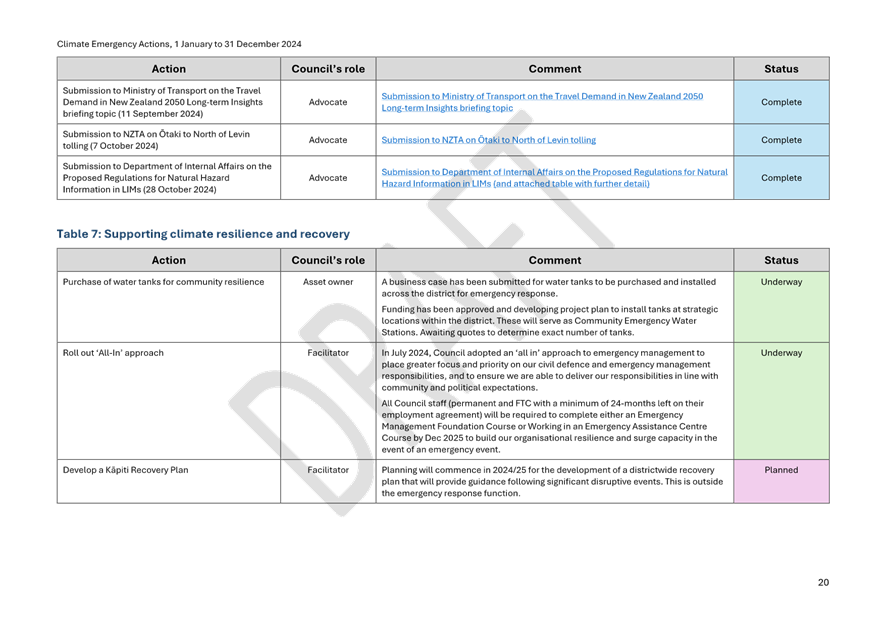
3 The
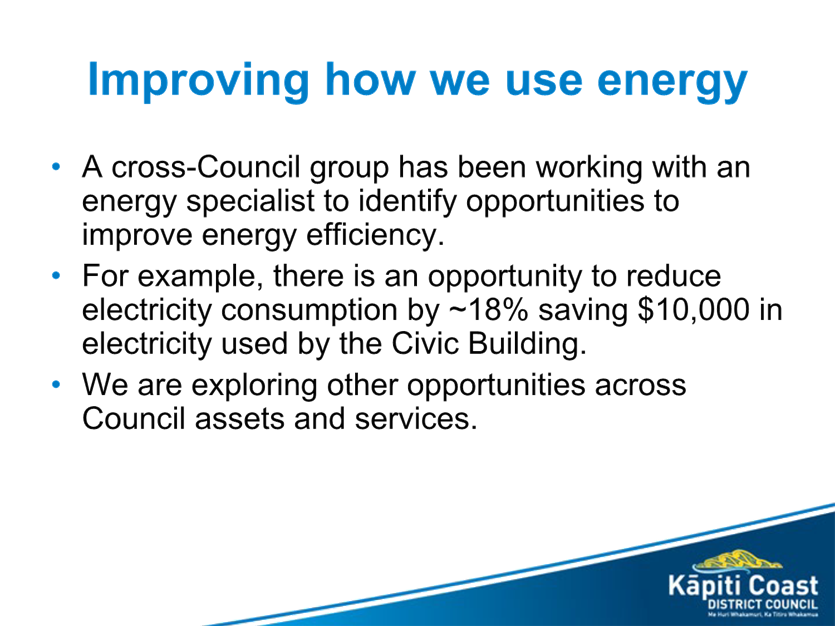
2024 Climate Emergency Action progress update is a ‘stocktake’ of
Council’s activities to deliver on its climate commitments. It uses the
same format as progress updates from 2022 and 2023.
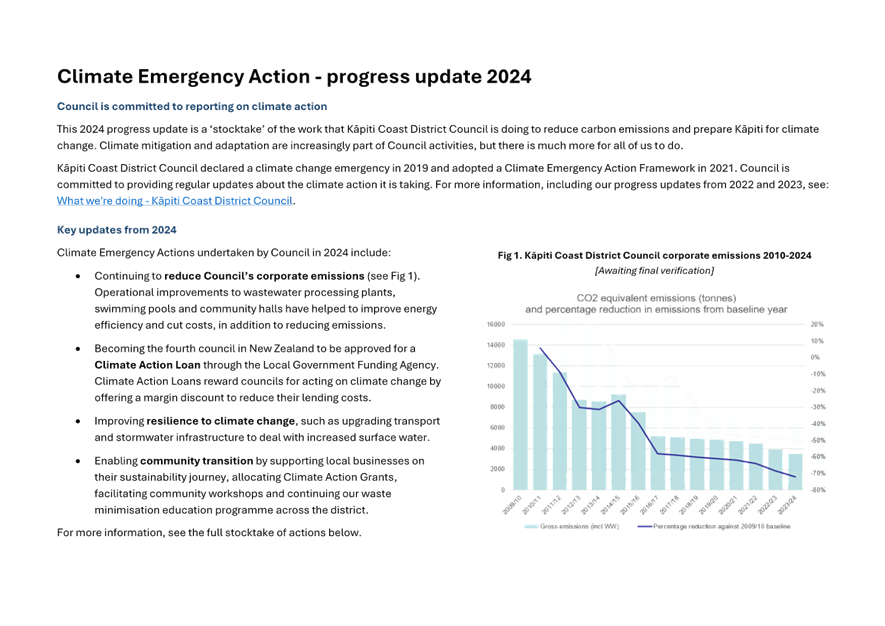
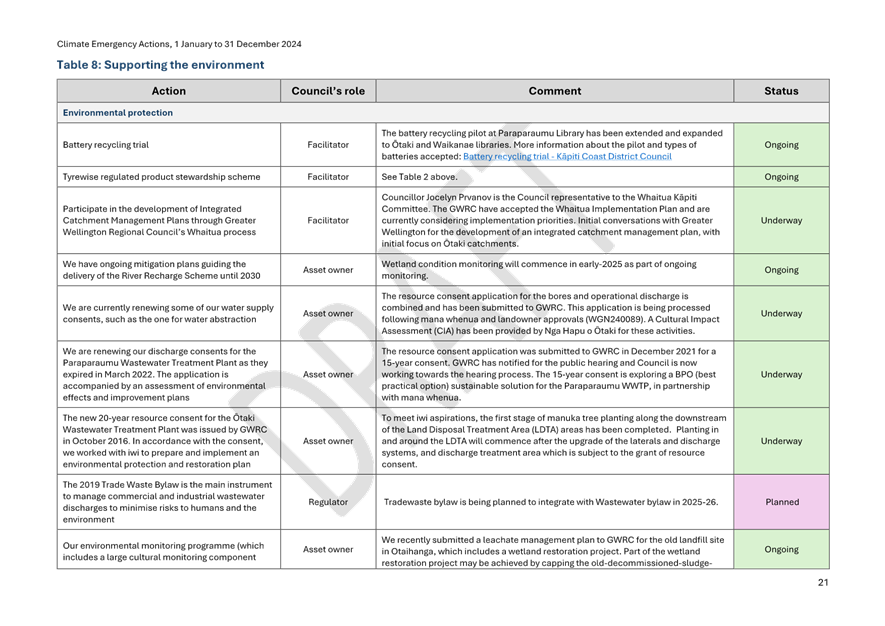
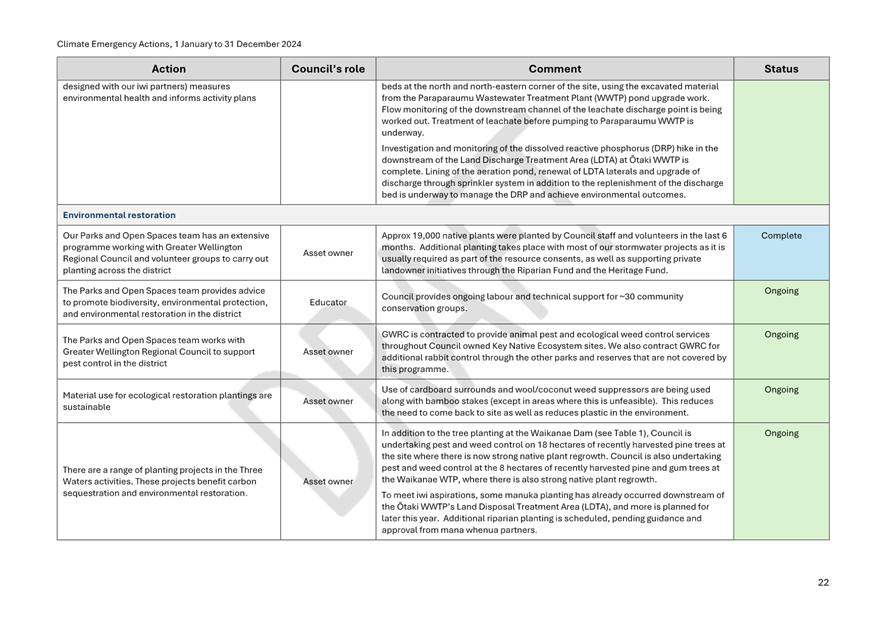
4 Notable
updates from the 2024 stocktake include:
4.1 Continuing
to reduce Council’s corporate emissions through operational improvements
to wastewater processing plants, swimming pools and community halls which have
also helped to improve energy efficiency and cut costs.
4.2 Becoming
the fourth council in New Zealand to be approved for a Climate Action Loan
through the Local Government Funding Agency, resulting in reduced lending
costs.
4.3 Improving
resilience to climate change, such as upgrading transport and stormwater
infrastructure to deal with increased surface water.
4.4 Supporting
community transition by supporting local businesses on their sustainability
journey, allocating Climate Action Grants, facilitating community workshops,
and rolling out a waste minimisation education programme across the district.
5 In
future, these annual Climate Emergency Action updates could also be used to
monitor progress against Council’s climate change strategy.
Ngā
kōwhiringa | Options
6 There
are no options to consider.
ngā Mahi
panuku |
next steps
7 Council
officers will finalise and publish the Climate Emergency Action progress update
2024 alongside the verified results from Council’s greenhouse gas
inventory audit 23/24FY.
Ngā āpitihanga | Attachments
1. Climate
Emergency Action Progress Update 2024
|
Climate and Environment Committee Meeting Agenda
|
20 February 2025
|
|
Climate and Environment Committee Meeting Agenda
|
20 February 2025
|
8.5 Community
Sustainability Outreach 2025 - Greener Neighbourhood Programme Update
Kaituhi |
Author: Rob
Dunn, Sustainability Advisor Communities
Kaiwhakamana
| Authoriser: Brendan Owens, Group Manager Customer and
Community
Te pūtake |
Purpose
1 In
November 2024 the Climate Action and Connected Communities team presented a
draft of proposed climate change education and outreach programmes for both
Kāpiti communities and Council staff to the Climate and Environment
Committee for comment.
2 The
purpose of this report is to provide an update on the progress of these
education and outreach programmes, and in particular the new Greener
Neighbourhoods programme.
3 Climate
and Environment Committee members may have questions or comments about the
Greener Neighbourhoods programme, or about some of the other education and
outreach programmes.
Taunakitanga | RECOMMENDATIONS
A. That
the Climate and Environment Committee note this report.
B. That
the Climate and Environment Committee provide further direction towards the
development and delivery of the Greener Neighbourhoods programme, or other
education and outreach programmes, as appropriate.
Tūāpapa | Background
4 The need to rapidly reduce
carbon emissions and overall resource consumption, protect and restore natural
ecosystems, and ensure a just transition to a low carbon future has been well
established over the last decade by multiple scientific bodies and authors.
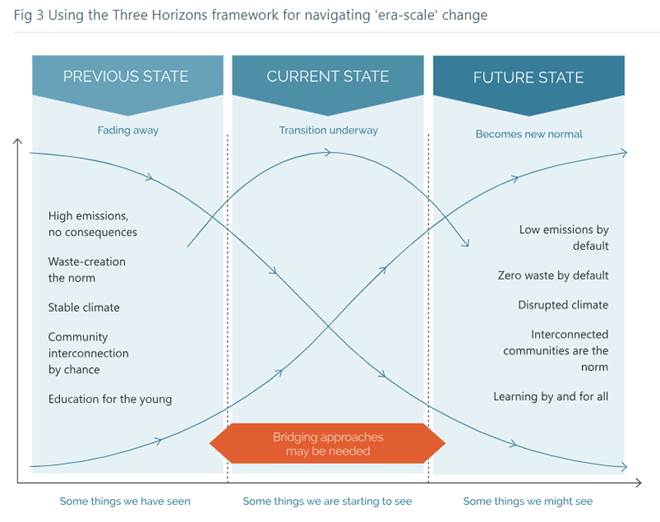
5 Local
government has a key role to play in this transition. One example of the
role local government might play in this process is provided by the Taituara
report Navigating Critical 21st Century transitions (2021).
The key concepts from this report are summarised in the graphic below.
 Taituarā
– Navigating Critical 21st Century Transitions (2021)
Taituarā
– Navigating Critical 21st Century Transitions (2021)
7 Council and Kāpiti
communities place significant priority on community connection and wellbeing,
local environment, and climate action, as reflected through Toitū
Kāpiti, Councils’ top 10 priorities, and important strategic
approaches such as the Climate Emergency Action Framework and the draft Climate
Mitigation Sub-Strategy.
8 In 2023, Council set an
aspirational, district wide net-zero emissions target for 2040. Achieving
this goal is in part dependent on cooperation and collaboration with our
communities.
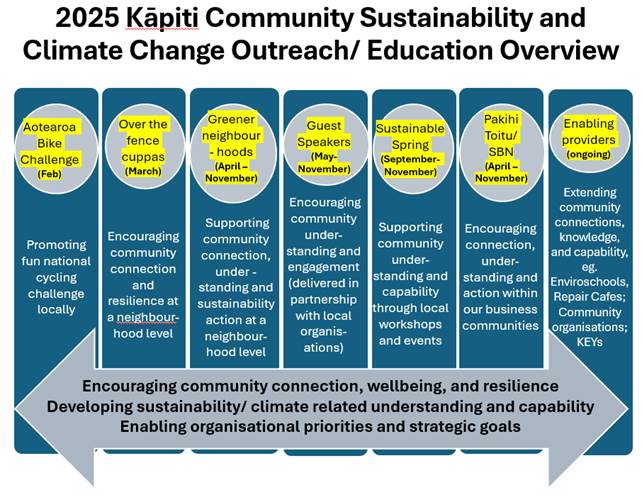
9 To help enable community
and Council priorities, and in response to feedback from the Climate and
Environment Committee in November 2024, the Climate Action and Connected
Communities team have further developed the 2025 climate change education and
outreach plan. A summary of this updated plan is presented below.
10 This report provides further
information on the Greener Neighbourhoods programme, which is a new programme
in 2025 (although Council previously ran this programme some years ago).
11 The purpose of the Greener
Neighbourhoods programme is to encourage community connection and resilience
and empower community groups to take positive environmental and climate action
through partnership, education and collaboration.
12 Council previously ran a Greener
Neighbourhoods programme from 2010- 2019; feedback from previous participants
suggests that the programme successfully enabled long-term community
relationship building and a range of positive and ongoing environmental outcomes.
An example of this is the Predator Free Paekākāriki programme, which
grew from the “Paekākāriki Rat Pack”, a project started
in 2011 as part of Councils’ Greener Neighbourhoods programme, and one of
the first backyard trapping groups anywhere in New Zealand.
13 How does the Greener
Neighbourhoods programme work?
· Groups
of 5 or more households from a neighbourhood sign up to participate (households
need to get themselves together in groups before signing up). Households
within each group should be within easy walking distance of each other
· The main
focus of the programme is a group project with an environmental/ climate focus
which neighbourhood groups collaborate on throughout the year. Council
supports groups to select suitable projects, and provides advice/ support and
some limited funding during project development and implementation.
· Examples of
previous projects from Greener Neighbourhoods participants include community
gardening, water and energy conservation, local pest control and restoration
work, and waste minimisation.
· In addition,
groups are offered access to a range of free educational workshops and learning
resources, for example WREMO neighbourhood resilience workshops and climate
education opportunities.
· Greener
Neighbourhood groups can also attend/ participate in Councils’ Guest
Speaker programme, and the Sustainable Spring programme
· Groups are
also connected with relevant local organisations/ community groups working in
their area
· Groups send
project updates and photos to Council for an ongoing blog celebrating group
progress
· All
neighbourhood groups come together for an end of project celebration
14 Timing and getting involved
· The
Greener Neighbourhoods programme runs from late April through to
November.
· Groups
of 5 or more households sign up to participate.
· Council
will start promoting the Greener Neighbourhoods programme once the Over the
Fence Cuppas programme has started.
· Spaces
are limited; the Climate Action and Connected Communities Team will work with
4-5 different Neighbourhood groups in 2025. Where possible the Greener
Neighbourhoods programme will prioritise working with neighbourhood groups from
across the Kāpiti district, rather than several neighbourhood groups from
the same suburb or town.
· A
post project review will explore opportunities for improvement and any larger
scale roll out.
He take |
issues
15 Climate change remains a
controversial topic with some members of our communities. The approach of
the 2025 education and outreach programmes is to work with our community
partners to provide positive learning and engagement opportunities for our
communities while minimising associated risks.
Ngā
kōwhiringa | Options
16 The
Climate and Environment Committee may have advice regarding the Greener
Neighbourhoods programme, or other programmes planned as part of the 2025
Sustainability and Climate Change Outreach/ Education overview presented above.
ngā Mahi
panuku |
next steps
17 Council
officers will incorporate any feedback from the Climate and Environment
Committee into further development of these outreach and education
programmes. Progress updates can be provided to the Climate and
Environment Committee as necessary.
Ngā āpitihanga | Attachments
Nil
|
Climate and Environment Committee Meeting Agenda
|
20 February 2025
|
9 Te
Whakaū i ngā Āmiki | Confirmation of Minutes
9.1 Confirmation
of Minutes
Author: Maria
Cameron, Advisor Governance
Authoriser: Rach
Wells, Group Manager People and Capability
|
Taunakitanga |
Recommendations
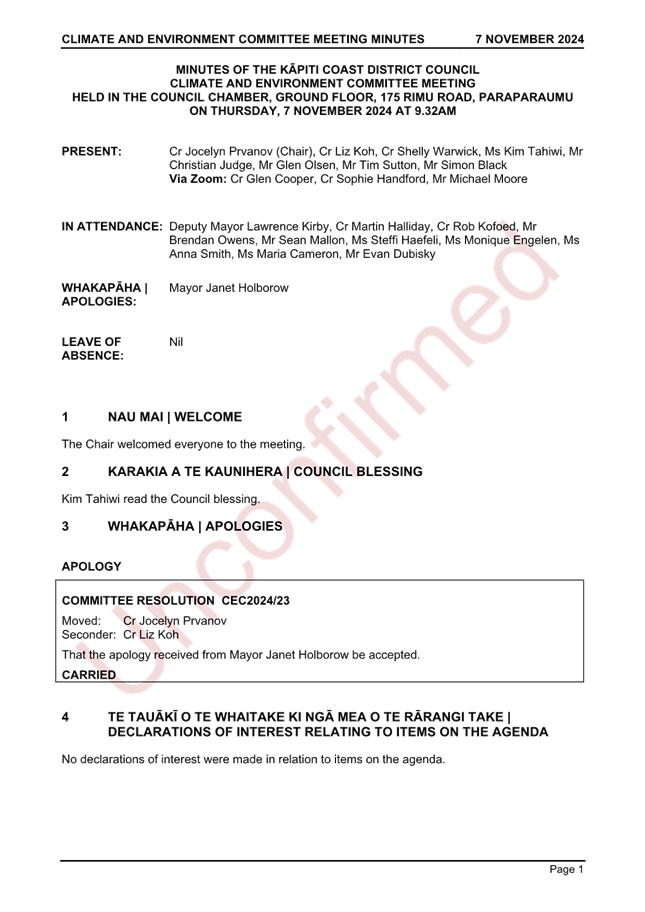
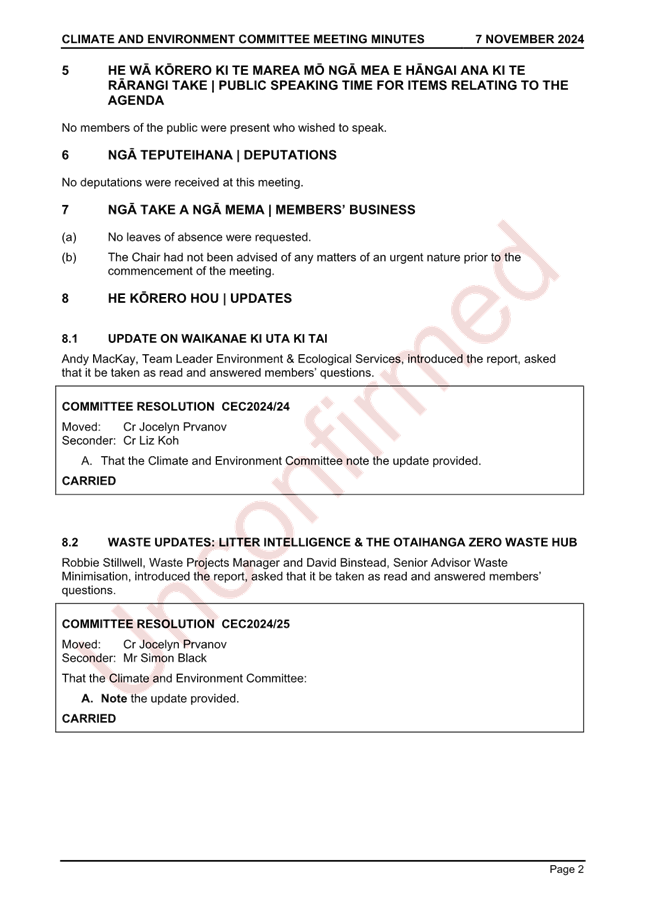
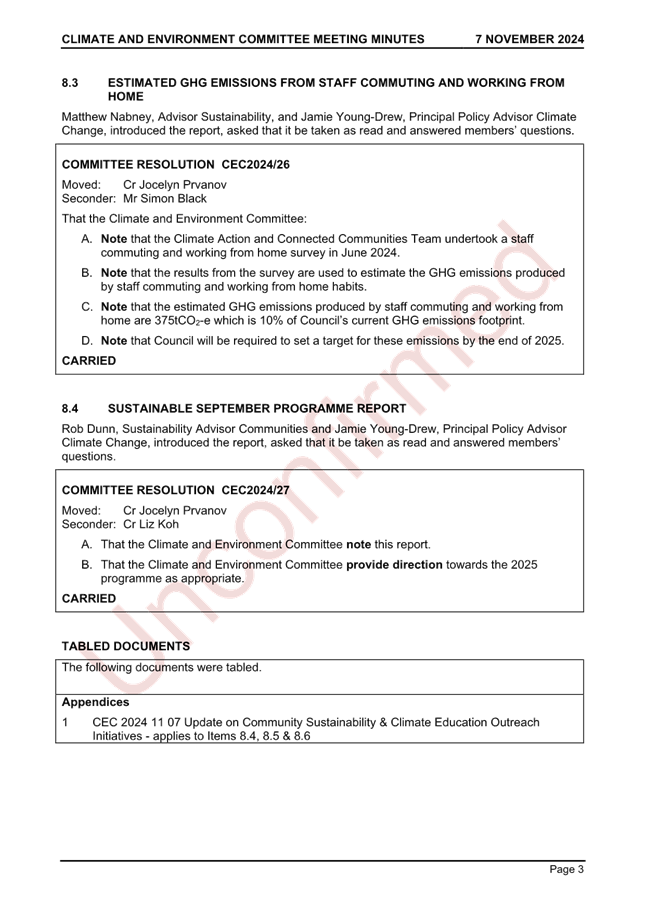
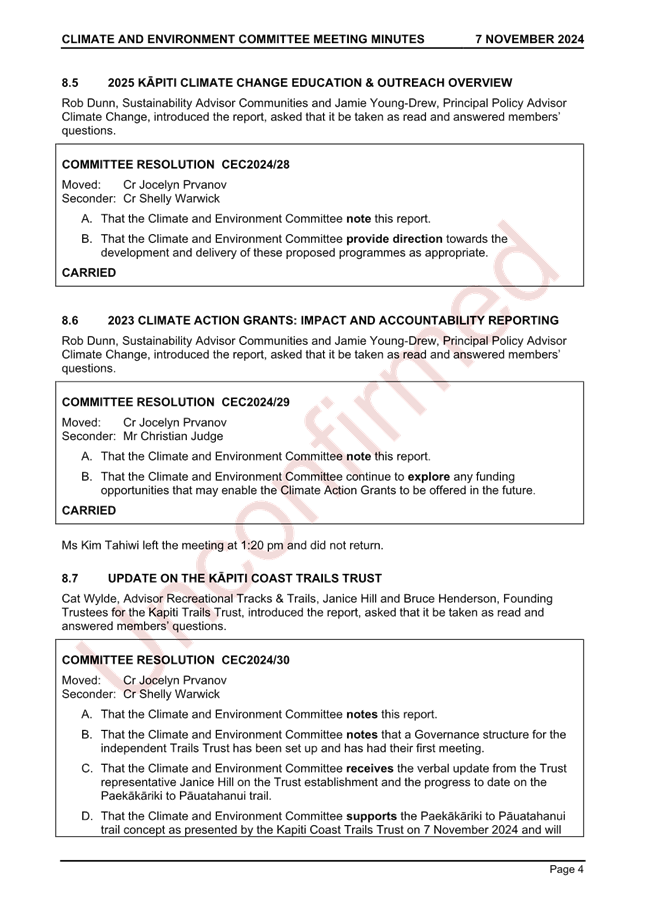
That the minutes of the Climate
and Environment Committee meeting of 7 November 2024 be accepted as a true
and correct record.
|
Ngā āpitihanga | Attachments
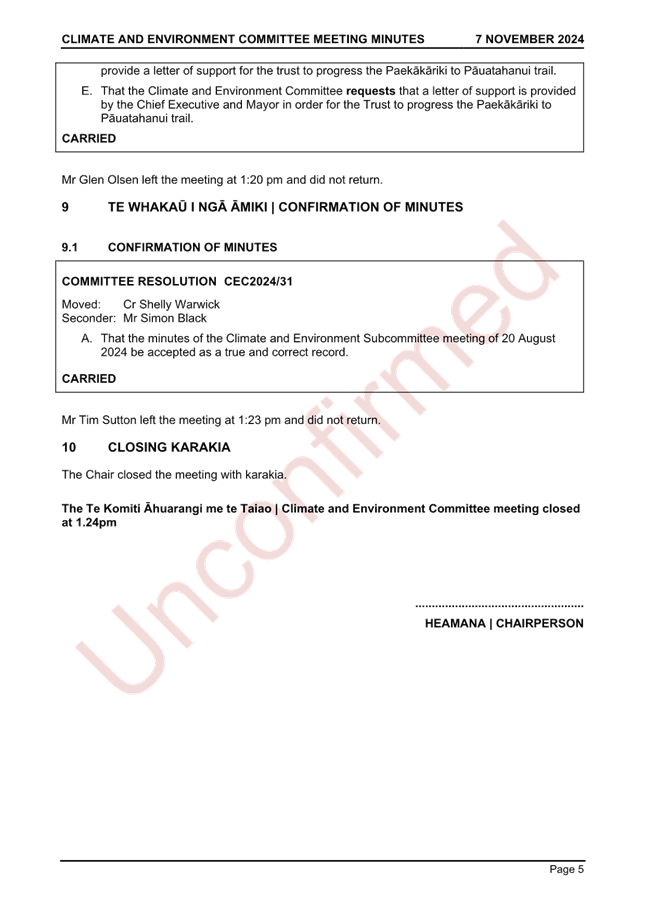
1. Unconfirmed
Minutes of the Climate and Environment Committee Meeting of 7 November 2024 ⇩
|
Climate and Environment Committee Meeting Agenda
|
20 February 2025
|
|
Climate and Environment Committee Meeting Agenda
|
20 February 2025
|
10 Karakia
Whakamutunga | Closing Karakia
|
Kia tau ngā manaakitanga
ki runga i a tātou katoa,
Kia hua ai te
mākihikihi, e kī ana
Kia toi te kupu
Kia toi te reo
Kia toi te wairua
Kia tau te mauri
Ki roto i a
mātou mahi katoa i tēnei rā
Haumi e! Hui e! Taiki
e!
|
May blessings be upon us all,
And our business be
successful.
So that our words endure,
And our language endures,
May the spirit be strong,
May mauri be settled and in
balance,
Among the activities we will
do today
Join, gather, and unite! Forward
together!
|